
Jason Arday Death: Powell Demands Cambridge Inquiry
The death of Professor Jason Arday — the youngest Black professor in Cambridge's history — has triggered a political reckoning over the treatment of high-profile academics, with Education Secretary Lucy Powell describing his passing as "awful and tragic" and confirming that an independent inquiry is expected to examine the circumstances surrounding his final months.
The death of Professor Jason Arday — the youngest Black professor in Cambridge's history — has triggered a political reckoning over the treatment of high-profile academics, with Education Secretary Lucy Powell describing his passing as "awful and tragic" and confirming that an independent inquiry is expected to examine the circumstances surrounding his final months.
Professor Jason Arday's Death: Education Secretary Demands Answers as Cambridge Faces Questions Over Scrutiny and Due Process
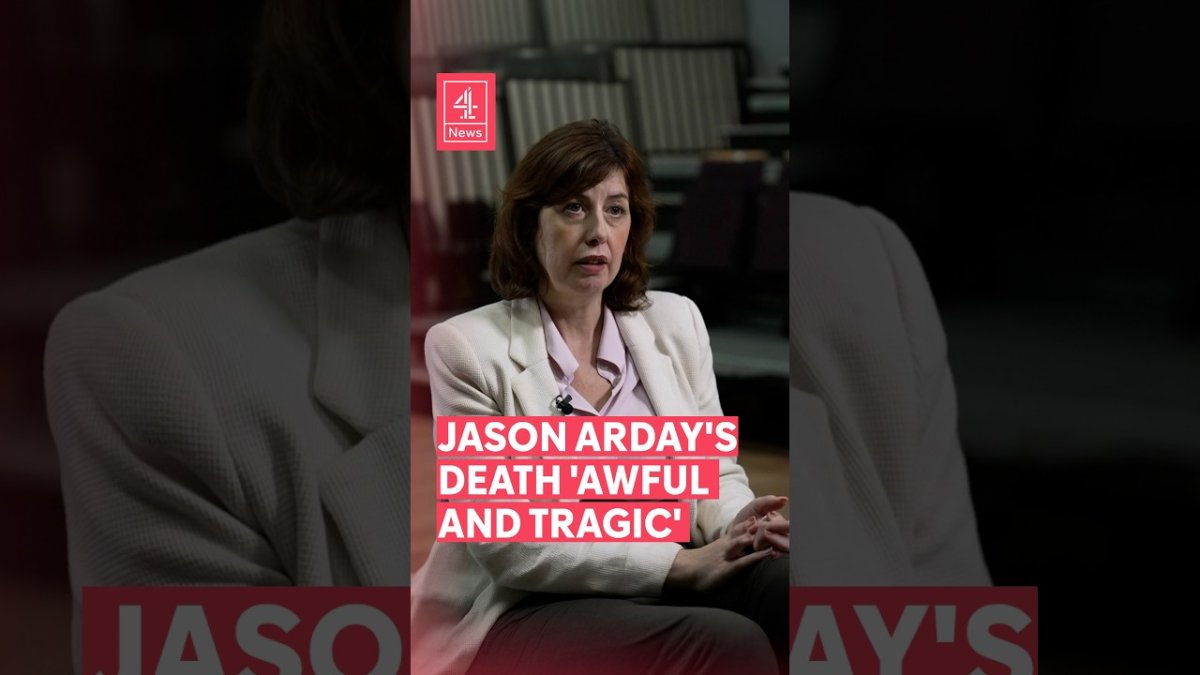
London, UK – 20 August 2026 — The death of Professor Jason Arday, the Cambridge academic whose journey from illiteracy to the pinnacle of British academia made him a symbol of social mobility, has plunged the higher education sector into a sombre and difficult conversation about the price of public prominence. In her first detailed public remarks since his death on 14 August, the Education Secretary told Channel 4 News that the University of Cambridge was expected to launch an independent inquiry into the events preceding his death, while the coroner would separately examine the circumstances. Ms Powell said she would "closely examine the findings" in her capacity as Secretary of State for Education.
A Life Under Scrutiny: The Final Months
Jason Atta Kwei Arday, 41, was found unresponsive at a property on Daley Thompson Way in Battersea, south London, just after 3pm on Friday 14 August. The Metropolitan Police confirmed the death was unexpected but not believed to be suspicious; officers from the Met's Central South Command Unit investigated and a file has been prepared for the coroner. The news came just nine days after the University of Cambridge announced an internal inquiry into "new information" regarding his "academic qualifications and honorary appointments" — a development that led to Arday's resignation "with immediate effect" from his professorship and his fellowship at Jesus College.
The sequence of events has raised profound questions about the intensity of public and media scrutiny directed at the academic. In a statement released on 15 August, Arday's family spoke of a "campaign of misinformation" that proved too much for a man they described as "gentle" and someone who "always wanted to see the best in everyone." They explicitly called on the press to cease what they labelled a "campaign of harassment" waged against Jason and his family.
Lucy Powell's Response: A Promise of Examination
Speaking to Channel 4 News on Thursday, Ms Powell struck a careful but clearly affected tone, describing the professor's death as "awful and tragic" amid questions over the intense scrutiny and pressure he faced. The Education Secretary confirmed that the University of Cambridge was expected to launch an independent inquiry, separate from the internal process that had been underway since 5 August. She added that the coroner's examination would also play a crucial role in establishing the facts.
Ms Powell said she would "closely examine the findings" in her capacity as Secretary of State for Education. Her remarks follow an earlier statement on 15 August in which she said she was "deeply shocked and saddened" and urged the public and press to respect the family's privacy. Prime Minister Andy Burnham has also described the death as "a tragedy on so many levels," calling for a "moment for reflection" rather than immediate political point-scoring.

The Scrutiny Debate: Misinformation, Allegations, and the Human Cost
At the heart of the emerging controversy is the question of what exactly happened between 5 August, when Cambridge announced its internal inquiry, and 14 August, when Arday was found dead. The university's statement cited "new information" about his "academic qualifications and honorary appointments" — a formulation that raised more questions than it answered. Media reports in the intervening days alleged plagiarism and embellishment, including claims that Arday had run 600 miles in six days and raised £5.5 million for charity, figures that were questioned.
The family's statement is unambiguous in its assessment. "The campaign of misinformation was too much for Jason," they said. "He was a gentle man who always wanted to see the best in everyone." The phrase "campaign of misinformation" is significant — it suggests a deliberate, sustained effort to discredit Arday rather than a legitimate journalistic inquiry. Whether that characterisation is accurate will now be a matter for the Cambridge inquiry and, potentially, for press regulators.
For those who followed Arday's career, the speed of his fall from grace has been dizzying. In 2023, aged just 37, he was appointed Professor of Sociology of Education at the University of Cambridge — the youngest Black professor in the institution's 800-year history. His appointment was celebrated as a landmark moment for diversity in British academia. Previously a professor at Durham University, Arday had become a prominent voice on race, class and education, publishing widely and speaking at conferences around the world.
A Remarkable Journey: From Illiteracy to Cambridge
Arday's personal story was extraordinary by any measure. Growing up in South London, he was autistic and totally mute until the age of 11. He did not learn to read or write until he was 18 — a fact that makes his subsequent academic career all the more remarkable. His trajectory from special educational needs support worker to one of the most prestigious professorships in the world was held up as proof that the British education system could, under the right conditions, transform lives.
His research focused on the sociology of education, particularly the barriers faced by working-class and minority ethnic students. He argued, with characteristic directness, that universities were not neutral institutions but sites of cultural reproduction that often excluded those who did not fit a particular mould. His work was cited by policymakers, featured in the national press, and made him a sought-after commentator on issues of social mobility and educational inequality.
The Department for Education has previously cited Arday's work in policy documents on widening participation, and his appointment at Cambridge was seen as a signal that the sector was serious about diversifying its senior ranks. According to data from the Higher Education Statistics Agency, only 1.4% of UK professors are Black — a figure Arday himself frequently highlighted in his writing and public speaking.
Institutional Questions: Cambridge's Handling of Allegations
The University of Cambridge now faces difficult questions about how it handled the allegations against Arday. The internal inquiry announced on 5 August was described as examining "new information" — but the university has not disclosed the nature of that information, nor the process by which it was assessed. Arday resigned "with immediate effect" from his professorship and his Jesus College fellowship, a move that pre-empted any formal findings.
The speed of Arday's resignation — announced the same day the university revealed its inquiry — suggests either that the allegations were serious, or that the pressure on him had become intolerable. The university's decision to announce the inquiry publicly, rather than conducting it quietly, has also been questioned. In a sector where reputations are everything, the announcement itself was a form of sanction.
Cambridge has said it will cooperate fully with the expected independent inquiry and with the coroner. But the institution's handling of the case will be scrutinised closely. Did the university follow its own procedures? Was Arday given adequate support? Were the allegations properly tested before being made public? These are questions that the independent inquiry — if it is genuinely independent — will need to answer.
The Wider UK Picture: Academia, Culture Wars, and the Pressure on Scholars
Arday's death comes at a moment of intense political and cultural conflict over the role of universities in British society. The debate over diversity, equity and inclusion (DEI) initiatives has become increasingly polarised, with some politicians and commentators arguing that such programmes have gone too far, while others insist they remain essential to addressing structural inequality.
Arday was, inevitably, drawn into this maelstrom. As a prominent Black academic who spoke openly about race and class, he became a lightning rod for criticism from those who saw his appointment as an example of "woke" box-ticking rather than merit-based selection. His personal story — the journey from illiteracy to Cambridge — was used by both sides of the debate: celebrated by those who saw it as proof of social mobility, and weaponised by those who questioned whether his achievements were exaggerated.
The pressure on academics in the UK has been rising for years. Surveys by the University and College Union have repeatedly documented soaring workloads and work-related stress, with many staff saying they have considered leaving the profession. The rise of social media has intensified scrutiny, with academics increasingly subjected to online abuse and coordinated campaigns of harassment. For those working in contested fields like sociology of education, the risks are even greater.
The Department for Education has yet to announce any specific policy response to Arday's death. Ms Powell's commitment to "closely examine the findings" of the Cambridge inquiry and the coroner's examination suggests a cautious, evidence-led approach. But there will be pressure on the government to go further — perhaps by reviewing how universities handle allegations against senior academics, or by introducing new protections for those in the public eye.
The Bottom Line — What Comes Next
The coming weeks will be critical. The coroner's examination will establish the medical facts of Arday's death. The University of Cambridge's independent inquiry — if it proceeds as Ms Powell expects — will examine the institutional context. And the family's call for an end to the "campaign of harassment" will put pressure on the press and on social media platforms to reflect on their role.
But the deeper questions will not be resolved by inquiries alone. How does British academia balance the need for rigorous scrutiny with the duty of care it owes to its members? How do we hold public figures to account without destroying them in the process? And what does it say about our society that a man who overcame so much — mutism, illiteracy, poverty — could be brought down by the very visibility he worked so hard to achieve?
Jason Arday's legacy will not be defined by the allegations that marked his final weeks, but by the thousands of students he inspired and the barriers he broke down. His story — from a South London childhood where he could not speak, to one of the oldest universities in the English-speaking world — remains one of the most remarkable in modern British academia. The tragedy is that the same society that celebrated his rise may have contributed to his fall.
By Erica Thornton, Staff Writer
This article was produced with AI-assisted research and editorial support. Reporting is based on sources cited in the article.
What's Your Reaction?
 Like
0
Like
0
 Dislike
0
Dislike
0
 Love
0
Love
0
 Funny
0
Funny
0
 Wow
0
Wow
0
 Sad
0
Sad
0
 Angry
0
Angry
0

US Politics and Policy Correspondent at Global1.News. Based in Washington DC, covering American politics, policy, elections, and the courts. Knows how the system works and tells you what it actually means.














Comments (0)