
Hong Kong Tiananmen Vigil Leaders Convicted of Inciting Subversion
Two former leaders of Hong Kong's Tiananmen Square vigil have been convicted of inciting subversion under China's national security law. Lee Cheuk-yan and Chow Hang-tung face up to ten years in prison in a landmark trial condemned by rights groups.
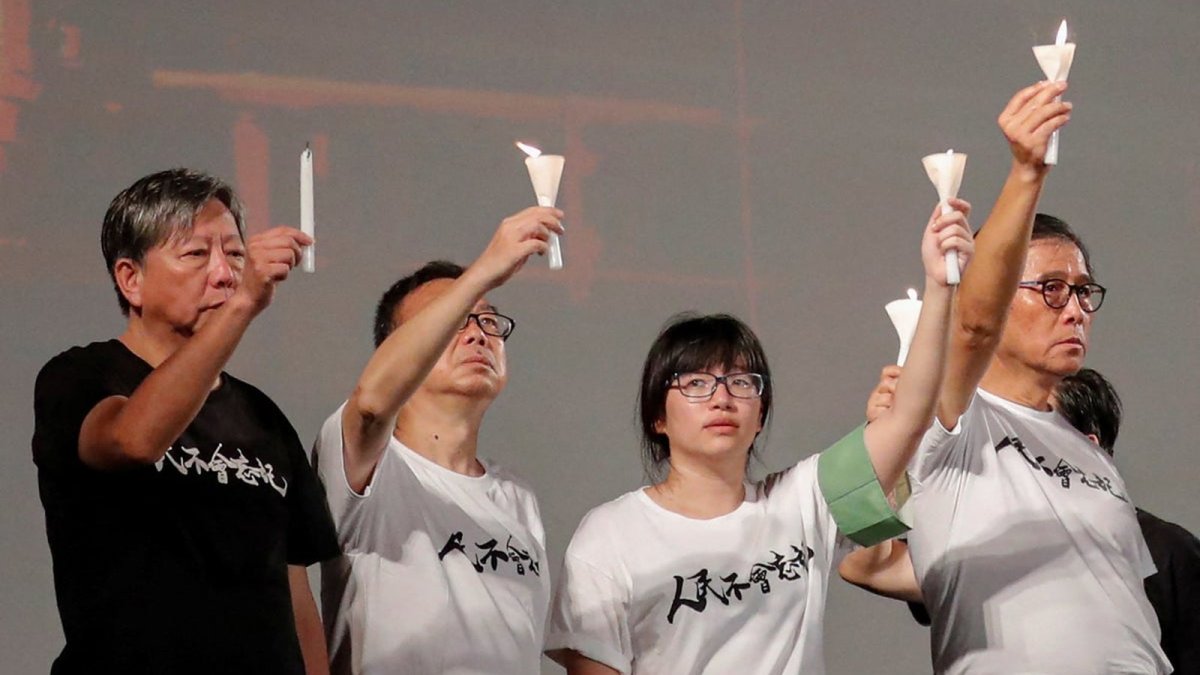
Two former leaders of Hong Kong's annual Tiananmen Square vigil have been convicted of inciting subversion, in one of the most high-profile national security trials the city has seen. Lee Cheuk-yan and Chow Hang-tung, who led the now-disbanded Hong Kong Alliance in Support of Patriotic Democratic Movements of China, were found guilty on Friday under the security law imposed by Beijing in 2020. The verdict targets the organisers of what was, for three decades, the only large-scale public commemoration of the 1989 crackdown held on Chinese soil.
The Verdict
The court found that the pair "incited other persons to organise, plan, commit or participate in acts by unlawful means with a view to subverting the state power", according to a summary of the ruling. Lee, 69, a former lawmaker, and Chow, 41, a barrister, have been in custody since 2021 and pleaded not guilty. They face a maximum sentence of ten years in prison, with sentencing expected at a later date.
A third defendant, Albert Ho, 74, the alliance's former vice-chairman, pleaded guilty when the trial opened in January. The organisation itself was also convicted. Supporters gathered outside the court despite a heavy police presence, watching as the two defendants smiled and waved at the public gallery before being led away.
Thirty Years of Candlelight
The case reaches back to the night of 3-4 June 1989, when Chinese troops moved into central Beijing and opened fire on pro-democracy protesters gathered around Tiananmen Square. Hundreds were killed; independent estimates of the death toll range from a few hundred to many thousands, though the exact figure has never been established because the Chinese authorities have censored discussion of the events for more than three decades.
The Hong Kong Alliance was founded in May 1989 to support the student demonstrators. From 1990, it organised an annual candlelight vigil in Victoria Park, drawing tens of thousands of people each June and becoming the only large-scale public remembrance of the crackdown anywhere in Chinese territory. It also campaigned for the authorities to acknowledge responsibility, free political prisoners and introduce democratic reform.
The vigil was banned in 2020, with the Hong Kong government citing Covid restrictions, weeks before Beijing imposed the national security law in the wake of the city's mass anti-government protests of 2019. The alliance disbanded the following year amid a wider crackdown on civil society, and its leaders were charged in 2021. Beijing has since described the organisation as a "toxic tumour".
How the Law Was Applied
The national security law, introduced under Article 23 of the Basic Law, criminalises secession, subversion, terrorism and collusion with foreign forces. Critics say its definitions are deliberately vague; the authorities insist it is necessary to maintain stability.
In Friday's ruling, three government-appointed judges found that the alliance's slogan, "end one-party dictatorship", was not a demand for greater political participation within China's constitutional system, but an attempt to strip the Communist Party of its constitutionally protected leadership role. The word "end", the judges concluded, carried the meaning of "overthrowing" and "undermining", and the defendants had intentionally encouraged supporters to pursue the goal through unlawful means when the opportunity arose.
The court acknowledged that the alliance had proposed no specific method or timetable for achieving its objective and had not advocated violence. But it found that the continued promotion of the goal, combined with the group's criticism of Beijing and its comparisons between the 1989 crackdown and Hong Kong's 2019 unrest, amounted to incitement to subversion. Prosecutors had pointed to the alliance's annual commemorations, publications, website and a museum devoted to the events of 4 June as evidence of a sustained campaign.
"Justice Lives in the Hearts of the People"
Chow, who represented herself at trial, argued that "ending one-party rule" meant ending unrestricted power, and that pursuing democratic change should not be criminalised. In May she told the court that the law itself was on trial. Lee insisted the alliance's demand was for democratic reform and the right of people to choose their leaders, not the removal of the Communist Party's leadership.
The judges rejected both arguments. But Chow struck a defiant note before the verdict, describing how correctional officers walked her from prison to court in handcuffs and waist and ankle chains "like a dog". "Justice lives in the hearts of the people," she said. "There is no need to look up to this kind of top-down ruling, and one verdict doesn't matter much."
Her history of resistance runs deep. In 2021 she was convicted over a vigil held despite the ban, but Hong Kong's top court overturned that conviction the following year, ruling that police had not properly justified the restrictions. Weeks before her arrest, she told the BBC: "I am prepared to be arrested. That is how Hong Kong is now. I am willing to pay the price for fighting for democracy."
International Condemnation
The convictions drew immediate criticism from human rights organisations. Amnesty International called Lee and Chow "prisoners of conscience who should never have been prosecuted in the first place", demanding their immediate and unconditional release. Sarah Brooks, the group's deputy regional director, said the case "relies on vague, overly broad and arbitrary definitions of 'subversion'".
Elaine Pearson, Asia director at Human Rights Watch, said the verdict showed "how public displays of mourning have become a crime in Hong Kong". The case is the latest in a series of trials that have dismantled the city's pro-democracy movement, from the 47-strong "35-plus" conspiracy case to the jailing of media owners such as Jimmy Lai, whose Apple Daily newspaper was forced to close in 2021.
What It Means for Britain
The ruling carries particular weight in Britain, which administered Hong Kong until the 1997 handover and signed the 1984 Sino-British Joint Declaration that promised the territory "a high degree of autonomy" for fifty years. Successive British governments have warned that the national security law erodes that promise, and Westminster has watched the dismantling of Hong Kong's civil society with growing unease.
The human consequences are visible closer to home. More than 100,000 Hongkongers have arrived in the UK under the British Nationals (Overseas) scheme introduced after the security law took effect, and the verdict will sharpen the debate in Whitehall about how far the guarantees of 1984 still hold. The Foreign, Commonwealth and Development Office has repeatedly expressed concern about the use of the security law against peaceful assembly, and Friday's convictions are likely to draw a further formal response from London.
For the British-Hongkonger communities now settled in cities from London to Manchester, the trial is a painful reminder of why they left. The candle that was lit in Victoria Park each June has been relit in vigil halls across the UK — but in Hong Kong itself, the memory of 4 June 1989 is now itself on trial.
The Bottom Line
Friday's verdict is the latest milestone in the systematic erasure of Hong Kong's pro-democracy history. The judges did not claim the alliance advocated violence or set out a plan to seize power; the crime, as defined, was to keep asking questions about 1989 and to keep demanding democratic change. That a peaceful candlelight vigil can produce a ten-year prison sentence tells you everything about the direction of travel in the city since the security law arrived.
Chow Hang-tung said one verdict "doesn't matter much" — and in a narrow legal sense she may be right, because the outcome was never really in doubt. But in a broader sense it matters enormously, because it will shape what remains of Hong Kong's public life for years to come, and it will test whether the promises Britain made in 1984 still mean anything at all.
This article was produced with AI-assisted research and editorial support. Sources: The Independent, BBC News, The Guardian, Amnesty International, Human Rights Watch.
By Erica Thornton, Staff Writer
What's Your Reaction?
 Like
0
Like
0
 Dislike
0
Dislike
0
 Love
0
Love
0
 Funny
0
Funny
0
 Wow
0
Wow
0
 Sad
0
Sad
0
 Angry
0
Angry
0

US Politics and Policy Correspondent at Global1.News. Based in Washington DC, covering American politics, policy, elections, and the courts. Knows how the system works and tells you what it actually means.










Comments (0)