
Friday Nights in the Caliphate City: Sokoto's Underground Nightlife Defies the Morality Police
In Sokoto, the historic "Seat of the Caliphate" and spiritual heart of Islam in Nigeria, a surprising sound now fills the night: Afrobeats pouring from underground nightclubs where revellers dance, sing and drink into the early hours.
In Sokoto, the historic "Seat of the Caliphate" and spiritual heart of Islam in Nigeria, a surprising sound now fills the night: Afrobeats pouring from underground nightclubs where revellers dance, sing and drink into the early hours. Multicoloured strobes sweep across packed dance floors in the deeply conservative northern state, where the Hisbah morality police patrol the streets enforcing Sharia-inspired codes. It is a delicate, often tense cohabitation — and a vivid window into how young Nigerians are renegotiating faith, tradition and the right to have fun.
Friday Nights in the Caliphate City: Sokoto's Underground Club Scene Defies the Morality Police
Sokoto, Nigeria — This week, new reporting from Africanews and The Associated Press has spotlighted a scene that surprises many outsiders: in one of the most conservative cities in West Africa, nightclubs are thriving. Revellers pack underground venues to dance to Afrobeats, sip drinks and trade the pressures of daily life for a few hours of release, even as the state's Islamic morality police keep watch.
The Scene: Friday Nights in the Caliphate City
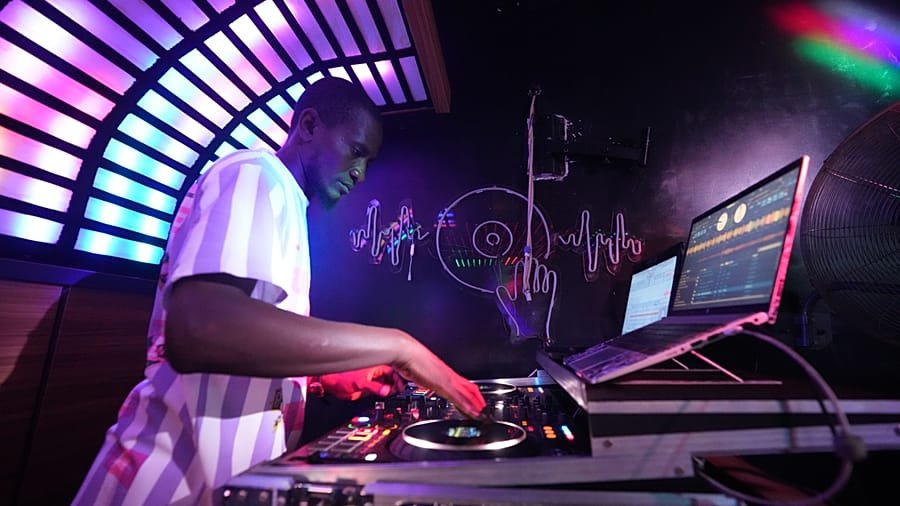
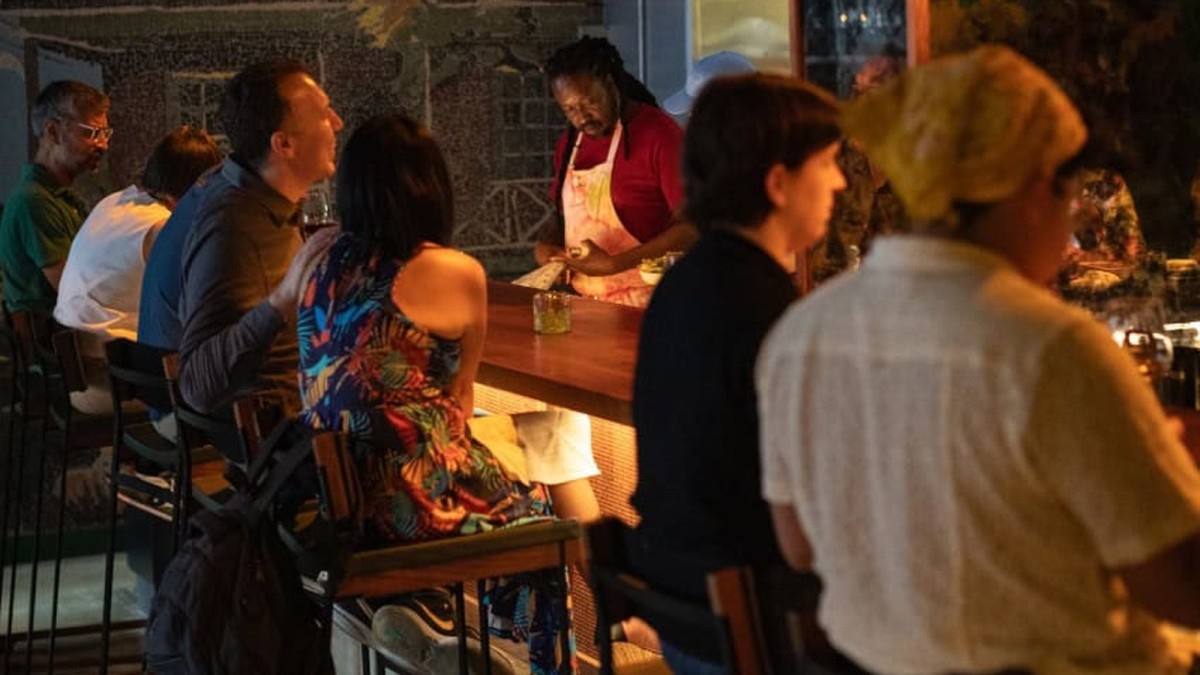
Walk down a certain street in Sokoto after midnight and you will find something that seems almost impossible in this city of scholars and saints. Behind unmarked doors, in basements and repurposed halls, the bass thumps. Multicoloured strobe lights sweep across dance floors, catching the faces of young men and women who sing along to Afrobeats at the top of their lungs. Attendants arrange bottles of expensive liquor on tables before the crowd arrives, a ritual of preparation that feels both clandestine and celebratory.
This is the new Sokoto, a city known for centuries as the "Seat of the Caliphate" for its role in the birth and propagation of Islam in West and Central Africa. Yet tonight, the faithful and the fun-seeking share the same streets. The nightlife takes place in a small number of underground clubs along a single stretch of road, venues that have learned to operate with discretion while still delivering the full experience. There is no marquee, no neon sign — just word of mouth and a knowing nod at the door.
Benjamin Danjuma, a frequent reveller with a wide grin and an easy laugh, rattles off the weekly calendar like a proud promoter. "Every Friday, every Sunday, I go to club. We even have Ladies' Night in this town. We have Old School on Saturday, and we also have karaoke night in Sokoto here," he says, counting the offerings on his fingers. For Danjuma, the variety is proof that the city has changed. "We are living our life more than anybody's expectation in this state. There is so much groove going on. We are not left behind."
Inside one such club, the atmosphere is electric. Young professionals, students and traders mingle, their conversations a mix of Hausa, English and Pidgin. The dress code is sharp — tailored shirts, designer sneakers, flowing gowns for the women who choose to wear them. The music shifts from Amapiano to Afrobeats to old-school hip-hop, and the crowd responds with equal enthusiasm. For a few hours, the weight of the city's expectations lifts.
Vincent Tabat, a reveller smoking a waterpipe in a corner of the club, gestures at the scene around him. "This is nearly 2 a.m., and as you can see, everyone is outside to have fun," he says, exhaling a plume of sweet-smelling smoke. His words capture the essence of this underground movement: a refusal to let circumstance dictate joy. The partygoers insist they are simply living like anyone else in Nigeria, claiming the same freedoms enjoyed by their counterparts in Lagos, Abuja or Port Harcourt.
The Hisbah Force: Morality Patrol in the Streets
But this freedom exists in a delicate tension with the Hisbah Force, the local Islamic morality police tasked with upholding public morals across some of the region's 19 states. Hisbah personnel patrol the streets of Sokoto and other northern cities, raiding key spots to enforce Shariah and local laws. Their mandate covers dress codes, haircuts and alcohol bans, and when they seize bottles of beer or spirits, they often destroy them on the spot, a public spectacle of moral correction.
Usman Abdullahi Jatau, commander of the Sokoto State Hisbah, speaks of his work with the calm certainty of a man who believes he is on the right side of history. "We attend to every citizen, be him or her a Muslim or non-Muslim, and we do justice to everyone. Ours is to see how we can uphold, how we can promote good morals and virtues within and outside the state," he told reporters this week. Jatau insists the force is not a blunt instrument of repression. "Every citizen needs to fulfill his or her moral obligation," he added.
The Hisbah say they seek "peace and stability through moral justice" and are not "enforcing Sharia law per se." Yet their presence is felt. In recent weeks, the force announced a statewide ban in Sokoto on the use of DJs at events, inappropriate haircuts, extravagant bridal gifts and playing music on public transport. The edict sent ripples through the city's young population, many of whom see it as an overreach into personal choice.
The history of the Hisbah in Sokoto is complicated. The group was disbanded in 2017 in part due to public complaints about alleged high-handed practices, before being reestablished in 2024. Its return has been met with a mix of resignation and resistance. Hisbah members face widespread allegations of rights abuses, including public beatings and shaming of offenders, accusations the force denies. For now, the clubs operate in a grey zone — tolerated, but never fully accepted.
Jatau's vision is one of moral clarity, but the reality on the ground is messier. The same city that hosts his patrols also hosts the underground clubs, and both exist in a state of mutual, wary recognition. The Hisbah know the clubs are there; the clubs know the Hisbah could come knocking at any moment. This is the unspoken contract of Sokoto's nightlife: dance while you can, but be ready to disappear.
Escapism in a Region Under Pressure
Sokoto is among the states most impacted by ongoing attacks by jihadists and other armed groups. The spectre of violence looms over daily life, a constant reminder of the fragility of peace. For many young people, the nightclub is not just a place to party — it is a sanctuary from the anxiety that pervades the daylight hours. The music, the lights, the company of friends: all of it offers a temporary reprieve from a world that often feels hostile.
Oluwamayowa Idowu, founder of Culture Custodian, a leading Lagos culture publication, understands this dynamic well. "A large part of nightlife is escapism, and you want to have an experience that takes you away from your day-to-day life," he says. Idowu has studied the cultural scenes across Nigeria and sees the northern nightlife as a vital, if underappreciated, part of the national fabric. "If we take out insecurity from northern Nigeria, I think the nightlife culture would be bigger than what it is. But I do think it will still be limited by the religious undertone that is common in the region."
Economic hardship compounds the insecurity. With inflation eroding incomes and job opportunities scarce, the club offers a rare moment of abundance. For the price of a drink, a young person can feel wealthy, if only for a night. The bottles of expensive liquor on the tables are not just beverages; they are symbols of aspiration, markers of a life that exists beyond the constraints of circumstance.
Idowu is careful to note that the north is not a monolith of suffering. "The north has been ravaged by insecurity, but people still live there, and people still participate in life there daily," he says. This is the crucial insight: resilience is not the absence of joy but the persistence of it. The revellers of Sokoto are not ignoring the dangers around them; they are simply refusing to let those dangers define their existence.
The escapism of the club is also a form of resistance. In a region where armed groups seek to impose their own rigid codes, the act of dancing to Afrobeats is a quiet assertion of autonomy. It says: we are here, we are young, and we will not be cowed. This is not a political statement in the traditional sense, but it is political nonetheless.

Sharia, Federalism and the Secular Question
To understand the tension in Sokoto, one must understand the broader context of Nigerian federalism. The country's population is almost evenly split between Christians, who live predominantly in the south, and Muslims, mostly in the north. After the return to democracy in 1999, several northern states advocated for Shariah, revealing fault lines in Nigeria's federalism and secular status. The Supreme Court left the matter an open-ended legal question, allowing each state to interpret its own path.
Fu'ad Lawal, executive director at Archivi.ng, a Lagos-based digital historical database, explains the significance of that moment. "When it (Shariah) became a law, it basically extended (beyond) criminal law and, perhaps more consequential, led to the regulation of public life," he says. The implementation of Shariah was never just about legal codes; it was about shaping the moral character of society. This is why the Hisbah exist, and why their reach extends into haircuts, music and bridal gifts.
The debate over Nigeria's secular character has never been resolved. The constitution declares the country a secular state, but the reality is far more complex. In the north, religion is woven into the fabric of governance; in the south, it is often seen as a private matter. This divide is a source of constant friction, and the nightclubs of Sokoto sit squarely on the fault line.
Lawal's point about the regulation of public life is key. Shariah did not just criminalize certain acts; it created a framework for how people should behave in public spaces. This is why a woman wearing a veil is the norm in Sokoto, and why a nightclub that bans veils is so provocative. The club is not just a venue; it is a counter-narrative to the moral order that the state seeks to impose.
The Supreme Court's decision to leave the question open has allowed for a patchwork of interpretations. Some states enforce Shariah aggressively; others are more lenient. Sokoto, as the spiritual heart of Islam in Nigeria, tends toward the stricter end of the spectrum. Yet even here, the young are finding ways to carve out spaces of their own, testing the limits of what is permissible.
Where Religion and Nightlife Find a Balance
The nightclub where Vincent Tabat partied posts a list of banned items at the entrance. At the top of the list: veils. Women who arrive wearing them are turned away, a rule that seems almost unthinkable in a city where the veil is expected almost everywhere else. The club's management says the rule is about safety and identification, but it is also a statement of intent: inside these walls, the rules are different.
This is the precarious balance of the religion-nightlife cohabitation. The clubs do not seek to challenge Islam; they simply seek to exist alongside it. They operate in the margins, in the hours after the last prayer, in the spaces that the Hisbah have not yet claimed. It is a fragile arrangement, one that could collapse at any moment, but for now, it holds.
Ibrahim Nuhu, a banker transferred from Jos in Plateau state roughly 650 kilometres away to Sokoto, has watched this evolution with fascination. When he first arrived, he found the city drab and lifeless. "When I entered Sokoto, I saw that life is easy. I always go out, even on Friday, Saturday, and Sunday, just to go and have some fun with my friends," he says. Over time, he has seen the city evolve from a drab scene to a lively spurt of weekend joys.
Nuhu's perspective is that of an insider who has learned to navigate the city's contradictions. "People see Sokoto from outside; I see it from the inside," he says. From the inside, the city is not just a bastion of conservatism; it is a place where young people are finding their own way, balancing faith and fun in ways that defy easy categorization. The clubs are not a rejection of religion; they are a negotiation with it.
The balance is maintained through a series of unwritten rules. The clubs do not advertise; they do not play music during prayer times; they do not flaunt their existence. The Hisbah, for their part, focus their raids on the most visible violations — public drinking, indecent dress — and leave the underground alone, for now. It is a dance of mutual avoidance, a choreography that both sides have learned to perform.
What the Sokoto Scene Says About Modern Nigeria
The cultural significance of nightlife in the north cannot be overstated. For decades, the narrative of northern Nigeria has been dominated by conflict, poverty and religious extremism. The clubs of Sokoto offer a counter-narrative, one of joy, creativity and resilience. They are proof that the north is not a monolith, that there is a vibrant youth culture waiting to be acknowledged.
Afrobeats serves as the soundtrack, connecting Sokoto's club scene to the wider Nigerian and continental music wave. The same songs that play in Lagos, Accra and Nairobi also play here, creating a sense of belonging to a larger community. The music is a bridge, linking the conservative north to the cosmopolitan south, and to the rest of Africa beyond.
Comparisons with Lagos and southern scenes are inevitable. The clubs of Sokoto are smaller, more discreet and less glamorous than their southern counterparts. But they share the same spirit: a determination to enjoy life despite the odds. The northern creative economy is still nascent, but it is growing, and the nightlife is a crucial part of that growth. DJs, promoters, security guards, bartenders — all are part of an emerging entertainment industry that is creating jobs and opportunities.
What this means for the broader African story is significant. Across the continent, young people are asserting their right to joy and cultural expression, often in the face of authoritarianism, poverty and conflict. Sokoto is a microcosm of this trend, a place where the desire for fun is colliding with the forces of tradition and control. The outcome of this collision is uncertain, but the fact that it is happening at all is remarkable.
The future of the delicate balance in Sokoto remains unclear. The state's youth continue to dance, and the Hisbah continue to patrol. Neither side seems willing to back down, and neither side seems able to win outright. This is the reality of modern Nigeria: a country of contradictions, where the sacred and the profane coexist in uneasy harmony. For now, the music plays on, and the young people of Sokoto keep dancing, one Friday night at a time.
By Amara Diop, Staff Writer
This article was produced with AI-assisted research and editorial support. Reporting is based on sources cited in the article.
What's Your Reaction?
 Like
0
Like
0
 Dislike
0
Dislike
0
 Love
0
Love
0
 Funny
0
Funny
0
 Wow
0
Wow
0
 Sad
0
Sad
0
 Angry
0
Angry
0

West Africa/Sahel Correspondent at Global1.News. Dakar-based journalist covering politics, security, climate, and development across Francophone and Anglophone West Africa. Tells the stories of a region undergoing profound transformation.









Comments (0)