
Istanbul Hosts Mecca Defense Agreement Committee Meeting
ISTANBUL — The strategic defense architecture linking Türkiye, Pakistan, and Saudi Arabia moves from signature to substance this week as senior ministers and military chiefs gather in Istanbul for the inaugural session of the Strategic Political and Defense Committee, the mechani
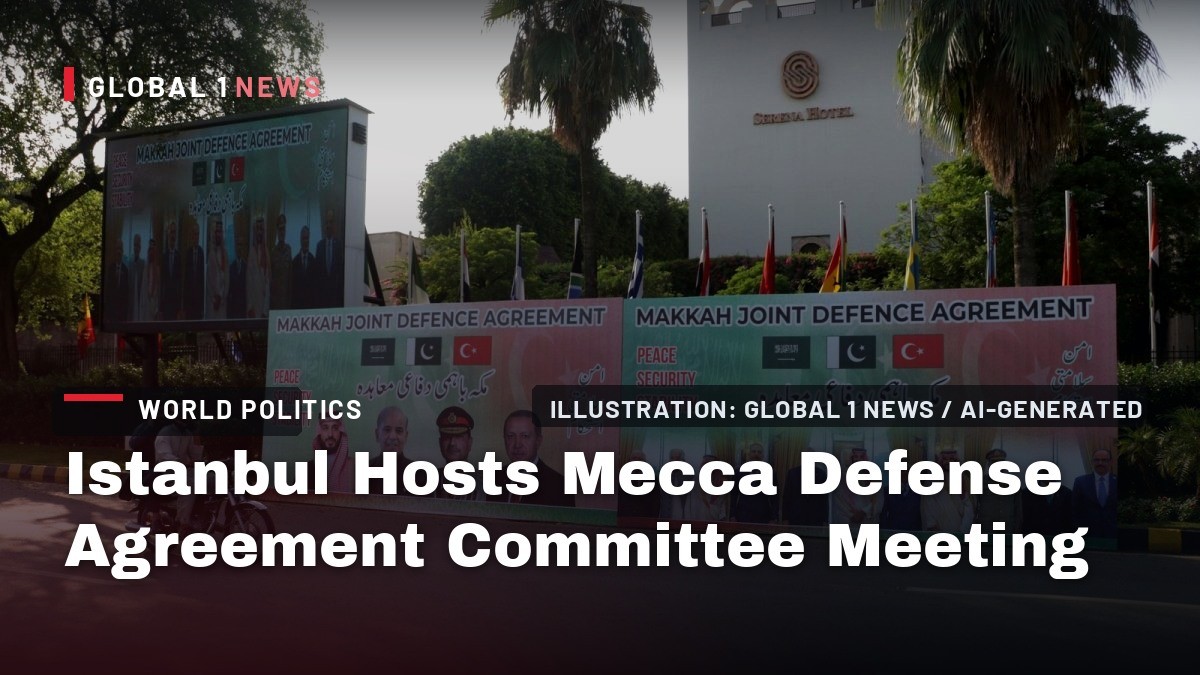
ISTANBUL — The strategic defense architecture linking Türkiye, Pakistan, and Saudi Arabia moves from signature to substance this week as senior ministers and military chiefs gather in Istanbul for the inaugural session of the Strategic Political and Defense Committee, the mechanism created to operationalize the Mecca Joint Defense Agreement.
Turkish Foreign Minister Hakan Fidan, Defense Minister Yaşar Güler, and Chief of General Staff Gen. Selçuk Bayraktaroğlu will host their Pakistani and Saudi counterparts on Monday, according to Turkish diplomatic sources cited by Daily Sabah. The meeting marks the first formal working session of the pact signed in Mecca on Aug. 7, which expanded the existing Saudi-Pakistan alliance to include Türkiye.
A Trio of Strategic Heavyweights
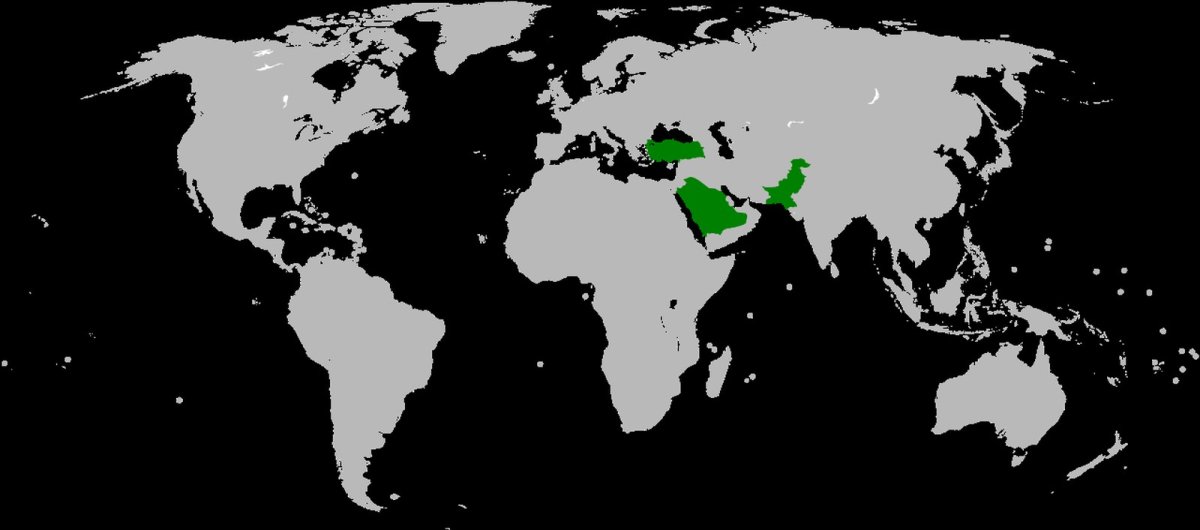
The composition of the alliance is itself a statement of intent. Türkiye fields NATO’s second-largest military, with a defense industry that has demonstrated combat-proven drone technology and indigenous missile programs. Pakistan brings the Islamic world’s only nuclear arsenal, a standing army of approximately 550,000 active personnel, and deep experience in counterterrorism operations. Saudi Arabia contributes the world’s largest crude oil export capacity, substantial financial reserves, and its status as custodian of Islam’s holiest sites.
The expected attendance list underscores the seniority of the commitment. Pakistan’s Deputy Prime Minister and Foreign Minister Ishaq Dar, Federal Defense Minister Khawaja Muhammad Asif, and Chief of Defense Forces Field Marshal Syed Asim Munir are slated to participate. Saudi Arabia’s Foreign Minister Prince Faisal bin Farhan Al Saud, Defense Minister Prince Khalid bin Salman bin Abdulaziz Al Saud, and Chief of General Staff Gen. Fayyadh bin Hamed Al-Ruwaili are expected to join their Turkish counterparts.
The meeting’s agenda, as outlined by Turkish diplomatic sources, focuses on developing defense capabilities, promoting interoperability among the three armed forces, deepening defense industry cooperation including joint production and research and development, and strengthening counterterrorism collaboration.
Collective Defense Clause and Regional Signaling
The core provision of the Mecca agreement is unambiguous: an attack against any one signatory state is considered an attack against all parties. This collective defense commitment, modeled on Article 5 of the NATO treaty, transforms what was previously a bilateral Saudi-Pakistani arrangement into a trilateral security guarantee spanning South Asia, the Gulf, and the Anatolian corridor.
Turkish officials have emphasized that the pact is purely defensive in nature and does not target any specific country. The agreement, proponents argue, serves as a deterrent to any power threatening the signatories. It explicitly remains open to participation by all actors that respect international law and share a vision of peaceful cooperation, with Egyptian membership reportedly a potential future expansion.
The timing is consequential. The agreement was signed amid the ongoing U.S.-Iran war, which has directly affected regional countries, and against the backdrop of Israel’s military campaigns across Gaza, Lebanon, and Syria. While the pact’s architects insist it is not directed at any particular state, the strategic geography of its members — Türkiye bordering both the Mediterranean and the Caucasus, Saudi Arabia flanking the Red Sea and the Gulf, and Pakistan anchoring the Indian Ocean approaches — creates a formidable deterrent arc.
Institutionalizing the Framework
Monday’s meeting carries a specific institutional mandate. Diplomatic sources indicate the committee will establish the framework for a Secretariat and other relevant mechanisms to guide work in areas of joint activity. The participants are also expected to determine a road map for steps to be taken in the coming period.
This institutionalization matters. Defense pacts in the Muslim world have historically suffered from a gap between rhetorical commitment and operational reality. The Arab League’s Joint Defense Treaty of 1950, for instance, has rarely been activated in practice. The creation of a dedicated committee with a secretariat suggests the three governments intend to move beyond symbolism toward concrete joint planning, intelligence sharing, and defense industrial integration.
The choice of Istanbul as the venue is itself significant. Türkiye has positioned itself as a security provider in its own right, conducting military operations in northern Iraq and Syria, maintaining a military presence in Qatar, and developing defense partnerships across Africa and Central Asia. Hosting the first committee meeting reinforces Ankara’s claim to leadership in Islamic world security coordination.
Strategic Calculus: What Each Side Wants
For Ankara, the pact deepens its alignment with the Gulf monarchies at a moment when its NATO relationships have been strained by disputes over Sweden’s accession, arms embargoes, and divergent approaches to regional conflicts. Türkiye gains access to Saudi financial resources for defense industrial expansion and a formal security partnership with the Islamic world’s only nuclear power.
For Riyadh, the agreement diversifies its security dependencies beyond the traditional American umbrella. Saudi Arabia has pursued defense partnerships with China and Russia in recent years, but the Mecca pact anchors its security in a Muslim-majority framework that includes a NATO member and a nuclear-armed state. The Saudi defense ministry, led by Prince Khalid bin Salman, has prioritized domestic defense manufacturing under Vision 2030; Turkish technology transfer and joint production arrangements could accelerate that goal.
For Islamabad, the pact provides strategic depth. Pakistan’s historical rivalry with India, and its complex relationship with Afghanistan, make reliable external security partners valuable. The Saudi-Pakistani relationship has included financial support for Pakistan’s economy and cooperation on nuclear matters; adding Türkiye brings a NATO-standard military and advanced drone technology into the equation.
Implications for Iran, the Gulf, and the Wider Region
The regional reverberations are substantial. Iran, which has faced Saudi and Pakistani opposition to its regional posture for decades, now confronts a trilateral bloc that includes a NATO member. While the pact is not explicitly anti-Iranian, Tehran’s leadership will likely interpret it as a containment mechanism, particularly given the ongoing U.S.-Iran conflict that provided the backdrop for the agreement’s signing.
For the Gulf Cooperation Council states not party to the pact — the UAE, Qatar, Kuwait, Bahrain, and Oman — the agreement creates a new security pole. Qatar, which hosts a Turkish military base, may seek closer alignment. The UAE, which has its own defense partnerships with both the United States and Russia, will watch the trilateral’s development with interest. The pact’s openness to expansion suggests Gulf states could eventually join, potentially reshaping the region’s security architecture away from exclusive reliance on external powers.
The NATO dimension adds complexity. Türkiye’s participation in a defense pact outside the alliance framework raises questions about burden-sharing and strategic coherence. NATO officials have not publicly commented on the Mecca agreement, but the alliance’s southern flank now includes a member with binding collective defense commitments to two non-NATO states. This could complicate contingency planning, particularly if a future conflict involving Pakistan or Saudi Arabia triggered Türkiye’s obligations under both treaties.
Defense Industry Integration and the Road Ahead
The committee’s focus on joint production and research and development signals an ambition beyond mutual defense guarantees. Türkiye’s defense exports have grown substantially in recent years, with drones, armored vehicles, and naval vessels finding buyers across the Muslim world. Saudi Arabia’s Vision 2030 explicitly targets localizing 50 percent of military spending by 2030. Pakistan’s defense industry produces everything from small arms to fighter aircraft under license.
Integrating these three industrial bases is a long-term project. The committee’s road map will need to address technology transfer protocols, export control regimes, and standardization of military equipment. The sources indicated the meeting will emphasize that the agreement offers significant opportunities to all countries seeking to reinforce security, peace, and stability in the region, adopting a cooperative approach to security issues and prioritizing peace and prosperity over conflict.
The immediate deliverables from Monday’s meeting will likely be procedural — establishing the secretariat, agreeing on working groups, and setting a calendar for future engagements. But the strategic direction is clear. The Mecca Joint Defense Agreement represents the most significant attempt to date to build an indigenous Muslim-world security architecture, one that does not replace existing alliances but supplements them with a distinctly regional framework.
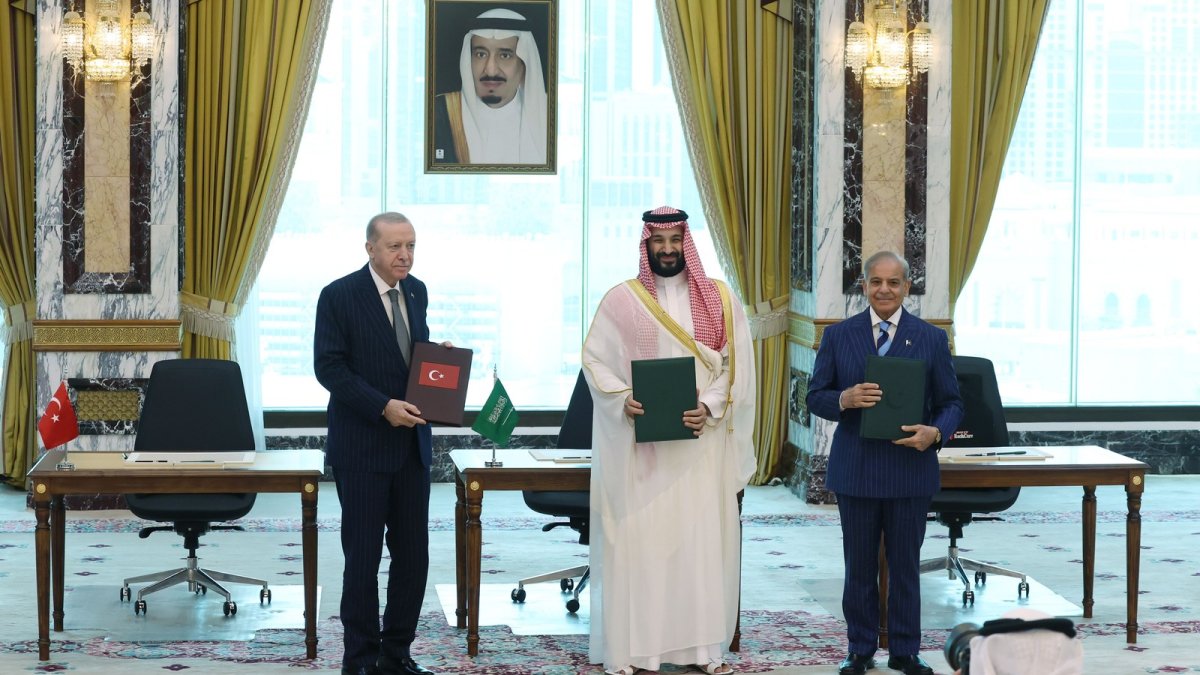
Whether the pact evolves into a genuine operational alliance or remains a political declaration will depend on the mechanisms established in Istanbul. The presence of the three countries’ top military commanders — Bayraktaroğlu, Munir, and Al-Ruwaili — suggests the intent is operational, not ceremonial. Joint exercises, intelligence-sharing protocols, and integrated air defense planning would mark the transition from paper to practice.
The broader question is whether other Muslim-majority states will join. Egypt, with its large military and strategic position astride the Suez Canal, is the most frequently mentioned candidate. Jordan, which has deep security ties to both the United States and the Gulf, could also be a fit. The agreement’s requirement that participants respect international law and share a vision of peaceful cooperation provides a screening mechanism, but also signals that the pact is designed to attract states aligned with the existing international order rather than revisionist powers.
For now, the focus is on Istanbul. The committee’s first meeting will test whether three very different militaries — NATO-standard Turkish forces, Pakistan’s nuclear-capable army, and Saudi Arabia’s modernizing but still American-equipped military — can find common operational ground. The sources’ emphasis on interoperability suggests the participants understand the challenge. The road map they produce will determine whether the Mecca agreement becomes a cornerstone of regional security or another footnote in the long history of unrealized Muslim-world alliances.
This article was produced with AI-assisted research and editorial support. Sources: Daily Sabah, Reuters, Al Arabiya, Wikipedia.
By Malik Hassan, Staff Writer
What's Your Reaction?
 Like
0
Like
0
 Dislike
0
Dislike
0
 Love
0
Love
0
 Funny
0
Funny
0
 Wow
0
Wow
0
 Sad
0
Sad
0
 Angry
0
Angry
0

Middle East Correspondent at Global1.News. Based in Beirut, covering politics, conflict, energy, and society across the Middle East. Brings context and depth to a region often reduced to headlines.












Comments (0)