
Iceland Rejects EU Accession Talks in Knife-Edge Vote
In a recent BBC News report, Icelandic voters headed to the polls in a referendum that would decide whether the country would resume European Union accession negotiations — and by the time counting ended, the island nation had delivered a verdict that confounded the final opinion polls and sent a clear message to Brussels.
In a recent BBC News report, Icelandic voters headed to the polls in a referendum that would decide whether the country would resume European Union accession negotiations — and by the time counting ended, the island nation had delivered a verdict that confounded the final opinion polls and sent a clear message to Brussels.
Iceland Rejects EU Talks: Fishing and Sovereignty Trump Economic Arguments
Reykjavík, Iceland – 31 August 2026 — Icelandic voters on Saturday delivered a decisive rejection of resuming European Union accession negotiations, with the No camp securing 52.8 percent of the vote against 47.2 percent for Yes, according to final results confirmed by national broadcaster RÚV. The margin of just over 12,600 votes, drawn from a record turnout of 82.5 percent of the country's approximately 272,690 registered voters, marked the highest participation in any Icelandic election since 2009. Prime Minister Kristrún Frostadóttir, whose centre-left coalition government had promised a referendum by 2027 but accelerated the timetable amid rising international tensions, acknowledged the outcome on Saturday evening, stating that the EU question would not be revisited while her administration remains in office through 2028.
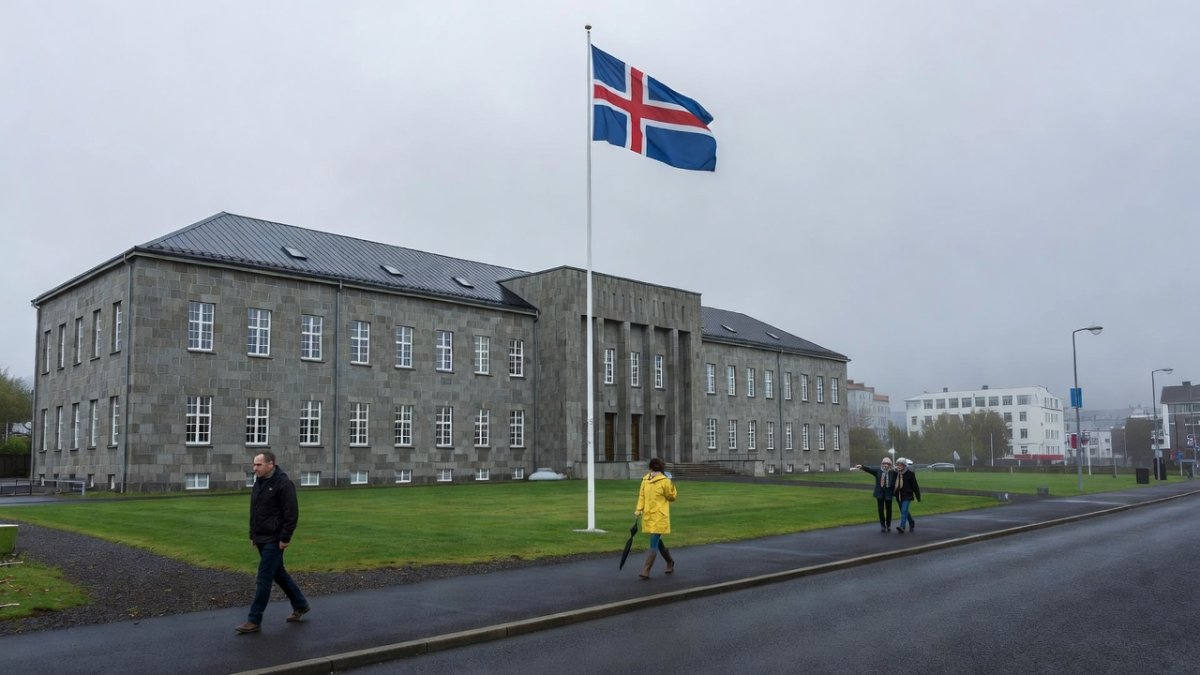
Fishing Rights and Sovereignty: Why the No Vote Prevailed
The fisheries question dominated the campaign from its opening weeks, and the final result reflects the depth of concern within a sector that anchors the Icelandic economy. Fish and marine industries account for nearly 40 percent of Iceland's exports and approximately 8 percent of GDP, figures that gave the No campaign its most potent argument: that Brussels' Common Fisheries Policy would strip Reykjavík of control over its own quotas. A Gallup poll conducted during the campaign found that 90 percent of fishing-sector companies opposed membership, a statistic that resonated powerfully in the coastal communities that form the backbone of the industry.
The memory of the Cod Wars with the United Kingdom, a series of confrontations spanning from 1958 to 1976, remains vivid in the national consciousness and was invoked repeatedly by No campaigners as evidence that Iceland's maritime sovereignty must never be surrendered to external authority. The geographic divide in Saturday's vote underscores this dynamic: Reykjavík North voted Yes by 57.5 percent and Reykjavík South by 54.5 percent, while rural constituencies delivered emphatic No majorities — Northwest at 62.9 percent, Northeast at 61.2 percent, and South at 60.5 percent. Eiríkur Bergmann, professor of politics at Bifröst University, told the BBC that the No side was "much more skillful in tapping into the political national identity in Iceland, which emphasises formal independence, coming out of a long independence struggle coming out of Denmark."
The Long Road From Reykjavík to Brussels
Saturday's referendum marked the latest chapter in a relationship with the European Union that has been fraught with ambivalence for nearly two decades. Iceland first applied for EU membership in 2009, a direct response to the catastrophic collapse of its banking system during the 2008 financial crisis, which had devastated the national economy and eroded public confidence in domestic financial governance. Negotiations progressed substantially over the following years, with both sides expressing optimism about a potential accession agreement, until a eurosceptic government took power in 2013 and suspended the talks. The application was subsequently withdrawn, leaving Iceland in a peculiar halfway house that has defined its relationship with Europe ever since.
That halfway house is the European Economic Area, through which Iceland enjoys access to the EU's single market and participates in the Schengen border-free zone without holding formal membership. The paradox is striking: Iceland has adopted approximately 9,000 EU legal acts without ever having held a direct vote on any of them, a fact that Yes campaigners argued made the country a rule-taker without a seat at the table. Full membership would have brought Iceland into the customs union and, eventually, the eurozone, fundamentally altering the terms of its European engagement. A Yes vote on Saturday would not have been the final decision on joining the EU — it would have moved Iceland toward an accession agreement requiring approval in a second referendum — but the No result does not permanently rule out future talks either.
A Referendum Called in the Shadow of Greenland
Prime Minister Frostadóttir's decision to bring the referendum forward from its original 2027 timeline was driven by a deteriorating international security environment that has made Iceland's strategic position increasingly precarious. The trigger was a series of threats from United States President Donald Trump directed at Greenland, including expressed interest in acquiring the territory and a Davos address in which he conflated Iceland with Greenland, raising immediate concerns in Reykjavík about how Washington perceives the Nordic region. Trump's subsequent tariff hikes on Icelandic goods added an economic dimension to the security anxiety, prompting the government to seek clarity on Iceland's future orientation while the window for decision-making remained open.
Iceland's security situation is unique among NATO allies: it is a founding member of the alliance yet maintains no armed forces of its own, relying instead on a 1951 bilateral defence agreement with the United States. The country sits astride the GIUK gap, the maritime corridor between Greenland, Iceland, and the United Kingdom through which Russia's Northern Fleet must pass to reach the Atlantic, and officials have been alarmed by increased Russian submarine activity near the island in recent years. Iceland has backed Ukraine since Russia's full-scale invasion, and Foreign Minister Þorgerður Katrín Gunnarsdóttir, who had argued that "in times like these, small nations need to think carefully about where they stand," said on Sunday that she would seek to strengthen Iceland's defence relations with other countries following the referendum result.
The Economic Calculus: Króna Versus the Euro
While fisheries and sovereignty dominated the emotional core of the No campaign, the economic argument presented a more complex picture that ultimately failed to sway a majority of voters. The Central Bank of Iceland's policy rate stood at 8.00 percent against the European Central Bank's 2.25 percent, a gap that translated into mortgage rates around 9 percent — a burden felt acutely by younger voters who formed a significant portion of the Yes support base. A May 2026 report from the Finance Ministry concluded that retaining the króna probably cost Iceland more than it benefited, lending official weight to the Yes campaign's contention that currency volatility and high interest rates were imposing a tangible tax on Icelandic households.
The Yes campaign, however, struggled to translate these economic arguments into political momentum. Bergmann told the BBC that the Yes side "ran an overtly technical campaign, never really explaining the purpose or the passion in why Iceland join the EU," a critique that resonates with the final result. No voters, by contrast, were animated by fears that euro adoption would mean surrendering monetary sovereignty and that EU membership would expose Iceland's small, open economy to competitive pressures from larger European economies. The final polls had been exceptionally tight — Gallup's 24-27 August survey showed No at 51.6 percent against Yes at 48.4 percent, while Maskína's 28 August poll had Yes ahead at 50.4 percent — suggesting that the outcome hung on a knife's edge until the final count.
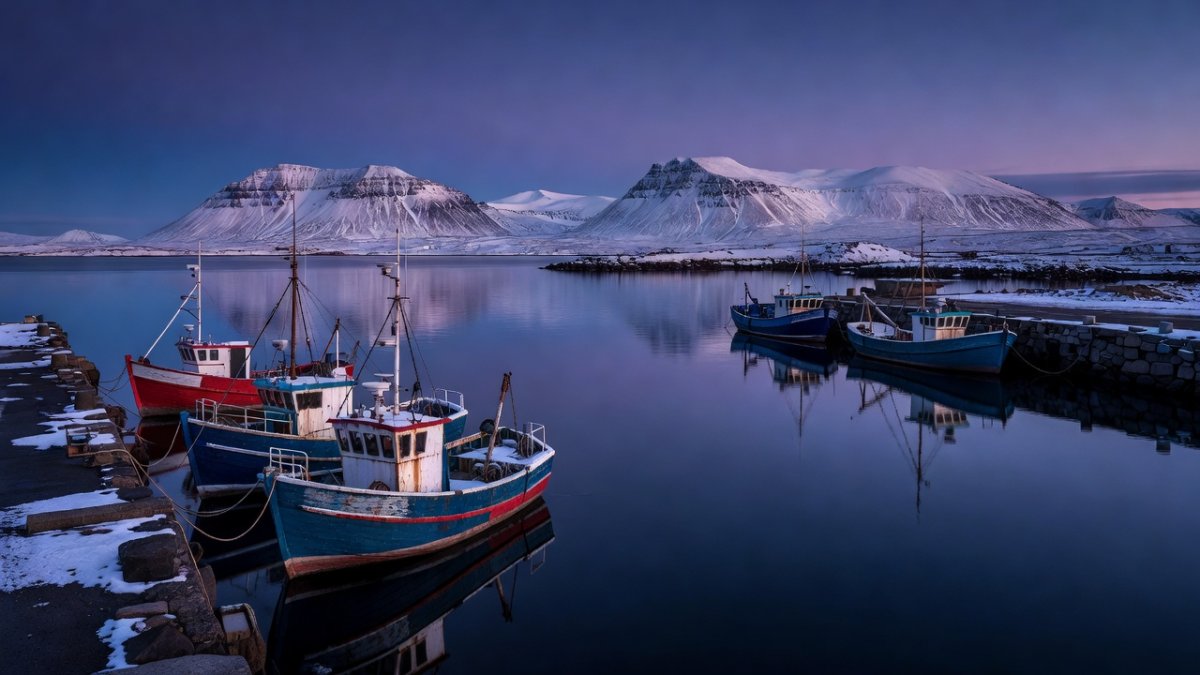
Brussels Reacts: A Setback, a Missed Opportunity, or a Warning
The reaction from Brussels was one of barely concealed disappointment. An unnamed EU diplomat told Reuters that the outcome was "a clear setback for Brussels," with fishing and independence identified as the decisive factors. Jacob Funk Kirkegaard, senior fellow at the Bruegel think tank, told RÚV that the EU had failed in "selling itself" even though it "clearly would like to see itself as also a security actor, particularly in the Arctic," calling the result "a missed opportunity — certainly for Iceland, but also the EU." The significance extends beyond Iceland itself: the country would have been the first net contributor to the EU budget to accede since Austria, Finland, and Sweden in 1995, making it a uniquely valuable candidate from a fiscal perspective.
Enlargement Commissioner Marta Kos had welcomed the referendum date ahead of Saturday's vote, saying that "a significant decision now lies ahead for the Icelandic people," while Polish Prime Minister Donald Tusk had expressed support for Icelandic membership. The result has now handed ammunition to eurosceptic voices across the continent: Nigel Farage said Icelanders had voted "to keep their independence," while Marine Le Pen declared that the outcome showed "membership in the European Union is not the natural horizon for every European democracy." For the EU's broader enlargement agenda, which has gained renewed momentum in the wake of Russia's invasion of Ukraine, the Icelandic rejection serves as a reminder that the bloc's appeal is not universal, even among nations that already enjoy deep integration with its structures.
Analysis: What the Result Means for Iceland and the Wider Arctic
The geopolitical context that prompted the referendum's early scheduling did not, in the end, drive the outcome. Security concerns about Russian submarine activity, anxiety over Trump's designs on Greenland, and the broader volatility of the international order were all present in the campaign discourse, yet voters ultimately cast their ballots on the familiar terrain of fisheries, sovereignty, and national identity. This could indicate that Icelanders, despite their government's stated concerns, do not perceive EU membership as the appropriate response to the security challenges facing the North Atlantic — a calculation that may reflect confidence in the NATO framework and the bilateral defence agreement with the United States, however strained that relationship has become.
The immediate consequences are now becoming clear. Prime Minister Frostadóttir has stated that the EU question will not be revisited while her government remains in office, effectively closing the file until at least 2028. Foreign Minister Gunnarsdóttir's commitment to strengthening defence relations with other countries suggests that Reykjavík will pursue bilateral security arrangements rather than seeking the shelter of a broader European framework. This could indicate that Iceland intends to navigate the increasingly contested Arctic environment through existing alliances and new partnerships, while maintaining the formal independence that Saturday's voters so emphatically affirmed.
Analysts suggest the result carries significance well beyond Iceland's shores. The Arctic is emerging as a theatre of great-power competition, with Russia modernising its Northern Fleet and the United States, China, and others seeking influence in the region. Iceland's position astride the GIUK gap makes it a critical node in NATO's northern defences, and its rejection of EU membership — despite the bloc's stated ambitions to be a security actor in the Arctic — leaves a gap in Brussels' strategic posture. For small states across Europe, the Icelandic vote offers a template for how sovereignty concerns can override economic and security arguments, a lesson that may resonate in other accession candidates and EU member states alike.
As the counting concluded and the scale of the No victory became clear, the mood in Reykjavík was one of quiet satisfaction among the victors and resignation among the defeated. One minister denied that the result was a setback, pointing instead to the extraordinary turnout as evidence of a healthy democratic culture. The questions that prompted the referendum, however, have not disappeared: the interest rate gap remains, the security environment remains volatile, and the króna remains vulnerable to external shocks. Saturday's vote has settled the EU question for the lifetime of this government, but it has not resolved the underlying tensions that made the question worth asking in the first place. Iceland has chosen independence once again; the challenge now is to make that independence sustainable in a world that grows more uncertain by the day.
By Irina Volkov, Staff Writer
This article was produced with AI-assisted research and editorial support. Reporting is based on sources cited in the article.
What's Your Reaction?
 Like
0
Like
0
 Dislike
0
Dislike
0
 Love
0
Love
0
 Funny
0
Funny
0
 Wow
0
Wow
0
 Sad
0
Sad
0
 Angry
0
Angry
0
Russia/Eastern Europe Correspondent at Global1.News. Covering Russian politics, energy, security, and the shifting dynamics of the post-Soviet space. Provides clear-eyed analysis on one of the world's most opaque regions.












Comments (0)