
Yemen Forces Destroy Houthi Drone Boat Threatening Red...
The Red Sea, already a crucible of regional tension, has become the central theater of the expanding US-Iran conflict. With the Strait of Hormuz effectively closed since the war began, Saudi Arabia's economic lifeline now runs exclusively through the Bab el Mandeb strait and the Red Sea—a vulnerability the Houthis, Tehran's most battle-hardened proxy, are exploiting with increasingly sophisticated unmanned attack craft.
The Red Sea, already a crucible of regional tension, has become the central theater of the expanding US-Iran conflict. With the Strait of Hormuz effectively closed since the war began, Saudi Arabia's economic lifeline now runs exclusively through the Bab el Mandeb strait and the Red Sea—a vulnerability the Houthis, Tehran's most battle-hardened proxy, are exploiting with increasingly sophisticated unmanned attack craft. The destruction of a Houthi drone boat base on August 30, 2026, by Yemen's National Resistance Forces marks a significant tactical victory, but it underscores a strategic reality: the battle for the Red Sea is now the battle for global energy security.
Yemen Forces Destroy Houthi Drone Boat Base as Red Sea Becomes Saudi Arabia's Economic Lifeline
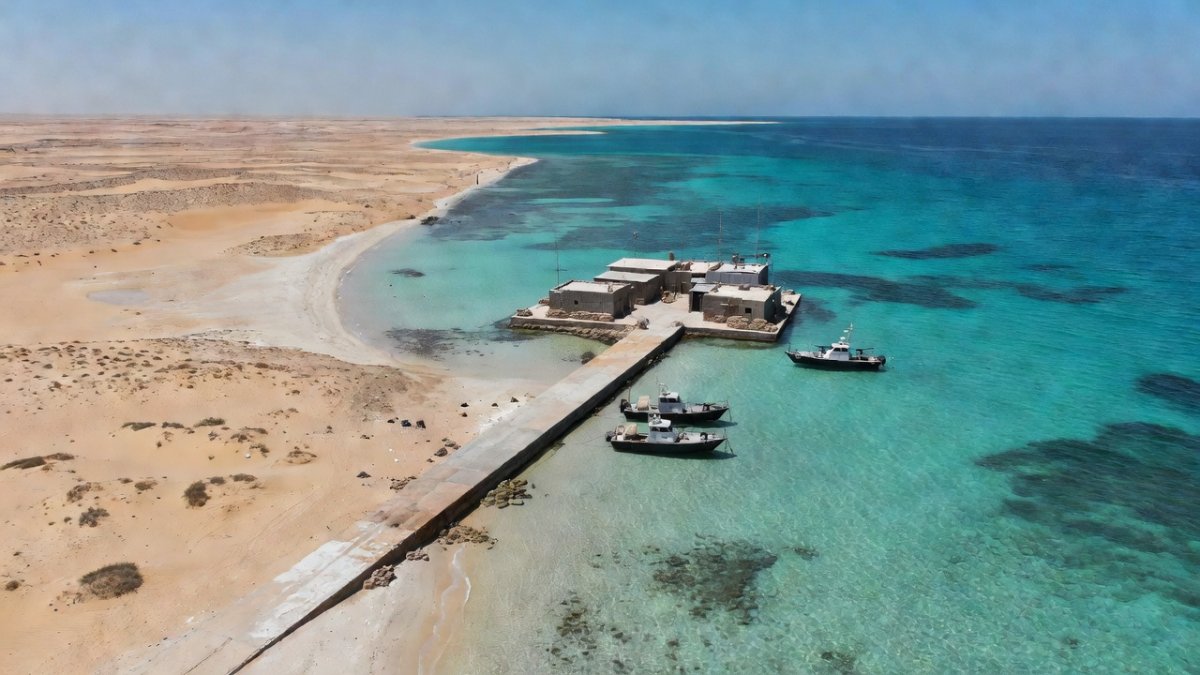
Sanaa, Yemen – August 30, 2026 — Yemen's National Resistance Forces (NRF), fighting for the Internationally Recognized Government (IRG), successfully destroyed a Tufan-1 unmanned attack boat at a Houthi naval outpost in Al Madasikah on Yemen's Red Sea coast. Video footage from the operation confirms the strike, which also revealed a second Tufan-1 and the causeway-end outpost already destroyed in a prior engagement. The outpost's position in the northern coastal strip held by the Houthis indicates the boats were intended for targets to the north, off the Saudi coast—a direct threat to the kingdom's oil export infrastructure.
Geopolitical Context: The Red Sea as Saudi Arabia's Economic Lifeline
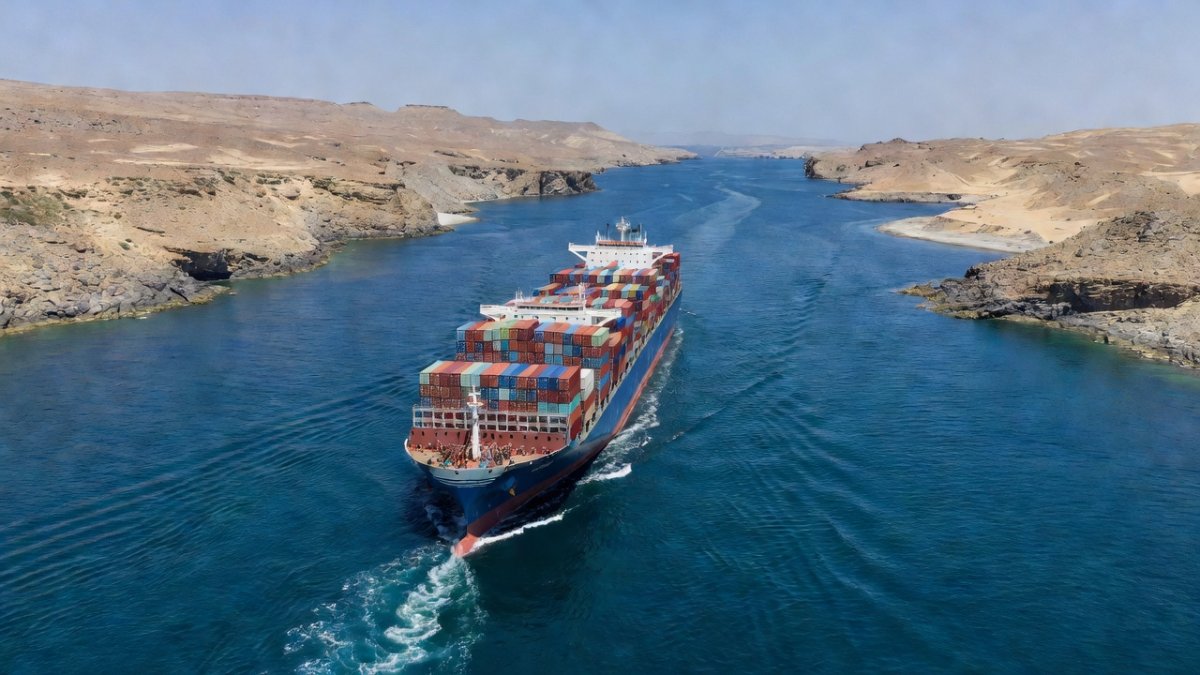
The strategic significance of this strike cannot be overstated. With the Strait of Hormuz effectively closed since the US-Iran war deepened in late June 2026, Saudi Arabia has been forced to reroute nearly all of its oil exports through the Red Sea. This makes the Bab el Mandeb strait—the narrow chokepoint at the southern entrance to the Red Sea—the single most critical maritime artery for Saudi economic survival and, by extension, global energy markets.
The Houthis, formally known as Ansar Allah, have recognized this vulnerability and are exploiting it with precision. The Tufan-1 unmanned attack boat, with its claimed 150kg warhead, radio-controlled steerage, and approximately 35-knot closing speed, represents a low-cost, high-impact asymmetric weapon. The two-man crew steers the boat toward its target before abandoning it at the last moment, making it difficult to intercept and devastating when it hits. This is not a hypothetical threat; the Tufan-1 was used in the June 2024 attacks on the Liberian-flagged bulk carrier MV Tutor, which sank with one Filipino crew member killed, and the Greek-owned Transworld Navigator. In January 2017, a similar attack boat struck the Royal Saudi naval frigate HMS Al Madinah (F702), killing two Saudi sailors.
The August 30 strike on the Al Madasikah outpost is part of a broader escalation that has been building for weeks. Earlier that week, NRF naval forces intercepted a dhow south of the Hanish Islands that had transited north through Bab el Mandeb on August 24. The vessel was carrying a large quantity of Chinese and Iranian electrical components—sufficient to manufacture hundreds of drones—along with radio-control equipment and documentation linking the consignment directly to Iran's Islamic Revolutionary Guard Corps (IRGC). This interception provides concrete evidence of the IRGC's ongoing logistical support for Houthi maritime operations.
Historical Background: From Asymmetric Attacks to Full-Scale Mobilization
The current escalation did not occur in a vacuum. It is the product of a carefully calibrated campaign that has been building since the US-Iran war deepened in late June 2026. As the conflict intensified, both Yemen's IRG and the Houthis mobilized their forces. In July, an IRG strike on Sanaa airport—intended to stop an Iranian plane from landing—prompted the Houthis to declare a naval blockade of the kingdom and a general mobilization of their forces.
The Saudi response was swift. On July 30, the kingdom announced a 13-country maritime coalition to protect the Red Sea, signaling that Riyadh viewed the Houthi threat as an existential challenge to its economic security. On August 6, Yemeni government forces launched a preemptive operation targeting Houthi weapons-smuggling routes, followed by the heaviest Houthi bombardment in years on August 9. That attack included missile and drone strikes on the Red Sea port city of al-Makha and a Saudi Aramco facility, demonstrating the Houthis' ability to strike both maritime and land-based targets with impunity.
The August 13 destruction of Houthi boats by Yemeni naval forces and coast guard, followed by the August 18 report from Yemeni army spokesman Col. Majed al-Nuzaili of 133 operations against Houthi capabilities in 24 hours, indicates a coordinated campaign to degrade the Houthis' maritime strike capability. The August 24 dhow interception and the August 30 Tufan-1 base destruction are the latest milestones in this escalating tit-for-tat.
Regional Dynamics: The Proxy War Intensifies
The Houthis are not operating in isolation. They are backed by Iran with support from Hezbollah, Iraqi Popular Mobilization Forces factions, and the IRGC, which provide weapons, training, and intelligence. This network allows the Houthis to field sophisticated systems like the Tufan-1 while maintaining plausible deniability for Tehran. The IRGC documentation found on the intercepted dhow is a smoking gun that threatens to expose the full extent of Iranian involvement.
Houthi military spokesman Yahya Saree has been active in claiming attacks, including strikes on a Saudi-led coalition landing ship and four warships near al-Makha, as well as on eight Saudi-linked vessels, energy facilities, and an airport. These claims, while difficult to verify independently, serve a dual purpose: they demonstrate the Houthis' reach and capability, and they project an image of strength to both domestic audiences and regional allies.
The fighting has spread across multiple Yemeni provinces, including Marib, al-Jawf, Hadramout, Hodeidah, Taiz, al-Dhale, and Lahj. This geographic spread indicates that the conflict is no longer confined to the Red Sea coast but has become a nationwide struggle with significant implications for the stability of the entire region.
Strategic Calculus: What Each Side Wants and What They're Willing to Risk
For the Houthis, the Red Sea campaign serves multiple strategic objectives. First, it directly threatens Saudi Arabia's economic lifeline, forcing Riyadh to divert military resources to maritime defense. Second, it demonstrates the Houthis' relevance as a regional power broker, capable of influencing global energy markets. Third, it strengthens their negotiating position in any future peace talks by showing they can inflict significant economic pain on their adversaries.
For Saudi Arabia, the calculus is more complex. The kingdom is reportedly evaluating military options, including a ground operation that Yemeni government forces would lead. Such an operation would be a significant escalation, potentially drawing Saudi ground forces back into the Yemeni quagmire they sought to exit after the 2022 truce. However, the threat to Saudi oil exports—and by extension, the global economy—may leave Riyadh with little choice.
The United Nations has warned that Yemen faces its highest risk of returning to all-out war since the 2022 truce. This warning reflects the precarious balance between the Houthis' desire to maintain their gains and the IRG's determination to reclaim territory and reassert the internationally recognized government's authority. The involvement of external actors—Iran on one side, and the Saudi-led coalition on the other—transforms what might otherwise be a civil conflict into a proxy war with global implications.
Regional Implications: The Second-Order Effects of the Red Sea Campaign
The Red Sea campaign has implications that extend far beyond Yemen's borders. The effective closure of the Strait of Hormuz has already forced Saudi Arabia to reroute its oil exports, but the Houthi threat to Red Sea shipping creates a second chokepoint vulnerability. If the Houthis can successfully interdict Saudi oil shipments, the impact on global energy markets would be catastrophic, potentially triggering a worldwide economic crisis.
The 13-country maritime coalition announced by Saudi Arabia on July 30 represents a significant diplomatic achievement, bringing together nations with diverse interests in Red Sea security. However, the coalition's effectiveness remains to be tested. The Houthis have demonstrated a capacity to adapt and innovate, and their use of unmanned attack boats like the Tufan-1 suggests they are prepared for a prolonged campaign.
The interception of the dhow carrying Iranian and Chinese components also raises questions about the role of other regional actors. China, which has maintained economic ties with Iran despite international sanctions, may find itself drawn into the conflict as its components are used in weapons targeting Saudi infrastructure. This could complicate Beijing's carefully balanced position in the Middle East, where it seeks to maintain economic relationships with all parties while avoiding military entanglement.
As the conflict enters its third month, the prospects for de-escalation appear dim. The Houthis have shown no willingness to back down, and the IRG, emboldened by Saudi Arabia's vulnerability, is unlikely to accept anything short of a complete Houthi withdrawal. The United Nations' warning of a return to all-out war may prove prophetic, with the Red Sea as the primary battleground.
The destruction of the Tufan-1 base at Al Madasikah is a tactical victory for the NRF and its Saudi backers, but it is unlikely to be a strategic turning point. The Houthis have demonstrated resilience and adaptability throughout years of conflict, and their Iranian patrons have shown a willingness to replenish their arsenal. The Red Sea, once a vital artery for global trade, has become a flashpoint where the ambitions of regional powers and the imperatives of global energy security collide. The coming weeks will determine whether the Saudi-led coalition can secure this critical waterway or whether the Houthis will succeed in turning it into a weapon of economic warfare.
By Malik Hassan, Staff Writer
This article was produced with AI-assisted research and editorial support. Reporting is based on sources cited in the article.
What's Your Reaction?
 Like
0
Like
0
 Dislike
0
Dislike
0
 Love
0
Love
0
 Funny
0
Funny
0
 Wow
0
Wow
0
 Sad
0
Sad
0
 Angry
0
Angry
0

Middle East Correspondent at Global1.News. Based in Beirut, covering politics, conflict, energy, and society across the Middle East. Brings context and depth to a region often reduced to headlines.















Comments (0)