
Israeli attacks kill Palestinian, injure several others in Gaza despite ceasefire
Israeli strikes across Gaza on Sunday killed one Palestinian and wounded others, including a child, hitting a tent in Al-Mawasi, a home in Nuseirat and near Bureij. The Oct. 10, 2025 ceasefire has cost 1,262 Palestinian lives, Gaza health officials say, as mediators push a second phase in Cairo.
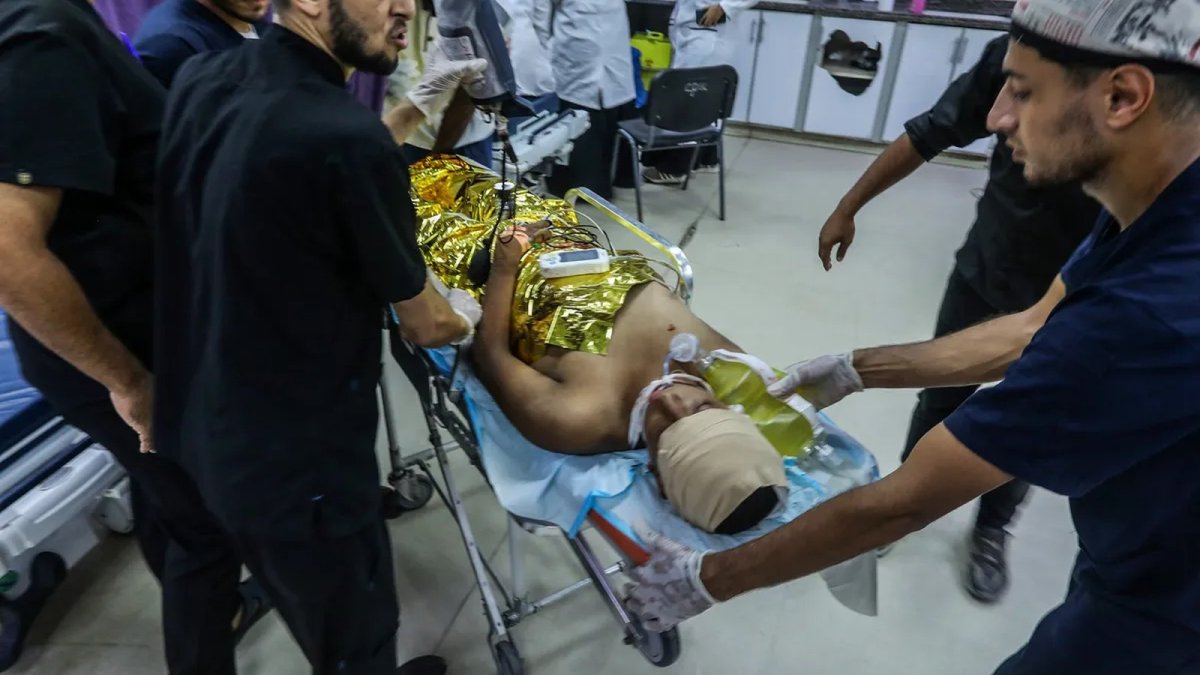
Israeli forces killed one Palestinian and wounded several others, including a child, in a series of attacks across the Gaza Strip on Sunday, medical sources reported, marking the latest violations of a ceasefire that has been in place since Oct. 10, 2025. The strikes hit a tent sheltering displaced people in the Al-Mawasi area, a house roof in the Nuseirat refugee camp, and targeted a child near the Bureij refugee camp. The attacks came as international mediators continued efforts to advance the fragile truce toward its second phase.
Gaza ceasefire strained as Israeli strikes kill, wound civilians
Gaza City, Palestine – August 16, 2026 — The latest bloodshed underscores the precarious nature of the ceasefire agreement, which has failed to halt daily attacks on the enclave. According to Gaza's Health Ministry, at least 1,262 Palestinians have been killed and more than 4,100 injured since the truce took effect, even as diplomatic efforts to finalize its implementation proceed in Cairo.
Drone strike on tent kills one, injures six in Al-Mawasi
A Palestinian was killed and six others were injured when an Israeli drone struck a tent sheltering displaced people near Al-Aqsa University in the Al-Mawasi area west of Khan Younis, a medical source told Anadolu Agency. Al-Mawasi, a coastal strip of sand and farmland, has been designated by the Israeli military as a "safe zone" for civilians fleeing the fighting, yet it has been repeatedly hit by airstrikes and drone fire throughout the conflict.
The area now hosts hundreds of thousands of displaced families living in makeshift tents and plastic sheeting, with minimal access to water, sanitation, and medical care. Sunday's strike on the tent near the university adds to a grim pattern of attacks on civilian infrastructure in areas where Palestinians have been told to seek refuge.
Nuseirat and Bureij: Attacks across central Gaza
In central Gaza, several Palestinians were injured when an Israeli strike targeted the roof of a house in the Nuseirat refugee camp, according to a medical source. The camp, one of the most densely populated areas in the Strip, has seen repeated bombardments despite the ceasefire. Witnesses reported that the strike caused panic among residents, many of whom had returned to the camp to assess the damage to their homes after months of displacement.
Separately, a child was shot and injured by an Israeli quadcopter drone east of the Bureij refugee camp. Quadcopter drones, often used for surveillance and targeted shootings, have become a daily source of fear for Palestinians in the enclave, particularly children who are frequently in the streets collecting water or firewood. The child's condition was not immediately available, medical sources said.
Displaced families in "safe zones" face daily peril
The attack on the tent in Al-Mawasi highlights the impossible situation facing displaced families who have followed Israeli military orders to relocate to designated safe zones. These areas, however, have not been spared from attacks, leaving civilians with no truly safe place to shelter. Humanitarian organizations have repeatedly warned that the designation of "safe zones" is meaningless without a binding commitment from the Israeli military to refrain from striking them.
For the families living in Al-Mawasi, the drone strike near Al-Aqsa University is a brutal reminder that the ceasefire has not translated into safety. Many have lost their homes, their livelihoods, and their loved ones over the past 22 months, and the continued attacks erode any remaining sense of security. Local residents described scenes of chaos following the strike, with medics rushing to pull the wounded from the rubble of the tent.
The repeated designation of areas like Al-Mawasi as "safe zones" has, in practice, become a cruel bureaucratic fiction for the hundreds of thousands of Palestinians who have been ordered to relocate there. Since the start of the offensive, the Israeli military has issued evacuation orders that have pushed families from one corner of the Strip to another, only for those supposedly protected areas to come under fire. Humanitarian agencies have consistently documented that these zones lack the most basic prerequisites for survival—clean drinking water, functioning sanitation systems, and adequate medical facilities—leaving displaced populations vulnerable to disease and untreated injuries. The absence of any binding legal commitment from the Israeli military to refrain from striking these areas has rendered the designation meaningless, transforming what should be a sanctuary into another front line where civilians are killed and maimed with impunity.
For the families sheltering in Al-Mawasi, the daily reality of displacement is one of grinding deprivation layered atop constant fear. With limited access to water and sanitation, children are forced to make dangerous trips to collect supplies, exposing them to the very quadcopter drones that have become a hallmark of this ceasefire period. Medical care is scarce, and the few clinics operating in the area are overwhelmed, often lacking even basic supplies to treat shrapnel wounds or infections. The strike on the tent near Al-Aqsa University is not an isolated incident but part of a systemic pattern that has made a mockery of the notion of safe refuge. Each attack erodes the already fragile trust that civilians place in international protections, leaving them with the grim understanding that no order, no designation, and no agreement can shield them from the violence that has defined their lives for nearly two years.
Ceasefire in name only: 1,262 killed since Oct. 10
The ceasefire agreement, which took effect on Oct. 10, 2025, was intended to halt the fighting and pave the way for a broader political settlement. However, the Israeli military has continued its attacks in the Palestinian enclave, killing at least 1,262 Palestinians and injuring more than 4,100 others since the truce began, according to Gaza's Health Ministry. These figures indicate that the ceasefire has been violated on a near-daily basis, with strikes targeting homes, tents, and even individuals in the streets.
The continued attacks have fueled widespread anger among Palestinians, who see the ceasefire as a one-sided arrangement that has done little to stop the violence. For many, the agreement has merely shifted the nature of the assault from full-scale war to a lower-intensity campaign of drone strikes and targeted killings, which continue to claim civilian lives.
The wider toll: 73,000 dead since October 2023
The broader context of Sunday's attacks is a war that has devastated the Gaza Strip. The Israeli army launched its offensive in October 2023, and since then, more than 73,000 Palestinians have been killed and over 174,000 others wounded, according to the material provided. The death toll includes thousands of women and children, and the health system in Gaza has been pushed to the brink of collapse, with hospitals running out of supplies and medical staff overwhelmed by the scale of casualties.
The physical destruction is equally staggering. Entire neighborhoods have been reduced to rubble, and critical infrastructure, including water treatment plants, schools, and hospitals, has been destroyed or severely damaged. The United Nations has estimated that rebuilding Gaza will require billions of dollars and take years, even if the fighting were to end tomorrow.
Mediators push for phase two amid ongoing violence
The attacks came as mediators continued efforts to complete the implementation of the ceasefire agreement. Egypt, Qatar, and Turkey, with the involvement of the United States, have been holding talks in Cairo on implementing the second phase of the agreement, which involves Hamas disarming and Israel withdrawing its forces from the Strip. The negotiations are complex and politically fraught, with both sides holding firm to their positions.
Egypt's President Abdel Fattah al-Sisi recently met with Jared Kushner, the former US envoy, for talks on the Gaza ceasefire, signaling continued international engagement with the process. However, the ongoing Israeli attacks threaten to derail the negotiations, as Palestinian factions have warned that they will not commit to further phases of the agreement while the military continues to kill civilians.
The second phase of the ceasefire is seen as critical to achieving a lasting end to the conflict, but the violence on the ground undermines the trust needed for such a deal to succeed. For the people of Gaza, the difference between war and ceasefire has become increasingly difficult to discern, as the daily toll of dead and wounded continues to mount.
This article was produced with AI-assisted research and editorial support. Sources: Middle East Monitor, Anadolu Agency.
By Fatima Al-Rashid, Staff Writer
The second phase of the ceasefire represents the most consequential test of whether the truce can evolve from a fragile pause into a durable end to the conflict. At its core, this phase demands that Hamas disarm and that Israeli forces withdraw from the Strip—two deeply contentious requirements that strike at the heart of both parties' security and political survival. The continued Israeli strikes, however, have created a profound trust deficit that threatens to make these negotiations moot. Palestinian factions have made clear that they cannot credibly commit to surrendering their military capacity while the Israeli military continues to kill civilians on a near-daily basis, as the 1,262 deaths since the truce began demonstrate. For the mediators in Cairo, the challenge is not merely technical but existential: how to build confidence between parties when the violence on the ground actively undermines the very premise of the agreement.
The regional stakes in these negotiations extend far beyond Gaza's borders, drawing in Egypt, Qatar, Turkey, and the United States in a delicate diplomatic dance. Egypt, as the primary broker, has staked its credibility on delivering a workable agreement, while Qatar's financial leverage and Turkey's political influence provide additional pressure points on the parties. The involvement of Jared Kushner, the former US envoy, signals Washington's continued interest in shaping the outcome, though its role has been complicated by its unwavering support for Israeli military actions. A collapse of the second phase would not only condemn Gaza to continued violence but would also destabilize the broader region, potentially reigniting cross-border tensions and undermining the fragile diplomatic architecture that has been painstakingly constructed. For the people of Gaza, the difference between a genuine ceasefire and a temporary lull has never been more stark, as each passing day of strikes makes the prospect of a lasting peace feel increasingly remote.
What's Your Reaction?
 Like
0
Like
0
 Dislike
0
Dislike
0
 Love
0
Love
0
 Funny
0
Funny
0
 Wow
0
Wow
0
 Sad
0
Sad
0
 Angry
0
Angry
0

Gulf/MENA Correspondent at Global1.News. Based in Doha, covering Gulf politics, energy markets, diplomacy, and development across the Middle East and North Africa. Tracks the economic transformation of the Gulf states.














Comments (0)