
Hezbollah's Resurrection: A New War and a Fractured Lebanon
In a recent Middle East Eye investigation, published alongside the video report "The resurrection of Hezbollah, explained," a detailed picture emerges of a movement that was written off as militarily decapitated and ideologically finished just eighteen months ago.
In a recent Middle East Eye investigation, published alongside the video report "The resurrection of Hezbollah, explained," a detailed picture emerges of a movement that was written off as militarily decapitated and ideologically finished just eighteen months ago. The investigation, based on interviews with seven figures with intimate knowledge of Hezbollah, sources close to the party, Lebanese politicians and officials, and Arab diplomats, reveals how the group has not only survived but has restructured, rearmed, and reasserted itself as a central actor in the region's most volatile confrontation. As Lebanon lives through one of its most volatile chapters in its multigenerational confrontation with Israel, the resurrection of Hezbollah is reshaping not only the battlefield but the very political and social fabric of the country.
Hezbollah's Resurrection: A New War and a Fractured Lebanon
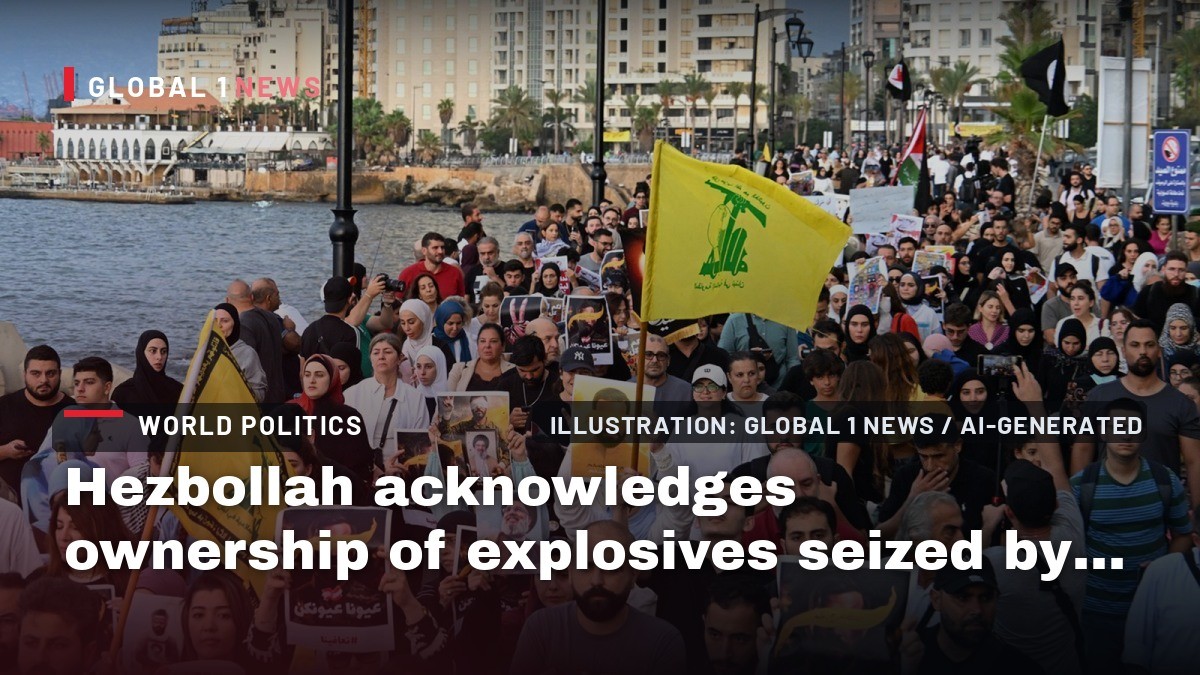
Beirut, Lebanon - 16 August 2026 - Since March 2026, a new war and a fragile, frequently-broken ceasefire have left much of south Lebanon in ruins, with hundreds of thousands still unable to return home. A US-brokered framework signed in Washington in June 2026 was meant to chart a path out of the war; instead, it has divided the country. At the heart of this maelstrom stands Hezbollah, a movement that, barely a year ago, was declared finished after Israel's 2024 assassination campaign decapitated its leadership and detonated thousands of booby-trapped pagers and walkie-talkies. The Middle East Eye investigation details how the group clawed its way back, adapting its military doctrine, embracing new technology, and navigating a profound political and financial crisis, all while the people of Lebanon pay the heaviest price.
The 2024 Decapitation and the Fight to Survive
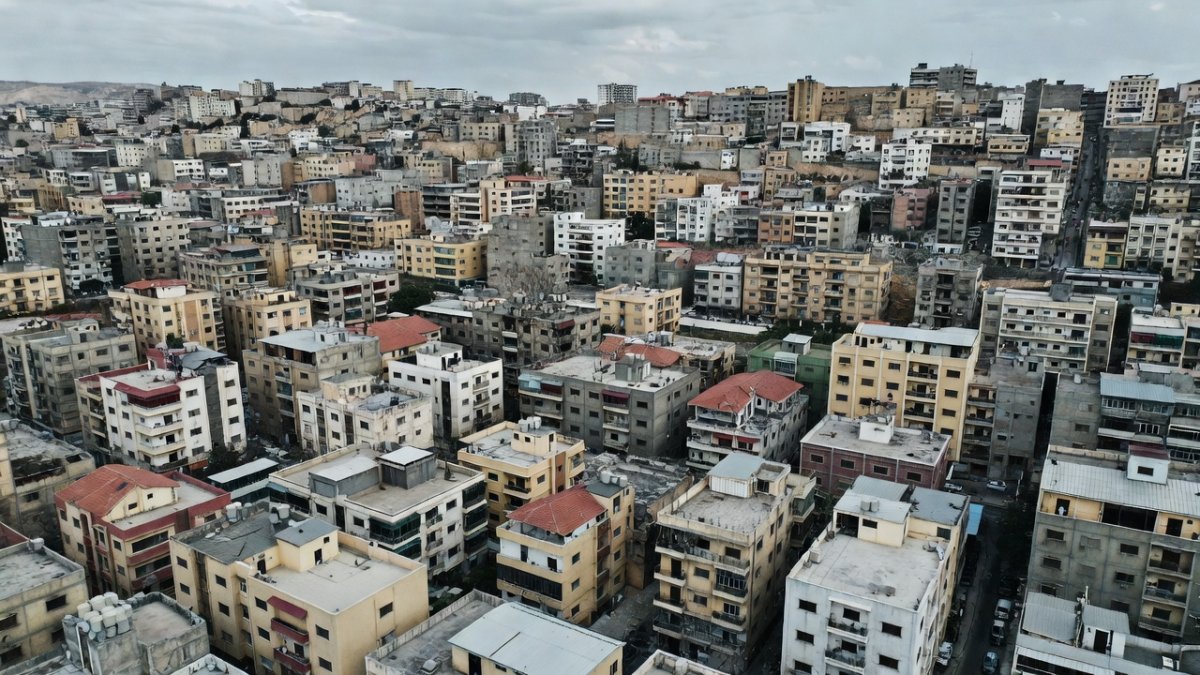
Late 2024 was a cataclysmic period for Hezbollah. In late September, Hassan Nasrallah, the group's charismatic secretary-general for over three decades, was killed when approximately 80 Israeli bombs obliterated the movement's headquarters in Dahieh. His presumed successor, Hashem Safieddine, was also killed in subsequent strikes. Simultaneously, Israel detonated thousands of booby-trapped pagers and walkie-talkies used by Hezbollah members, a sophisticated operation that maimed thousands and sowed deep paranoia within the ranks. Many regional analysts and Western officials declared the movement finished, its command structure in tatters and its morale shattered.
Yet, according to the investigation, the surviving commanders did not capitulate. They ditched their phones, abandoned digital communication entirely, and reverted to a system of in-person meetings at pre-arranged rendezvous points in the southern suburbs of Beirut, specifically in the neighborhoods of Haret Hreik and Chiah. This return to low-tech, face-to-face communication was a direct response to the intelligence failure that had allowed Israel to penetrate their communications network so devastatingly. It was a slow, painstaking process of rebuilding trust and operational security from the ground up, a process that would lay the foundation for the group's subsequent resurgence.
The March 2026 Decision: Entering the Fray
The decision to re-enter the conflict came in March 2026, following the outbreak of a US and Israeli war on Iran that resulted in the killing of Iran's supreme leader, Ayatollah Ali Khamenei. Hezbollah, believing that Israel was about to launch a new assault on Lebanon under the cover of the Iran war, decided to pre-empt. The decision to fire six rockets across the border in retaliation was made by Naim Qassem, Nasrallah's replacement as secretary general, and was supported by Iran. It was a calculated gamble, a signal of continued relevance and a demonstration that the axis of resistance, however battered, was not broken.
Israel's response was swift and devastating. A ground invasion was launched, and air strikes reached as far as Beirut. The 15-month ceasefire period that preceded this had already been a time of intense, low-level attrition. According to the investigation, during that period Israel carried out approximately 3,000 air, drone and artillery strikes on Hezbollah positions, fortified and expanded five military bases, and levelled Shia-majority towns and villages along the border. One Hezbollah source described the border area as "now like a football pitch - completely flat," a stark testament to the scale of destruction intended to create a permanent buffer zone.
Restructuring and a New Generation of Fighters
Central to Hezbollah's resilience has been a fundamental restructuring of its military wing. Under Naim Qassem's direction, the group has been remoulded, moving away from a rigid, hierarchical structure to a more flexible model of independent units, a concept inspired by the late commander Imad Mughnieh. These units operate with pre-planned playbooks, giving commanders on the ground greater autonomy and reducing the risk of a single decapitation strike crippling the entire organization. Fighters have been told they do not have to fight to the last bullet, a pragmatic shift in doctrine that prioritizes survival and sustained resistance over martyrdom.
This new structure is being manned by a new generation of fighters. Mohammed Raad heads Hezbollah's parliamentary bloc, while Hassan Fadhlallah, a second-generation heavyweight, has become more influential. Senior Hezbollah official Nawaf Moussawi highlighted the significance of this generational shift, telling Middle East Eye: "Israeli intelligence had strong intelligence on the first, second and third generations. But now, it is fighting with a new generation that it does not know." This lack of familiarity on the part of Israeli intelligence is a significant strategic advantage for the group, making its operations less predictable and its leadership more difficult to target.
The Drone War and the Almas-1 Legacy
Perhaps the most significant tactical development has been Hezbollah's embrace of drone technology, specifically FPV (First-Person View) drones operated with fibre-optic cables. This innovation protects the drones from electronic interference and jamming, making them a formidable weapon. Israeli Prime Minister Benjamin Netanyahu has described them as a "central threat." The investigation reveals a surprising source for this new pilot corps: Lebanese gamers. As in Ukraine, the skills honed in video games have proven transferable to the battlefield, and these young pilots now make up the bulk of Hezbollah's drone operators. Production has been stepped up massively, with the drones adapted to carry more explosives, posing a direct threat to Israeli Merkava tanks.
The technology for these drones has its roots in the Almas-1 missile, an advanced fibre-optic anti-tank guided missile that Hezbollah reverse-engineered from an Israeli Spike missile in 2024. The stored fibre-optic cable, which runs for 8-10 kilometres, was repurposed for the new FPV drones. This demonstrates a remarkable capacity for adaptation and innovation, transforming a defensive weapon into a highly effective offensive tool. Israeli troops, who have fanned out south of the Litani River and established approximately 300 positions in private homes, abandoned bases, and even a Crusader castle, have found themselves vulnerable to these new attacks. Approximately 20 Israeli soldiers have been killed in south Lebanon since 2 March, a figure that underscores the ongoing lethality of the conflict despite the ceasefire nominally in force since 16 April 2026.
The Political and Humanitarian Fallout
The war has had a catastrophic impact on Lebanon's people. Approximately 600,000 people remain displaced from their homes in south Lebanon, with many homes no longer existing. Half a million Shia are homeless, a humanitarian crisis of staggering proportions. Lebanon's deputy prime minister, Tarek Mitri, told Middle East Eye that this was "a war that Lebanon did not want, did not seek," a sentiment that reflects the deep divisions the conflict has exposed. The Lebanese state, through direct negotiations with Israel, has sought to decouple Lebanon from the US-Israeli war on Iran. The US-mediated framework has resulted in the Lebanese army deploying in just one southern town in a "pilot scheme," a move that has been widely viewed as a capitulation and was openly mocked by Netanyahu.
Hezbollah, for its part, is facing a severe financial crisis and is unable to provide the welfare services it once did. There is no land route to Iran through Syria, and aviation between Iran and Lebanon is restricted. This vacuum has been filled by personal and institutional charitable initiatives from within the Shia community, a shift that may have long-term implications for the party's social base. Senior official Nawaf Moussawi rejected any blame for the war, calling it a "media campaign to try to turn facts upside down." He insisted, "Rather than identifying the occupation as the problem, this media campaign seeks to claim that the resistance is the problem."
Analysis and Implications
The resurrection of Hezbollah presents a profound dilemma for Lebanon. The pressure on the Lebanese army to confront Hezbollah risks sparking a civil war, a prospect that terrifies many. An article in The Economist urging more forceful military intervention has only heightened these fears. However, Deputy Prime Minister Mitri noted that "neither the army nor Hezbollah are willing to fall into the trap of fighting each other," suggesting a mutual, if uneasy, recognition of the red lines that must not be crossed. The truce is essentially underwritten by Iran, which has threatened shipping on the Strait of Hormuz if Israel violates the ceasefire, adding a dangerous new dimension to the regional standoff.
The political landscape is equally fraught. The US-mediated framework, despite being mocked, has given Hezbollah some political breathing space. In a revealing anecdote, two party sources and a Lebanese diplomatic source told Middle East Eye that Donald Trump, growing frustrated during recent ceasefire negotiations, telephoned the Lebanese ambassador to Washington and demanded a direct line to Hezbollah. Officials panicked and tried to find a phone number for anyone in Hezbollah, even random sheikhs. Trump's request, all three sources say, was denied. This incident highlights the strange paradox of a group that is both a target of US policy and a necessary interlocutor for any lasting peace.
Discussions within the party about disarmament are happening "in the background," according to sources, but no proposals can be put forward in a moment of war. One source noted, "Importantly, Naim Qassem has no red lines," suggesting a potential for future flexibility that could be crucial. The death toll for Hezbollah members over the two wars is estimated to be between 4,000 and 10,000 people, most killed in 2024, according to party sources, though no official numbers have been released. The Iranian presence in Lebanon is at its lowest due to logistical difficulties, but political and strategic coordination continues.
As Lebanon looks ahead, the path is uncertain. The ceasefire is fragile, the political divisions are deep, and the humanitarian needs are immense. Hezbollah has proven its resilience, but the cost has been borne by the people of Lebanon, particularly the Shia community, who have lost their homes, their loved ones, and their livelihoods. The group's resurrection may have secured its survival, but it has also entrenched a state of perpetual conflict. For the hundreds of thousands of displaced families living in temporary shelters, the question is not about the strategic balance of power, but about when, or if, they will ever be able to return to the places they once called home. The answer, like the future of Lebanon itself, remains profoundly uncertain.
By Fatima Al-Rashid, Staff Writer
This article was produced with AI-assisted research and editorial support. Reporting is based on sources cited in the article.
What's Your Reaction?
 Like
0
Like
0
 Dislike
0
Dislike
0
 Love
0
Love
0
 Funny
0
Funny
0
 Wow
0
Wow
0
 Sad
0
Sad
0
 Angry
0
Angry
0
Gulf/MENA Correspondent at Global1.News. Based in Doha, covering Gulf politics, energy markets, diplomacy, and development across the Middle East and North Africa. Tracks the economic transformation of the Gulf states.










Comments (0)