
Israel and US Set Gaza Terms With Board of Peace
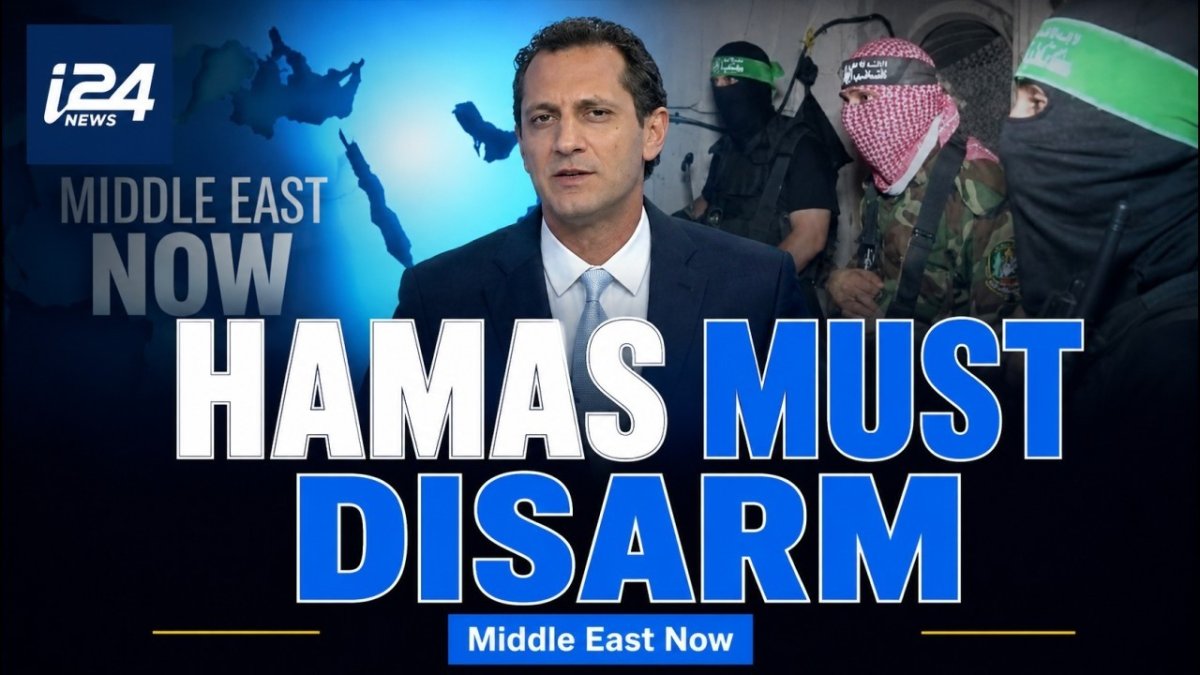
In a recent i24NEWS English report, the focus was squarely on Tel Aviv, where US envoy Jared Kushner, Board of Peace Director-General Nikolay Mladenov, and former British Prime Minister Tony Blair met with Israeli Prime Minister Benjamin Netanyahu for roughly three hours of high-stakes talks.
In a recent i24NEWS English report, the focus was squarely on Tel Aviv, where US envoy Jared Kushner, Board of Peace Director-General Nikolay Mladenov, and former British Prime Minister Tony Blair met with Israeli Prime Minister Benjamin Netanyahu for roughly three hours of high-stakes talks. The meeting, which took place on Monday, was the culmination of a dramatic diplomatic week that saw Kushner hold an unprecedented direct meeting with a Hamas delegation in Cairo, signaling a potential shift in Washington's approach to the Gaza ceasefire roadmap. The core question now is whether Israel and Hamas can bridge their fundamental disagreements over sequencing—disarmament versus withdrawal—before the fragile truce collapses entirely.
Kushner, Blair, and Mladenov Confront Netanyahu Over Stalled Gaza Roadmap in Tense Tel Aviv Talks
Jerusalem, Israel – Monday — The meeting at a Tel Aviv hotel was described by a Board of Peace official as "lengthy, in depth and very productive," but the reality on the ground is far more complex. An Israeli official told reporters that there had been no breakthrough, with Netanyahu making clear that the IDF would not withdraw from its positions in Gaza and would continue to carry out military operations. The prime minister reportedly told attendees that making progress on the US plan was "problematic" because of the approaching Knesset elections in October, a statement that has fueled Washington's growing frustration with what it perceives as Israeli stalling tactics.
On the Ground in Tel Aviv: The Meeting Itself
The Monday session brought together a formidable cast of international figures with deep ties to the region. Jared Kushner, President Trump's son-in-law and senior advisor, arrived with a mandate that a source described as "not to reopen negotiations" but rather "to close." He was joined by Nikolay Mladenov, the former UN envoy who now heads the Board of Peace, and Tony Blair, the former British premier who has long been involved in Middle East peace efforts. On the Israeli side, Netanyahu was flanked by senior officials from the Prime Minister's Office, the Foreign Ministry, and the IDF, according to a statement released after the talks.
The meeting followed Kushner's more than two-hour session in Cairo with a Hamas delegation headed by political chief Khalil al-Hayya. That rare direct US engagement with a group Washington officially designates as a terrorist organization has sent shockwaves through Israeli politics and the broader region. A statement from Netanyahu's office said the talks were "deep and constructive" and that it was agreed to establish two working groups—one on disarmament and demilitarisation of Gaza, which both Israel and the Board of Peace are determined should be prompt and completed before any reconstruction happens, and a second focusing on sanitation, clean water, and other public health issues for the people of Gaza.
However, the substance of the discussions revealed a significant gap. Netanyahu insisted there could be no Israeli withdrawal or reconstruction without full Hamas disarmament, and he requested that a US general supervise the group's handover of weapons. Hamas, which says it has agreed to the roadmap including disarmament, insists Israel must first withdraw its troops from the roughly 60% of Gaza that it currently occupies. The Hamas leader demanded Israel halt its attacks and withdraw to the so-called "yellow line" dividing the territory, a line that was never precisely defined in the original ceasefire agreement.
The Board of Peace and Resolution 2803: A Framework Under Strain
The Board of Peace is an international body authorized by UN Security Council Resolution 2803, adopted on November 17, 2025, to support transitional governance of the Gaza Strip after the war. Its mandate expires on December 31, 2027, and it was set up in January 2026 to oversee reconstruction. On August 6, 2026, it issued its first construction contract in the territory—a project to build a military base, a move that raised eyebrows given the ongoing conflict. The Board is now tasked with implementing a 15-point roadmap for Gaza, part of a broader 20-point plan approved by Trump, which includes provisions for disarmament, reconstruction, and a new governance structure.
The ceasefire between Israel and Hamas took effect on October 10, 2025, ending major military operations, but Israeli forces continue to occupy about 60% of the strip. Gaza's health ministry says Israel has killed more than 1,200 Palestinians and wounded more than 4,100 since the ceasefire began. Around 2 million people live in Gaza, and reconstruction has been stalled for more than 10 months. The Board of Peace's mandate is to break that deadlock, but it is increasingly caught between Israeli security demands and Hamas's insistence on a clear withdrawal timeline.
According to the Israeli newspaper Yedioth Ahronoth, US officials are increasingly frustrated that Israel is "trying to buy time, introduce new reservations, and change the sequencing set out in the roadmap." The report quoted a source saying Washington feels "Israel is playing games." The US administration is expected to push Netanyahu on halting attacks in Gaza, withdrawing forces to the Yellow Line, significantly increasing humanitarian aid, and enabling the rollout of reconstruction and civilian governance mechanisms. The establishment of the two working groups is seen as a face-saving mechanism, but the core dispute over sequencing remains unresolved.
Regional Context: Arab Pressure Mounts on Israel
The diplomatic pressure on Israel is not coming from Washington alone. Eight Arab and Muslim nations—Saudi Arabia, the United Arab Emirates, Egypt, Qatar, Jordan, Indonesia, Pakistan, and Turkiye—issued a joint statement condemning Israel's rejection of the roadmap. The foreign ministers' statement said "Israel now bears responsibility for obstructing the efforts to bring peace in Gaza" and called on the Board of Peace and the US to take "immediate and concrete measures" to keep any party from obstructing the plan's implementation. The statement warned that rejection "constitutes an explicit refusal to proceed with the implementation of the Comprehensive Plan, and directly threatens to derail the extensive efforts exerted by US President Trump to bring an end to the war in Gaza."
Mediating countries Egypt, Qatar, and Turkey had officials present in the talks, underscoring the regional stakes. The joint statement represents a rare unified front among Arab and Muslim nations, many of which have normalized or are considering normalizing relations with Israel. The pressure is particularly acute for Egypt and Qatar, which have served as key mediators between Israel and Hamas throughout the conflict. Their involvement in the current round of talks signals that they see the Board of Peace framework as the last viable path to a lasting ceasefire and reconstruction.
For Israeli readers, this regional pressure carries significant weight. The Abraham Accords, which normalized relations with the UAE and Bahrain, were predicated on the idea that Israel could maintain security while building diplomatic bridges. The current crisis threatens to unravel those gains, as Arab states grow increasingly vocal in their criticism of Israeli military operations in Gaza. The joint statement's reference to "obstructing the efforts" is a direct challenge to Netanyahu's government, which has repeatedly asserted its right to continue operations until Hamas is fully dismantled.
Diplomatic and International Reactions: A Shift in Washington's Posture
The most significant development in recent days has been the direct US engagement with Hamas in Cairo. Mahjoob Zweiri, a Middle East politics expert at the Doha Institute for Graduate Studies, told Al Jazeera that this represents a "type of American submission to the fact that Hamas is a political force in Palestinian society that cannot be ignored." Adel Shadid, an expert on Israeli affairs, went further, saying "There is a shift in the American position towards Hamas... Hamas is no longer the problem in the American reading, but rather part of the solution." This contradicts one of the war's stated goals of eradicating Hamas politically as well as militarily, a shift that has profound implications for Israel's long-term strategy.
The international reaction has been closely watched. The UN Security Council, which authorized the Board of Peace under Resolution 2803, is watching to see whether the two working groups can deliver tangible results before the mandate expires at the end of 2027. The Board's mandate expires at the end of 2027, and if the current impasse continues, there is a real risk that the entire framework will collapse, leaving Gaza in a state of perpetual limbo.
For Israel, the diplomatic landscape is increasingly challenging. The US administration, under Trump, has been more sympathetic to Israeli security concerns than previous administrations, but the direct engagement with Hamas signals a pragmatic shift. Kushner's mandate to "close" rather than negotiate suggests that Washington is losing patience with the endless rounds of talks. The fact that Netanyahu is facing elections in October adds another layer of complexity, as he must balance his political survival against the demands of his most important ally.
Analysis and What This Means for Israel and the Region
The current standoff is a classic chicken-and-egg dilemma. Israel insists that disarmament must precede any withdrawal, fearing that a pullback would allow Hamas to regroup and rearm. Hamas, for its part, argues that it has already agreed to the roadmap and that Israel is using the disarmament demand as a pretext to maintain its occupation. The "yellow line" issue is particularly problematic, as it was never precisely defined, leaving ample room for interpretation and dispute. The establishment of the two working groups is a positive step, but it does not resolve the fundamental sequencing question.
Zweiri's analysis of the broader regional dynamics is instructive. He noted that "Iran is not going the way he wants, and his attempt to separate the Lebanese file from the memorandum of understanding did not succeed. The only file where he can make a breakthrough and record it as a victory in his foreign policy is the Gaza file now." This suggests that Trump sees Gaza as a potential foreign policy win, which explains the intense pressure on both Israel and Hamas to reach an agreement. The subcontracting of critical US negotiations to a small circle of friends, associates, and family members—Kushner, Blair, and Mladenov—is being watched closely by allies and foes alike, raising questions about the sustainability of this approach.
For Israeli readers, the implications are clear. The IDF will likely continue operations in Gaza in the near term, but the pressure to withdraw is mounting from multiple directions. The Knesset elections in October will be a critical test, with Gaza and Netanyahu's role in the events leading up to the October 7, 2023 attack remaining highly charged issues. Finance Minister Bezalel Smotrich has asserted that Netanyahu's stated goals for Gaza were only "halfway there," with the missing half being full Israeli control, including settlement. This internal political dynamic complicates any potential compromise, as Netanyahu must navigate between his far-right coalition partners and the demands of the international community.
The coming weeks will be decisive. Hamas says it is waiting for mediators to start the 14-day negotiation period to work out a timetable for implementation, but that period requires all parties' approval of the roadmap to begin. If Israel continues to introduce new reservations, the entire process could collapse, leading to a resumption of hostilities. The Board of Peace, with its mandate running until the end of 2027, remains the best hope for a structured transition, but it cannot succeed without genuine commitment from both sides. The question is whether Netanyahu, facing an election and internal political pressure, can afford to make the concessions that Washington and the Arab world are demanding.
As the dust settles on Monday's meeting, one thing is certain: the status quo is unsustainable. The people of Gaza, who have endured more than a decade of blockade and war, are watching closely. The international community, which has invested significant political capital in the Board of Peace framework, is losing patience. And the Israeli public, still grappling with the trauma of October 7, is deeply divided over the path forward. The next few weeks will determine whether the roadmap becomes a reality or another failed peace initiative, with consequences that will reverberate far beyond the borders of Gaza.
By Hannah Berg, Staff Writer
This article was produced with AI-assisted research and editorial support. Reporting is based on sources cited in the article.
What's Your Reaction?
 Like
0
Like
0
 Dislike
0
Dislike
0
 Love
0
Love
0
 Funny
0
Funny
0
 Wow
0
Wow
0
 Sad
0
Sad
0
 Angry
0
Angry
0

Israel Correspondent at Global1.News. Based in Tel Aviv, covering Israeli politics, security, technology, and society. Provides balanced, deeply-sourced reporting on one of the most closely-watched regions in the world.













Comments (0)