
Is Japan Decoupling From China?
The Generational Turn in Tokyo's China Policy The Diplomat article of August 3, 2026, identifies a clear generational change among Japanese policymakers. Younger officials show markedly less inclination to accommodate Beijing than their predecessors. This shift coincides with Prime Minister Sanae Takaichi's early 2026 snap election victory after she dissolved the lower house in January. Her platform emphasizes making Japan strong and prosperous through accelerated defense spending and revised na
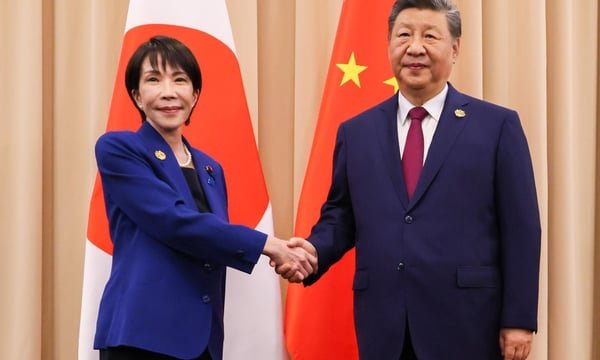
The Generational Turn in Tokyo's China Policy
The Diplomat article of August 3, 2026, identifies a clear generational change among Japanese policymakers. Younger officials show markedly less inclination to accommodate Beijing than their predecessors. This shift coincides with Prime Minister Sanae Takaichi's early 2026 snap election victory after she dissolved the lower house in January. Her platform emphasizes making Japan strong and prosperous through accelerated defense spending and revised national security strategies by the end of 2026.
This generational pivot reflects the gradual erosion of economic interdependence that began after the 2012 Senkaku/Diaoyu islands crisis and accelerated following the 2020 pandemic disruptions. Younger bureaucrats, shaped by two decades of territorial disputes and technology competition rather than the post-1972 normalization era, view China less as an indispensable partner and more as a strategic risk. Their policy preferences align with Takaichi's pledge to advance defense spending to 2 percent of GDP two years ahead of schedule.
Historical precedent underscores the significance of this transition. During the 1980s and 1990s, Japanese officials routinely prioritized commercial access to Chinese markets over security concerns, a stance rooted in the 1972 Tanaka-Zhou joint communiqué. Contemporary officials, however, operate within a framework where supply-chain resilience and alliance coordination take precedence, marking a decisive break from that earlier accommodationist tradition.
Seoul watches these developments closely because Japanese policy recalibration directly affects Korean foreign policy options. South Korea's own balancing act between Washington and Beijing requires stable trilateral mechanisms, yet a more assertive Tokyo could compress the diplomatic space available for Seoul's hedging strategy in Northeast Asia.
Concrete Steps Toward Economic Security
Under Takaichi, Japan has expanded measures already in place since 2018. These include the exclusion of Huawei from domestic telecommunications networks and alignment with United States restrictions on semiconductor manufacturing equipment exports to China. Corporate diversification away from Dalian in northeast China reached a 15-year high by early 2026. The government has also committed to raising defense spending to 2 percent of GDP ahead of the original schedule.
Japan's Economic Security Promotion Act, which came into force in 2022, provides the statutory foundation for these initiatives by establishing frameworks for supply-chain security, critical infrastructure protection, and mandatory patent disclosure. The legislation enables targeted government support for firms relocating production from China to Southeast Asia and India under the "China+1" diversification model that Tokyo has pursued since the mid-2010s.
These programs build on earlier supply-chain resilience initiatives launched after 2018, when Japanese authorities first began screening foreign direct investment in sensitive sectors. The 2023 alignment with allied export controls on semiconductor manufacturing equipment to China further illustrates how domestic legislation now serves as an instrument of coordinated technology denial rather than purely commercial policy.
For Korean observers, Japan's institutionalization of economic security measures carries direct implications. Seoul's chaebol remain dependent on Japanese precision materials and equipment, and any tightening of Tokyo's regulatory regime could replicate the leverage demonstrated during earlier bilateral frictions, compelling Korean firms to accelerate localization or seek alternative suppliers.
Beijing's Retaliatory Measures
China responded swiftly on January 6, 2026, when its Ministry of Commerce issued Announcement No. 1 of 2026. The announcement imposed export controls on rare earth materials and other dual-use items. Japanese analysts interpreted the move as a direct signal to the new administration. These controls have placed Japanese industry under sustained pressure while prompting coordinated diplomatic outreach.
Beijing's use of rare earth restrictions echoes tactics employed during the 2010 Senkaku crisis, when similar export curbs were applied to Japanese manufacturers. The 2026 measures, however, occur against a backdrop of already diminished bilateral trust, as Japanese firms have spent more than a decade reducing exposure to single-source dependencies in critical minerals.
The announcement also reflects China's broader strategy of weaponizing economic interdependence at a moment when Tokyo's generational leadership shows reduced willingness to absorb such pressure. Japanese analysts note that the timing, immediately following Takaichi's election, was designed to test the new administration's resolve before revised national security strategies are finalized by the end of 2026.
South Korea's position remains particularly exposed because any escalation in Japan-China economic friction transmits through shared supply chains. Seoul must therefore calibrate its own responses to Chinese economic coercion while preserving access to Japanese intermediate goods essential for its semiconductor and display industries.
Economic Costs and Corporate Adjustments
Nomura Research Institute estimates indicate that a three-month restriction on rare earth exports could produce roughly $4.3 billion in lost Japanese production. A full-year disruption could raise losses to approximately $17 billion. Japanese firms have responded by broadening procurement sources, though the scale of adjustment remains gradual and incomplete at this stage.
Corporate responses have centered on accelerating "China+1" strategies, with government subsidies supporting relocation of production facilities to Vietnam, Thailand, and India. These efforts build on programs initiated after 2018 and intensified following the 2020 supply-chain shocks, yet complete decoupling from Chinese rare earth processing remains technically and economically challenging.
Japanese industry associations have also increased lobbying for expanded stockpiling mechanisms and joint procurement arrangements with allied nations. Such measures aim to mitigate the short-term vulnerabilities exposed by Beijing's January 2026 announcement while long-term diversification projects mature over the coming decade.
The Korean dimension adds another layer of complexity. Because South Korean manufacturers source critical components from Japanese suppliers, any sustained production losses in Japan would cascade into Korean assembly operations, underscoring the regional interdependence that persists despite political friction between Tokyo and Seoul.
The Korean Dimension: Supply Chain Vulnerabilities
South Korean manufacturers depend heavily on Japanese intermediate goods. Any prolonged disruption in Japanese access to rare earths would transmit directly through these linkages to Korean assembly lines. The 2019 Japan-Korea trade friction already demonstrated how bilateral tensions can cascade into regional supply-chain strain. Chaebol groups therefore monitor Tokyo's policy trajectory with particular attention to semiconductor and materials flows.
The 2019 episode, when Tokyo imposed export controls on fluorinated polyimide, photoresists, and hydrogen fluoride, prompted Samsung Electronics and SK Hynix to accelerate domestic material development and diversify sourcing. That precedent now informs Korean contingency planning as Takaichi's administration advances its economic security agenda.
Seoul's foreign policy must navigate these vulnerabilities while maintaining engagement with Beijing. The Moon and Yoon administrations both pursued localization drives in response to Japanese leverage, yet complete insulation from Tokyo's policy shifts remains elusive given the continued technological edge of Japanese suppliers in advanced semiconductor processes.
Regional security implications extend beyond economics. Sustained Japan-China friction could compel Seoul to deepen alignment with Washington and Tokyo on technology controls, potentially at the cost of economic access to Chinese markets that remain vital for Korean exports.
Prospects for Trilateral Northeast Asian Cooperation
China-Japan-South Korea trilateral cooperation was declared completely restored following a March 2025 agreement to advance economic and trade cooperation amid emerging challenges. Takaichi's harder line toward Beijing introduces uncertainty into this framework. At the same time, her meeting with French President Emmanuel Macron produced a joint statement of grave concern over rare earth restrictions and a commitment to diversify procurement. South Korean public favorability toward China has shown modest recovery, rising from approximately 2.1 in 2024 to 2.6 by early 2026, yet analysts caution that renewed turbulence in Japanese politics could stall trilateral momentum.
The trilateral summit framework, first established in Fukuoka in 2008, has historically provided a platform for functional cooperation even during periods of bilateral strain. The 2025 revival demonstrated continued interest among all three capitals in maintaining dialogue channels, yet Takaichi's generational policy shift may limit the scope of future agreements on sensitive economic issues.
South Korea's position within this triangle remains delicate. Seoul benefits from stable Japan-China economic relations that reduce the risk of secondary sanctions or supply disruptions, but it must also accommodate Washington's expectations for coordinated technology controls. This balancing act grows more complex as Tokyo accelerates its own economic security measures.
Forward-looking assessments suggest that trilateral cooperation may increasingly focus on non-sensitive areas such as disaster response and environmental standards while contentious issues like rare earth supply chains are addressed through bilateral or minilateral formats involving the United States.
Historical Context and Regional Implications
Japan's post-war economic interdependence with China developed over decades through trade and investment. The current generational shift marks a departure from that pattern. For Seoul, the stakes involve both economic resilience and the broader Northeast Asian security architecture. Korean foreign policy must therefore balance continued engagement with China against the need to secure stable supplies from Japan and other partners. The outcome will shape whether trilateral cooperation deepens or fragments under sustained bilateral friction.
Post-1972 normalization produced deep integration, with China becoming Japan's largest trading partner by the early 2000s. The subsequent erosion of that interdependence after 2012 has been driven by both geopolitical tensions and deliberate Japanese policy choices to reduce strategic vulnerabilities, a trajectory now institutionalized through the Economic Security Promotion Act.
Regional security implications are profound. A Japan that decouples more rapidly from China may strengthen alliance coordination with the United States and like-minded partners, yet it could also heighten the risk of economic coercion cycles that affect Korean prosperity and stability. Seoul's historical experience with the 2019 export controls illustrates the transmission mechanisms at work.
Scholarly assessments emphasize that the durability of Northeast Asian economic architecture will depend on whether institutional mechanisms can insulate supply chains from political shocks. The coming years will test whether the trilateral framework can adapt to Japan's generational policy turn or whether fragmentation becomes the prevailing pattern.
By Prof. David Park, Staff WriterThis article was produced with AI-assisted research and editorial support. Reporting is based on sources cited in the article.
What's Your Reaction?
 Like
0
Like
0
 Dislike
0
Dislike
0
 Love
0
Love
0
 Funny
0
Funny
0
 Wow
0
Wow
0
 Sad
0
Sad
0
 Angry
0
Angry
0

East Asia/Technology Correspondent at Global1.News. Seoul-based voice covering Korean politics, technology, business, and culture. Analyzes how technology and geopolitics intersect across East Asia.














Comments (0)