
Iraq: The New Front Line of the US-Iran War
In a recent Middle East Eye Big Picture report, Dr Renad Mansour, Deputy Director of Chatham House's MENA program and Director of its Iraq Initiative, laid out a stark reality: Iraq has become the newest battlefield of the US-Iran war. Bombed by the United States, Iran, and now Saudi Arabia, the country finds itself at the epicenter of a conflict it did not choose, caught between Washington's military might and Tehran's regional ambitions.
In a recent Middle East Eye Big Picture report, Dr Renad Mansour, Deputy Director of Chatham House's MENA program and Director of its Iraq Initiative, laid out a stark reality: Iraq has become the newest battlefield of the US-Iran war. Bombed by the United States, Iran, and now Saudi Arabia, the country finds itself at the epicenter of a conflict it did not choose, caught between Washington's military might and Tehran's regional ambitions.
Iraq: The New Front Line of the US-Iran War
Baghdad, Iraq – August 2026 — The war that began on 28 February 2026, following US-Israeli airstrikes that killed several Iranian officials including Supreme Leader Ali Khamenei, has fundamentally redrawn the map of the Middle East. While the conflict's origins lie in the Gaza war and the broader regional crisis it ignited, Iraq has emerged as the principal battleground where the fates of millions of ordinary Iraqis hang in the balance. As Dr Mansour explains in the video, Iraq is not merely a passive observer; it is the arena where the US-Iran war is being fought, with devastating consequences for its sovereignty, economy, and people.
Iraq Dragged Into a Regional War
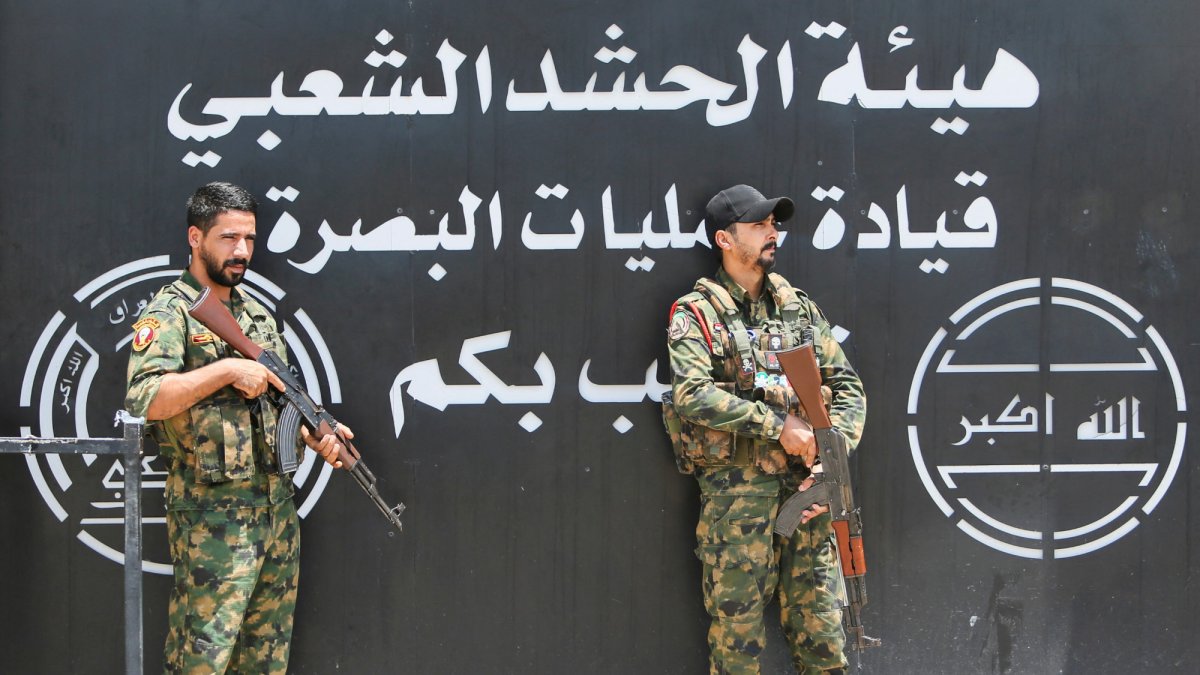
The opening salvos of the war in late February were followed within days by a dramatic escalation on Iraqi soil. On 1-2 March 2026, US and Israeli forces conducted coordinated attacks on Iranian-backed Iraqi militias, specifically targeting the Islamic Resistance in Iraq and various Popular Mobilization Forces (PMF) umbrellas. The stated objective was to degrade their capabilities to launch drone and missile attacks against US interests in the region. These strikes marked the first major military engagement of the war on Iraqi territory, transforming the country from a peripheral concern into a central front.
Iraqi territory has since been struck by US, Israeli, Saudi, and Iran-linked forces in a dizzying array of attacks and counter-attacks. Iran-backed militias have used Iraqi soil as a launchpad for drone and missile attacks on US bases, while US forces have responded with airstrikes on militia positions. The Iraqi government, ostensibly sovereign, has found itself powerless to prevent foreign powers from using its airspace and territory as a battleground. For ordinary Iraqis, this has meant a return to the dark days of the post-2003 insurgency, with the constant threat of airstrikes, drone attacks, and the ever-present possibility of being caught in the crossfire.
The 29 July Strikes: A New Precedent
The conflict took a significant turn on 29 July 2026, when Saudi Arabia, in coordination with US CENTCOM, conducted joint airstrikes on PMF and other Iran-backed militia sites across Iraq. This marked the first time Riyadh publicly joined US strikes in the country. The Popular Mobilization Forces reported at least 20 members killed and 32 wounded, while Iraqi and Iranian media said four IRGC advisers were also killed. The strikes were a direct retaliation for drone attacks on Saudi oil facilities that had been launched from Iraqi territory, and the Saudi foreign ministry called the action "self-defence."
The Iraqi National Security Council condemned the strikes as an act of aggression, but the damage was done. Dr Hesham Alghannam, a Carnegie Middle East scholar in Riyadh, told Middle East Eye that the strikes "were targeted at specific militia sites linked directly to drone attacks on Saudi oil facilities, to deter these groups." He added that the killing of Iranian advisers "was not accidental. This was a message to Tehran." The message was clear: Saudi Arabia was no longer content to be a passive observer in the conflict, and Iraq had become the venue for a new regional power struggle.
Baghdad's Impossible Balancing Act
Iraqi Prime Minister Ali al-Zaidi, who was sworn in around May 2026 and has aligned himself closer to Washington, has found himself in an impossible position. He cancelled a planned trip to Riyadh in protest over the 29 July strikes, only to receive Riyadh's intelligence chief in Baghdad days later, pledging that Iraqi territory would not be used to launch attacks on anyone. This delicate dance between Washington, Tehran, and Riyadh has become the defining feature of his premiership, and his room for maneuver is shrinking by the day.
Al-Zaidi's July 14 visit to Washington was a study in contrasts. President Trump called him "young and handsome" and touted their "tremendous chemistry," while al-Zaidi secured energy deals and pledged that all weapons would be brought under state control. But the reality on the ground is far more complex. The Iraqi government faces a September 30 deadline to disarm all militias operating outside state authority, the same day US forces are scheduled to withdraw from their last bases in Iraq. Whether al-Zaidi can deliver on his promises remains deeply uncertain, and the militias are showing no signs of compliance.
Militias Dig In as Deadline Looms
Esmail Qaani, commander of Iran's Quds Force, visited Baghdad on 10 August, meeting with militia commanders and Coordination Framework officials. According to reports, he pressed the militants to keep their weapons rather than hand them to the government. Prime Minister al-Zaidi did not receive him, a pointed snub that underscores the growing rift between Baghdad and Tehran. Mohammad Bagher Ghalibaf, one of Iran's chief negotiators, also visited Baghdad and reportedly pitched a plan to conceal factions' heavier weapons or relocate them to Iran, a proposal that would effectively gut the disarmament deadline of any meaning.
The militias themselves have been unambiguous in their defiance. Kataib Hezbollah leader Abu Hussein al-Hamidawi said flatly that his group will not disarm, calling the US-Saudi strikes "a serious precedent that may establish a new phase in the region." The US has a $10 million bounty on his head, but that has done little to deter him. Harakat al-Nujaba and Kataib Sayyid al-Shuhada have taken similar hardlines, while only two factions — Asaib Ahl al-Haq and Kataib Imam Ali — have announced they would sever ties to the PMF and place weapons under state authority. However, Iraqi media found that the handover ceremonies involved mostly scrap weapons, and there is no independent verification mechanism to ensure compliance.
An Economy Under Siege
While the military conflict dominates headlines, the economic toll on ordinary Iraqis has been catastrophic. The Strait of Hormuz has been largely closed since Iran's blockade began in late February 2026, and oil revenue — which accounts for roughly 90% of Iraq's state budget — has collapsed by approximately two-thirds since the war began. Baghdad has struggled to pay public-sector salaries, leaving millions of families without income and pushing the country to the brink of economic collapse. Iraq has reportedly been selling oil at a steep discount, as much as $30 a barrel below benchmark, to Abu Dhabi's ADNOC, which ferries crude out by going "dark" with transponders off.
The human impact is impossible to overstate. Public-sector workers, teachers, doctors, and civil servants have gone months without pay. Families are selling possessions to buy food. The war has dragged Iraq's economy and daily life into the conflict, and there is no end in sight. Tom Barrack, the US ambassador to Turkey and special envoy for Iraq and Syria, has reportedly vetoed candidates for Iraqi ministries including defense and interior, including people tied to Nouri al-Maliki's coalition. His stated goal is to make the Strait of Hormuz "an afterthought" within two years via overland pipelines, including the Kirkuk-Baniyas and Ceyhan routes, but that vision offers little comfort to Iraqis struggling to survive today.

Analysis and Implications
The war has also deepened Iraq's emotional and religious ties to Iran. Supreme Leader Khamenei's body was carried through the Iraqi holy cities of Najaf and Karbala in processions that drew crowds shouting "Death to America" and "Death to Israel." These scenes are a powerful reminder of how bound Iraq remains to Iran, despite its government's attempts to chart a more independent course. The PMF, an umbrella of mostly Shia militias formally absorbed into Iraq's security apparatus in 2016, operates as part of the state but answerable to no one in it. This dual nature makes disarmament nearly impossible without a fundamental restructuring of Iraq's security forces.
Looking ahead, the September 30 deadline looms as a potential flashpoint. If the militias refuse to disarm and US forces withdraw as scheduled, Iraq could descend into a new civil conflict. The ceasefire that held from 8 April to 19 June under the Islamabad Memorandum has already broken down, with hostilities renewed on 8 July and continuing to the present. The Strait of Hormuz crisis remains unresolved, and the economic pressure on Iraq shows no signs of abating. As Dr Mansour's analysis makes clear, Iraq is not just a battleground in the US-Iran war; it is the battleground, and the Iraqi people are paying the price for a conflict they never chose.
The coming weeks will be critical. Whether Prime Minister al-Zaidi can navigate between Washington's demands, Tehran's pressure, and Riyadh's newfound assertiveness remains to be seen. But one thing is certain: the ordinary Iraqis caught in the middle — the unpaid civil servants, the families mourning loved ones killed in airstrikes, the children growing up under the constant threat of violence — will continue to bear the heaviest burden. The international community's attention may have moved on, but for Iraq, the war is far from over.
By Fatima Al-Rashid, Staff Writer
This article was produced with AI-assisted research and editorial support. Reporting is based on sources cited in the article.
What's Your Reaction?
 Like
0
Like
0
 Dislike
0
Dislike
0
 Love
0
Love
0
 Funny
0
Funny
0
 Wow
0
Wow
0
 Sad
0
Sad
0
 Angry
0
Angry
0

Gulf/MENA Correspondent at Global1.News. Based in Doha, covering Gulf politics, energy markets, diplomacy, and development across the Middle East and North Africa. Tracks the economic transformation of the Gulf states.










Comments (0)