
Anthropic Nears $6 Billion Deal for Israeli AI Startup Decart, Creating New Billionaires
Anthropic is in final stages of a deal to acquire Israeli AI startup Decart for up to $6 billion, a landmark acquisition that would create new Israeli billionaires and bring the Claude-maker's first R&D operations to Israel.
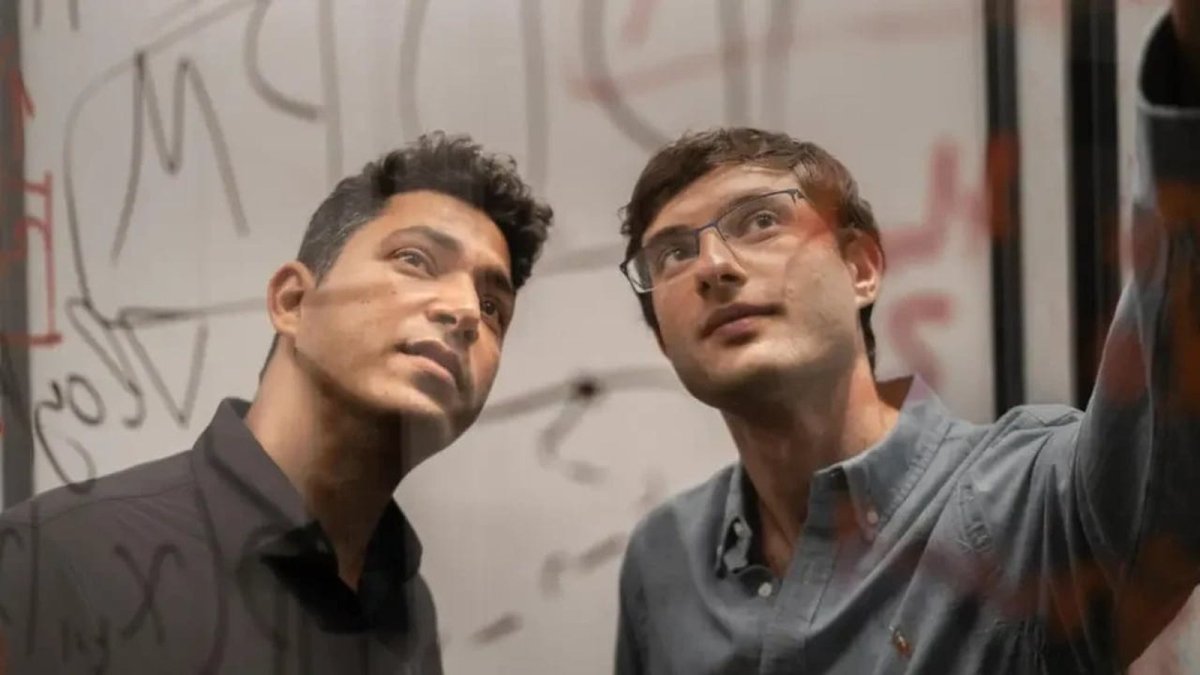
Israeli AI startup Decart is in the final stages of a landmark acquisition by US artificial intelligence giant Anthropic, the company behind the Claude language model, in a deal valued at up to $6 billion that would create at least two new Israeli billionaires and bring Anthropic's first operations to Israel. The transaction would mark a major validation of the country's AI ecosystem and, according to industry estimates, one of the most significant exits in Israeli tech in recent years.
Anthropic's $6B Decart Deal: Israeli AI Founders to Gain Billions
Tel Aviv, Israel — Dean Leitersdorf and Moshe Shalev, the founders of Israeli AI startup Decart, are in the final stages of signing a transformative deal with Anthropic, the US company behind the Claude language model, according to industry estimates. The acquisition is expected to bring one of the world's most successful language model developers to Israel while creating at least two new billionaires on a scale similar to the Wiz exit earlier this year.
Anthropic's First Move Into Israel
If the deal closes, it will mark Anthropic's first physical presence in Israel. Until now, the AI giant has operated here only through Israeli salespeople stationed in Ireland, leaving the country's vibrant tech sector largely untapped by one of the world's most valuable AI companies. The acquisition of Decart, which employs 89 people in Israel and another 17 in the US, would transform the Israeli operation into a dedicated research and development center for Anthropic products.
The R&D center is expected to focus on improving the efficiency of running Anthropic's models on various chips, including Nvidia GPUs, Google TPUs, and Amazon's "Infernasia" processors. This specialization in chip-level optimization is considered a critical competitive advantage in the AI industry, where computational costs remain a major barrier to scaling. Decart could become Anthropic's second R&D center outside the US, following the company's recent expansion in London, where it is building a 15,000 square meter center that employs 200 people.
Three Founders, Billion-Dollar Payouts
Leitersdorf and his team managed to retain control of Decart with a combined shareholding of about 64% of the company's shares — a control worth about $4 billion on paper. After Leitersdorf's brother, Orian, joined the founding team as chief scientist last year, each of the three founders is expected to receive an estimated $1 billion to $1.5 billion. While slightly less than the Wiz founders — Assaf Rapaport, Yinon Kostika, Ami Luttwak, and Roy Reznik, who received just under $2 billion each from Google last March — the Decart deal represents a significant personal windfall for the young entrepreneurs.
The founders' decision to retain such a large stake in the company, rather than diluting through multiple funding rounds, reflects a growing trend among Israeli startups to maintain control and maximize founder value. This approach has proven particularly successful in the AI sector, where technical expertise and vision are highly valued by acquirers.
Why They Chose Shares Over Cash
In a notable departure from the Wiz deal, where founders received full cash compensation for their stake from Google, Decart's founders preferred a lower offer in overall size but one that included shares of a company on its way to being listed on the New York Stock Exchange. The decision reflects a strategic bet on Anthropic's future growth and the potential for a massive IPO that could dwarf any immediate cash payout.
Decart received a higher acquisition offer from Nvidia, estimated at $7-8 billion, according to industry sources. However, Anthropic agreed to an upper limit of $6 billion, with only a few hundred million dollars in cash and the rest in Anthropic shares. Decart shareholders believe they can produce a higher return from shares of Anthropic, which is planning what could be the largest IPO in history at a company valuation of $2 trillion, with annual revenues expected to reach $100-120 billion by the end of the year, according to Fortune.
Nvidia's Higher Bid — and the Bet on Anthropic's IPO
The bidding war between Nvidia and Anthropic highlights the strategic importance of Decart's technology in the AI infrastructure race. Nvidia, the dominant player in AI chips, was reportedly willing to pay a premium to acquire Decart's expertise in optimizing AI models across different hardware platforms. Anthropic's counter-offer, while lower in absolute terms, offered something arguably more valuable: equity in a company poised for a historic public offering.
The decision to accept a lower cash offer in favor of shares represents a calculated risk by the founders and their investors. If Anthropic's IPO meets expectations, the value of the shares could far exceed the $6 billion acquisition price. However, if the market cools or the IPO underperforms, the founders could end up with less than they would have received from Nvidia's cash offer. This bet on future value rather than immediate liquidity is becoming increasingly common in the AI sector, where companies are valued on potential rather than current earnings.

The State's Tax Windfall
The deal carries significant implications for the Israeli treasury. Assuming Israeli founders exercise their shares at current value, estimated at around NIS 12 billion, potential income to the state is around NIS 4.2 billion, including a maximum capital gains tax of 30% and a maximum surtax of 5%. This would represent one of the largest single tax windfalls in Israeli history, comparable to the taxes collected from the Wiz acquisition.
Adv. (CPA) Racheli Guz-Lavi, Managing Partner and Head of the Tax Department at Amit Pollak Matalon (APM) law firm, notes that the structure of the deal creates complex tax considerations. "Receiving shares in lieu of cash is subject to tax, even though the founders receive an illiquid asset," she explains. The tax event can be postponed until shares are exercised if certain conditions are met under structural changes in the Income Tax Ordinance. If part of the proceeds is a secondary transaction — sold for cash — tax is paid on that portion at the time of sale.
Guz-Lavi adds that if Anthropic is issued in the future and share value increases, the state may collect tax on a larger profit; if value decreases, future tax may be lower. "The question is not only how many billions founders are worth 'on paper' but when shares become liquid, at what value, and how much tax the state sees today versus only in the future," she says. This uncertainty creates a delicate balance for tax authorities, who must weigh immediate revenue against potential future gains.
Decart's Role in Anthropic's Global R&D
Decart's acquisition would position Israel as a critical node in Anthropic's global research and development network. The company's expertise in optimizing AI model performance across different chip architectures is considered a key differentiator in an industry where computational efficiency directly impacts profitability. With Anthropic planning to scale its Claude models to new markets and applications, the Israeli R&D center could play a pivotal role in reducing operational costs and improving performance.
The Israeli team's work on chip-level optimization is particularly valuable given the ongoing global shortage of AI processors and the increasing competition for computing resources. By developing methods to run models more efficiently on existing hardware, Decart's engineers could help Anthropic gain a competitive edge over rivals like OpenAI and Google DeepMind. The company's 89 Israeli employees bring a depth of technical expertise that is difficult to replicate elsewhere.
What This Means for Israeli Tech
The Decart deal, if completed, would reinforce Israel's position as a global AI hub and provide a significant boost to the local tech ecosystem. Israeli high-tech accounts for roughly half of the country's economic growth, with a record 18.3% of GDP and $85 billion in exports, according to the Israel Innovation Authority's 2026 report. The acquisition would add to a string of major exits in recent years, including the $32 billion Wiz acquisition by Google and Intel's ongoing investments in the country.
The deal also sends a signal to global tech companies that Israel remains a prime destination for AI talent and innovation, despite ongoing geopolitical challenges. The presence of major US funds — Benchmark, Sequoia, Radical Ventures, and Zeev Ventures, the US fund managed by serial investor Oren Zeev — in Decart's cap table underscores the international confidence in Israeli technology. The main investors are expected to share more than $2 billion from the deal, with the exception of the Aleph fund of Michael Eisenberg, an advisor to Prime Minister Benjamin Netanyahu, which holds a very small stake.
OpenAI Stays Away — For Now
While Anthropic moves to establish a presence in Israel, its main competitor OpenAI is taking a different approach. As Globes reported last month, OpenAI hired a team of senior salespeople from Amazon's AWS cloud operations in the US and Europe to recruit corporate customers. However, sources close to OpenAI say it has no intention of opening operations in Israel or hiring a local representative.
This divergence in strategy between the two AI giants highlights the complex considerations facing US tech companies regarding Israel. While Anthropic appears willing to invest in Israeli R&D, OpenAI's decision to stay away may reflect concerns about regional stability or a preference for centralized operations. For Israeli tech professionals, the contrast is notable: one of the world's most valuable AI companies is betting on Israeli talent, while the other remains on the sidelines.
As the deal moves toward closing, the Israeli tech community is watching closely. If successful, the Anthropic-Decart acquisition would not only create new billionaires and generate significant tax revenue but also cement Israel's role in the global AI revolution. The coming weeks will determine whether this historic transaction becomes a reality.
This article was produced with AI-assisted research and editorial support. Sources: The Jerusalem Post.
By Hannah Berg, Staff Writer
What's Your Reaction?
 Like
0
Like
0
 Dislike
0
Dislike
0
 Love
0
Love
0
 Funny
0
Funny
0
 Wow
0
Wow
0
 Sad
0
Sad
0
 Angry
0
Angry
0

Israel Correspondent at Global1.News. Based in Tel Aviv, covering Israeli politics, security, technology, and society. Provides balanced, deeply-sourced reporting on one of the most closely-watched regions in the world.











Comments (0)