
Iran's $30K Bounty on US Soldiers: War Escalation Analysis
Iran's army chief Amir Hatami has announced a US$30,000 bounty for killing or capturing American soldiers, doubled for women, as the US-Iran memorandum of understanding on the Strait of Hormuz expires and tensions over the strategic waterway escalate.
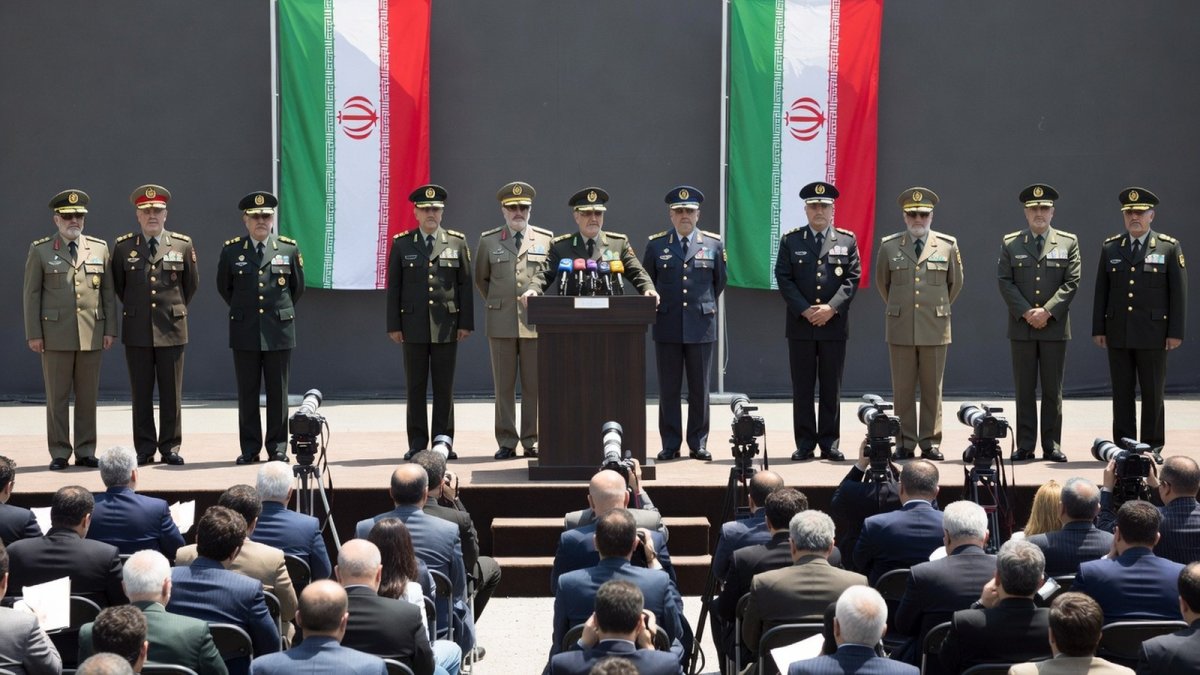
The Islamic Republic of Iran has crossed a new threshold in its confrontation with the United States, offering a cash bounty for the killing or capture of American service members even as a fragile memorandum of understanding governing the Strait of Hormuz expires. The announcement, made by Iranian Army Commander-in-Chief Major General Amir Hatami at a National Journalists' Day ceremony in Tehran, transforms the conflict from a state-on-state military engagement into something more diffuse, more dangerous, and more difficult to contain — a financial jihad that invites non-state actors and individual Iranians into the fight.
Iran's Financial Jihad: Bounty Program Signals Shift in War Strategy as Hormuz MOU Expires
Tehran, Iran – August 16, 2026 — The timing was deliberate. On the very day the US-Iran memorandum of understanding to halt military operations was set to expire, Major General Amir Hatami stood before Iran's journalists and announced a reward of US$30,000 — or 5 billion tomans — for any Iranian who kills or captures an "American aggressor." Iranian women who succeed will receive double that amount: US$60,000. The weapon of anyone who kills an American will be purchased at double its price and replaced with a new one, with the original preserved in a planned museum.
The Bounty as Strategic Messaging
Hatami framed the program as a response to "a large volume of requests" from Iranians wanting to support the war effort, announced via IRIB, the Islamic Republic of Iran Broadcasting, on X/Twitter. But the bounty is less about the actual financial incentive — US$30,000 is modest by international standards — and more about signaling Iran's intent to wage asymmetric warfare that extends beyond the uniformed military. The doubling of the reward for women is a calculated appeal to Iranian nationalism and religious sentiment, positioning the conflict as a defensive jihad in which all segments of society have a stake.
"The Americans made many claims about their military power... but the war with Iran broke that hegemony. America no longer has the authority it once had," Hatami declared, directly challenging the narrative of American military supremacy that has underpinned US deterrence in the Gulf for decades. This is not merely rhetoric; it reflects a strategic assessment in Tehran that the United States, bogged down in a war that began February 28, 2026, with "Operation Epic Fury," is overextended and vulnerable.
The War That Changed the Gulf
The context for this escalation is a conflict that has already reshaped the region's security architecture. Since the US-Israeli airstrikes that killed several Iranian officials — including Supreme Leader Ali Khamenei — Iran has restricted traffic through the Strait of Hormuz, the chokepoint that carried roughly 20% of global oil supply, approximately 20.9 million barrels per day in the first half of 2025. The strait has become what analysts describe as a "global economy kill switch," with Iran using its closure as leverage against a US naval blockade of Iranian ports.
The economic consequences have been severe. Brent crude rose nearly 6% to US$114.44 a barrel on May 5, 2026, as violence flared in the strait.
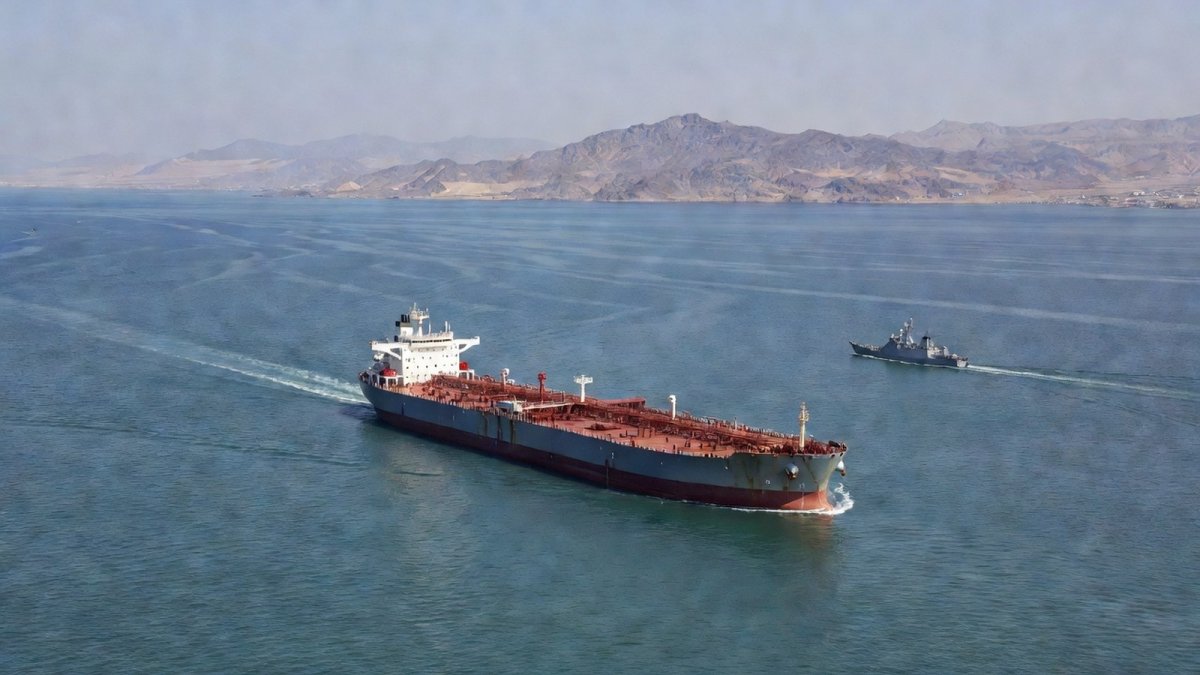
The ripple effects of the Hormuz closure extend far beyond the headline Brent spike, reaching deep into the insurance and logistics arteries of global energy trade. War-risk insurance premiums, now roughly eight times pre-crisis levels, have effectively priced a surcharge into every barrel transiting the Gulf, a cost that refiners in India, China, and Japan — the strait's primary customers — are absorbing with grim resignation. For Japanese utilities and Indian state refiners, the calculus has shifted from spot purchases to long-term contract renegotiations, while some Chinese buyers have begun quietly exploring alternative overland routes through Central Asia, though none offer the volume or cost-efficiency of the sea lane. The LNG dimension is equally fraught: Qatar, which ships nearly all its liquefied natural gas through the strait, faces the prospect of its premium Asian contracts becoming hostage to Iranian naval patrols, pushing Doha into intense diplomacy with both Washington and Tehran.
Gulf Arab governments, caught between their security dependence on the United States and their geographic proximity to Iranian power, have responded with a mixture of public condemnation and private hedging. The UAE's invocation of UN Security Council Resolution 2817 following the August 8 strike on an ADNOC-linked tanker — the 15th attack since March — was a pointed legal rebuke, but Abu Dhabi has simultaneously maintained back-channel communications with Tehran through Omani intermediaries. Saudi Arabia, still wary of Iranian retaliation against its own energy infrastructure, has publicly aligned with the UAE's demand for reopening the strait while privately urging Washington to avoid escalation that could trigger a broader regional war. The economic squeeze is bidirectional: Iran's ports remain under US naval blockade, choking its non-oil exports and forcing Tehran to rely on barter arrangements with Russia and China, while the global economy faces the specter of sustained $100-plus oil that threatens to reignite inflation across emerging markets.
Trump's Territorial Gambit
Into this volatile mix, US President Donald Trump has injected a new and legally dubious element. On August 14, 2026, speaking to supporters at the Nassau County police academy in Garden City, New York, Trump declared: "After we finish defeating Iran, which is being very badly defeated, pretty soon I'll be declaring the Hormuz Strait a territory of the United States." He added, "Essentially, that's what it is... We have the blockade. No ships get through unless we want them to." The following day, he posted an AI-generated image on Truth Social of himself seizing an Iranian-flagged tanker with the caption "It's Our Oil Tanker Now!"
Hatami dismissed Trump's statements with characteristic contempt: "The delusional US president is trying hard to create a winning image of himself. But today, few people in the world take him seriously." He also referenced the July 8, 2026 NATO summit in Ankara, where — according to The Washington Post — Trump was secretly moved off Air Force One into a catering truck and onto a military plane, a Qatari-donated jet, over an alleged Iranian threat. The anecdote, whether accurate in every detail or not, has become a symbol in Tehran of American vulnerability and Trump's diminished standing on the world stage.
The Legal and Strategic Calculus
Iran's position, articulated by Deputy Foreign Minister Kazem Gharibabadi, is that Tehran has reached an agreement with Oman on control of the waterway: "This strait will only be opened and closed under Iran's command... Iran will continue to enforce the blockade."
The Iranian judiciary chief called Trump "criminal and feather-headed" and his remarks "nonsense," while Foreign Minister Abbas Araghchi has blamed the US for the return to violence in the strait. Iran says no decision has been made on a return to talks with the United States, and Trump has characterized negotiating with Iran as "like chess" — a statement that suggests he sees the conflict as a game of strategic positioning rather than a humanitarian and economic catastrophe.
The legal framework governing the Strait of Hormuz is deceptively simple in theory but profoundly contested in practice. Under the UN Convention on the Law of the Sea, straits used for international navigation are subject to transit passage, a right that cannot be suspended even in times of conflict. Iran is not a party to UNCLOS, but it has historically observed transit-passage norms as customary international law — a position that now sits in tension with its assertion of unilateral control over the waterway. Tehran's claim of an agreement with Oman, which shares the strait's southern shore along the Musandam Peninsula, is diplomatically significant but legally dubious; Oman has not publicly confirmed any such arrangement, and Muscat's traditional role as a mediator suggests it would resist being cast as Tehran's co-enforcer. Trump's declaration that the strait could become "a territory of the United States" has no basis in any legal instrument, treaty, or precedent — it is pure political theater, but dangerous theater that undermines the very international order Washington claims to defend.
The historical precedent of the 1980s Tanker War is instructive for what it reveals about the limits of naval power in constricted waterways. During the Iran-Iraq War, both belligerents attacked neutral shipping, prompting the US to reflag Kuwaiti tankers under Operation Earnest Will and escort them through the Gulf. That operation succeeded in maintaining traffic flow, but it did so at enormous cost and with the implicit understanding that the US was protecting its own interests, not asserting sovereignty over the waterway. The current situation is more complex: Iran's IRGC has demonstrated a willingness to strike tankers linked to Gulf states like the UAE, and the August 8 attack on an ADNOC-linked vessel suggests that no flag or ownership structure offers immunity. The legal distinction between blockade and closure is also critical — a blockade is an act of war subject to international rules, while closure of an international strait violates transit passage rights and invites collective response under UNCLOS.
Beneath the legal posturing lies a more fundamental strategic calculus. Tehran's objectives are threefold: sanctions relief that restores its economy, survival of the Islamic Republic's political system, and reassertion of its regional dominance after the devastating February 28 airstrikes that killed Supreme Leader Khamenei. The bounty program, while financially modest, serves these goals by mobilizing Iranian nationalism and signaling that the conflict has entered a phase where conventional deterrence has failed. Washington's objectives are equally clear: regime pressure through economic strangulation and preservation of free navigation as a global public good. Neither side appears willing to compromise, and the June MOU — which both sides claim the other violated — showed how fragile truces are when underlying grievances remain. The expiration of the MOU on August 16 has removed even the thin veneer of restraint, leaving the strait as a flashpoint where a single miscalculated attack could trigger a full-scale confrontation.
Regional Implications
The bounty program, the Hormuz closure, and Trump's territorial rhetoric combine to create a dangerously unstable situation with no clear off-ramp. For Gulf states like Saudi Arabia and the UAE, the calculus is increasingly fraught. They depend on the strait for their oil exports and have been caught between Washington's demands for solidarity against Iran and their own economic interests in maintaining trade flows.
The bounty program introduces a new and unpredictable variable: the activation of non-state actors and proxy networks across the region. Iraqi Shia militias, already deeply integrated into Iran's security apparatus, could interpret the bounty as a call to target American personnel still stationed in Iraq. Hezbollah, while primarily focused on Lebanon's internal crisis, retains the capability to strike US interests in the Eastern Mediterranean if Tehran issues a direct order. The Houthis in Yemen, who have already demonstrated their ability to attack shipping in the Red Sea and Bab el-Mandeb, could extend their operations to the Gulf if Iran provides the necessary intelligence and targeting support. The danger is that the bounty transforms the conflict from a state-on-state military engagement into a diffuse, decentralized campaign where individual actors — motivated by ideology, financial reward, or both — can trigger escalations that neither Tehran nor Washington controls.
Looking ahead to the coming weeks, three scenarios warrant close attention. The first is a return to negotiations, driven by the recognition in both capitals that the current trajectory is unsustainable; Iran has said no decision has been made on talks, but Trump's characterization of negotiating with Tehran as "like chess" suggests he sees room for maneuver. The second scenario is continued low-level attrition, with periodic IRGC attacks on shipping and US retaliatory strikes, maintaining the current state of managed chaos without full escalation. The third, and most dangerous, is a major incident — a US warship struck, a tanker sunk, a mass casualty event — that forces both sides into a confrontation neither wants. Oil prices — with Brent already spiked to US$114.44 a barrel in May — would climb sharply in any of these scenarios, with the most severe case potentially pushing Brent toward $150 and triggering a global recession. The Gulf states, for all their diplomatic efforts, have limited agency in this equation.
The expiration of the MOU on August 16, 2026, leaves both sides without a formal framework for de-escalation. Iran's threat that "the only way is for the Americans to leave the region" — that they "have been effectively expelled and are no longer permitted to enter the Persian Gulf, the Sea of Oman, and the Strait of Hormuz" — suggests Tehran believes it has the upper hand. But the US naval blockade and Iran's economic desperation tell a more complicated story. Neither side can fully win; neither side appears willing to fully disengage.
By Malik Hassan, Staff Writer
This article was produced with AI-assisted research and editorial support. Reporting is based on sources cited in the article.
What's Your Reaction?
 Like
0
Like
0
 Dislike
0
Dislike
0
 Love
0
Love
0
 Funny
0
Funny
0
 Wow
0
Wow
0
 Sad
0
Sad
0
 Angry
0
Angry
0
Middle East Correspondent at Global1.News. Based in Beirut, covering politics, conflict, energy, and society across the Middle East. Brings context and depth to a region often reduced to headlines.









Comments (0)