
In Gaza's Waters, Amputee Children Find Freedom, Confidence and Joy Again
In a small pool tucked inside a rented house in Khan Younis, southern Gaza, a remarkable sound now echoes off the tiles — the laughter of children who have lost limbs to war, discovering for the first time that water can make them weightless. These are not ordinary swimming lessons.
In a small pool tucked inside a rented house in Khan Younis, southern Gaza, a remarkable sound now echoes off the tiles — the laughter of children who have lost limbs to war, discovering for the first time that water can make them weightless. These are not ordinary swimming lessons. They are acts of defiance against the cruelest statistics in the modern world: Gaza now holds the tragic record for the highest number of child amputees per capita on Earth, with an estimated 4,000 children having lost limbs since the war began.
In Gaza's Waters, Amputee Children Find Freedom, Confidence and Joy Again
Khan Younis, Gaza – This week — The pool is small, unremarkable by any international standard, but for 90 boys and girls it has become the most important place in Gaza. Twice a week, children with amputated limbs and orphaned children climb carefully into the water under the guidance of coaches who understand their struggle intimately — because several of those coaches are amputees themselves.
The programme, run jointly by the Tanteesh Foundation and the NGO Heal Palestine, began in late July and represents a lifeline for children who have endured what no child should ever endure. Steve Sosebee, who heads Heal Palestine, put it bluntly: "There are many kids who lost their legs or arms or saw their parents and siblings die and are suffering enormously both physically and psychologically. They are no longer children, and we want them to be children again."
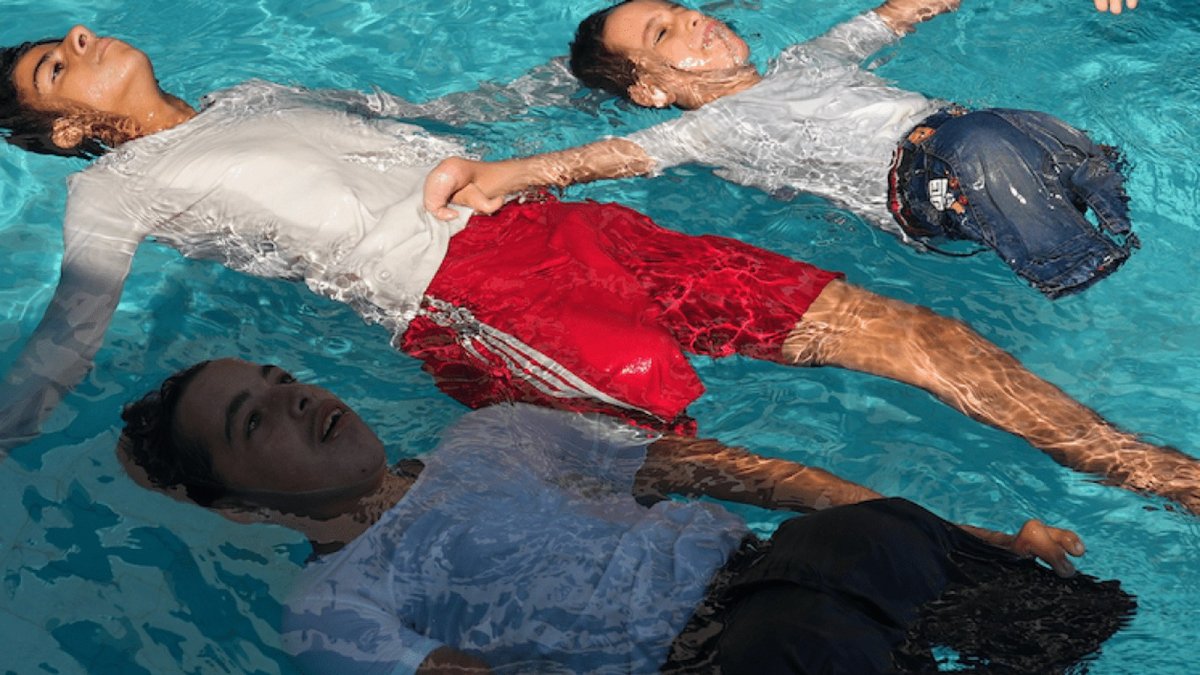
Water Where Weight Disappears
The man behind the coaching is Amjed Tantish, who has been teaching children in Gaza to swim for more than 20 years. His Gaza swimming school has partnered with Heal Palestine to create something unprecedented in this devastated territory. Tantish has assigned his most experienced instructors — six men and six women — to work with the amputee and orphaned children. One of those instructors lost a leg as a child and now serves as living proof that the water holds no limits.
"Everyone can learn to swim, even if they lack legs or arms," Tantish insists. And remarkably, the results back him up. "After the first class, most of these children are already floating on their own, even though they started from scratch."
The pool itself is located in the house that Heal Palestine rented as an office in Gaza — a humble setting for something extraordinary. Tantish says he is not aware of any other pool currently operating anywhere in Gaza. This small rectangle of water, surrounded by the chaos of war, has become a sanctuary. For the children who arrive with what Ibrahim Abu Jarad of Heal Palestine describes as "a serious, closed expression," the transformation begins the moment they enter the water. "They get in the water and begin to regain their energy and joy," Abu Jarad said.
Faces of the Programme
Ahmed al Masri, 14, knows exactly what this programme means. He lost his right leg in July 2025 while searching for food for his family. The amputation first came below the knee, then extended above the thigh. He endured several operations and spent five months in a wheelchair before finding his way to this pool.
"I am happy in the water. I feel increasingly confident, and I want to keep improving," Ahmed said. His words carry the weight of someone who has seen too much. "Swimming has changed my life. For a few hours I feel weightless, and I also leave the tent, escape the heat and the flies, and talk to people."
Saleh al Satari, also 14, lives in displacement in Al-Mawasi, southern Gaza. He lost his left leg after being wounded in an Israeli airstrike in July 2024 while returning from the market. His journey into the water began with fear. "At first I was scared, but learning to swim has changed many things in me. I feel stronger and more energetic. In the water, I feel I regain movement. Everything is easier, lighter, and the constant fear of falling disappears."
Then there is Rahaf Abu Aathra, just 8 years old, who lost a foot after being run over by a truck. Her progress is measured in small victories that mean everything. "I can already put my head under water, and I am learning to float. In the water, I feel I move faster, and that helps me lose my fear."
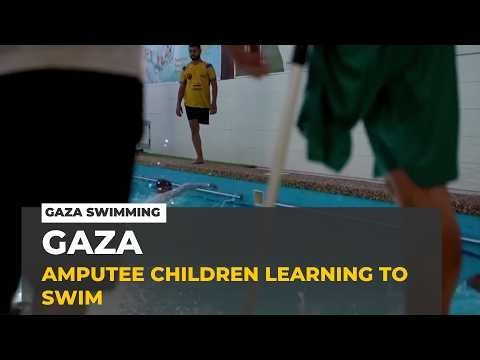
Gaza's Shocking Toll
The numbers behind these personal stories are almost incomprehensible. The United Nations estimates that since October 2023, around 42,000 people in Gaza have suffered life-altering injuries — and a quarter of them are children. That means roughly 10,500 children have been permanently changed by this war, their bodies and their futures altered in ways that will follow them for the rest of their lives.
Gaza now holds the world record for the highest number of child amputees relative to its population. An estimated 4,000 children have lost limbs since the war began — a figure that should shake the conscience of the world. These are not statistics. They are children like Ahmed, Saleh and Rahaf, who should be worrying about schoolwork and playground games, not learning to navigate life without a limb.
The swimming programme is a direct response to this crisis. Heal Palestine, created two and a half years ago under Sosebee's leadership, provides education, medical and psychological care, food and activities funded through international donations. The swimming school run by Tantish has been teaching Gaza's children for over two decades. Together, they have built something that addresses not just the physical injuries but the psychological wounds that run even deeper.
South African Perspective: Lessons From Natalie du Toit
For South Africans, this story resonates on a deeply personal level. We know what it means to watch an amputee defy the limits of the human body in the water. We have our own national treasure in Natalie du Toit, who lost her left leg in a scooter accident in 2001 and went on to become the first amputee swimmer to qualify for an Olympic final at Beijing 2008 in the 10km open water event. She also collected five Paralympic gold medals, proving that the water does not discriminate.
Our swimming pedigree runs deep. Chad le Clos announced himself to the world with Olympic gold at London 2012, memorably defeating Michael Phelps in the 200m butterfly. Tatjana Schoenmaker brought home Olympic gold from Tokyo 2020 in the 200m breaststroke. Rebecca Meder and Lara van Niekerk have carried the torch into the current generation. Swimming South Africa has long understood that the pool is a place where barriers dissolve and potential reveals itself.
The work happening in Khan Younis echoes the philosophy that has driven South African para-sport to global prominence. SASCOC and the development pathways for para-sport in South Africa have shown what is possible when talent meets opportunity. The amputee coaches in Gaza, led by Tantish's experienced team, are doing exactly what our own coaches have done for decades — proving that ability, not disability, defines what a person can achieve.
Sport's Healing Power at Home and Abroad
South Africans understand the healing power of sport better than most nations on Earth. We watched Nelson Mandela walk onto the field at Ellis Park in 1995, wearing a Springbok jersey, and saw a fractured nation begin to knit itself back together. That moment was not about rugby. It was about using sport as a vehicle for reconciliation, for unity, for hope.
The same principle is at work in that small pool in Khan Younis. Sport — in this case, swimming — is being used to restore something that war has stolen from children. It is not just about learning to float or kick. It is about reclaiming childhood, rebuilding confidence, and reminding these young people that their bodies are still capable of joy and movement.
In South African townships, grassroots swimming programmes have long understood this dual role of sport. The pool is a place of safety, of discipline, of possibility. It is where children learn that they can overcome obstacles — whether those obstacles are physical, economic or social. The transformation agenda in South African sport has always been about more than numbers on a scoreboard. It is about opening doors that were previously closed, creating pathways that did not exist before.
What Tantish and Sosebee are doing in Gaza is the same work, under infinitely harder conditions. They are not waiting for peace to restore these children's lives. They are using the water as a tool of resistance against despair, a declaration that these children matter, that their joy is worth fighting for.
What to Watch For
The swimming lessons for amputee and orphaned children are scheduled to continue through August, September and October. But the organisers are already thinking bigger. There are discussions about extending the programme and heating the pool for the winter months, ensuring that these children do not lose their sanctuary when the weather turns cold.
Tantish has also managed in recent months to open several seawater pools along Gaza's beaches. Around 1,600 children currently attend his classes, funded through international donations coordinated under the Swim with Gaza initiative. The scale of the need is vast, but the response has been determined.
For South Africans watching from afar, there is a clear call to action. The international community has a role to play in supporting programmes like this one. Donations to Heal Palestine and the Swim with Gaza initiative directly fund these classes, these coaches, these moments of freedom for children who have lost so much. The water does not care about politics or borders. It simply holds, supports and empowers.
As Sosebee said, these children are no longer children — the war has stolen that from them. But in the water, even for a few hours, they get a piece of it back. They float. They laugh. They feel weightless. And for a moment, the weight of everything they have lost disappears.
That is not just swimming. That is healing. And it is happening, one stroke at a time, in a small pool in Khan Younis.
By Dante Williams, Staff Writer
This article was produced with AI-assisted research and editorial support. Reporting is based on sources cited in the article.
What's Your Reaction?
 Like
0
Like
0
 Dislike
0
Dislike
0
 Love
0
Love
0
 Funny
0
Funny
0
 Wow
0
Wow
0
 Sad
0
Sad
0
 Angry
0
Angry
0

Breaking News and Investigations Correspondent at Global1.News. Based in London, covering global breaking news, security, and investigative stories. Known for digging deeper and connecting the dots across continents.










Comments (0)