
How the Super-Rich Are Fuelling the Climate Crisis — and Making Latin America Pay
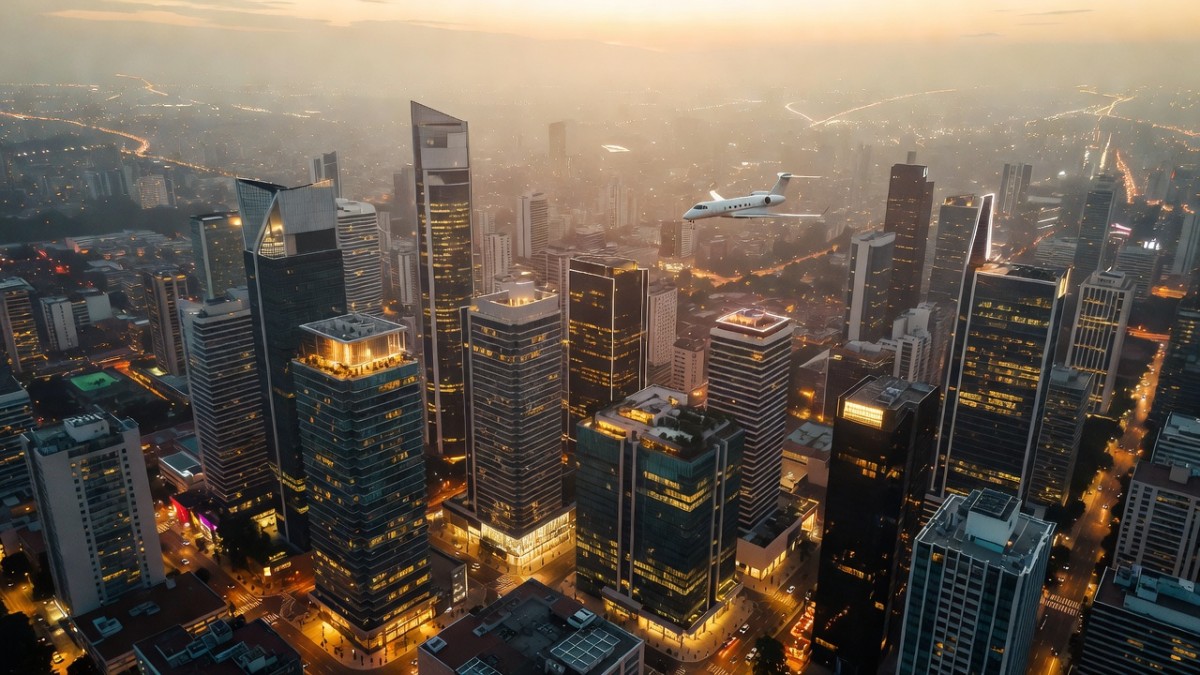
In the sweltering heat of a São Paulo summer, a street vendor pours water over her head to stay conscious, while a few kilometers away, a private helicopter ferries a financier to a rooftop helipad in the affluent district of Jardins. This is the stark geography of climate inequality - a chasm that a data-driven investigation from Al Jazeera English's AJ Labs has quantified with brutal precision.
In the sweltering heat of a São Paulo summer, a street vendor pours water over her head to stay conscious, while a few kilometers away, a private helicopter ferries a financier to a rooftop helipad in the affluent district of Jardins. This is the stark geography of climate inequality — a chasm that a data-driven investigation from Al Jazeera English's AJ Labs has quantified with brutal precision. For Latin America, a region that contributes a fraction of global emissions yet suffers the most brutal consequences, it is the defining economic and moral crisis of our era.
HOW THE SUPER-RICH ARE FUELLING THE CLIMATE CRISIS — AND MAKING LATIN AMERICA PAY
São Paulo, Brazil - September 4, 2026 - By the tenth day of 2026, the world's richest 1 percent had already exhausted their entire fair-share carbon budget for the year — the amount of CO2 they could emit while keeping the planet within 1.5 degrees Celsius of warming. The richest 0.1 percent blew through theirs on January 3. The Al Jazeera English episode "How the rich are fuelling the climate crisis for everyone else" turns those figures into a damning portrait of who is burning the planet — and who is left to pay for it.
The 10-Day Carbon Year: Pollutocrat Day Comes Early
The arithmetic of climate justice is unforgiving. According to the Stockholm Environment Institute and Oxfam, the fair per-person annual carbon budget for a 1.5°C world is approximately 2.1 tonnes of CO2, calculated against a global population of 8.5 billion projected for 2030. Yet the richest 1% of humanity emits an average of 75.1 tonnes per person per year—a daily rate of 0.206 tonnes. At this pace, their 2026 budget is mathematically exhausted in just 10.2 days. This is the "Pollutocrat Day" phenomenon: the wealthiest have already spent the planet's allowance for the year before most of us have even paid our January rent.
The implications are staggering. To align with the Paris Agreement's 1.5°C threshold, this elite demographic must slash their emissions by 97% by 2030—a reduction that would require dismantling the very asset base that generates their wealth. The data reveals a temporal distortion: if every human lived like the richest 0.1%, the entire global carbon budget would be exhausted in under three weeks. This is not hyperbole; it is a linear projection of consumption rates. For Latin America, where the average citizen emits a fraction of this amount, the message is clear: the region's development space is being colonized by the atmospheric debt of a tiny global elite. The poorest 50% of humanity — people who emit less carbon in an entire year than a member of the richest 0.1% emits in a single day — are the ones being told to tighten their belts.
Billionaire Portfolios: Assets That Emit in Minutes
The AJ Labs investigation goes beyond lifestyle emissions to expose the hidden engine of inequality: investment portfolios. The average billionaire's annual per capita investment emissions are a staggering 1.9 million tonnes of CO2 equivalent—346,000 times the average person's total footprint. To visualize this, the video notes that this is equivalent to circumnavigating the planet almost 10,000 times in a private jet. This is not about the occasional yacht trip; it is about the structural composition of wealth itself. Approximately 60% of billionaire investments are parked in high-impact fossil fuel and mining sectors, which emit 2.5 times more than an average S&P Global 1200 investment.
This concentration is a policy choice, not an accident of nature. The Oxfam report "Climate Plunder," published on October 29, 2025, documents that since 1990, the richest 1% have burned roughly 15% of the total carbon budget. While the per capita emissions of the richest 0.1% rose by 92 tonnes between 1990 and 2023, the poorest half of humanity saw an increase of just 0.1 tonne. The share of global emissions held by the top 1% rose by 13% during this period, while the poorest 50% saw their share fall by 3%. In 2024, the first year average global temperatures rose above the 1.5°C mark, fossil-fuel emissions hit an all-time high. The assets of the ultra-rich are not passive holdings; they are active agents of atmospheric destruction, operating 24/7 in oil fields, coal plants, and mining operations across the Global South.
Latin America's Two Brazils: The Elite's Carbon Footprint
Nowhere is the divide more visible than in Brazil, a country that contains multitudes within its borders. The World Inequality Report 2025, released by the World Inequality Lab under the direction of Thomas Piketty and Lucas Chancel, paints a portrait of extreme bifurcation. Brazil's richest 10% earn 63.5 times the income of the poorest 50%, a dramatic increase from the 53.7 times recorded in 2014. The top 10% now capture approximately 59% of national income, while the bottom 50% receive just 9%. This economic chasm translates directly into carbon chasms: the elite's consumption patterns—frequent air travel, large homes, industrial agriculture—mirror the emissions profiles of the global super-rich, while the favela residents of Rio and the riverine communities of the Amazon live on the edge of subsistence.
The wealth concentration is even more stark when examining assets. The top 10% of Brazilians hold 70.1% of the country's wealth, with the top 1% alone controlling 37%. The poorest half of the population scrapes by with just 2.4% of the national wealth. This is not merely an economic statistic; it is a carbon map. The wealthy invest in cattle ranching that drives deforestation in the Amazon, in agribusiness that relies on fossil-fuel-intensive fertilizers, and in real estate developments that pave over green spaces in São Paulo. The poor, meanwhile, are pushed into precarious housing on floodplains and hillsides, where they are most exposed to the climate shocks that elite consumption accelerates. The "two Brazils" are not just divided by income; they are divided by atmospheric responsibility.
Who Pays the Price: Amazon Fires, Heat and the Poorest Half
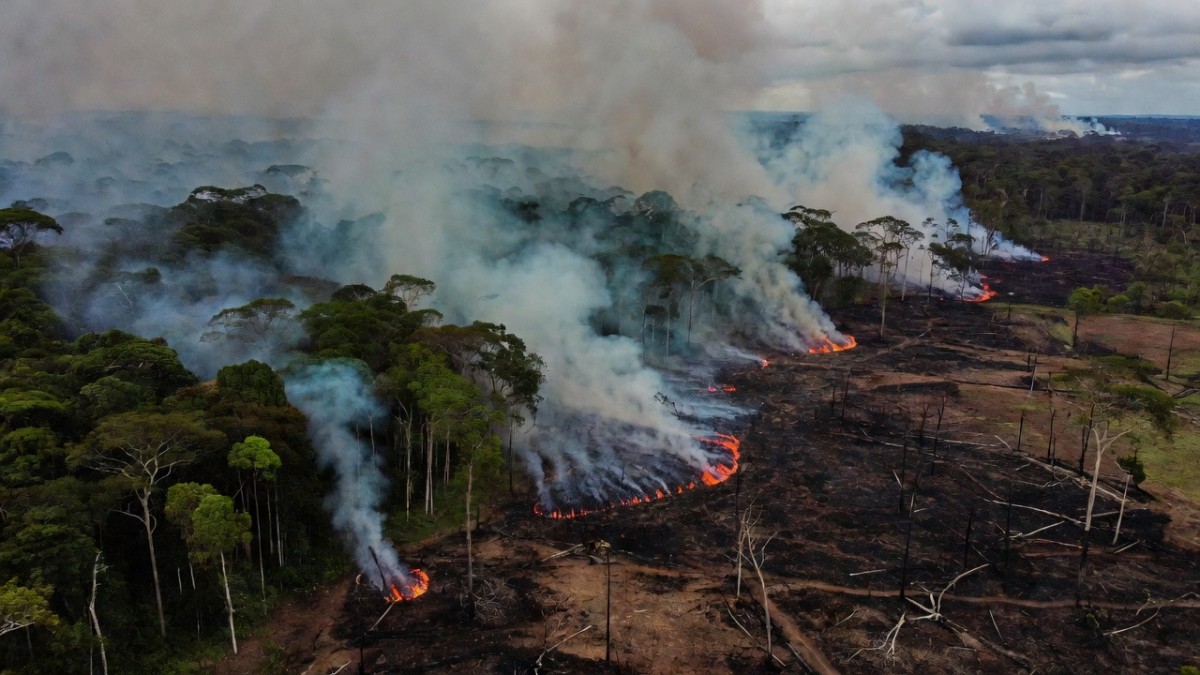
The consequences of this carbon inequality are not distributed evenly. Latin America contributes only roughly 7-10% of global emissions, yet it is one of the most climate-vulnerable regions on Earth. The poor—favela residents, Amazon riverine and Indigenous communities, small farmers—suffer first and worst. In August 2026, Amazon fire hotspots surged dramatically, with Amazonas state seeing a 407% increase in hotspots amid a deepening drought and an El Niño that the World Meteorological Organization now warns could reach exceptional levels by September. The Brazilian government has warned of a historic fire season this spring, threatening to turn the world's largest rainforest from a carbon sink into a carbon source.
Extreme heat is another silent killer that operates along class lines. In Brazilian cities, the poorest neighborhoods have the least green space, the worst housing stock, and the highest heat exposure. The urban heat-island effect makes densely built favelas and peripheral bairros measurably hotter than leafy, tree-lined districts of the same city. Heat stress hits outdoor workers—construction laborers, street vendors, waste pickers—and children hardest. The emissions of the richest 1% in a single year are projected to cause approximately 1.3 million heat-related deaths by the end of the century, a death toll that will fall disproportionately on the Global South. In the Pantanal, the world's largest tropical wetland, recurrent fire crises have decimated wildlife and displaced traditional communities who depend on the ecosystem for their livelihoods.
The $44 Trillion Invoice Written Against the Global South
The financial architecture of climate injustice is now being quantified with precision. The UN Fund for Responding to Loss and Damage (FRLD), operationalized after COP28, has received total pledges of approximately $815-821 million since its inception, yet only about $397 million has actually been paid in. Barbados Prime Minister Mia Mottley has called this capitalization "deeply disappointing" given the hurricane destruction that regularly devastates Caribbean nations. The first grants, totaling roughly $250 million, are only now being rolled out. This is a pittance compared to the scale of the crisis. Research indicates that damage to low and lower-middle-income countries from the super-rich's excess emissions could reach up to $44 trillion by 2050.
This is an invoice written by the wealthy against the poor. The COP30 summit in Belém, Brazil, which closed on November 22, 2025, under the chairmanship of President Lula da Silva, produced the "Global Mutirão" or Belém Political Package. It calls for mobilizing $1.3 trillion per year by 2035 for developing-country climate action, tripling adaptation finance by 2035, and operationalizing the loss-and-damage fund. It also launched the Tropical Forest Forever Facility and a Belém Mission to 1.5°C. Yet the final text contained no formal fossil-fuel phase-out roadmap, disappointing more than 80 countries. The gap between rhetoric and reality remains vast: the $1.3 trillion goal is more than four times the $300 billion public-finance target developed countries set at COP29 in Baku, and the loss-and-damage fund remains a rounding error against the $44 trillion in damages projected.
From Belem to Santa Marta: Latin America Pushes Back
Despite the bleak data, Latin America is emerging as a leader in the push for climate justice. From April 24-29, 2026, Colombia's Environment Minister Irene Vélez Torres and the Netherlands co-hosted the first international conference on transitioning away from fossil fuels in Santa Marta, Colombia. The summit brought together 57 countries representing one-third of the world economy. While no binding commitments were made, participants agreed to build national and regional roadmaps tied to their Nationally Determined Contributions (NDCs). Tuvalu and Ireland will host the second summit in 2027, and Brazil's COP30 presidency is preparing a global fossil-fuel roadmap for COP31, which will be held in Antalya, Turkey, in November 2026, with Australia leading negotiations.
The diplomatic push is backed by concrete policy proposals. Brazil's G20 presidency in 2024, held in Rio de Janeiro, achieved a historic agreement among finance ministers to cooperate on effectively taxing ultra-high-net-worth individuals. Brazil has championed a 2% minimum wealth tax on billionaires with assets over $1 billion, a measure estimated to raise approximately $250 billion per year, according to research by economist Gabriel Zucman. Currently, billionaires are taxed at an effective rate of just 0.3% of their wealth. Spain and Brazil have jointly pushed this global tax-cooperation agenda. The demand is clear: if the super-rich are responsible for a disproportionate share of emissions, they must pay a proportionate share of the transition costs. The window for voluntary action has closed; what is needed is structural fiscal reform.
The Bottom Line — Climate Justice Is a Tax Question
The evidence is irrefutable: climate change is not a universal human failing but a concentrated act of carbon plunder by a tiny elite. Oxfam's climate lead, Nafkote Dabi, has articulated the path forward with clarity. The organization demands taxes on extreme wealth and income, windfall taxes on fossil fuel companies, taxes and restrictions on private jets and superyachts, and the implementation of a UN Tax Convention. These are not punitive measures; they are corrective mechanisms designed to align the incentives of the ultra-rich with the survival of the planet. The richest 1% have exhausted their fair-share budget for 2026 in ten days; they must be forced to account for the remaining 355 days of atmospheric damage they will cause.
For Latin American readers, the message is one of both urgency and agency. The region's governments, from Brazil's Lula to the 57 nations that gathered in Santa Marta, are pushing back against a global economic order that treats their citizens as disposable. The $44 trillion invoice must be paid, not through further austerity imposed on the poor, but through wealth taxes on the billionaires who have profited from planetary destruction. The poorest 50% of humanity, who emit less in a year than the top 0.1% emits in a day, deserve a future where their development is not constrained by the excesses of others. The fight for climate justice is a fight for fiscal justice, and it is a fight that Latin America is increasingly leading. The question is whether the global community will listen before the Amazon burns again, before the glaciers of the Andes vanish, and before the Caribbean is battered by yet another superstorm.
By Elena Vasquez, Staff Writer
This article was produced with AI-assisted research and editorial support. Reporting is based on sources cited in the article.
What's Your Reaction?
 Like
0
Like
0
 Dislike
0
Dislike
0
 Love
0
Love
0
 Funny
0
Funny
0
 Wow
0
Wow
0
 Sad
0
Sad
0
 Angry
0
Angry
0

Latin America Correspondent at Global1.News. Based in Mexico City, covering politics, economics, energy, and culture across the region. Brings an on-the-ground perspective to stories spanning from the Rio Grande to Patagonia.













Comments (0)