
Houthi Double-Tap Strike on Cargo Ship Tihamah Kills 6 in Bab al-Mandeb
The killing of six people aboard the Egypt-owned cargo ship Tihamah in the Bab al-Mandeb Strait on Tuesday marks a grim escalation in the Red Sea crisis, shattering a fragile threshold that had held even through the opening months of the US-Iran war.
The killing of six people aboard the Egypt-owned cargo ship Tihamah in the Bab al-Mandeb Strait on Tuesday marks a grim escalation in the Red Sea crisis, shattering a fragile threshold that had held even through the opening months of the US-Iran war. The Houthi double-tap strike — a second missile fired directly at rescue personnel — has transformed the maritime conflict from a campaign of harassment into one of deliberate mass casualty, with immediate diplomatic reverberations from Riyadh to Islamabad.
The attack comes as the region's two critical chokepoints — Bab al-Mandeb and the Strait of Hormuz — are simultaneously throttled, with shipping through both waterways collapsing to historic lows. As Saudi Arabia prepares a potential sea and land offensive against the Houthis, and as Pakistan signals readiness to join a Saudi-led maritime coalition, the contours of a wider regional war are sharpening by the hour.
Double-Tap Strike on Tihamah Kills Six, Wounds Ten in Bab al-Mandeb; Pakistan and Yemen Condemn 'Terrorist' Attack as Red Sea Shipping Collapses
Dubai, United Arab Emirates – August 12, 2026 — The Houthi attack on the Tihamah was not a single strike but a calculated double-tap. According to Yemen's Transport Ministry, the group fired three ballistic missiles at the commercial vessel on Tuesday morning, sparking a fire and causing "significant damage" as the crew "lost control of the vessel." The ship, carrying a cargo of food, had departed the Yemeni government-held port of Al Mokha on Saturday, August 9, according to maritime security firm Ambrey.
Then came the second act. Yemen's coastguard reported that as rescue personnel were evacuating the dead and wounded, the Houthis fired another missile directly at the rescue operation site. "The attack struck the site of the rescue operation and resulted in deaths and injuries among the forces participating in the response operation," the coastguard said. At least two Yemeni rescuers from the National Resistance Forces (NRF), an anti-Houthi military group, were killed in that follow-up strike. In total, ten people were wounded: seven crew members, two Coast Guard personnel, and one NRF member.
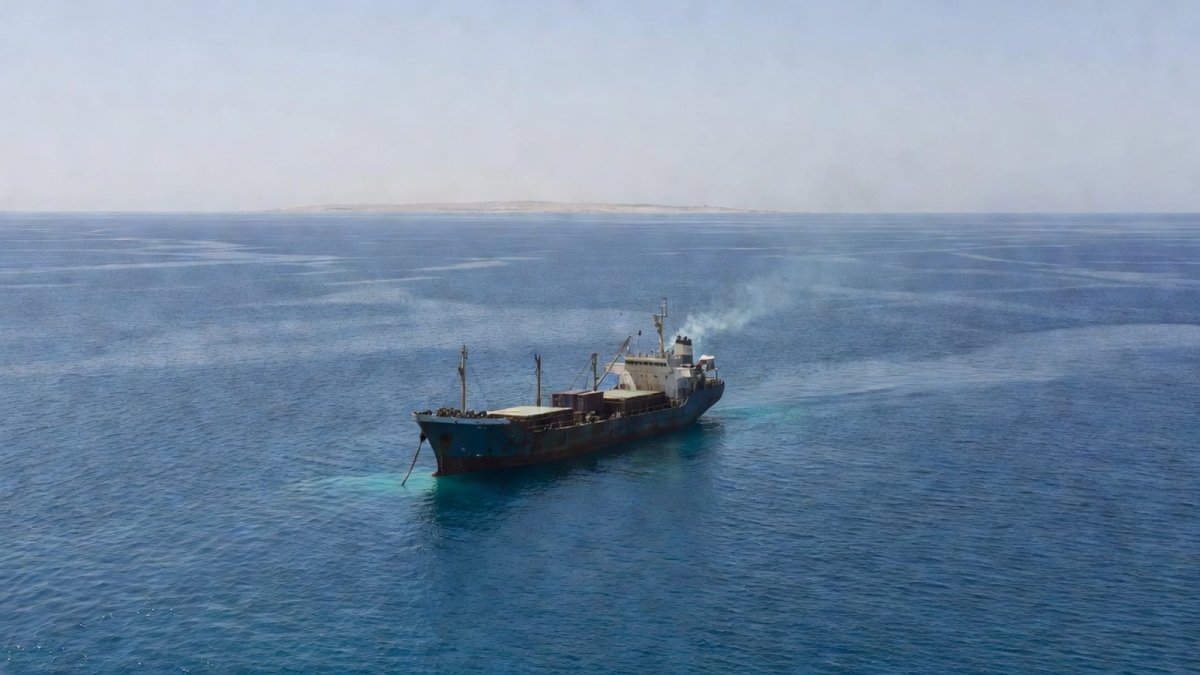
Yemen's internationally recognised government accused the Houthis of killing at least six people and wounding ten in the "double-tap strike." The Foreign Ministry condemned the attack and called on the international community "to move from condemnation to effective and decisive action" against the group. The Transport Ministry labelled it a "terrorist" attack, warning that the targeting of the Tihamah demonstrated the Houthis' expanding threats to commercial vessels and civilian maritime infrastructure, and could disrupt food and consumer goods supplies to millions of Yemenis.
The Houthis, for their part, claimed via their Saba news agency that they had attacked "a Saudi ship carrying military equipment" in Bab al-Mandeb. They did not name the vessel. Ambrey, however, stated definitively that the Tihamah was not Saudi-owned or operated, and LSEG data lists Egyptian companies as the vessel's owners and managers. The Saudi Center for International Communication did not respond to requests for comment. The Houthis later confirmed attacking a ship they said carried Saudi military equipment, a claim the Yemeni government and maritime security analysts have dismissed as a pretext for the strike on a civilian food carrier.
First Shipping Deaths Since the Iran War Began
These are the first shipping deaths linked to the Houthis since the US-Iran war began on February 28, 2026. The distinction matters. For over two years, the Houthis have attacked dozens of vessels in the Red Sea, but the attacks were largely designed to disrupt shipping lanes and assert leverage, not to maximise casualties. Tuesday's double-tap changes that calculus. The deliberate targeting of rescue personnel is a tactic more commonly associated with sniper teams and improvised explosive devices in ground warfare, not missile strikes at sea.
The UK Maritime Trade Operations (UKMTO) reported a vessel in the strait hit by an unknown projectile, confirming the incident. The UN called for restraint, warning that renewed hostilities risk "drawing the country into a broader regional confrontation, with devastating consequences for its people." But the UN's words carry little weight in Sanaa, where the Houthis have declared a maritime embargo against Saudi Arabia in the Red Sea since July 20, 2026, citing what they describe as a Saudi siege of Yemen. Riyadh denies Yemen is under siege.
The collapse of the UN-backed 2022 truce followed a Saudi air strike on the runway of Sanaa airport on July 13, which prevented the landing of an Iranian flight carrying a high-ranking Houthi delegation. The Houthis responded by attacking Abha airport in southwestern Saudi Arabia and announcing the blockade on Saudi shipping. The Saudi-led coalition has since struck Houthi-controlled Hodeidah and Kamaran, Yemen's largest island in the Red Sea, while the Houthis have launched attacks on government-held areas including al-Makha and Marib, killing dozens of troops and civilians.
Pakistan's Response: Condemnation and Coalition Readiness
Pakistan's reaction has been swift and pointed. The Ministry of Foreign Affairs condemned the attack, confirming it is investigating and working with Saudi and Yemeni authorities. Foreign Office spokesperson Tahir Hussain Andrabi issued a strong statement: "Pakistan strongly condemns this attack on a non-combatant commercial vessel." He said such attacks "endanger innocent lives, constitute a violation of international law, and pose a serious threat to freedom of navigation, maritime security, and the safety of commercial shipping in the Red Sea."
Three Pakistani nationals were among the dead. Pakistan is in contact with Saudi authorities and the internationally recognised government of Yemen, with efforts underway for the retrieval and repatriation of the mortal remains of the deceased and medical assistance to the injured. Deputy Prime Minister and Foreign Minister Ishaq Dar condemned the attack, expressed condolences, and directed Pakistan's mission in Riyadh to remain in contact with Saudi authorities and the Yemeni government.
But the diplomatic language masks a deeper strategic shift. Pakistan has joined a Saudi-led maritime coalition focused on protecting freedom of navigation and maritime security. Andrabi stated that Pakistan is "ready and willing to assist Saudi Arabia and other coalition partners" in implementing the coalition's communiqué. This is not abstract rhetoric. Pakistan's Defence Minister Khawaja Asif told Bloomberg that the US and Iran are "coming close to some sort of an arrangement" on Hormuz — a signal that Islamabad sees itself as a key player in the region's maritime security architecture, not a bystander.
Shipping Collapse: Bab al-Mandeb and Hormuz in Parallel Freefall
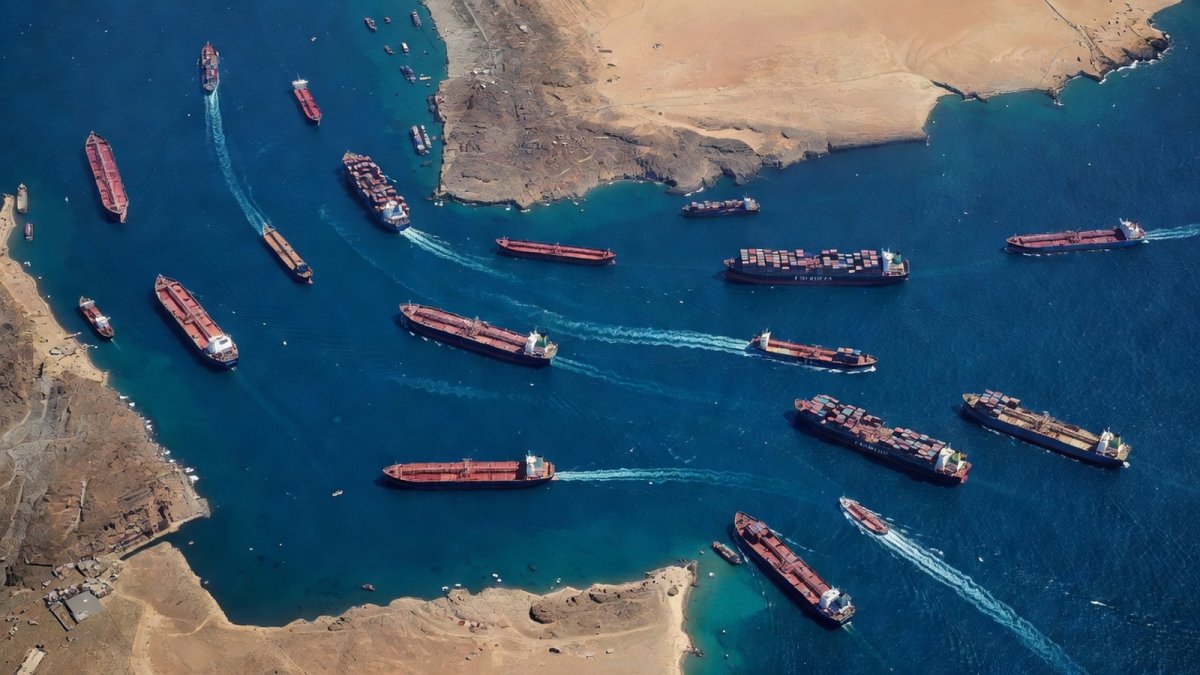
The Tihamah attack is occurring against a backdrop of unprecedented maritime contraction. Shipping through Bab al-Mandeb and the Red Sea has fallen more than 50% since Houthi attacks began in 2023. Last week, an average of 32 ships per day passed through the strait, according to data from Kpler, down from about 50 before the Houthi blockade was announced last month. The trend is accelerating, not stabilising.
In the Strait of Hormuz, the numbers are even more stark. Just six ships passed through on Monday, down from a 10-day average of about 11 and prewar levels of roughly 130-140. The near-total collapse of Hormuz traffic is a direct consequence of the US naval blockade on Iran, announced in April and reimposed on July 14. Some Middle East countries have turned to the Red Sea as an alternative export route for oil, but the Houthi attacks have further limited those options, leaving Gulf producers with few viable pathways to global markets.
The parallel strangulation of both chokepoints has created a feedback loop of risk. Insurance premiums for Red Sea transits have soared, pushing more shippers to reroute around the Cape of Good Hope, which adds weeks to voyages and increases costs. But with Hormuz effectively closed, the Red Sea becomes the only viable shortcut for Gulf oil — and the Houthis know it. Their blockade is designed to squeeze Saudi Arabia precisely where it hurts most: revenue.
The US-Iran Dimension: Vela Nova and the Blockade's Reach
While the Houthis struck in the Red Sea, US forces were enforcing the blockade in the Gulf of Oman. US Central Command fired two Hellfire missiles at the Panama-flagged container ship Vela Nova after it attempted to reach an Iranian port in violation of Washington's naval blockade. The missiles disabled the vessel's steering gear after it ignored repeated warnings. The vessel was struck about 71 nautical miles (131 km) off the coast of Pakistan.
This was the 12th vessel attacked by US forces since the blockade was announced in April, and the third since it was reimposed on July 14. The Vela Nova had recently made port calls in Mumbai and Port Klang, Malaysia. Charlie Brown, senior advisor at United Against Nuclear Iran, said the incident "underscores the heightened scrutiny now being applied to Iran-related shipping." US Central Command did not say if any crew members were wounded.
The two incidents — the Houthi double-tap in Bab al-Mandeb and the US strike in the Gulf of Oman — are separate in geography but linked in strategy. The Houthis are Iran's most effective proxy, and their blockade of Saudi shipping is a direct extension of Tehran's broader war effort. The US blockade of Iranian ports is designed to cut off that support. But the Houthis have shown they can operate independently, with their own missile stockpiles and tactical autonomy. The Tihamah attack suggests they are escalating precisely as the US and Iran appear to be moving toward some sort of arrangement.
Regional Calculus: Mecca Pact, Saudi Offensive, and the Search for Clarity
The strategic backdrop to Tuesday's attack is the newly signed "Mecca Pact" — a joint defence pact between Saudi Arabia, Pakistan, and Turkey signed in early August, aimed at strengthening regional security. The pact is widely seen as a response to the collapse of the Yemen truce and the broader Iran war. Pakistan's readiness to assist Saudi Arabia in the maritime coalition is a direct outgrowth of this pact, and the Tihamah attack will test its operational relevance.
A July 30 Guardian report indicated that Saudi Arabia is preparing a sea and possible land offensive against the Houthis, with troop movements inside Yemen concentrating forces for what could be an attack on al-Bayda, a governorate captured by the Houthis in 2020-21. The Houthis, meanwhile, have escalated their own attacks, launching 10 missiles and four drones at sites on Yemen's western coast on Tuesday, and claiming ballistic missile and drone attacks "targeting Saudi military buildups, weapons depots and command posts" in al-Makha and central Marib province.
The UAE's diplomatic adviser, Dr Anwar Gargash, captured the regional mood when he said the region cannot remain "in a state of neither war or peace" and that the future requires "clarity in vision and direction" as negotiators work on a revised US-Iran deal. Qatar's Foreign Ministry spokesman, Majed Al Ansari, added that negotiations between Oman and Iran on shipping in the Strait of Hormuz are at an advanced stage, discussing an alternative route for ships carrying much of the world's oil supply. "We have heard positive feedback from both countries," he said.
But the Tihamah attack complicates those negotiations. The Houthis have demonstrated that they can escalate faster than diplomats can de-escalate. The double-tap strike was not just an attack on a ship; it was a message to Saudi Arabia, Pakistan, and the international community that the Houthis will not be contained by maritime coalitions or defence pacts. As the region lurches toward a broader confrontation, the Red Sea has become the front line — and Tuesday's deaths are likely only the beginning.
By Malik Hassan, Staff Writer
This article was produced with AI-assisted research and editorial support. Reporting is based on sources cited in the article.
What's Your Reaction?
 Like
0
Like
0
 Dislike
0
Dislike
0
 Love
0
Love
0
 Funny
0
Funny
0
 Wow
0
Wow
0
 Sad
0
Sad
0
 Angry
0
Angry
0

Middle East Correspondent at Global1.News. Based in Beirut, covering politics, conflict, energy, and society across the Middle East. Brings context and depth to a region often reduced to headlines.













Comments (0)