
Erdoğan, Abbas Vow to Defend Palestinian Cause as Israel Escalates West Bank Pressure
ANKARA — In a display of strategic solidarity, Turkish President Recep Tayyip Erdoğan hosted Palestinian President Mahmoud Abbas in Ankara on Wednesday for talks that underscored the deepening alignment between Ankara and Ramallah amid Israel’s intensifying settlement expansion and...
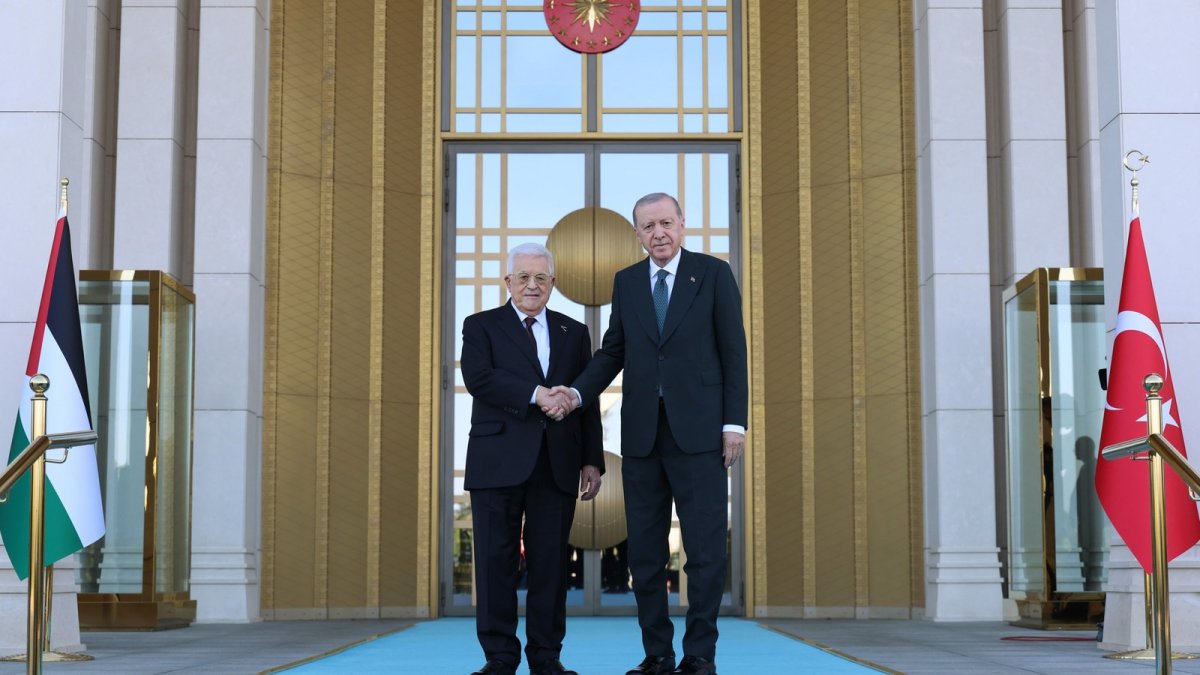
ANKARA — In a display of strategic solidarity, Turkish President Recep Tayyip Erdoğan hosted Palestinian President Mahmoud Abbas in Ankara on Wednesday for talks that underscored the deepening alignment between Ankara and Ramallah amid Israel’s intensifying settlement expansion and forced displacement in the occupied territories. The meeting came just days after the signing of the landmark Mecca Joint Defense Agreement among Saudi Arabia, Turkey, and Pakistan — a pact Abbas explicitly referenced as a potential foundation for regional stability.
Erdoğan, Abbas Vow to Defend Palestinian Cause as Israel Escalates West Bank Pressure
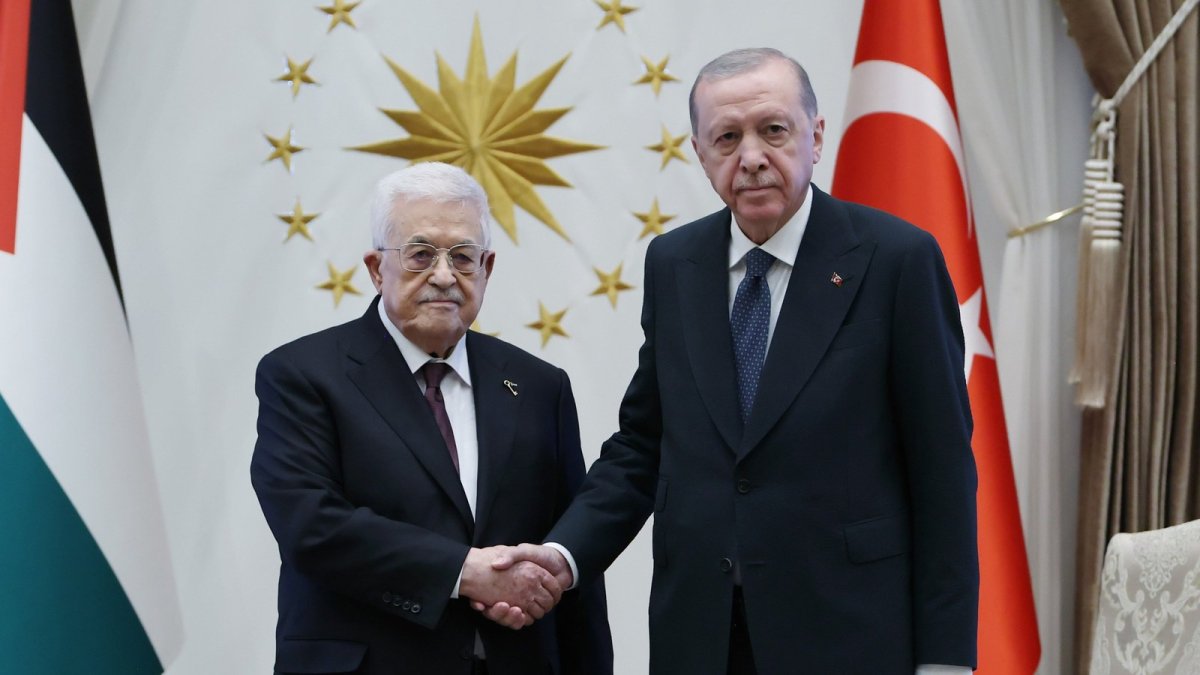
Ankara, Türkiye – August 12, 2026 — The joint press conference, held after a formal welcoming ceremony, saw Erdoğan deliver a blistering indictment of Israeli Prime Minister Benjamin Netanyahu’s government, accusing it of seeking to “erase Palestine from humanity’s common agenda” by exploiting regional chaos. Abbas, for his part, praised Türkiye’s unwavering support and voiced hope that the new Mecca pact could anchor a broader security architecture for the Middle East.
A Region in Flux: The Mecca Pact’s Shadow Over Ankara Talks
The Ankara summit unfolded against a backdrop of profound regional realignment. On August 7, Saudi Crown Prince Mohammed bin Salman, President Erdoğan, and Pakistani Prime Minister Shehbaz Sharif signed the Mecca Joint Defense Agreement at Al-Safa Palace during the Makkah Al-Mukarramah Summit for Joint Defence. The pact stipulates that any armed attack on one signatory “shall be regarded as an attack against them all,” providing for joint military exercises, intelligence sharing, and technology transfer.
The agreement was born not of Western brokerage but of the strategic calculations of three Muslim-majority nations navigating a fractured Middle East. Since the United States and Israel launched strikes against Iran in late February 2026, Gulf states have absorbed repeated missile and drone attacks from Iranian-backed forces. Abu Dhabi’s ADNOC reported that 15 of its vessels have been hit since hostilities began, while commercial shipping through the Strait of Hormuz has collapsed to an estimated 10 percent of pre-war levels, according to Reuters ship-tracking data.
Abbas’s reference to the pact during the Ankara press conference was telling. “This agreement is very important. I hope it will be a starting point for ensuring stability and security in the region,” he said, signaling that Palestinian leadership views the emerging Muslim bloc as a potential counterweight to Israeli impunity and a guarantor of future security arrangements.
Erdoğan’s Sharp Rebuke: Israel’s Erasure Campaign
Speaking at the joint news conference, Erdoğan did not mince words. “The Netanyahu government’s aim is to remove Palestine from humanity’s common agenda by benefiting from chaos and new conflicts in the region,” he declared. “Whatever they do, they will not succeed.”
“The more they try to erase it, the more the Palestinian cause will continue to grow in people’s hearts,” Erdoğan added. “As Türkiye, we will continue to defend the Palestinian cause in the strongest possible manner on every platform.”
The Turkish president reiterated Ankara’s commitment to a two-state solution, calling for “an independent, sovereign and geographically contiguous Palestinian state based on the 1967 borders, with East Jerusalem as its capital.” He accused Netanyahu’s “genocidal” government of pursuing unlawful policies “before the eyes of the entire world.”
Citing U.N. figures, Erdoğan noted that around 3,800 Palestinians had been displaced in 2026 alone due to settler violence, demolitions, and evacuations, with nearly 100 Palestinians killed. “The existence of a sovereign Palestinian state is being undermined,” he warned. “It is impossible to remain indifferent to this.”
Settlements: The Numbers Behind the Rhetoric
The diplomatic language was grounded in concrete data. According to the latest U.N. secretary-general’s report on settlements, Israeli authorities advanced or approved plans to build 4,750 settlement units in the West Bank, including occupied East Jerusalem, between March 14 and June 12.
More alarmingly, on March 25, the Israeli government approved the establishment or legalization of 34 illegal settlements in Area C of the West Bank — the largest number approved in a single Israeli government decision, according to the same U.N. report. U.N. Security Council Resolution 2334 affirms that Israeli settlements in Palestinian territory occupied since 1967, including occupied East Jerusalem, have “no legal validity” and constitute a flagrant violation of international law.
The meeting’s agenda also addressed attacks on holy sites, particularly Al-Aqsa Mosque in East Jerusalem, where Israeli politicians have led provocations. Erdoğan and Abbas reiterated their solidarity against violations at Al-Aqsa, Hebron, and elsewhere. “We strongly oppose provocations aimed at changing the status quo at Al-Aqsa Mosque, our first qibla, and other holy sites,” Erdoğan said.
Gaza: Deadlock and Reconstruction
On Gaza, Erdoğan accused the Israeli government of maintaining an uncompromising and aggressive stance despite international efforts and agreements, contrasting it with what he described as the constructive approach of Palestinians. “We are facing an Israeli administration that has made deadlock its policy despite all agreements and international efforts,” he said.
Erdoğan insisted that developments had demonstrated which side favored continued conflict and which sought peace, adding that the people of Gaza had clearly shown their desire and determination for peace. He called for conditions necessary to guarantee security and launch Gaza’s reconstruction to be established without delay. “The necessary conditions for initiating the reconstruction and rebuilding process in Gaza and ensuring security must be provided as soon as possible,” he said.
Türkiye has consistently supported an immediate cease-fire, expanded humanitarian access, and the establishment of an independent Palestinian state. Working in close strategic alignment with Doha, Ankara has coordinated joint mediation efforts alongside Qatar and regional partners to enforce a lasting cease-fire, secure uninterrupted humanitarian relief, and advance diplomatic channels for a comprehensive regional peace settlement.
Palestinian Elections and Unity
Erdoğan also welcomed plans for Palestinian legislative and presidential elections, expressing hope that the process would advance reconciliation and strengthen unity among Palestinians. The endorsement signals Ankara’s support for a unified Palestinian political front — a position that carries weight given Türkiye’s diplomatic reach and its ability to convene disparate factions.
Abbas, who arrived in Ankara on Tuesday at Erdoğan’s invitation, thanked the Turkish president and “brotherly Türkiye” for their support for Palestinian rights. The warmth of the exchange underscored the depth of the Ankara-Ramallah relationship, which has grown closer as Israel’s policies have hardened.
Strategic Calculus: Why Ankara and Ramallah Align
The Ankara summit reflects a convergence of interests. For Türkiye, championing the Palestinian cause is a cornerstone of its autonomous foreign policy posture — one that treats NATO membership as a tool, not a loyalty oath. Erdoğan has consistently raised the Palestinian issue at international events, and this is expected to continue at next month’s United Nations General Assembly in New York.
Thanks to Türkiye’s diplomatic initiatives, the number of leaders and influential figures speaking out against Israel has increased. Ankara continues its efforts to intensify international pressure on Israel while consistently raising the Palestinian cause on every platform.
For Abbas and the Palestinian Authority, Türkiye offers a powerful voice in international forums, a bridge to the broader Muslim world, and a counterweight to Israeli diplomatic pressure. The reference to the Mecca pact suggests that Palestinian leadership sees the emerging Turkey-Saudi-Pakistan axis as a potential security umbrella — one that could eventually extend to Palestinian territories.
Regional Implications: A New Order Takes Shape
The Mecca Joint Defense Agreement represents an inflection point in the Middle East’s shifting order. The three signatories command a formidable combined force: Turkey brings NATO’s second-largest army and a rapidly expanding domestic defense sector; Pakistan contributes a nuclear arsenal and battle-tested military; Saudi Arabia brings oil wealth and the legitimacy of Mecca itself. By mid-2026, Pakistani troops and air assets had already been quietly positioned inside Saudi Arabia, per CBS News reporting, in response to the escalating Iran war.
A Turkish government official, speaking to the Associated Press on condition of anonymity, described the deal as “purely defensive in nature” and insisted it was “not against any specific actor.” The framework is designed to remain open for other regional countries to join. But the timing speaks volumes: the agreement was born from a war Washington started and appears uncertain how to end, a Hormuz chokepoint Washington has failed to keep open, and a regional order visibly reorganizing itself around axes that exclude the West.
For Erdoğan, the pact cements Türkiye’s pivot toward autonomy. For Riyadh, it is a hedge against unreliable American security guarantees. For Islamabad, it is validation and economic lifeline. Washington was not in the room — and that absence may define the region’s trajectory for years to come.
As the UN General Assembly convenes next month, Erdoğan is expected to carry the Palestinian cause to the world stage once again. The question is whether the new Muslim bloc forming around the Mecca pact will translate its moral weight into concrete diplomatic and security outcomes for Palestine — or remain a symbolic declaration in a region still fractured by war.
By Malik Hassan, Staff Writer
This article was produced with AI-assisted research and editorial support. Reporting is based on sources cited in the article.
What's Your Reaction?
 Like
0
Like
0
 Dislike
0
Dislike
0
 Love
0
Love
0
 Funny
0
Funny
0
 Wow
0
Wow
0
 Sad
0
Sad
0
 Angry
0
Angry
0

Middle East Correspondent at Global1.News. Based in Beirut, covering politics, conflict, energy, and society across the Middle East. Brings context and depth to a region often reduced to headlines.









Comments (0)