
House wraps up OP budget talks
Manila – As the House of Representatives wrapped up its plenary deliberations on the 2027 budget, the modest allocation for the Office of the President (OP) sparked both applause and alarm among lawmakers and civil‑society groups.
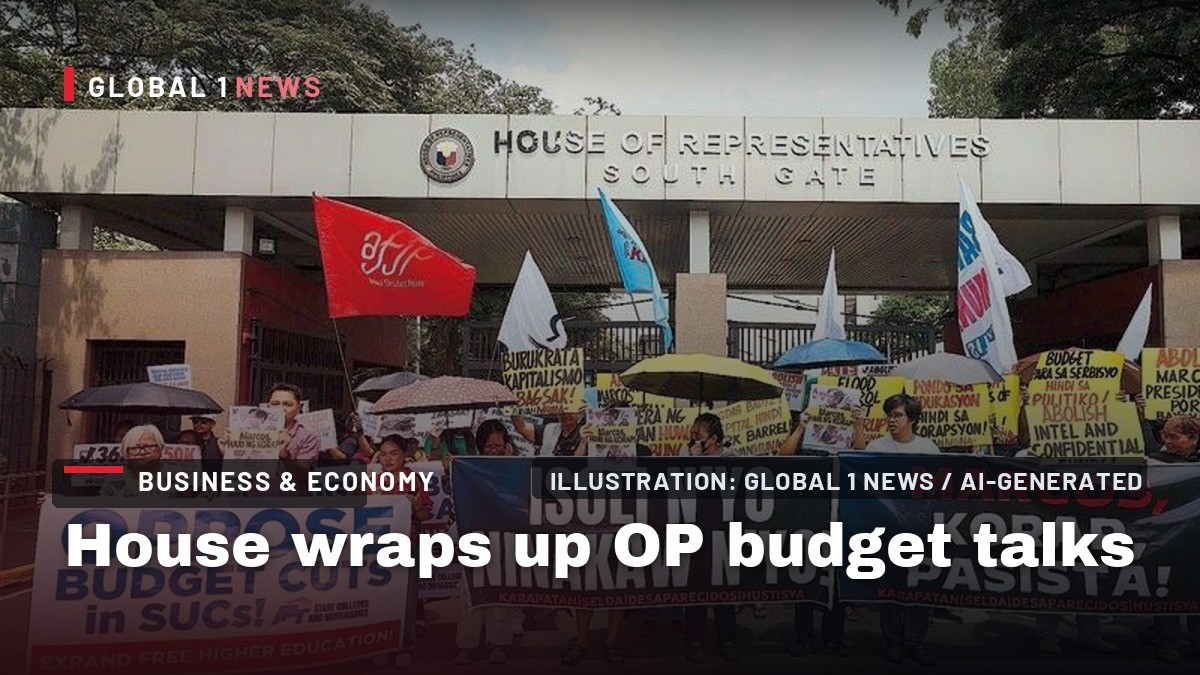
Manila – As the House of Representatives wrapped up its plenary deliberations on the 2027 budget, the modest allocation for the Office of the President (OP) sparked both applause and alarm among lawmakers and civil‑society groups. The proposed P10.16 billion budget—just 0.14 percent of the projected P7.2 trillion national budget—marks a sharp contraction from the P28.03 billion the OP received this year, a decline driven largely by the winding down of projects tied to the country’s hosting of ASEAN 2026. While the numbers speak to fiscal restraint, the reactions on the floor of the Batasang Pambansa reveal deeper concerns about transparency, priority‑setting and the lingering shadows of “pork barrel” politics.
Operating budget cuts and the ASEAN legacy
Rep. Albert Garcia, senior vice chair of the House appropriations committee, framed the OP’s new budget as primarily an operating fund, earmarking P7.46 billion for maintenance and other operating expenses. He noted that even without the ASEAN‑related projects that have now concluded, the regular programs of the OP were trimmed by P392.52 million—about a 3.75 percent reduction from the previous year. This modest cut reflects the administration’s effort to scale back on capital‑intensive projects now that the ASEAN summit infrastructure has been completed.
For barangays across Luzon, Visayas and Mindanao, the shift means fewer large‑scale construction contracts flowing from the presidential office, but it also signals that future spending may focus more on sustaining existing facilities rather than launching new, costly ventures. Residents who benefited from the ASEAN‑related road improvements and venue upgrades will now look to local government units (LGUs) to maintain those assets.
Funding the Presidential Communications Office
The House also terminated deliberations on the P2.62 billion budget for the Presidential Communications Office (PCO) and its attached agencies. The PCO’s mandate, as outlined in the deliberations, is to ensure that government policies, programs and services reach the Filipino people through both traditional media and digital platforms. While the amount remains substantial, it reflects a continued commitment to keeping citizens informed—a crucial task in a nation where many still rely on community radios and sari‑sari stores for news.
For OFWs and their families, the PCO’s role in disseminating information about overseas employment regulations, health advisories and repatriation assistance is especially vital. The budget’s allocation to digital outreach could help bridge the information gap for those who are far from home, reinforcing the spirit of bayanihan across borders.
Presidential Management Staff’s modest boost
The proposed P851.39 million budget for the Presidential Management Staff (PMS) received approval from the chamber. The PMS, which supports the president’s daily operations, will use these funds to manage the executive branch’s internal coordination and policy implementation. Though the figure is modest compared to the OP’s overall budget, it underscores the administration’s intent to keep the executive machinery running efficiently.
In practical terms, the PMS budget may affect how swiftly government services are delivered at the barangay level. Faster coordination can translate into more timely disaster response, a pressing concern given the country’s vulnerability to typhoons and floods.
Tourism budget: a catalyst for local economies
The Department of Tourism (DOT) was allocated P5.47 billion for 2027, a sum that Rep. Bernadette Escudero described as an “investment that multiplies.” Under this budget, one billion pesos is earmarked for a global branding campaign, while P1.37 billion is set aside for the tourism promotion board. The rest will fund various initiatives aimed at attracting foreign visitors and boosting domestic travel.
For small‑scale entrepreneurs—jeepney operators, homestay owners, and sari‑sari store keepers—tourism dollars can mean the difference between a modest profit and a thriving business. The branding push seeks to position the Philippines as a safe, vibrant destination, which could revive the flow of tourists that many local economies depend on after the pandemic slump.
Critics decry “railroading” and hidden funds
The Bagong Alyansang Makabayan (Bayan), a coalition of progressive groups, slammed the House’s handling of the OP budget as a “railroading” of the executive’s spending plan. Bayan secretary‑general Raymond Palatino warned that the budget embeds “pork barrel and other items” within the P7.2 trillion General Appropriations Bill. He highlighted that nearly half of President Marcos’ budget is allocated to confidential and intelligence funds, a category he believes warrants closer scrutiny from lawmakers.
Palatino’s remarks echo longstanding concerns about the opacity of certain budgetary items. For ordinary Filipinos, the lack of transparency can erode trust in institutions like the Department of Finance and the Office of the Ombudsman, which are tasked with ensuring public funds are used responsibly.
Calls for greater support to agriculture, health and education
Beyond the debate over discretionary spending, Palatino pointed out that the budget falls short in key sectors that affect daily life. He lamented inadequate subsidies for agriculture, health and education, areas that remain critical for food security, pandemic preparedness and human capital development. The criticism underscores a persistent tension in Philippine budgeting: balancing high‑visibility projects with the steady, often underfunded, needs of the grassroots.
Farmers in Central Luzon, teachers in the Visayas, and health workers in Mindanao all depend on government allocations to sustain their livelihoods. When budgetary priorities tilt toward large‑scale infrastructure or promotional campaigns, these frontline workers risk being left behind, potentially widening the gap between urban centers and provincial communities.
What the budget means for the Filipino people
In the end, the 2027 budget deliberations reflect a broader narrative of fiscal tightening, political scrutiny and competing development goals. The OP’s sharply reduced budget signals an effort to curb spending after the ASEAN 2026 surge, while the DOT’s sizable allocation shows the government’s belief that tourism can still drive growth. Meanwhile, civil‑society watchdogs remain vigilant, urging Congress to shine a light on confidential funds and to ensure that essential sectors—agriculture, health and education—receive the support they need.
For the average Filipino, the real impact will be felt in how quickly services are delivered, how transparently funds are used, and whether the promised “investment that multiplies” in tourism translates into more jobs and higher incomes in barangays across the archipelago. As the House moves from deliberation to enactment, the hope is that the budget will not only balance the books but also uphold the democratic ideals of accountability and inclusive development that many Filipinos hold dear.
This article was produced with AI-assisted research and editorial support. Reporting is based on the source material cited below. Sources: Philstar.com; Global1.News (24 September 2026).
By Bella Reyes, Staff Writer
What's Your Reaction?
 Like
0
Like
0
 Dislike
0
Dislike
0
 Love
0
Love
0
 Funny
0
Funny
0
 Wow
0
Wow
0
 Sad
0
Sad
0
 Angry
0
Angry
0

Philippines/Southeast Asia Correspondent at Global1.News. Manila-based journalist covering Philippine politics, environment, maritime security, and social issues. Passionate about marine conservation and the communities protecting the Philippines' natural heritage.














Comments (0)