
Xi Jinping Is Coming to the US. Why Is He Skipping the UNGA?
In the context of the 81st United Nations General Assembly (UNGA) convening in New York, the itinerary of Chinese President Xi Jinping this September provides a revealing case study of Beijing’s evolving diplomatic calculus.
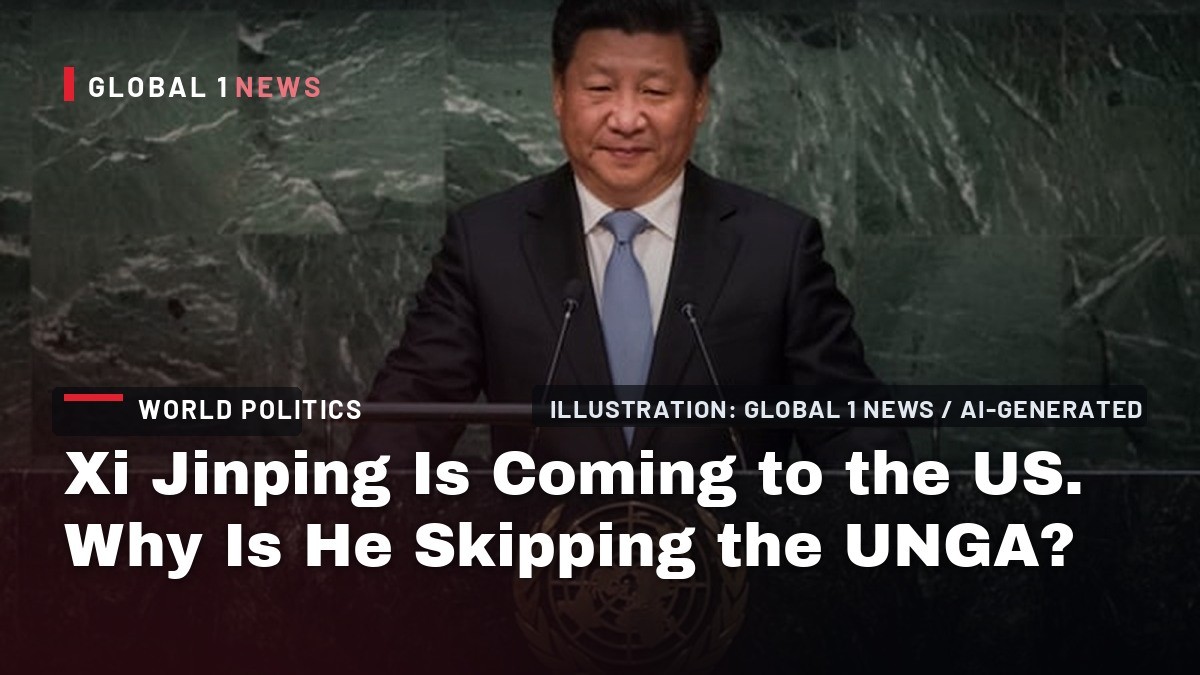
In the context of the 81st United Nations General Assembly (UNGA) convening in New York, the itinerary of Chinese President Xi Jinping this September provides a revealing case study of Beijing’s evolving diplomatic calculus. According to the White House’s publicly released schedule, President Xi arrived at Andrews Air Force Base on 23 September 2026, was personally received by President Donald Trump, and proceeded to a series of engagements in Washington, D.C., including a formal welcome ceremony, a summit, a state dinner, and a joint visit to the National Archives on 25 September. Notably absent from this agenda is any stop in New York to attend the UNGA, an omission that stands in stark contrast to the presence of numerous regional leaders—Bangladesh, Japan, Indonesia, Kyrgyzstan, Nepal, Mongolia, South Korea and Vietnam—who have traveled to the United Nations for the high‑profile general debate.
Official Representation at the UNGA: Vice President Han Zheng’s Role
China’s official delegation to the UNGA was led not by President Xi but by Vice President Han Zheng, who arrived in New York on 24 September and remained until 26 September. As China’s Foreign Ministry spokesperson Guo Jiakun explained, Vice President Han’s mandate included participation in the “High‑Level Dialogue on the Fifth Anniversary of the Global Development Initiative”—a forum hosted by China itself—as well as meetings with the United Nations Secretary‑General, the President of the 81st UNGA session, and leaders of relevant countries. The spokesperson reiterated the government’s public articulation that the United Nations remains the “core platform for global governance” and that the UNGA’s general debate is a “vital opportunity for countries to build political consensus.”
While the presence of a senior official maintains a formal Chinese footprint at the United Nations, the substitution of the vice‑president for the head of state signals a deliberate de‑escalation of the symbolic weight traditionally attached to the UNGA by Beijing. This shift warrants close scrutiny, especially in light of the broader diplomatic narrative that China has cultivated around multilateral institutions.
Historical Attendance Patterns: From 2015 to 2025
President Xi’s attendance record at the UNGA underscores the significance of his current absence. Since assuming the top leadership in late 2012, Xi has physically attended the UNGA only once—in 2015, marking the United Nations’ 70th anniversary. That visit coincided with his last state trip to the United States, during which he also met then‑President Barack Obama, thereby integrating the UNGA appearance within a broader bilateral agenda. In 2021, Xi delivered a video address to the UNGA to launch the Global Development Initiative, but he has not spoken in person at the assembly since.
The pattern of attendance aligns with a longstanding Chinese practice of marking round‑number anniversaries of the United Nations with high‑level visits. Jiang Zemin attended the 1995 session (the 50th anniversary), and successive leaders have followed suit for decennial milestones. Xi’s decision to forgo the 80th session in 2025—another round number—reinforced the departure from this tradition. Instead of traveling to New York, Xi remained in China to extend “festive greetings” for a national harvest celebration and to visit Urumqi for the 70th anniversary of the Xinjiang Uyghur Autonomous Region, events that received prominent coverage in the People’s Daily.
Policy Signaling and the Global Development Initiative
The 2026 Chinese white paper on global governance, issued in June, reiterates the official line that the United Nations is the “core” of the international order and the primary platform for multilateralism. The document states that the UN’s “leading position must be upheld and remain rock solid; its role can only be reinforced, not weakened.” Yet the same white paper is juxtaposed with a diplomatic schedule that privileges a bilateral summit with the United States over participation in the UNGA’s most visible multilateral forum.
In 2021, Xi used a video address to the UNGA to announce the Global Development Initiative, a flagship policy aimed at shaping development cooperation. The decision to launch the initiative virtually, rather than in person, already hinted at a willingness to employ digital platforms for multilateral messaging. By 2025, the Global Governance Initiative—directly tied to the United Nations’ mission—was unveiled at the Shanghai Cooperation Organization (SCO) summit in China, a venue where Beijing enjoys greater agenda‑setting control. This strategic relocation of initiative announcements away from the UNGA suggests a recalibration of where China seeks to project its normative leadership.
Parallel Institutional Ventures: WAICO and the SCO
China’s establishment of the World Artificial Intelligence Cooperation Organization (WAICO) further illustrates a pattern of creating parallel structures to the United Nations. WAICO, described as an “independent intergovernmental international organization” dedicated to AI governance, was announced at a domestic AI conference rather than at the United Nations’ Global Dialogue on AI Governance, which took place a month earlier. By founding a new institution, Beijing sidestepped the UN’s established mechanisms for AI policy coordination, thereby preserving greater influence over agenda‑setting and standards‑setting processes.
The Shanghai Cooperation Organization, where the Global Governance Initiative was introduced, similarly provides Beijing with a platform to rally regional partners—Russia, Central Asian states, and others—under a China‑led framework. These parallel institutions allow China to cultivate a multilateral image while retaining tighter control over the substantive content and procedural rules that govern the forums.
Financial Contributions and the United Nations Budget
Amid the diplomatic choreography, the fiscal dimension of China’s engagement with the United Nations remains salient. Since President Trump’s administration began reducing U.S. contributions to the UN budget, Beijing has not stepped forward to fill the shortfall. Chinese contributions, assessed by the United Nations, have historically been “chronically late” and constitute “a mere fraction” of the United States’ prior levels of funding. This financial reticence, juxtaposed with the rhetorical emphasis on the UN’s centrality, underscores a gap between Beijing’s public statements and its material support for the institution.
The limited fiscal commitment may reflect a calculation that monetary leverage is less critical than political influence within venues where China can dictate terms. By channeling resources toward the SCO, WAICO, and bilateral engagements, Beijing can achieve tangible diplomatic dividends without the administrative constraints imposed by UN budgetary processes.
Interpretations of Strategic Messaging
Analysts at Nikkei Asia have posited that President Xi’s decision to skip the UNGA serves to position China as an equal partner to the United States, rather than as a participant among a multitude of smaller states congregating in New York. The presence of numerous leaders from less‑powerful nations at the UNGA could dilute China’s narrative of parity with Washington, especially given the bilateral nature of the Washington summit, which places China and the United States on a one‑to‑one stage.
From a Korean perspective, the episode offers insight into how Beijing calibrates its diplomatic outreach across different multilateral and bilateral settings. The Ministry of Foreign Affairs (MOFA) and think tanks such as the Asan Institute for Policy Studies have long observed that China’s selective engagement with the United Nations reflects a broader strategy of “selective multilateralism.” By attending high‑profile bilateral summits while delegating UNGA participation to a vice‑president, Beijing signals both a willingness to cooperate with the United States and a preference for forums where it can exercise greater procedural control.
Forward‑Looking Assessment: Implications for Regional Diplomacy
Looking ahead, China’s diplomatic posture at the 81st UNGA may presage a more nuanced approach to multilateralism in the coming years. The emphasis on China‑led institutions, the strategic timing of initiative announcements, and the selective allocation of senior leadership to specific venues suggest a calibrated balance between global normative aspirations and pragmatic control over agenda‑setting. For South Korea, whose Ministry of Education (MOE) and Korea Institute for International Economic Policy (KIEP) monitor shifts in regional power dynamics, the lesson is clear: Beijing will continue to leverage both bilateral and multilateral platforms, but will prioritize those that afford it the greatest strategic leverage.
In sum, President Xi’s absence from the UNGA, juxtaposed with his presence at a high‑stakes Washington summit, underscores a deliberate re‑orientation of Chinese diplomatic resources. While the United Nations remains a cornerstone of Beijing’s official rhetoric, the practical deployment of senior leadership, financial contributions, and policy announcements points to a preference for venues where China can shape outcomes more directly. As the 2026 diplomatic calendar unfolds, scholars and policymakers alike should monitor how this selective engagement pattern evolves, particularly in relation to Korea’s own diplomatic initiatives and its navigation of a multipolar East Asian order.
This article was produced with AI-assisted research and editorial support. Reporting is based on the source material cited below. Sources: The Diplomat; thediplomat.com; Global1.News (24 September 2026).
By Prof. David Park, Staff Writer
What's Your Reaction?
 Like
0
Like
0
 Dislike
0
Dislike
0
 Love
0
Love
0
 Funny
0
Funny
0
 Wow
0
Wow
0
 Sad
0
Sad
0
 Angry
0
Angry
0
East Asia/Technology Correspondent at Global1.News. Seoul-based voice covering Korean politics, technology, business, and culture. Analyzes how technology and geopolitics intersect across East Asia.











Comments (0)