
Hossam Hassan's World Cup of Conscience: Egypt Coach's Palestine Stand Honoured
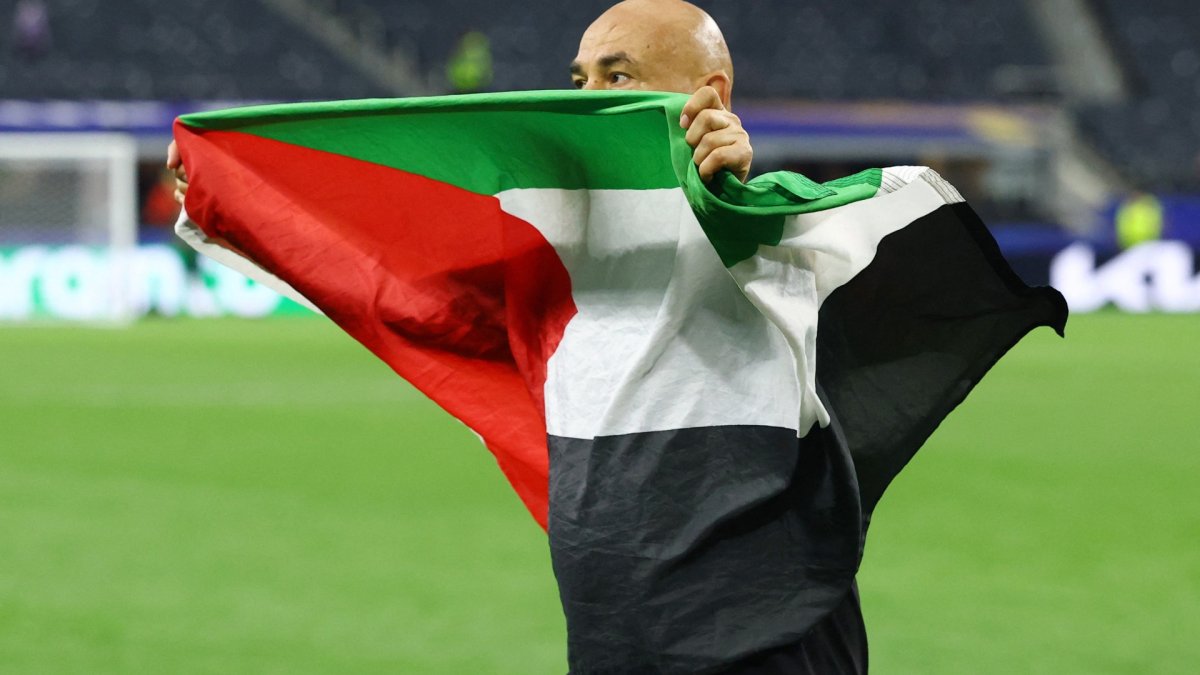
The image of Hossam Hassan, a 59-year-old Egyptian football icon, striding across the Dallas turf with the Palestinian flag draped over his shoulders after Egypt's historic penalty shootout victory over Australia will be etched into World Cup folklore forever.
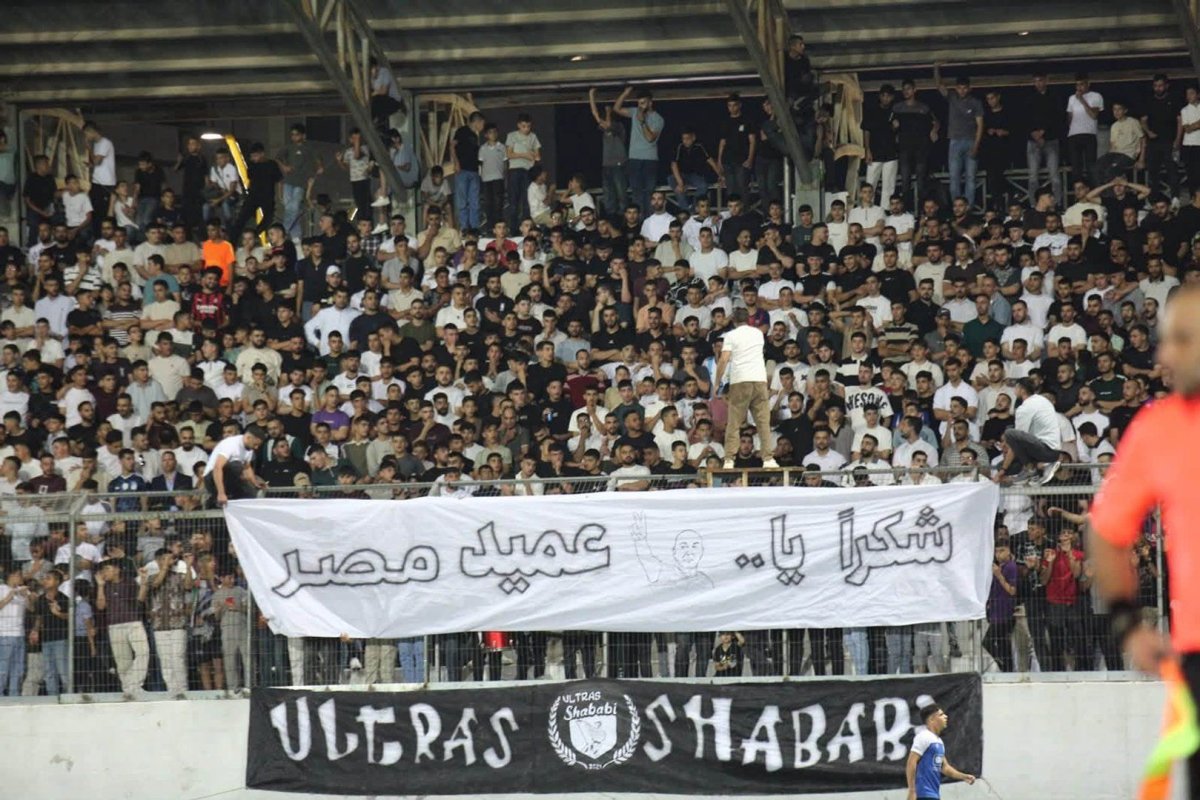
The image of Hossam Hassan, a 59-year-old Egyptian football icon, striding across the Dallas turf with the Palestinian flag draped over his shoulders after Egypt's historic penalty shootout victory over Australia will be etched into World Cup folklore forever. It was a moment that transcended sport, a visceral act of solidarity that echoed from the stadium in Texas to the rubble-strewn streets of Gaza. Now, weeks later, the gratitude from Palestine has arrived in the most beautiful form imaginable — a banner raised by fans of the Palestinian club Shabab Al-Khaleel, thanking the Egyptian coach for using the world's biggest sporting stage to amplify a cry for humanity.
Hossam Hassan's World Cup of Conscience: How Egypt's Coach Turned Football into a Global Plea for Palestine
Johannesburg, South Africa – 18 July 2026 — In a World Cup already defined by controversy, political battles and stunning upsets, one man has emerged as the tournament's moral compass. Egypt coach Hossam Hassan has transformed the Pharaohs' historic run into a platform for the Palestinian cause, and the football world is taking notice. From a flag raised in victory to an emotional press conference plea that has gone viral across the globe, Hassan has done what few in his position have dared: he has put humanity before diplomacy, and principle before pragmatism.
A Night of History in Dallas: Egypt's Penalty Shootout Triumph
The stage was set on 3 July at the Dallas Stadium in Arlington, Texas, where Egypt faced Australia in a Round of 32 clash that would define a generation of Egyptian football. After a tense 1-1 draw that stretched through extra time, the match came down to the cruel lottery of penalties. Egypt held their nerve, winning 4-2 on spot-kicks after Harry Souttar and Lucas Herrington both missed from 12 yards. Hossam Abdelmaguid rolled in the winning penalty, sending the Egyptian bench into delirium and securing the nation's first-ever World Cup knockout victory.
Emam Ashour had given Egypt the lead with a powerful 13th-minute header, but a Mohamed Hany own goal ten minutes into the second half had levelled the scores and forced the extra period. The drama was relentless, but it was what happened after the final whistle that captured the world's attention. As his players collapsed in exhaustion and joy, Hassan marched onto the pitch carrying both the Egyptian and Palestinian flags, holding them aloft for the cameras. His squad collectively bent down in prostration, a moment of prayer and gratitude that resonated far beyond the football pitch.
"May God grant them victory, may God have mercy on their martyrs," Hassan said in the aftermath. "I'm saying to them: I'm dedicating this victory to the Egyptian people and Palestinian people, those kind and honourable people." It was a statement that would ripple across the Arab world and beyond, transforming a sporting achievement into a political statement of profound significance.
Gaza's Joy Amid the Rubble: A Moment of Life
While the world saw a football victory, Palestinians saw something far deeper. Social media footage from Gaza showed thousands of people emerging from tents and destroyed homes to watch the match on makeshift screens, their faces illuminated by the glow of the broadcast against the backdrop of bombed buildings. Children with Egypt flags painted on their faces cheered and danced, finding a fleeting moment of joy in a landscape of devastation.
Tamer Nahed, a Gaza-based writer, captured the sentiment perfectly in a post on X that was shared thousands of times: "For the first time, I'm following the World Cup with this much excitement... I was so happy to see Egypt win a little while ago, but the most beautiful sight was here … thousands of people came out of their tents and from among their destroyed homes to watch the match. Faces lit up with smiles, cheers filled the air, and it felt as if everyone had decided to give themselves a moment of life despite everything surrounding them."
This was football as escape, as resistance, as a reminder that life persists even in the darkest of times. Hassan's gesture had given Palestinians a rare moment of uncomplicated happiness, and they responded with an outpouring of gratitude that would culminate in the Shabab Al-Khaleel banner honouring the Egyptian coach.
The Atlanta Press Conference: A Plea That Shook the World
Three days after the Australia triumph, on 6 July in Atlanta ahead of the Round of 16 clash with Argentina, Hassan delivered what many are calling the most powerful speech of the 2026 World Cup. Speaking in Arabic, his voice thick with emotion, the Egyptian coach made an impassioned appeal that transcended sport entirely.
"If there is one person in the world who does not feel for the Palestinian people, then he is not a human being," Hassan declared, stressing that this applied regardless of whether the person was "Arab, European, American or anything else." He criticised the global indifference to the suffering in Gaza, noting how people mobilise when an animal is harmed while "every day human beings are killed in their thousands, children and women."
Then came the line that would echo around the world: "Please, please, all athletes and media professionals, regardless of their religions and countries, maybe through the World Cup, we can send a message: please let the Palestinian people live. They do not want anything, just to live." Hassan invoked FIFA's own slogan, demanding consistency: "Just as FIFA's slogan says, 'respect and fair play', we want fairness in life. We want respect for human beings."
The reaction was immediate and overwhelming. Jibril Rajoub, president of the Palestinian Football Association, thanked Hassan for his "humanitarian and noble" stance. Palestinian writer Yasser Zaatreh wrote that Hassan had achieved "glory greater than the World Cup," winning "the match of humanity and principles." Egyptian journalist Ahmed el-Erian called the words "historic" because Hassan's feelings were "sincere" and his positions on Palestine "consistent." Even Turkey's ambassador to Cairo publicly praised the Egyptian coach.
The Argentina Heartbreak: Controversy, Boycott, and a Vow of No Justice
But football, as ever, had its own cruel script to follow. On 7 July at the Atlanta Stadium, Egypt faced defending champions Argentina in the Round of 16, and for 67 minutes, they were magnificent. Yasser Ibrahim powered home a header in the 15th minute, and goalkeeper Mostafa Shobeir produced a stunning penalty save to deny Lionel Messi. When Mostafa Ziko extended the lead in the 67th minute after a devastating counter-attack involving Mohamed Salah and Haissem Hassan, Egypt led 2-0 and Argentina seemed destined for an early exit.
Then came the collapse. Cristian Romero pulled one back with a header in the 79th minute. Messi equalised in the 83rd. And in stoppage time, Enzo Fernandez completed the most painful of turnarounds, sealing a 3-2 victory that sent Argentina through and shattered Egyptian dreams. The manner of the defeat, coming after such a commanding performance, left Hassan incandescent with rage.
"Argentina's victory is entirely undeserved. I promise you, once I return today, I will not watch football in this World Cup at all, because there is no justice in it," Hassan fumed. "We had the right to win, and I don't want to say 'hard luck' to us - No. We left with honour, honour on our part. But the final result, aside from being highly influenced, is a far cry from the 'fair play' that FIFA talks about and far from respect. There was neither respect nor fair play today."
Hassan went further, suggesting external influences had impacted the result: "Perhaps they wanted to keep the world champion in the competition. Perhaps they wanted Messi to stay in the running." He announced a personal boycott of the remainder of the tournament, and star midfielder Ziko accused FIFA of rigging the competition. Whether or not one agrees with the conspiracy theories, the sense of injustice was palpable — and it only deepened the bond between Hassan and the Palestinian cause, a people who know all too well what it feels like to be denied justice.
Shabab Al-Khaleel's Tribute: Football's Circle of Solidarity
On 18 July, the gratitude became visible. During a match involving Palestinian club Shabab Al-Khaleel, fans raised a banner thanking Egypt coach Hossam Hassan for his unwavering support for the Palestinian cause. It was a simple gesture with profound meaning — a football community honouring a coach who used his platform to speak for those who cannot speak for themselves. Gaza residents also sent messages of appreciation to Hassan, and Al Jazeera Arabic covered the tributes extensively.
For Hassan, a man with over 170 caps for Egypt as a player and a legendary career with Al Ahly, this may well be his most significant achievement. He has led the Pharaohs to the World Cup knockout stage for the first time in the modern era, made Egypt the standard-bearer for African and Arab football at the tournament, and used every moment of that platform to advocate for Palestine. The banner from Shabab Al-Khaleel is a reminder that in football, as in life, solidarity is a two-way street.
The South African Connection: Solidarity, Soft Power, and Shared Struggles
For South Africans, Hassan's stance resonates on a deeply personal level. Our own history is one of struggle against oppression, and our sporting triumphs — from the 1995 Rugby World Cup to the 2010 FIFA World Cup — have always been intertwined with our political journey. The South African government's decision to take Israel to the International Court of Justice over the Gaza genocide case reflects a national consensus that transcends party politics, and public solidarity with Palestine runs deep in our sporting culture.
Bafana Bafana competed at this World Cup, and South African referee Abongile Tom officiated at his third successive tournament, following in the footsteps of Victor Gomes who refereed at the 2022 World Cup in Qatar. Our football institutions, from SAFA to the Premier Soccer League, have consistently supported Palestinian causes, and the sight of Hassan raising that flag in Dallas felt like a continuation of a tradition that South Africans understand intimately.
Hassan's invocation of sport as "soft power" is particularly resonant in the African context. Egypt is the most successful African nation in AFCON history with seven titles, and Al Ahly is Africa's most decorated club. When an Egyptian coach speaks, the continent listens. His willingness to use the World Cup platform for a political message challenges the notion that sport and politics should be separated — a notion that has never held much weight in Africa, where football has always been intertwined with liberation struggles and national identity.
What to Watch For
As the World Cup concludes with Spain beating Argentina in the final at MetLife Stadium on 19 July, Hassan's boycott of the remainder of the tournament stands as a powerful protest. But his legacy from this World Cup is already secure. He has shown that a coach can be both a winner and a humanitarian, that football's global platform can be used for more than just commercial gain, and that the Palestinian cause has allies in the most unexpected places.
The Shabab Al-Khaleel banner will be remembered long after the final whistle of the final. It represents a moment when football transcended itself, when a coach's simple act of solidarity became a symbol of hope for millions. For South Africans, who know the power of sport to unite and to heal, Hassan's example is both inspiring and familiar. He has reminded us that football is never just a game — it is a reflection of who we are and what we stand for.
Hossam Hassan may not have won the World Cup, but he has won something far more important: the hearts of a people who needed a champion. And in the annals of football history, that counts for everything.
By Dante Williams, Staff Writer
This article was produced with AI-assisted research and editorial support. Reporting is based on sources cited in the article.
What's Your Reaction?
 Like
0
Like
0
 Dislike
0
Dislike
0
 Love
0
Love
0
 Funny
0
Funny
0
 Wow
0
Wow
0
 Sad
0
Sad
0
 Angry
0
Angry
0

Breaking News and Investigations Correspondent at Global1.News. Based in London, covering global breaking news, security, and investigative stories. Known for digging deeper and connecting the dots across continents.














Comments (0)