
USS George Washington Reaches Middle East as Iran War Grinds On
The rotation of America's premier naval assets in the Middle East comes at a pivotal juncture, as the US-Iran war enters its sixth month with no diplomatic off-ramp in sight. The arrival of the USS George Washington (CVN-73) in the US Central Command (CENTCOM) theater signals not only a logistical handover but a strategic commitment to sustaining pressure on Tehran, even as questions mount over the sustainability of the campaign and the widening gaps in America's global naval posture.
The rotation of America's premier naval assets in the Middle East comes at a pivotal juncture, as the US-Iran war enters its sixth month with no diplomatic off-ramp in sight. The arrival of the USS George Washington (CVN-73) in the US Central Command (CENTCOM) theater signals not only a logistical handover but a strategic commitment to sustaining pressure on Tehran, even as questions mount over the sustainability of the campaign and the widening gaps in America's global naval posture.
USS George Washington Enters CENTCOM Theater as Lincoln Departs, Leaving Strategic Gaps in the Pacific and a Grinding War in the Gulf
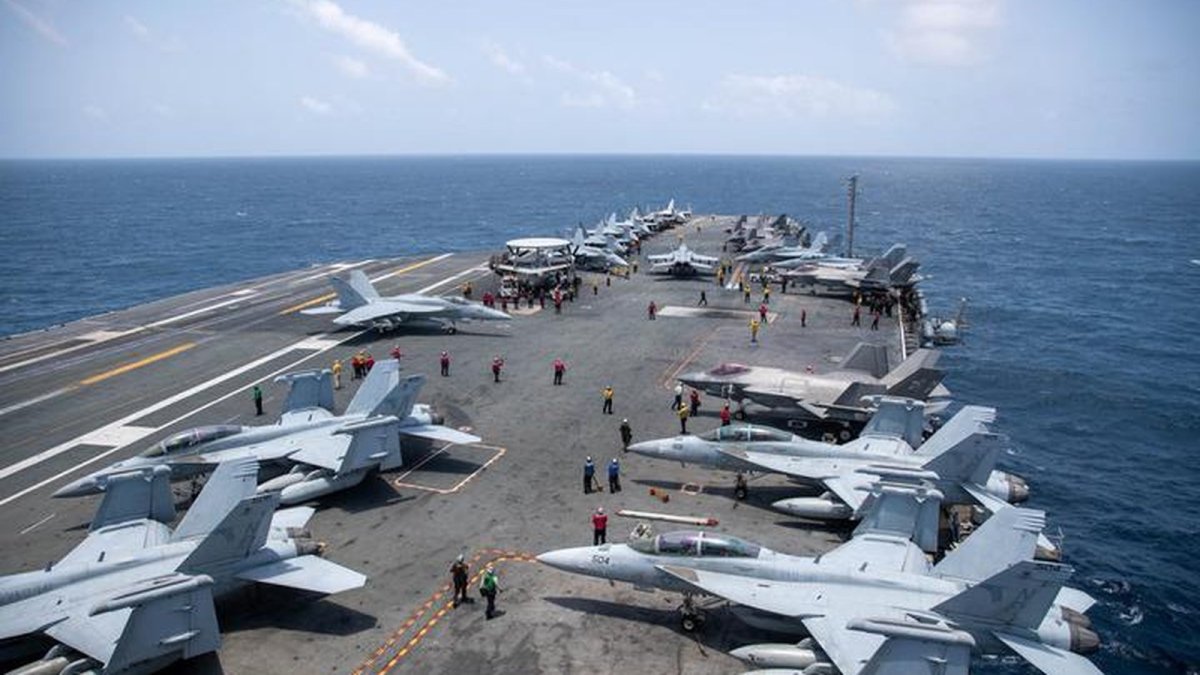
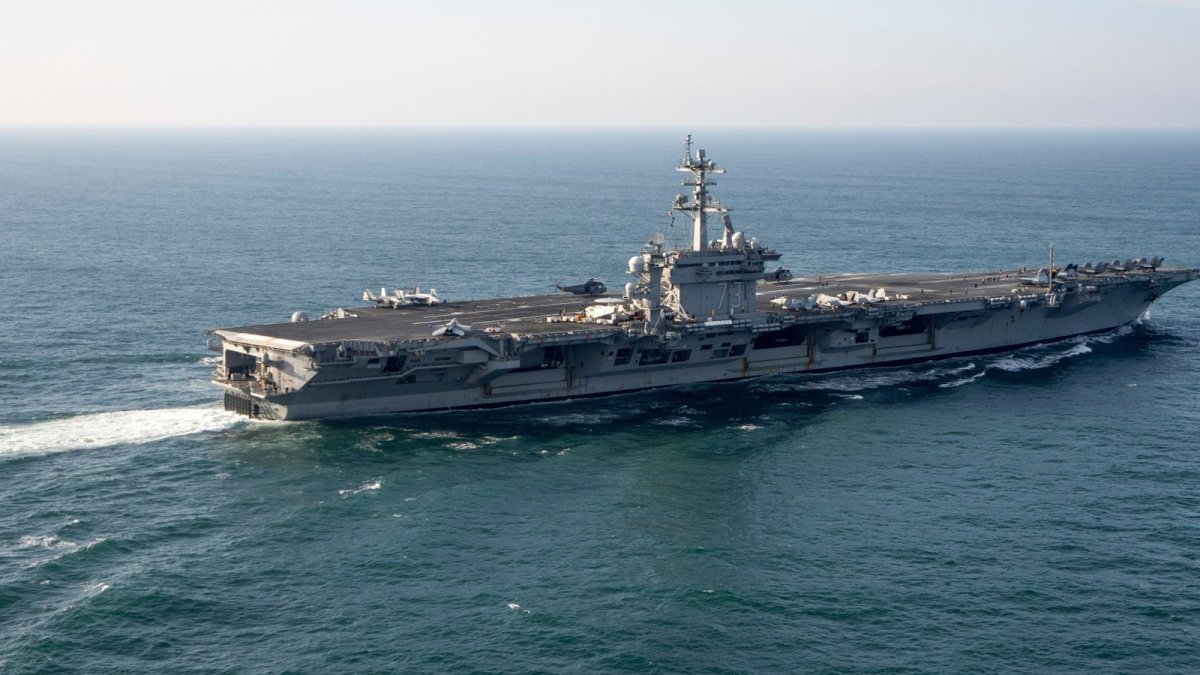
Manama, Bahrain – August 20, 2026 — The Nimitz-class nuclear-powered aircraft carrier USS George Washington (CVN-73) arrived in the US Central Command theater on Wednesday, August 19, 2026, with CENTCOM officially announcing its presence on Thursday. The carrier is currently transiting the Arabian Sea, heading toward the Gulf of Oman, as part of a scheduled deployment that will see it relieve the USS Abraham Lincoln, which is now en route back to the United States after a record-breaking and grueling tour of duty.
A Record Deployment and a Navy Under Strain
The departure of the USS Abraham Lincoln marks the end of an unprecedented operational chapter. The carrier left San Diego in November 2025, initially deploying off the coast of Venezuela before being rerouted to the Middle East in January 2026, ahead of the US and Israel's declaration of war against Iran on February 28. Since then, the Lincoln has been the centerpiece of the bombing campaign and the naval blockade of Iranian ports, logging more than 250 consecutive days deployed, with over 200 of those days spent without a single port call—a stark contrast to the standard 30-to-45-day intervals crews typically expect.
That endurance has come at a human cost. The Lincoln carries approximately 5,000 sailors and Marines, and reports from the ship detailed paltry food and hygiene supplies, persistent maintenance issues, declining morale, and alarming incidents of suicidal thoughts. Military Times reported at least one instance where a sailor was physically prevented from jumping overboard, with additional overboard attempts documented. Family members of the crew have pressed the Pentagon to return the ship to its San Diego homeport, amplifying public scrutiny of the deployment's toll.
Pentagon Defends the Mission, Acknowledges Past Issues
The Pentagon has pushed back against the narrative of a beleaguered crew. Defense Secretary Pete Hegseth characterized the reports of poor conditions as "completely misrepresented," while President Donald Trump went further, stating the deployment was "not nearly long enough." Acting Secretary of the Navy Hung Cao offered a conciliatory note, assuring that the Lincoln "will return home soon."
Adm. Brad Cooper, the CENTCOM commander, acknowledged in a Wall Street Journal op-ed published Sunday that "issues related to food, hot water, or other concerns happened months ago and were addressed by leadership and resolved." However, Democratic legislators have seized on the episode as emblematic of the Trump administration's poor planning for a war that has devolved into a grinding asymmetrical conflict, with no clear end in sight after nearly six months of hostilities.
Historical Background
The rotation now unfolding in the Arabian Sea is the latest chapter in a naval legacy that began with Operation Desert Storm in 1991, when coalition carriers first established the pattern of a near-continuous American flattop presence in the Gulf. That posture was dramatically expanded in 2003, when the Navy surged multiple carrier strike groups into the region to support the invasion of Iraq, demonstrating the capacity to concentrate overwhelming sea-based airpower on short notice. Today's handover from the Lincoln to the George Washington fits squarely within that tradition, but with a critical difference: the 2003 surge was a prelude to a swift conventional victory, whereas this rotation sustains a blockade and bombing campaign now entering its sixth month against an adversary that has proven far more resilient than Baghdad. The legacy endures, but the strategic context has fundamentally shifted.
The Strategic Calculus of the George Washington
The arrival of the George Washington is not merely a like-for-like replacement. As the US Navy's only forward-deployed aircraft carrier, home-ported in Yokosuka, Japan since 2024, the George Washington brings a different operational pedigree. It has conducted extensive joint exercises with Japan's Maritime Self-Defense Force and recently completed a port call in Da Nang, Vietnam, after operating in the South China Sea. The carrier transited the Luzon Strait on July 22, 2026, accompanied by the Arleigh Burke-class destroyer USS Benfold (DDG-65), signaling a deliberate shift from the Indo-Pacific to the CENTCOM theater.
This rotation, however, leaves no US aircraft carrier strike group west of San Diego—a gap in the Western Pacific that analysts say Beijing is watching closely. The strategic trade-off is stark: reinforcing the Middle East comes at the direct expense of deterrence in the Indo-Pacific, where China continues to assert its maritime claims. For the Gulf states and Israel, the George Washington's presence is a reassurance of continued US commitment to the blockade and the broader campaign against Iran. For Tehran, it is a signal that Washington intends to sustain its pressure campaign indefinitely.
Blockade, Economic Warfare, and the Strait of Hormuz
CENTCOM has stated it has facilitated the passage of 1,300 ships through the Strait of Hormuz waterway, a critical chokepoint for global energy supplies. The administration maintains it can uphold its blockade on Iran's ports indefinitely, a claim that will be tested by the George Washington's crew as they assume their new duties. Fighting has recently paused, but Iran continues to vow to assert its influence over the Strait of Hormuz, keeping regional tensions elevated.
The Strait of Hormuz remains the world's most consequential energy chokepoint, with roughly a fifth of global seaborne crude passing through its narrow waters daily. CENTCOM's facilitation of 1,300 ships through the strait during the blockade underscores the delicate balancing act Washington is performing: strangling Iran's oil exports while keeping the waterway open for the rest of the region's producers. The economics of this dual-track approach are unforgiving—every day the blockade holds, Tehran loses revenue, but any miscalculation that disrupts the strait's broader traffic would send shockwaves through global energy markets. The Gulf Cooperation Council states, which host US military facilities and depend on the strait for their own exports, are watching this calculus with acute anxiety, torn between their security dependence on Washington and their commercial ties to both Iran and China.
The diplomatic track remains frozen. A US-Iran Memorandum of Understanding designed to find a more lasting end to the war expired on Monday, August 17, with no indication that talks will resume soon. Instead, on Thursday, August 20, President Trump announced a "crushing economic operation" against Iran, which he dubbed "economic D-Day," warning that any country doing business with Tehran faces "tremendous economic consequences." Iran's Foreign Minister, Abbas Araghchi, dismissed the announcement as a distraction, asserting that the approach will "bring further defeat" to the United States.
Regional Dynamics and the Road Ahead
The interplay between military rotation and economic pressure reveals a dual-track strategy from Washington: maintain overwhelming naval superiority while strangling Iran's economy. Yet the expiration of the MOU and the lack of a resumption date for talks suggest that the administration is betting on coercion over negotiation. For Iran, the blockade and the bombing campaign have not yielded the quick capitulation Washington may have hoped for, and the regime's rhetoric remains defiant.
The George Washington's departure from Yokosuka leaves a conspicuous void in the Western Pacific—no US carrier strike group west of San Diego—and Beijing is certain to interpret this as an opportunity to press its maritime claims in the South China Sea and beyond. China's stake in the conflict is direct: it remains the largest buyer of Iranian crude and has consistently opposed US sanctions against Tehran, meaning the blockade and the new "economic D-Day" threaten Chinese commercial interests as much as Iranian ones. For Japan, the forward-deployed carrier's temporary absence from its homeport tests the credibility of the alliance's Indo-Pacific posture, even as Tokyo continues its own naval buildup. The Gulf states, meanwhile, are recalibrating their own balancing act, hedging between US security guarantees, Iranian proximity, and Chinese economic leverage—a tripartite tightrope that this rotation has made only more precarious.
The broader regional calculus is equally fraught. The US-Israel-Iran war has redrawn alliances and tested the patience of Gulf partners, who are wary of being drawn into a wider conflagration. The presence of the George Washington in the Arabian Sea serves as a deterrent to any Iranian miscalculation, but it also raises the stakes for a potential escalation. The carrier's forward-deployed status, with its deep integration into Indo-Pacific operations, underscores the global nature of this conflict—one where a single carrier's movement can shift the balance of power across two theaters.
As the Lincoln finally heads home to a hero's welcome and a much-needed overhaul, the George Washington's crew begins its own uncertain tenure in the Gulf. The coming weeks will reveal whether the new carrier can sustain the blockade's tempo and whether the "economic D-Day" will break Iran's resolve or merely harden it. For now, the US Navy remains the linchpin of American strategy in the Middle East, even as the costs of that strategy continue to mount on both the sailors who serve and the strategic posture Washington maintains globally.
By Malik Hassan, Staff Writer
This article was produced with AI-assisted research and editorial support. Reporting is based on sources cited in the article.
What's Your Reaction?
 Like
0
Like
0
 Dislike
0
Dislike
0
 Love
0
Love
0
 Funny
0
Funny
0
 Wow
0
Wow
0
 Sad
0
Sad
0
 Angry
0
Angry
0

Middle East Correspondent at Global1.News. Based in Beirut, covering politics, conflict, energy, and society across the Middle East. Brings context and depth to a region often reduced to headlines.













Comments (0)