
Israeli Minister Ben-Gvir Calls for Killing '30 to 40' Gazans a Night
Israeli National Security Minister Itamar Ben-Gvir called for killing 30 to 40 Palestinians a night in Gaza and renewing settlements there, remarks published by the Jerusalem Post that drew international condemnation and exposed coalition divisions ahead of October elections.
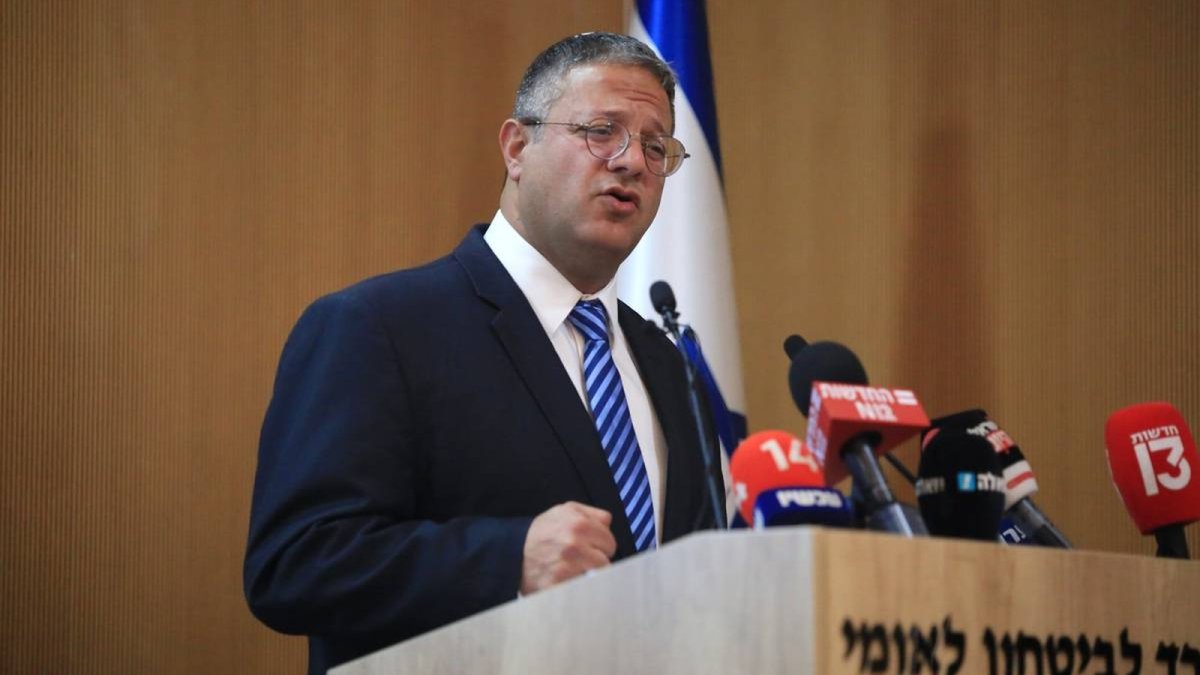
Israeli National Security Minister Itamar Ben-Gvir has called for Israel to kill "30 to 40" Palestinians a day in Gaza and to expand airstrikes across the entire enclave, while renewing his demand for Israeli settlements to be reestablished there at the expense of the indigenous population. The remarks, made on a podcast and published this week by the Jerusalem Post, have drawn international condemnation and exposed fresh divisions inside Israel's governing coalition ahead of elections expected in October.
Ben-Gvir, leader of the far-right Jewish Power party, made the comments on the "October 8" podcast hosted by Rom Braslavski, a former Israeli soldier who was captured by Hamas on Oct. 7, 2023, and released on Oct. 13, 2025, as part of a prisoner exchange. In excerpts published by the Jerusalem Post, Ben-Gvir said Israel should not limit its attacks to those who "pose an immediate threat," calling instead for far-ranging strikes across the entire Gaza Strip. He said some people "aren't worthy of life ... they aren't people at all," and argued that Palestinians uninvolved in the fighting should not be exempt from Israeli attacks.
Ben-Gvir's Call for Daily Killings and Expanded Strikes
According to the Jerusalem Post, Ben-Gvir said Israel should kill "30 to 40 Gazans in strikes every night," adding that those he described as "terrorists" should be "killed one by one." He also referred to a Palestinian woman who had provided food to Braslavski while he was held captive in Gaza, calling her a "terrorist" who "needs a bullet in the head."
The comments were shared widely across Palestinian media over the weekend and have been met with condemnation from human rights organizations and international observers. Ben-Gvir does not have direct authority over Israel's military and cannot order airstrikes on Gaza; his portfolio includes oversight of the police force and the prison system. However, his statements carry weight within the governing coalition and reflect a hardening of positions among far-right factions ahead of the October elections.
Gaza's Health Ministry says Israeli strikes have killed more than 1,250 people since a ceasefire took effect in October 2025. The ceasefire, which halted the most intense phase of a war that began after the Oct. 7, 2023 attacks, remains fragile, with periodic Israeli operations and Palestinian rocket fire reported. Ben-Gvir's call for expanded strikes, if implemented, would represent a significant escalation and a direct challenge to the ceasefire framework.
Who Is Itamar Ben-Gvir and the Platform He Chose
Ben-Gvir is a longtime figure in Israel's far-right political landscape. As a teenager, he was involved with the outlawed Kahanist movement, which advocated for the expulsion of Palestinians from historic Palestine. Over the years, he has built a political career on a platform of Jewish supremacy, annexation, and the displacement of Palestinian communities. His current role as national security minister gives him authority over Israel's police and prison systems, making him a central figure in the treatment of Palestinian prisoners and in the enforcement of policies in occupied East Jerusalem and the West Bank.
The podcast is hosted by Rom Braslavski, held in Gaza for two years before his release in October 2025. His captivity and release have made him a prominent voice in Israeli media, and his platform has become a venue for hardline political figures. Ben-Gvir's choice to appear underscores his alignment with the most hawkish elements of Israeli society and his willingness to articulate positions many mainstream politicians avoid.
Al Jazeera notes that Ben-Gvir's comments fit a pattern stretching back decades, from his teenage involvement with the Kahanist movement to his current role in government. His rhetoric has consistently dehumanized Palestinians, and his policy proposals have repeatedly centered on displacement, settlement, and military escalation. The podcast appearance is the latest in a series of public statements that have drawn criticism from human rights groups and even from some within Israel's own political establishment.
Settlement and Displacement: 'I See All of Gaza as Ours'
In the interview, Ben-Gvir renewed his call for Israeli settlements to be reestablished in Gaza, saying: "I see all of Gaza as ours." He argued that settlements should not be limited to the former Gush Katif bloc, which Israel evacuated in 2005, but should extend across the entire enclave. He also encouraged Gaza's Palestinian residents to voluntarily leave their ancestral homes, calling for "as much emigration as possible."
These statements reflect a long-standing ideological goal of the Israeli far right: the depopulation of Gaza and its replacement with Israeli civilian settlements. The 2005 disengagement, which saw the evacuation of approximately 8,000 Israeli settlers from Gaza, was a traumatic event for the settler movement, and figures like Ben-Gvir have consistently called for its reversal. His remarks now go further, envisioning not just a return to Gush Katif but a complete transformation of the enclave's demographics and governance.
For Palestinians in Gaza, such statements are not abstract. The war that followed the Oct. 7, 2023 attacks killed more than 48,500 Palestinians, according to Gaza's health ministry, and displaced the vast majority of the enclave's population. Many have lost their homes, their livelihoods, and their families. Ben-Gvir's call for "voluntary" emigration is widely understood by Palestinians as a euphemism for forced displacement, particularly when paired with his advocacy for expanded military strikes and the denial of basic rights to those who remain.
Prison Remarks and Attack on Coexistence Groups
Ben-Gvir also addressed the conditions of Palestinians held in Israeli prisons, saying they "suffer greatly" and adding that he was "glad" about the inhumane conditions they faced. According to Palestinian and Israeli rights groups, roughly 9,500 Palestinians - including women and children - are currently in Israeli prisons. Many are held under administrative detention, without charge or trial, and reports of abuse and neglect have been documented by human rights organizations.
Ben-Gvir's remarks on prisons are particularly significant given his oversight of Israel's prison system. His statements appear to endorse the harsh conditions that rights groups have long condemned, and they signal that, under his leadership, there is little appetite for reform or for improving the treatment of Palestinian detainees. The comments have drawn sharp criticism from human rights advocates, who note that the conditions in Israeli prisons have been the subject of multiple United Nations reports and international legal challenges.
In addition to his remarks on prisoners, Ben-Gvir called for outlawing Israeli rights groups that promote coexistence between Palestinians and Israelis, such as Peace Now and Standing Together. He accused such groups of "supporting terrorism," a charge that these organizations have denied. The call to ban coexistence groups is part of a broader campaign by far-right elements in Israel to delegitimize and criminalize civil society organizations that advocate for Palestinian rights or for a negotiated resolution to the conflict.
The Human Cost on the Ground
The human cost of the ongoing conflict is staggering. Gaza's Health Ministry reports that more than 1,250 people have been killed by Israeli strikes since the ceasefire took effect in October 2025. During the war that followed the Oct. 7, 2023 attacks, more than 48,500 Palestinians were killed in Gaza, according to the same ministry. These figures include thousands of women and children, and the actual toll may be higher, as many bodies remain buried under rubble or in areas that are inaccessible to medical teams.
The ceasefire, brokered after months of negotiations, has brought a partial halt to the large-scale bombing that characterized the war's most intense phase, but it has not ended the violence. Israeli strikes continue to be reported, and Palestinians in Gaza face severe shortages of food, water, medicine, and shelter. The United Nations and humanitarian organizations have repeatedly warned of a catastrophic situation, with most of the population dependent on aid for survival.
In addition to the death toll in Gaza, the fate of Palestinian prisoners remains a central grievance. Ben-Gvir's expressed satisfaction with their suffering is a stark reminder of the dehumanization that underpins the occupation and the conflict.
What This Means for Palestinians, the Ceasefire, and Israeli Politics
Ben-Gvir's comments come at a delicate moment. The ceasefire, if it holds, offers a fragile opportunity for Palestinians in Gaza to begin the long process of recovery and reconstruction. However, the national security minister's call for expanded strikes and daily killings threatens to undermine that process. While Ben-Gvir does not control the military, his influence within the coalition and his ability to shape public discourse should not be underestimated. His statements could embolden hardline elements within the military and the government to push for a return to full-scale hostilities.
For Palestinians, Ben-Gvir's remarks are a confirmation of what they have long known: that significant segments of Israeli political leadership view them not as people with rights, but as obstacles to be removed. His call for "as much emigration as possible" is a direct threat to the Palestinian presence in Gaza, and his advocacy for settlements is a clear indication that the far right's goal is not coexistence but replacement. The international community's response, or lack thereof, will be closely watched by Palestinians who have seen decades of statements and resolutions fail to translate into meaningful protection.
Domestically, Ben-Gvir's comments have exposed divisions inside Israel's governing coalition. Ahead of elections expected in October, the far right is seeking to consolidate its base, and Ben-Gvir's rhetoric is aimed at mobilizing voters who support maximalist positions on Gaza and the Palestinians. However, his statements have also drawn criticism from more moderate voices within Israel, who worry that such rhetoric damages Israel's international standing and complicates efforts to maintain the ceasefire.
The coming months will be critical. If the ceasefire holds, there is a possibility of further prisoner exchanges and gradual de-escalation. If it collapses, the region could return to the devastating violence that killed tens of thousands and left Gaza in ruins. For Palestinians, the stakes could not be higher.
This article was produced with AI-assisted research and editorial support. Sources: Middle East Monitor, The Jerusalem Post, Anadolu Agency, Euronews, Al Jazeera.
By Fatima Al-Rashid, Staff Writer
What's Your Reaction?
 Like
0
Like
0
 Dislike
0
Dislike
0
 Love
0
Love
0
 Funny
0
Funny
0
 Wow
0
Wow
0
 Sad
0
Sad
0
 Angry
0
Angry
0

Gulf/MENA Correspondent at Global1.News. Based in Doha, covering Gulf politics, energy markets, diplomacy, and development across the Middle East and North Africa. Tracks the economic transformation of the Gulf states.














Comments (0)