
Catholic Diocese shuts four institutions in Benue, withdraws priests
In a decisive move that underscores the growing insecurity in parts of Nigeria’s Middle Belt, the Catholic Diocese of Gboko ordered the indefinite closure of four of its key institutions in Ihugh, Vandeikya Local Government Area of Benue State.
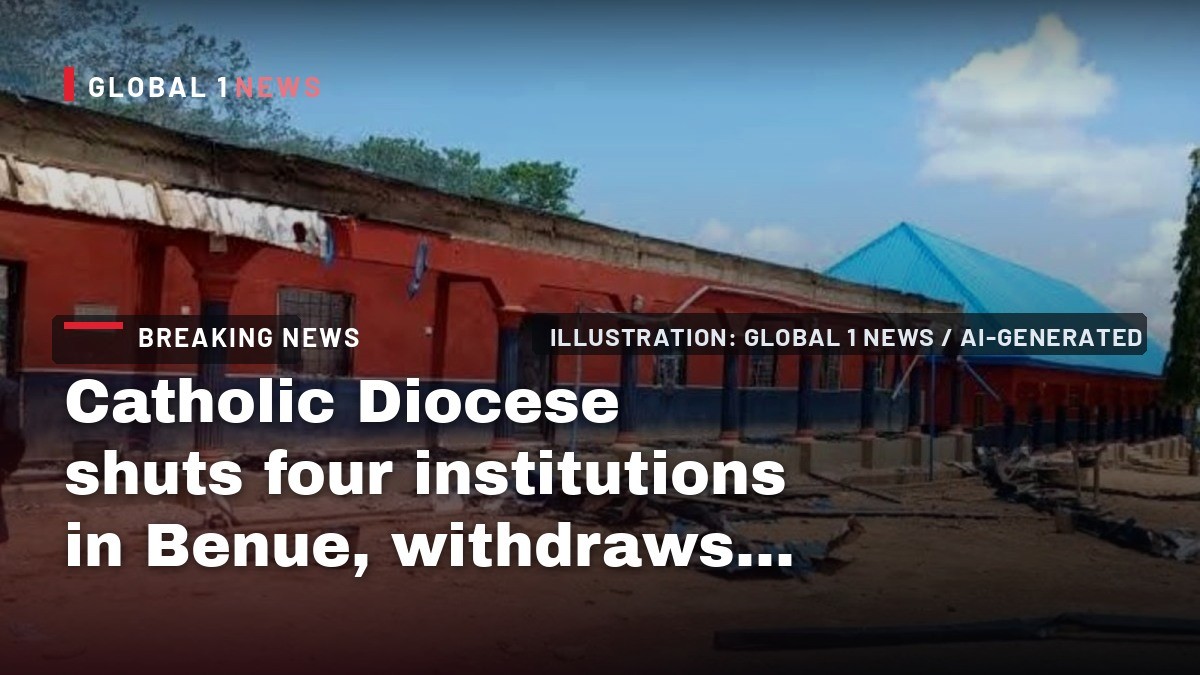
In a decisive move that underscores the growing insecurity in parts of Nigeria’s Middle Belt, the Catholic Diocese of Gboko ordered the indefinite closure of four of its key institutions in Ihugh, Vandeikya Local Government Area of Benue State. The directive, signed by Bishop Most Rev. William A. Avenya and Diocesan Chancellor Rev. Fr. Marcellinus Wende, took effect on 12 October 2026 after a series of violent incidents that threatened the lives of students, teachers, medical staff and clergy. This development not only disrupts local access to education and health services but also reflects a broader pattern of communal tension that has been simmering across the region.
Background to the closure
The Diocese’s decision follows a documented string of attacks on its properties. Notably, the students’ hostels at St. Winifred Secondary School were set ablaze on four separate occasions – 28 October 2025, 10 May, 15 May and again on 11 October 2026. In addition, St. Winifred Parish suffered persistent burglaries, and St. Thomas Hospital faced repeated criminal incidents that hampered its operations.
A particularly tense episode occurred on 21 June 2024, when the reopening of St. Thomas Hospital was met with placards and chants from community members demanding that the Reverend Sisters leave the area. Bishop Avenya described these events as part of a “recurring pattern of hostility and destruction” aimed at Church‑owned facilities, creating an environment of fear and uncertainty for workers and residents alike.
Despite multiple attempts at dialogue – involving community leaders, traditional rulers, elders, government officials and security agencies – the Diocese reported that these efforts failed to secure the level of safety required for continued operation. Consequently, the bishop concluded that the Church could no longer expose its personnel or beneficiaries to danger.
The institutions affected
The closure impacts four key establishments: St. Winifred Secondary School, St. Winifred Nursery and Primary School, St. Thomas Hospital (including the Salus Mind Care Center and its chaplaincy), and St. Winifred Parish. All are located in the town of Ihugh, a hub that previously served as a vital centre for Catholic education and health care in the Vandeikya area.
St. Winifred Secondary School, once a beacon for secondary education in the region, now lies dormant, its hostels scarred by repeated arson. The nursery and primary school, which fed younger children into the secondary system, face a similar fate, leaving families scrambling for alternative schooling options.
St. Thomas Hospital, a critical health provider for surrounding villages, now stands closed, its patients redirected to other facilities. The Salus Mind Care Center, which offered mental health services, is also shuttered, compounding the health vacuum in the area.
Impact on education
With the schools closed, the Diocese has pledged to assist affected pupils by facilitating transfers to other Catholic schools within the Diocese. However, the logistics of moving large numbers of students, many of whom travel long distances, present a considerable challenge. The Director of Catholic Education Services is expected to provide further details on relocation plans.
Parents in Ihugh now confront the dual burden of finding safe accommodation for their children and coping with the disruption of academic calendars. The loss of St. Winifred’s educational infrastructure also threatens long‑term human capital development in a region already grappling with limited educational resources.
Beyond immediate displacement, the closure may have ripple effects on enrollment patterns across the Diocese, as families weigh the safety of Catholic schools against secular alternatives. This shift could reshape the religious schooling landscape in Benue State over the coming years.
Impact on health services
Patients who were receiving treatment at St. Thomas Hospital are now being referred to other health facilities, with urgent cases receiving priority attention. The Diocese emphasized that it will ensure continuity of care for those with critical needs, but the sudden redirection inevitably strains neighboring hospitals and clinics.
The Salus Mind Care Center’s closure removes a rare source of mental health support in the area, leaving vulnerable individuals without specialised care. Mental health advocates warn that such gaps can exacerbate community stress, especially in regions already facing insecurity.
Health workers employed by the Diocese, including doctors, nurses and administrative staff, are slated for redeployment or reassignment through diocesan channels. While the Diocese assures that welfare will be addressed with “justice and charity,” the transition period may see temporary disruptions in service delivery.
Clerical withdrawal and pastoral implications
Under the bishop’s decree, all priests serving as parish priests, assistant priests, chaplains, principals and administrators in Ihugh must withdraw from their assignments. The withdrawal extends to consecrated persons, catechists, pastoral workers and lay mission partners deployed by the Diocese.
The decree also bars anyone from returning to the affected positions or exercising ministry in Ihugh without the bishop’s written authorisation. This strict measure underscores the seriousness of the security concerns and the Diocese’s intent to protect its clergy from further harm.
Beyond the immediate loss of pastoral presence, the suspension of sacramental services – including Mass, baptisms and confessions – disrupts the spiritual life of the Catholic community. Bishop Avenya urged residents, youth leaders, traditional rulers and security agencies to restore peace, emphasizing that the decision was not driven by hatred but by a genuine need to safeguard lives.
Broader security context in Benue
The closure of these institutions reflects a larger climate of insecurity that has plagued parts of Benue State in recent years. Communal clashes, farmer‑herder disputes and sporadic attacks on public infrastructure have created an environment where religious and humanitarian organisations increasingly find themselves vulnerable.
While the Diocese’s appeal for “lasting peace and credible security guarantees” targets local authorities, it also highlights the limited capacity of state security forces to protect civilian institutions. The repeated arson attacks and burglaries suggest a pattern of lawlessness that extends beyond isolated incidents.
Analysts note that such insecurity can have cascading effects on development, as schools and hospitals are essential pillars of social stability. When these pillars are compromised, the trust between communities and institutions erodes, potentially fueling further cycles of violence.
Looking ahead: prospects for reconciliation
Bishop Avenya called on community leaders, traditional rulers and government officials to work collectively toward restoring peace and ensuring that those responsible for the attacks are brought to justice. He stressed that the Diocese holds no ill will toward innocent members of the community, seeking instead a durable resolution.
The Diocese’s commitment to assist displaced students and patients demonstrates a willingness to mitigate the humanitarian fallout, even as it withdraws its personnel. This dual approach – safeguarding staff while striving to maintain service continuity – may serve as a model for other faith‑based organisations facing similar threats.
Ultimately, the path to reopening the closed institutions hinges on securing credible security guarantees and rebuilding trust with the local populace. Until such assurances are in place, the Diocese’s decisive step to suspend operations remains a stark reminder of the fragile security landscape in Benue and the broader challenges confronting Nigeria’s Middle Belt.
This article was produced with AI-assisted research and editorial support. Reporting is based on the source material cited below. Sources: Daily Post Nigeria; dailypost.ng; Global1.News (13 October 2026).
By Sarah Okafor, Staff Writer
What's Your Reaction?
 Like
0
Like
0
 Dislike
0
Dislike
0
 Love
0
Love
0
 Funny
0
Funny
0
 Wow
0
Wow
0
 Sad
0
Sad
0
 Angry
0
Angry
0

Africa Correspondent at Global1.News. Based in Lagos, covering politics, business, technology, and culture across the continent. Focused on telling African stories beyond the headlines — the innovation, entrepreneurs, and communities shaping the region's future.











Comments (0)