
Gulf of Paria widens as Trinidad pours oil on troubled Venezuelan waters
Venezuela has formally demanded information and compensation from Trinidad and Tobago over a May 1 oil spill in the Gulf of Paria, a claim Port of Spain disputes as a minor, quickly contained ten-barrel incident.
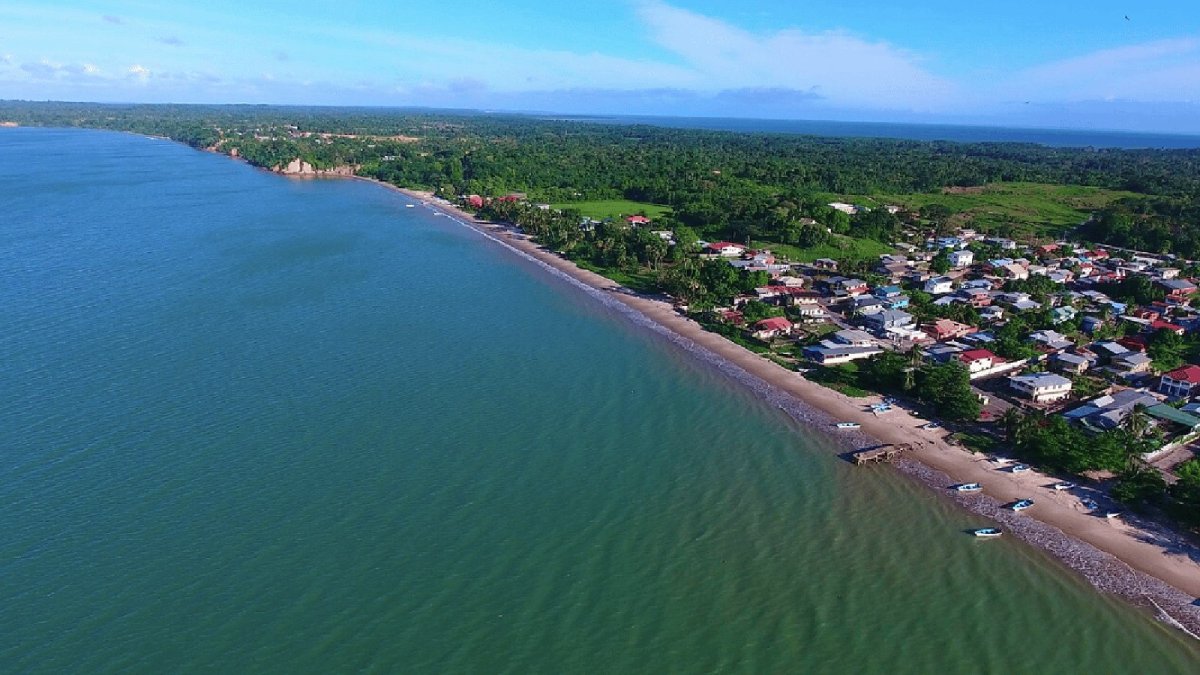
PORT OF SPAIN — The waters we share with our western neighbour have never felt wider. A diplomatic storm has been brewing in the Gulf of Paria since May, when a small oil spill from Trinidad’s Main Soldado field triggered a sharp rebuke from Caracas — and the ripples are still being felt across the region.
What Port of Spain has consistently described as a minor, quickly contained ten-barrel spill has, in Caracas’ telling, become a matter of international environmental law, food security, and the livelihoods of hundreds of artisanal fishermen. The gap between those two narratives is not merely a matter of barrels and kilometres; it is a chasm of trust, communication, and shared responsibility for a body of water that has sustained both nations for generations.
A May morning that changed the conversation
It began quietly enough. At 0725 hours on May 1, 2026, state-owned Heritage Petroleum Company Ltd detected an oil spill in the Main Field, offshore Trinidad, and immediately activated its oil spill response protocols. The Ministry of Energy and Energy Industries (MEEI), the Trinidad and Tobago Coast Guard, and the Environmental Management Authority were all notified without delay.
By 0950 hours, the MEEI had approved the use of chemical dispersants. Oil spill trajectory modelling indicated that if left untreated, the hydrocarbon material could cross the Trinidad/Venezuelan border in the Gulf of Paria. Dispersant was deployed approximately six to eight nautical miles from the border, and visual observations confirmed the dispersant effectively broke up the hydrocarbon. Follow-up inspections using drones and vessels showed no visible hydrocarbons remaining on the water’s surface.
The source of the leak was identified and stopped that same day, repaired, and returned to service on May 2. The total volume: ten barrels. By any measure, a small incident — but in a shared marine space, size is not the only measure that matters.
Caracas cries foul, Port of Spain pushes back
Late on the night of May 9 into May 10, Venezuela’s government issued a statement to the international community alleging that the hydrocarbon spill originating from Trinidad and Tobago had affected coastal areas in the Venezuelan states of Sucre and Delta Amacuro, as well as the Gulf of Paria itself. The statement spoke of “severe risks to mangroves, wetlands, marine fauna and strategic hydrobiological resources for food security and the ecological balance of the region.”
Caracas demanded information about the incident and the action plan, and reparations measures in accordance with international environmental law. It also reserved the right to take action before competent international bodies.
Port of Spain’s response was measured but firm. The MEEI described the May spill as minor and quickly contained, while committing to work with Venezuelan counterparts “to develop a structured framework to manage any incidents of this nature which may arise in the future along our shared border.” Daily inspections continue within all operating fields offshore, and no further spill incidents have been reported.
Prime Minister Kamla Persad-Bissessar referred questions on the matter to Energy Minister Dr Roodal Moonilal, who sought to downplay the incident, insisting there was no cause for alarm.
A second spill, a sharper tone
Then came June. On June 12, Venezuela’s government, through Foreign Minister Yvan Gil, decried a NEW spill allegedly originating in Trinidad and Tobago, saying satellite imagery confirmed it and that it exceeds in magnitude the May incident. Venezuela claimed the May and June incidents together affected approximately 647 square miles in the Gulf of Paria, with “serious environmental damage” to four national parks, 12 strategic wetland systems, 140 marine species, and the livelihoods of about 500 artisanal fishermen.
Caracas demanded full transparency regarding structural causes, actual scope and consequences, and urged permanent operational safeguards.
Trinidad and Tobago responded on June 13, saying authorities were conducting a joint operation to determine the source and nature of the substance. Energy Minister Dr Roodal Moonilal said the MEEI, Heritage Petroleum and the Trinidad and Tobago Air Guard had launched the operation, coordinating with Minister of Foreign and CARICOM Affairs Sean Sobers.
“We have deployed sea vessels and drones to conduct reconnaissance. We have received a report from our Venezuelan counterparts and are urgently investigating,” Moonilal said.
Opposition and analysts question the Government’s handling
Not everyone is convinced the Government has handled this matter with the transparency the situation demands. Former energy minister and Opposition member Stuart Young has accused the Government and Heritage Petroleum Company Ltd of attempting to conceal what he described as a significant environmental incident.
Political analyst Dr Shane Mohammed has warned that poor communication may have unnecessarily strained bilateral ties with Caracas. For a small island state that shares a delicate marine ecosystem with a larger, politically volatile neighbour, the cost of mixed messaging can be high — not just in diplomatic terms, but in the trust of the fishing communities and environmental stewards who depend on the Gulf of Paria’s health.
The Gulf of Paria is not just an oil and gas producing zone; it is an inland sea at Venezuela’s westernmost end and south of the island of Trinidad, an ecologically sensitive fishing area that has sustained coastal communities on both sides for centuries. Mangroves, wetlands, marine fauna — these are not abstract concepts in a diplomatic note. They are the nurseries of the fish that end up on our tables and in our markets.
Watching from across the region
For the wider Caribbean, this is more than a bilateral spat between neighbours. Trinidad and Tobago is one of the region's largest energy producers, a supplier whose stability matters well beyond its own shores. When the Gulf of Paria — a waterway shared with Venezuela and central to the region's oil and gas landscape — becomes the subject of public accusations and counter-claims, governments across CARICOM take notice.
There is history here that neither side can ignore. Venezuela and Trinidad and Tobago signed a delimitation treaty in the 1990s establishing terms for exploiting hydrocarbon deposits on both sides of the border strip. That treaty was meant to provide a framework for cooperation, not confrontation. But treaties are only as strong as the communication channels that support them.
The wider region has seen similar maritime tensions before, and the lesson has usually been the same: when neighbours talk only through statements and press releases, misunderstandings harden into disputes. When they talk directly, through established channels and structured frameworks, problems tend to stay manageable. That is the path the MEEI has said it wants to take, with its stated commitment to developing a structured framework with Venezuelan counterparts for managing future incidents along the shared border.
A shared border, a shared responsibility
Heritage Petroleum, the state-owned successor to Petrotrin, carries the weight of that legacy. With that weight comes responsibility — not only to shareholders and the national treasury, but to the environment and to our neighbours.
The MEEI has stated its commitment to working with Venezuela to develop a structured framework for managing future incidents along the shared border. That is a welcome step, but it comes after months of public disagreement and mutual suspicion. The question now is whether both sides can move beyond statements and accusations to build a mechanism that works before the next incident — not after.
For the fishermen of Cedros and Icacos, for the communities along Venezuela’s Delta Amacuro coast, for the mangrove ecosystems that filter our waters and shelter our young fish, the stakes could not be higher. This is not a story about barrels of oil or square miles of satellite imagery. It is a story about how two neighbours, bound by geography and history, choose to share the waters that sustain them both.
The Gulf of Paria may have widened in diplomatic terms, but the tide will keep coming in and going out, indifferent to our disputes. The question is whether we will learn to manage it together — or let it slip further between us.
By Sharon Sahatoo, Staff Writer
This article was produced with AI-assisted research and editorial support. Sources: Caribbean360, OilNOW, TTT News, Caribbean Media Corporation (CMC), Trinidad Guardian, CP24/Associated Press, UPI.
What's Your Reaction?
 Like
0
Like
0
 Dislike
0
Dislike
0
 Love
0
Love
0
 Funny
0
Funny
0
 Wow
0
Wow
0
 Sad
0
Sad
0
 Angry
0
Angry
0

Caribbean Correspondent at Global1.News. Based in Port of Spain, Trinidad, covering Caribbean politics, economy, energy, climate, and culture. Amplifying the voices and stories of the Caribbean region.










Comments (0)