
Gaza Patients Issue Urgent Appeal for Medical Evacuation as Health System Collapses
In a recent Middle East Eye report published August 8, 2026, patients and their families gathered in the ruins of Gaza City's Al-Shifa Medical Complex to issue an urgent global appeal for immediate medical evacuation. The video, titled "Gaza patients call for urgent evacuation amid health system collapse," captures the scene as Gaza's healthcare system has entirely collapsed under severe supply shortages.
In a recent Middle East Eye report published August 8, 2026, patients and their families gathered in the ruins of Gaza City's Al-Shifa Medical Complex to issue an urgent global appeal for immediate medical evacuation. The video, titled "Gaza patients call for urgent evacuation amid health system collapse," captures the scene as Gaza's healthcare system has entirely collapsed under severe supply shortages. Families described watching loved ones suffer from treatable conditions while crossings stay closed and supplies dwindle.
Gaza Patients Issue Global Appeal Amid Health System Collapse
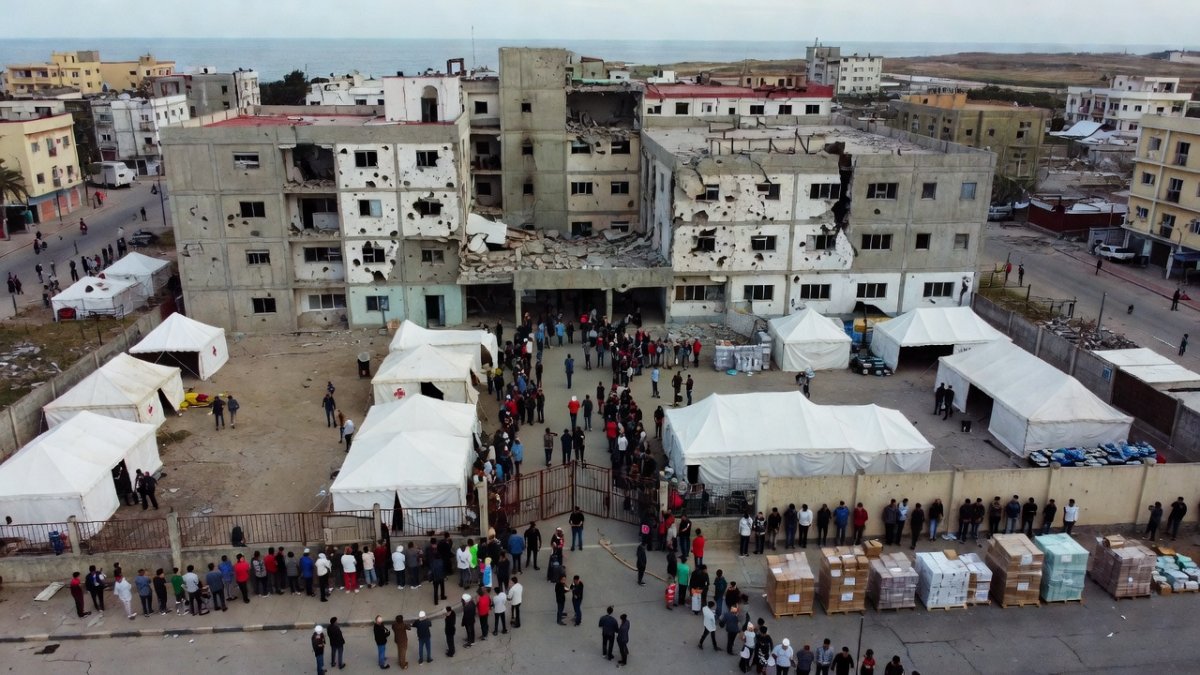
Gaza City, Palestine – August 8, 2026 — Patients and relatives stood among the shattered walls of what was once Gaza's largest hospital, Al-Shifa Medical Complex, to demand urgent medical evacuation abroad. Their call comes as verified figures show around 20,000 patients waiting for treatment unavailable inside the Strip, according to Al Jazeera correspondent Noor Khaled on August 8, 2026, and the Palestinian Centre for Human Rights. The gathering highlights how the health infrastructure has been reduced to fragments after repeated strikes and prolonged restrictions.
The Scale of Hospital Destruction and Partial Function
The World Health Organization has confirmed that only 18 of Gaza's 36 hospitals remain partially functioning. Most facilities lie in ruins, leaving residents without basic services in areas that once served hundreds of thousands. Al-Shifa Medical Complex, where the appeal took place, previously treated patients from across the Strip before its destruction during the war.
These conditions force families to travel long distances on foot or by limited transport to reach the few open wards. Daily life in Gaza City now revolves around locating any remaining medical point that might still hold basic supplies.
Before the war, Al-Shifa Medical Complex served as Gaza's primary referral center, handling complex cases from across the territory and maintaining specialized departments that supported the broader health network. Reports indicate that earlier raids and sieges in 2023 already strained its operations, reducing its ability to function at full capacity even before later damage occurred. The current WHO assessment of 18 partially functioning hospitals must be viewed against pre-war levels, when the system included more comprehensive infrastructure capable of addressing a wider range of needs for the population.
Partial functioning in practice often means the absence of intensive care units, oncology services, and maternity wards in many remaining sites, leaving critical gaps that force referrals or delays for patients requiring those interventions. Without these core capabilities, facilities can manage only the most basic interventions, and even those are limited by ongoing shortages. This reduction transforms what were once full-service hospitals into points of minimal stabilization, shifting the burden onto families who must navigate fragmented options.
Comparisons with earlier capacity show that the loss extends beyond physical structures to the overall ability to sustain routine and emergency care across regions that previously relied on these centers. Residents now face extended travel under difficult conditions to reach any available services, further complicating access for those with mobility challenges.
Daily Deaths from Treatable Conditions
The Gaza Health Ministry reports that six to 10 patients die each day from treatable diseases or injuries because they cannot access needed care. Nasser Hospital in Deir al-Balah has recorded three to four such deaths daily due to shortages of medicines and medical supplies, as stated by Al Jazeera correspondent Ashraf Abu Amra.
More than 11,000 cancer patients face slow death inside the Strip. About 4,000 of them have been denied travel abroad for treatment. The Gaza Government Media Office adds that more than 9,300 wounded and sick Palestinians have died since October 2023 due to the collapse of medical care and Israel's ban on medical evacuations.
The crisis for cancer patients involves the unavailability of chemotherapy and the near-total absence of palliative care options, leaving many without means to manage pain or slow disease progression. According to reports, the 4,000 individuals denied travel represent a portion of those whose cases require specialized treatment outside the Strip, yet permit processes introduce repeated delays and outright refusals tied to security coordination requirements. Families describe prolonged waits that turn treatable situations into irreversible ones.
The permit regime for medical evacuation has historically involved layers of approval that extend timelines for patients already in urgent need, with some cases resulting in death before any decision is reached. Figures on daily deaths from treatable conditions gain context when viewed alongside these barriers, as the six to 10 reported losses reflect not only immediate shortages but also the cumulative effect of restricted movement for care. Accounts indicate that patients sometimes pass away while documentation remains pending.
Broader patterns show that the combination of unavailable medicines and blocked evacuations compounds the daily toll, particularly for those with chronic illnesses that once had pathways for external support. This situation underscores how administrative and logistical hurdles intersect with material shortages to produce preventable outcomes.
Aid Restrictions and Territorial Confinement
Crossings remain largely closed. Of the 600 aid trucks that should enter daily, the number that actually arrives does not exceed 250. Last week, Israeli forces destroyed a medical supply warehouse serving nearly half a million people near Al-Aqsa Martyrs Hospital.
Israeli-controlled "yellow" zones now cover more than 70 percent of the Strip, confining Palestinians to less than 30 percent of the territory, most of it already destroyed. This confinement limits movement for patients seeking any remaining care and blocks delivery routes for essential medicines.
Pre-war figures indicated more than 500 trucks entering daily to sustain basic needs, providing a baseline against which current arrivals of no more than 250 represent a significant reduction in volume. This shortfall affects the consistent supply of medical items, with dual-use restrictions cited as blocking items such as oxygen generators and spare parts essential for equipment maintenance. Such classifications limit what can reach facilities even when trucks are permitted through.
The destruction of the warehouse near Al-Aqsa Martyrs Hospital eliminated a key storage point for supplies serving a large population, further straining distribution in surrounding areas. The yellow zone system, which designates large portions of territory under movement controls, creates additional barriers by restricting access routes and concentrating populations in already damaged sections. This setup disrupts both patient travel and the logistics of delivering remaining aid.
Overall, these measures compound the effects of closed crossings, leaving health providers with inconsistent access to materials needed for even basic operations. Reports note that the combination of volume limits and classification rules creates ongoing uncertainty for planning care.
Calls to Protect Medical Staff and Detainees
Dr Muneer al-Boursh, director general of Gaza's Ministry of Health, has called for urgent action to save detained paediatrician Dr Hussam Abu Safia, former director of Kamal Adwan Hospital. He has been held without charge by Israel since December 27, 2024, under the unlawful combatant law.
Doctors still working inside the remaining hospitals describe operating rooms without basic anaesthetics and wards without electricity for incubators. Their accounts echo the broader pattern of medical personnel facing detention or restricted access to their own facilities.
Reports document a wider pattern of attacks on healthcare workers, with more than 1,700 killed according to available tallies, alongside detentions that remove experienced staff from the system. The case of Dr Abu Safia involves an 85-day siege of Kamal Adwan Hospital followed by a raid on December 27, 2024, after which he was held under the unlawful combatant law; a related supreme court matter was rejected in June. These events illustrate the pressures on remaining personnel who continue to operate under constrained conditions.
International bodies including Amnesty International and the UN Commission of Inquiry have issued warnings about the cumulative impact on medical infrastructure and staff safety. Such statements highlight risks to those attempting to provide care amid ongoing restrictions and detentions. The absence of legal recourse in some instances adds to the uncertainty faced by families and colleagues.
Working conditions described by staff include repeated interruptions that prevent consistent service delivery, further isolating facilities from external support networks. This environment affects both immediate patient outcomes and the long-term viability of any remaining services.
The Human Cost of Waiting
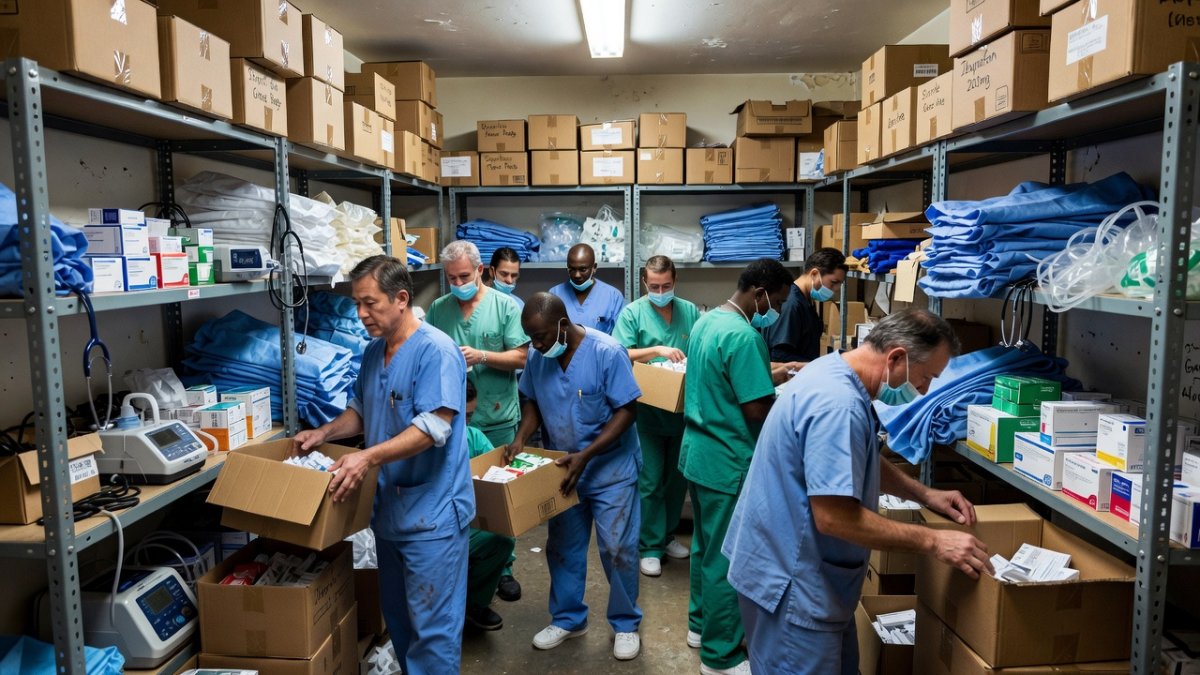
Families gathered at the ruins of Al-Shifa Medical Complex have described the experience of watching relatives decline from conditions that once received treatment locally, with limited options now forcing extended periods without intervention. Displacement has separated many from familiar care providers, leaving individuals with chronic illnesses to manage symptoms without consistent access to medicines or monitoring. Children facing ongoing health needs encounter particular difficulties as movement restrictions and facility closures reduce available support.
The psychological strain on patients and relatives grows as days pass without resolution, with accounts noting the emotional weight of observing gradual deterioration amid uncertainty over evacuation or supply arrivals. Lived experiences of illness under confinement include repeated attempts to locate functioning points of care, often resulting in returns without assistance. This cycle contributes to a sense of isolation that affects entire households managing multiple health challenges.
Stories shared in the appeal reflect how treatable issues escalate when external pathways remain blocked, placing additional burdens on those already navigating damaged surroundings. The absence of specialized services means families must weigh staying near partial facilities against the risks of seeking alternatives farther away, a calculation that adds to daily stress.
Analysis and Implications
Ajith Sunghay, head of the UN human rights office in the occupied Palestinian territories, stated that Gaza's health system was among the hardest hit and that it will take generations for Palestinians to recover from trauma and loss. Médecins Sans Frontières has described the system as a broken shell with medicine being strangled by ongoing restrictions.
These developments connect directly to daily realities in Palestinian communities, where families must weigh the risk of staying near destroyed hospitals against the impossibility of leaving. Historical patterns of restricted movement have compounded over months, turning routine illnesses into fatal outcomes for entire neighbourhoods.
The situation leaves residents with shrinking options for survival while international appeals continue without immediate results. Recovery of basic services appears distant given the scale of destruction documented by health authorities.
By Fatima Al-Rashid, Staff Writer
This article was produced with AI-assisted research and editorial support. Reporting is based on sources cited in the article.
What's Your Reaction?
 Like
0
Like
0
 Dislike
0
Dislike
0
 Love
0
Love
0
 Funny
0
Funny
0
 Wow
0
Wow
0
 Sad
0
Sad
0
 Angry
0
Angry
0

Gulf/MENA Correspondent at Global1.News. Based in Doha, covering Gulf politics, energy markets, diplomacy, and development across the Middle East and North Africa. Tracks the economic transformation of the Gulf states.













Comments (0)