
Fusion power startups find new partners in the defense world
Fusion power is suddenly back on the radar of defense contractors, and the buzz isn’t just about clean‑energy hype. Startups that were once solely chasing a grid‑ready reactor are now fielding offers from the Pentagon‑adjacent world that helped seed the industry in the first place.
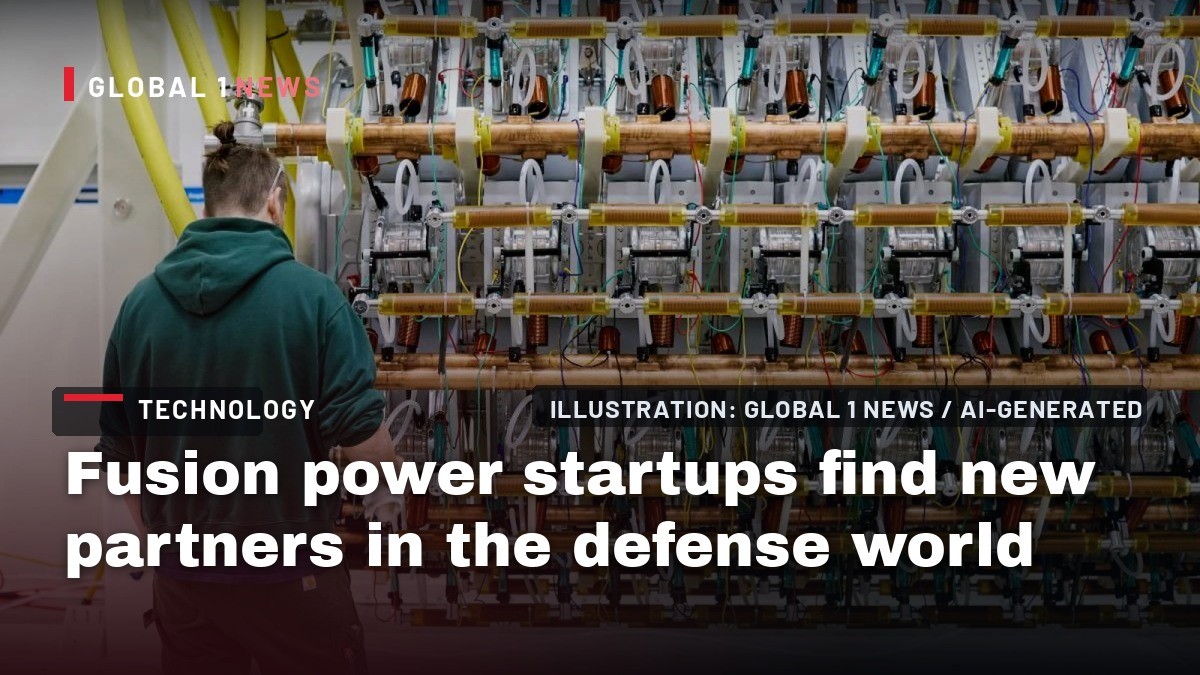
Fusion power is suddenly back on the radar of defense contractors, and the buzz isn’t just about clean‑energy hype. Startups that were once solely chasing a grid‑ready reactor are now fielding offers from the Pentagon‑adjacent world that helped seed the industry in the first place. The latest deals—like laser‑fusion pioneer Xcimer’s cash infusion from RTX and Pacific Fusion’s memorandum with the National Nuclear Security Administration—show how the sector’s high‑cost, high‑risk reality is being reframed as a national‑security opportunity. For investors, policymakers and the everyday citizen watching the energy transition, the story is less about a new power source and more about who’s funding the next wave of military tech.
From Cold‑War Labs to Startup Labs
The fusion field grew out of the same scientific curiosity that powered thermonuclear weapons during the Cold War. Physicists long ago wondered whether the same reactions that could unleash a bomb could be harnessed for constructive use. That dual‑use mindset never vanished; the National Ignition Facility’s breakthrough experiment in 2022, for example, was conducted under the umbrella of a lab that has supported national‑security work for more than a quarter‑century.
Today’s startups inherit that legacy. They are still “chasing their ultimate goal — putting electrons on the grid,” but the defense angle is resurfacing as a pragmatic funding source. The sector’s early ties to national security mean that the technology roadmap already includes high‑energy lasers and other applications that can be repurposed for defense.
Why Venture Money Is Tapering Off
Fusion has captured a sizable slice of climate‑tech capital, yet the business model remains notoriously expensive. The article notes that “venture dollars committed to climate tech … have stalled,” a slowdown that pressures founders to look beyond traditional green‑energy investors. Because fusion projects demand massive capital for laser systems, reactor chambers and high‑precision diagnostics, any shortfall in venture funding can stall progress for years.
When VCs see a portfolio company courting a new revenue stream, they tend to cheer. The defense sector’s deep pockets and appetite for cutting‑edge tech present a “helpful boost” for startups that might otherwise be forced to scale back or shut down.
Laser Weapons: A New Reason to Fund Fusion
Modern warfare has been reshaped by cheap, ubiquitous drones, which expose a mismatch in legacy air‑defense systems that were built to intercept larger, manned aircraft. The article illustrates this with a “comical mismatch” where a $3 million Patriot missile was used to down a $200 consumer drone—effective but wildly inefficient.
Laser weapons promise to flip that math. Rather than expending a single, costly missile per engagement, a laser can fire rapidly and at low marginal cost, drawing power from a generator, ship reactor, or—crucially—an emerging fusion‑based power source. This makes the laser‑fusion synergy a natural fit for defense contractors looking to field cheaper, high‑rate‑of‑fire solutions against swarms of small drones.
Xcimer’s RTX Deal: Funding Meets Firepower
Last week, Denver‑based Xcimer announced a partnership and investment from RTX, the conglomerate that houses defense heavyweight Raytheon. Under the agreement, RTX Ventures will fund Xcimer while the defense giant gains access to Xcimer’s “powerful lasers” for its own projects. Xcimer claims to operate the largest privately owned laser system in the world, dubbed Phoenix, which, while still an order of magnitude below the power needed for a full‑scale plant, is already “powerful enough to have caught the attention of the defense industry.”
This partnership exemplifies the two‑way street: Xcimer receives much‑needed capital, and RTX secures a pipeline to next‑generation directed‑energy weapons. For the broader fusion ecosystem, the deal signals that defense money is now a viable alternative to climate‑tech grants, potentially accelerating timelines for both power‑generation and weapons‑development pathways.
Pacific Fusion’s NNSA MoU: From Labs to Battlefields
Pacific Fusion, another player in the laser‑fusion arena, recently signed a memorandum of understanding with the National Nuclear Security Administration (NNSA). The agreement focuses on high‑energy‑density fusion experiments, and the startup has broken ground on a demonstration facility in New Mexico near Sandia and Los Alamos national labs. While the primary goal is to prove a net‑positive energy output—generating more power than the facility consumes—the reactor’s output will also be “far more powerful than those the government currently uses to perform nuclear weapons experiments.”
Co‑founder and CTO Keith LeChein highlighted the dual‑use nature of the project, noting that the facility “also has utility in this world‑leading defense application.” Co‑founder and COO Carrie von Muench added that “defense applications were always on our mind,” underscoring that the startup’s roadmap was deliberately aligned with national‑security needs from the outset. Their backgrounds—spanning Sandia, Lawrence Livermore and the NNSA—reinforce the deep‑seated connection between fusion research and defense.
Implications for the Energy Transition
If fusion startups can reliably tap defense funding, the ripple effects could reshape the clean‑energy landscape. Traditional climate‑tech investors may see a reduced appetite for high‑risk fusion projects, redirecting capital toward more immediate renewable solutions. Meanwhile, defense‑backed fusion could accelerate prototype development, potentially delivering a high‑density, low‑carbon power source that complements solar and wind, especially in remote or mobile applications like naval vessels or forward operating bases.
However, the partnership also raises questions about technology transfer and the militarization of a sector that many view as a hopeful climate solution. The article notes that the “national security angle never really went away,” suggesting that the fusion community has always balanced civilian aspirations with defense imperatives. As the sector matures, the balance of public versus military funding will likely shape both the speed of breakthroughs and the public perception of fusion as a clean‑energy answer.
Who Wins, Who Loses, and What It Means for You
For startups like Xcimer and Pacific Fusion, defense deals are a lifeline that could keep their labs humming while they chase net‑positive energy. Defense contractors such as RTX gain early access to laser technologies that could redefine battlefield tactics against cheap drone threats. Meanwhile, venture capital firms see an exit or at least a diversification path for their high‑risk investments.
On the flip side, pure‑play climate investors may find fewer opportunities in fusion as capital drifts toward the Pentagon’s budget. And for the public, the convergence of energy and defense could blur the narrative of fusion as a purely green solution, prompting debates about the ethical dimensions of funding research that serves both civilian and military ends.
What’s clear is that the fusion field is no longer a lone wolf chasing a distant dream of limitless clean power. It’s re‑entering the national‑security arena that birthed it, and that partnership is reshaping the economics, the technology roadmap, and the very story we tell about the future of energy. The next few years will reveal whether this defense‑fuelled boost translates into a breakthrough that powers both the grid and the next generation of laser weapons—or whether the two tracks will diverge, leaving each to chart its own uncertain path.
This article was produced with AI-assisted research and editorial support. Reporting is based on the source material cited below. Sources: TechCrunch; techcrunch.com; Global1.News (13 September 2026).
By Nova Chen, Staff Writer
What's Your Reaction?
 Like
0
Like
0
 Dislike
0
Dislike
0
 Love
0
Love
0
 Funny
0
Funny
0
 Wow
0
Wow
0
 Sad
0
Sad
0
 Angry
0
Angry
0

Trend Reporter at Global1.News. Based in San Francisco, tracking the stories crossing from social platforms, forums, and community discussions into mainstream news — tech breakthroughs, cultural shifts, and world events that real people are engaging with right now.















Comments (0)