
Six Drones Repelled at RAF Lakenheath; Iran Suspected, None Recovered
About six drones were repelled by US counter-drone systems over RAF Lakenheath on 13 November, the Financial Times reported, with Iran suspected and none of the aircraft recovered. A ferry pilot says his three light aircraft caused the alert, and neither account has been reconciled.
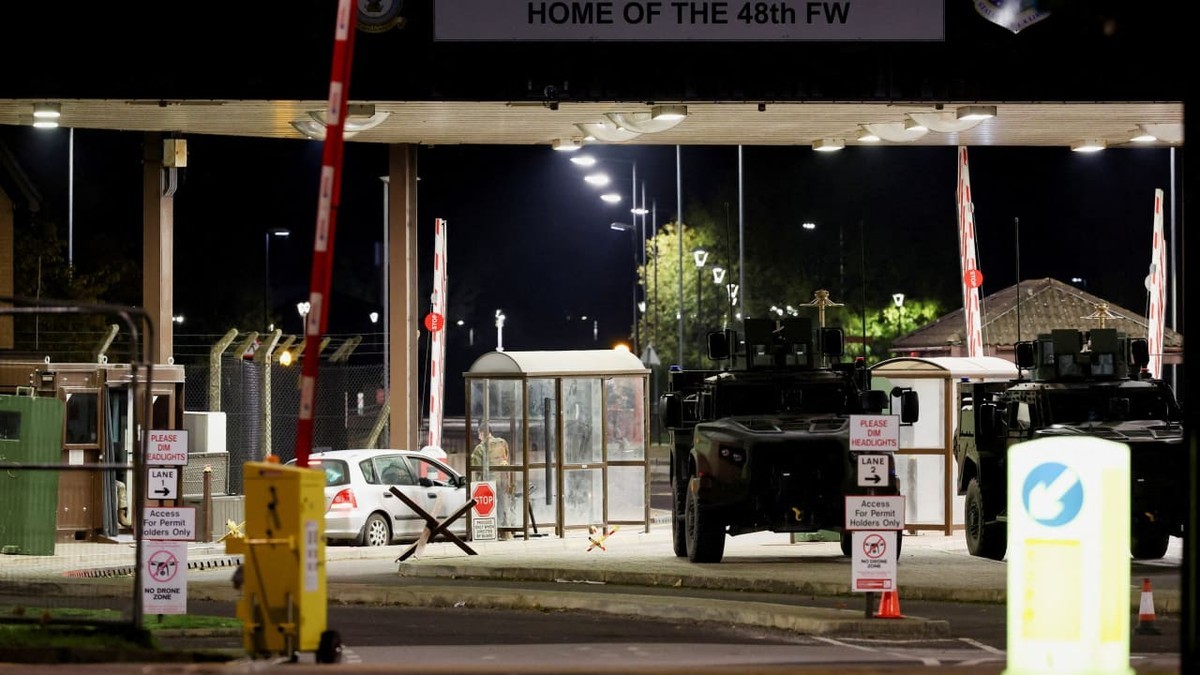
Six drones, a shelter alert, and not one piece of hardware recovered. That is the Financial Times' account of what happened at RAF Lakenheath in Suffolk on 13 November. On 19 November a ferry pilot told the BBC the alert had been caused by his three light aircraft. Both accounts are now on the record, and neither has been withdrawn.
Six Drones Repelled at RAF Lakenheath; Iran Suspected, None Recovered
Suffolk, England — The Financial Times reported on Saturday that about half a dozen unmanned aircraft were spotted flying around RAF Lakenheath on 13 November, triggering a shelter-in-place order for US personnel, and that US forces deployed counter-drone technology to repel them. The people familiar with the matter cited by the newspaper said Iran was suspected of being linked to the episode. No government has publicly attributed the incident to Iran.
Six Drones and a Shelter Alert
The Financial Times account, published on 28 November, describes a security alert that put US personnel on the Suffolk base under orders to shelter in place. Sky News saw a copy of the internal message sent to personnel. It was headed in capital letters with the words "REAL WORLD" in red and instructed people to "shelter-in-place" and "Seek the nearest shelter-in-place room." The US Air Force's own statement that evening described "suspected unauthorised drone activity over RAF Lakenheath" and added: "No personnel, aircraft or infrastructure were affected." The service has not confirmed that the objects were drones, has not identified an operator, and has not said whether security levels changed that night. The Ministry of Defence said that evening that it was "working closely with them to establish the facts" and would "provide updates in due course"; the fullest account instead came from the Financial Times on 28 November.
A Pilot Says It Was Him
On 19 November, Sam Rutherford, a former British Army pilot now flying as a professional light-aircraft pilot, told the BBC that a formation he was flying in sparked the reports. He was in one of three Cirrus SR20s that flew into the area on their way to Belgium shortly before the alarm was raised. The planes had taken off from Stornoway on the Isle of Lewis and entered Norfolk airspace at approximately 6,000ft. "It was definitely us," he said. "It was exactly the right time, the right location, and three aircraft. Unless by some complete fluke there was a hostile actor who happened to have three drones in the sky in exactly the same place. The odds are millions to one against that. So no, it was definitely us." Only one of the three had its transponder switched on, which he said was standard practice in a tight formation, and flight-tracking sites showed one aircraft with a matching tail number and make. The aircraft were being ferried from the United States to a flying school in India. The Air Force did not comment on his claims.
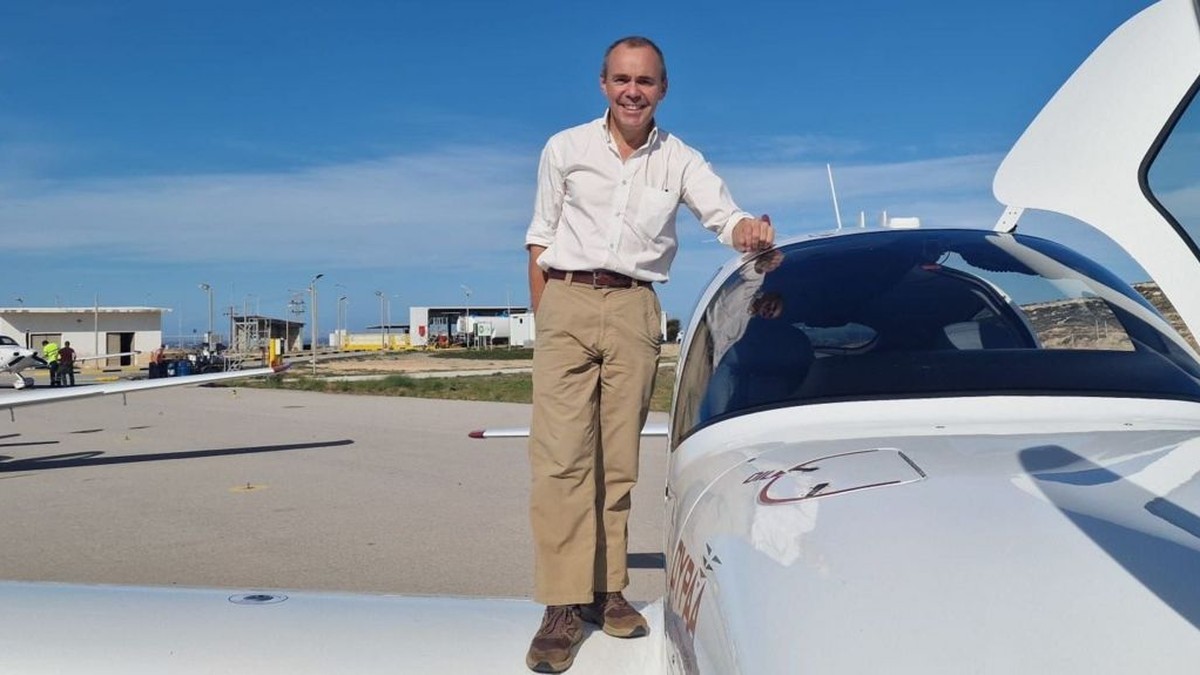
Two Accounts That Do Not Meet
Set the two accounts side by side and the record does not reconcile them. The newspaper's sources describe unmanned systems around a base that had said in September it was at the second-highest US threat level, driven off by counter-drone equipment. Rutherford describes a routine transit that he says was mistaken for one, and he said the aircraft were also mistaken for drones when the formation flew into Chisinau, Moldova. Nothing in the public record establishes that the two accounts describe the same objects. Nothing establishes that they describe different ones. The Air Force has not addressed Rutherford's account, the Ministry of Defence has not either, and the discrepancy sits unresolved. The consequence is not abstract: nobody has been able to say what, if anything, was in the sky over Britain's most important fighter base.
The Base Already on Charlie Alert
RAF Lakenheath is home to the US Air Force's 48th Fighter Wing, known as the Liberty Wing, flying F-35 and F-15E fighters. Almost 7,000 active-duty personnel work there, making it the largest US fighter operation in Europe, according to the official base website. The War Zone calls it "America's master fighter base in England." The base said in September that it was on "Charlie alert," the second-highest threat level that can be issued by the US Department of Defense. Force Protection Condition Charlie applies when an incident occurs, or when intelligence is received, indicating that some form of terrorist action against personnel or facilities is likely. Delta is the highest. The Air Force declined to say whether the level changed on the night of 13 November.
A War That Reached the Runway
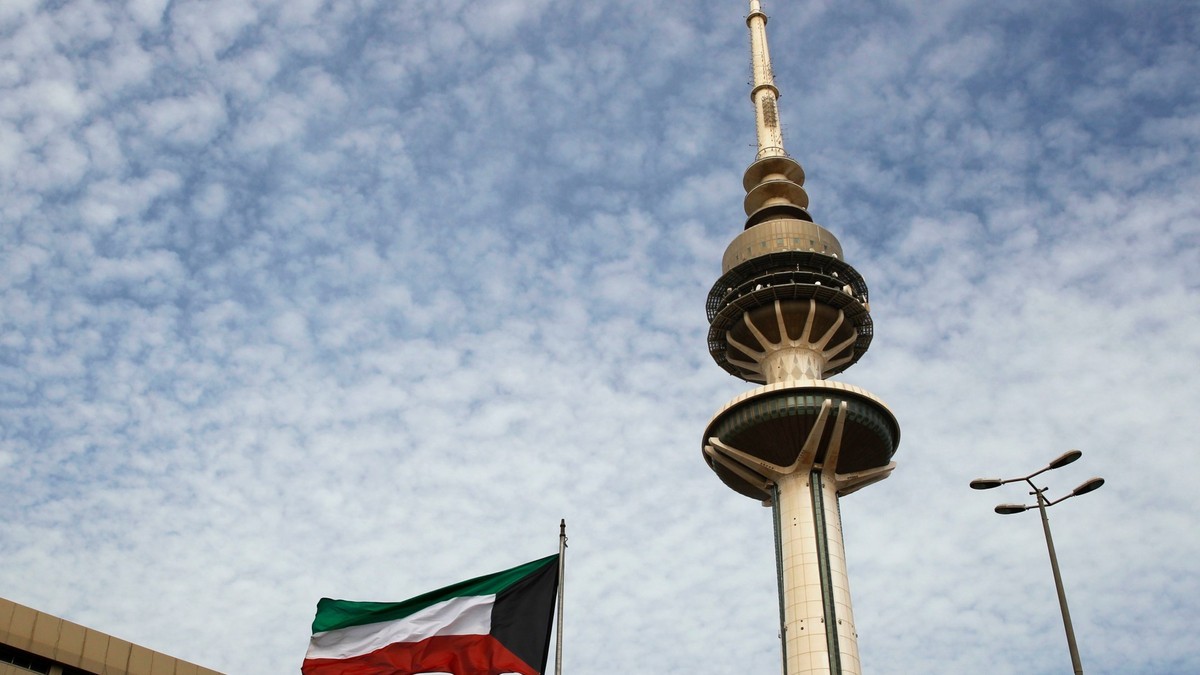
The 48th Fighter Wing took part in operations over Iran earlier this year, the BBC reported. In recent months US bombers have taken off from the base for the Middle East after the UK approved a US request to use it for defensive strikes on Iran. At least two of its aircraft have been recently shot down, one in Iran and one in a friendly-fire incident over Kuwait, according to the same reporting. Iran said in July: "any base used for aggression against Iranian territory constitutes a legitimate target for our forces." The war has not ended. US Central Command said on Friday that it had disabled another merchant ship trying to run its blockade of Iranian ports, and Tehran has vowed to keep the Strait of Hormuz shut.
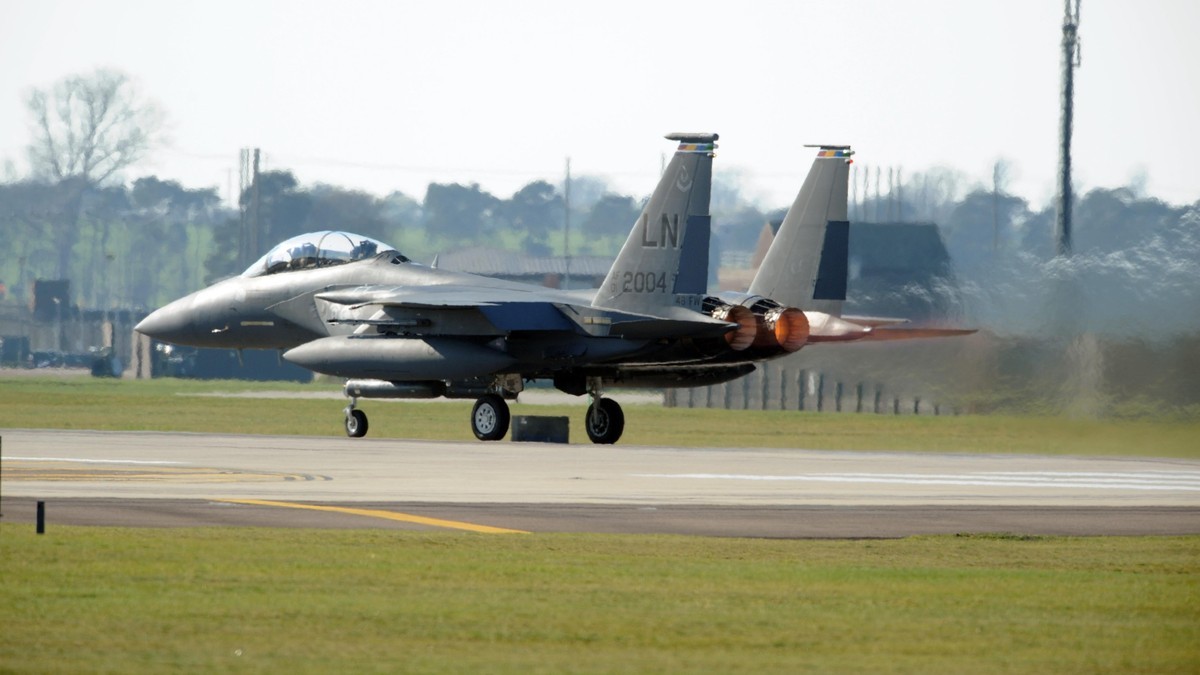
Nothing Was Recovered
None of the drones was retrieved by British or American personnel, the Financial Times reported. Because nothing was recovered, officials cannot rule out that any of the aircraft carried weapons, espionage equipment or other specialized kit. That is the central unresolved fact. Without hardware there is no forensic trail: no manufacturer, no launch site, no flight path, no payload. The reporting does not settle how close the objects came to the runway. The Independent and ITV News wrote that the drones were seen flying over the base; Reuters' wording is that they were flying around it. On Friday, US Air Forces in Europe declined to discuss its counter-drone systems for operational security reasons. A day later the command said its security forces, working with host nation partners, "take a proactive integrated and layered approach to base defence and are ready to address potential threats." The White House and the Pentagon did not immediately respond to requests for comment.
The Planes That Left Mildenhall
On 9 November, at least 12 US Air Force aircraft, including Boeing KC-135 Stratotanker refueling aircraft, departed RAF Mildenhall amid heightened security. The repositioning came as security levels at the three bases hosting US military aircraft in England were raised because of threats from Iran, according to The Wall Street Journal. The War Zone was first to report that the levels had been raised. At least two of the aircraft were moved to RAF Lakenheath, according to the BBC and Sky News. Mildenhall is used mainly as a base for refueling tankers. By the night of the shelter alert, aircraft were dispersing, alerts were rising, and a base already at Charlie was preparing for a threat its commanders would not describe in public.
The Hardening of the RAF
On 25 November, The Times and Sky News reported that the RAF is moving aircraft into hangars and hardened shelters at night to protect them from possible drone attacks, and that troops have been tasked with putting up Kevlar anti-drone nets, like those used in Ukraine, around jets that have to stay in the open. Neither outlet named its sources, and the Ministry of Defence did not immediately comment. Hardened aircraft shelters are reinforced concrete and steel hangars; only a handful of British bases have them, and lawmakers called this month for more after US bombers were pulled out of RAF Fairford, according to Defence Blog. The UK government is investing an additional £470 million, about $615 million, in security at military sites, including physical protection, surveillance and counter-drone capabilities.
The Pattern Since 2024
In November 2024, groups of up to 20 drones appeared over RAF Mildenhall, RAF Lakenheath and RAF Feltwell for several nights, and Britain sent about 60 troops to help defend the installations, according to Defence Blog. On 27-28 September this year, reports of three suspicious vehicles near RAF Fairford in Gloucestershire led to a major incident being declared and dozens of homes evacuated. Five men from London were held on suspicion of explosive and terrorism offences and later bailed. Counter-terrorism police said it was "highly likely" Iran was involved. President Donald Trump said last month that a threat linked to Iran prompted the removal of American B-1 bombers from Fairford. Tehran has rejected accusations of involvement there and in other malign activity in Britain, where authorities have for years accused Iran of plotting against dissidents and Israeli and Jewish targets.
What to Watch Now
Three questions remain open. Attribution: the Financial Times' sources suspect Iran, but no government has publicly attributed the 13 November activity. Identification: the Air Force called it "suspected" drone activity, and the pilot's account has not been answered by either government. Nick Timothy, the Conservative MP for West Suffolk, said on the night that he had urged the Ministry of Defence and the US Air Force "to communicate as freely as operational security constraints allow them." A social-media investigator the BBC identified only as @TakeThatClouds, who geolocated video of lights near RAF Marham that night, said: "The same pattern seems to repeat: there is never a photo or a video of an actual drone, and all the sightings that can be pinned down turn out to be normal aircraft." Hardening: the hangar and netting measures are reported, not confirmed. The Air Force's own advice to the community is to report "any unusual or suspicious activity". Who was flying that night, and what they carried, is still unanswered.
By Jessica Ali, Staff Writer
This article was produced with AI-assisted research and editorial support. Sources: Financial Times (via Reuters), BBC News, ITV News, The Independent, Sky News, The Times, The War Zone, Defence Blog, UPI, The Times of Israel. Lead image: Chris Radburn/Reuters. Inline photographs: Sam Rutherford via BBC News; PA.
What's Your Reaction?
 Like
0
 Dislike
0
 Love
0
 Funny
0
 Wow
0
 Sad
0
 Angry
0

Editor-in-Chief at Global1.News. Atlanta-based journalist who cuts through the BS and tells it like it is. Lead anchor, host, and the voice you hear when the spin stops and the truth starts.










Comments (0)