
In the Shadow of the Afghanistan-Pakistan Border
In the spring of 2026, the Afghan‑Pakistani frontier once again became a flashpoint of armed confrontation, underscoring the enduring volatility of the Durand Line—a border drawn in 1893 that bisected Pashtun tribal lands and continues to shape regional security dynamics.
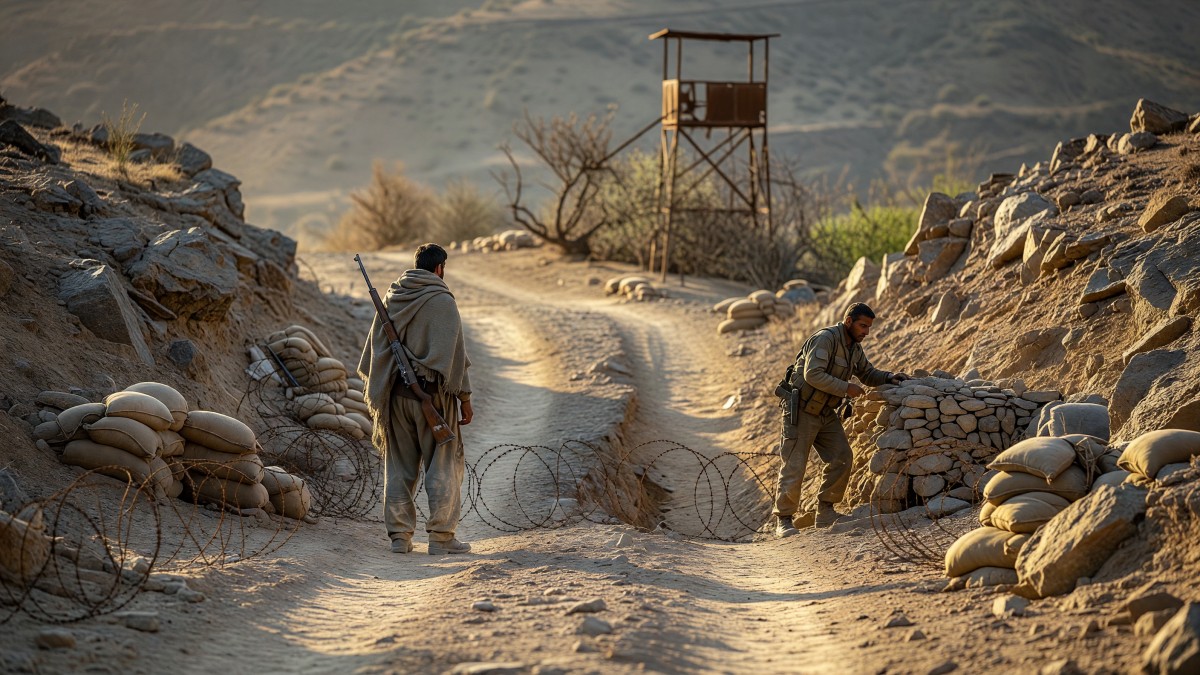
In the spring of 2026, the Afghan‑Pakistani frontier once again became a flashpoint of armed confrontation, underscoring the enduring volatility of the Durand Line—a border drawn in 1893 that bisected Pashtun tribal lands and continues to shape regional security dynamics. The latest bout of hostilities, which erupted in February and persisted through early March, was marked by artillery exchanges and Pakistani airstrikes on Afghan territory, followed by a fragile cease‑fire that left civilian populations in a precarious state of recovery. This article situates the 2026 flare‑up within the broader historical and geopolitical context, drawing on field observations from Kunar province, United Nations casualty data, and the testimonies of local officials and aid workers.
Historical Roots of the Durand Line Conflict
The Durand Line, established by Sir Mortimer Durand in 1893 between British India and the Afghan emirate, was designed to serve imperial strategic interests rather than the social realities of the Pashtun tribal belt. By slicing through contiguous ethnic communities, the demarcation sowed a legacy of contested sovereignty that persists to this day. As the source material notes, the border’s creation “cut through Pashtun communities, leaving people of the same ethnic group on opposite sides,” a condition that has repeatedly been invoked by both Kabul and Islamabad to justify cross‑border incursions.
In the contemporary period, the line has become a conduit for insurgent movements, most notably the Tehreek‑e‑Taliban Pakistan (TTP). Islamabad accuses the Afghan Taliban of providing sanctuary to TTP elements, while Kabul denies any official support, framing Pakistani operations as violations of Afghan sovereignty. The 2026 escalation thus reflects not merely a bilateral dispute but a deeper contest over the control of trans‑border militant networks that have been a feature of the region since the Soviet invasion of Afghanistan.
Chronology of the 2026 Border Skirmishes
According to United Nations Assistance Mission in Afghanistan (UNAMA) reports, the most intense phase of fighting occurred between 26 February and 5 March 2026. During this ten‑day window, artillery fire and aerial bombardments resulted in the deaths of 56 civilians and injuries to 129 more, with women and children constituting 55 percent of the casualties. The source material emphasizes that “there’s no particular reason for the fighting” as described by Ibrahim, a police commander in a Kunar border village, highlighting the ad‑hoc nature of many cross‑border exchanges.
By June, when the journalist arrived on the ground, the guns had fallen silent for several weeks, yet the underlying tension remained palpable. Checkpoints continued to dot the route toward the frontier, and the presence of armed personnel on both sides suggested that the cease‑fire was more a temporary lull than a durable peace.
Humanitarian Impact on Border Communities
The civilian toll of the 2026 clashes extended far beyond the immediate combat zones. UNAMA’s casualty figures, combined with on‑the‑ground observations, reveal a pattern of displacement and disruption. In Kunar province, a UNICEF‑operated tent camp sheltered approximately 300 children who had fled the fighting. The camp, described as a “temporary home for displaced children,” became a focal point for humanitarian assistance, with local volunteers like Farid organizing education and play activities.
Beyond the Afghan side, Pakistani villages experienced parallel pressures. Farid reported that Pakistani authorities had harassed residents in certain border villages, prompting some families to cross into Afghanistan for safety. This reciprocal displacement underscores the porous nature of the frontier and the shared vulnerability of communities on both sides of the line.
Security Practices and Border Management
Travel through the border region in June 2026 required navigating a labyrinth of checkpoints and security protocols. The journalist’s experience illustrates the complexities faced by outsiders and locals alike. After securing a ministry‑issued permit, the team was stopped by a Taliban soldier who, mistaking the journalist for a member of the Hazara minority, initially refused passage. The impasse was resolved only after the interpreter presented a photograph of the issuing Taliban official, leveraging personal connections to persuade the guard.
This episode reflects the decentralized nature of authority in Afghanistan’s border provinces, where local commanders and militia groups exercise significant autonomy. The presence of a “temporary home for displaced children” and the frequent military checkpoints along the Kunar River underscore the blend of humanitarian and security considerations that shape daily life in the area.
Infrastructure Damage and Reconstruction Challenges
The physical landscape of the frontier bears the scars of repeated conflict. The journalist’s observations of “bombed‑out houses,” “shrapnel‑punched” hospital walls, and a “double fence several meters high” lined with barbed wire illustrate the extent of destruction. In Barikot, a small Afghan village along the border, virtually every wall displayed marks of artillery impact, indicating that the community’s built environment has been repeatedly targeted.
Reconstruction efforts are hampered by the volatile security environment and limited resources. While the Taliban authorities in Kunar offered to “clear the way” for journalists and aid workers, the broader lack of coordinated reconstruction funding—particularly from international donors wary of the Taliban’s governance—means that many structures remain in a state of disrepair. The presence of repurposed military pickups for civilian travel further signals the blending of civilian and military spheres in the reconstruction process.
Geopolitical Implications for Regional Stability
The 2026 border skirmishes must be read within the larger framework of Northeast Asian geopolitics, where Afghanistan and Pakistan occupy peripheral yet strategically significant positions. The persistence of cross‑border militant activity threatens to destabilize not only the immediate frontier but also the broader security architecture of South Asia, potentially drawing in external actors interested in counter‑terrorism and regional influence.
From a Korean diplomatic perspective, the episode offers a cautionary illustration of how colonial‑era borders can engender protracted conflict, a lesson relevant to the Korean Peninsula’s own demarcation line. Korean ministries such as the Ministry of Foreign Affairs (MOFA) and think tanks like the Asan Institute have long emphasized the importance of historical context in conflict resolution. The Afghan‑Pakistani case reinforces the need for nuanced, historically informed engagement when addressing border disputes and insurgent dynamics.
Prospects for Peace and Policy Recommendations
Looking ahead, the fragile cease‑fire in early 2026 suggests that a durable peace will require more than temporary military pauses. The United Nations’ casualty data highlights the human cost of continued hostilities, while the testimonies of local actors such as Ibrahim and Farid reveal a desire for stability among border populations.
Policy recommendations emerging from this analysis include: (1) the establishment of a joint Afghan‑Pakistani border monitoring mechanism, potentially facilitated by a neutral third party such as the United Nations, to reduce accidental engagements; (2) increased humanitarian assistance to displaced families on both sides of the line, coordinated through agencies like UNICEF and supported by donor nations; and (3) a diplomatic dialogue that addresses the TTP issue within a broader regional security framework, incorporating inputs from South Asian and Central Asian partners. By integrating historical awareness, humanitarian imperatives, and security considerations, stakeholders can work toward a more sustainable resolution of the Durand Line’s enduring challenges.
This article was produced with AI-assisted research and editorial support. Reporting is based on the source material cited below. Sources: The Diplomat; thediplomat.com; Global1.News (28 November 2026).
By Prof. David Park, Staff Writer
What's Your Reaction?
 Like
0
 Dislike
0
 Love
0
 Funny
0
 Wow
0
 Sad
0
 Angry
0

East Asia/Technology Correspondent at Global1.News. Seoul-based voice covering Korean politics, technology, business, and culture. Analyzes how technology and geopolitics intersect across East Asia.














Comments (0)