
South Korean Chief Justice’s Impending Impeachment
Chief Justice Cho Hee‑dae has become the focal point of South Korea’s political turbulence since President Lee Jae‑myung took office in June 2025. This article unpacks each allegation, examines the legal and political context, and assesses the likely trajectory of the impeachment effort.
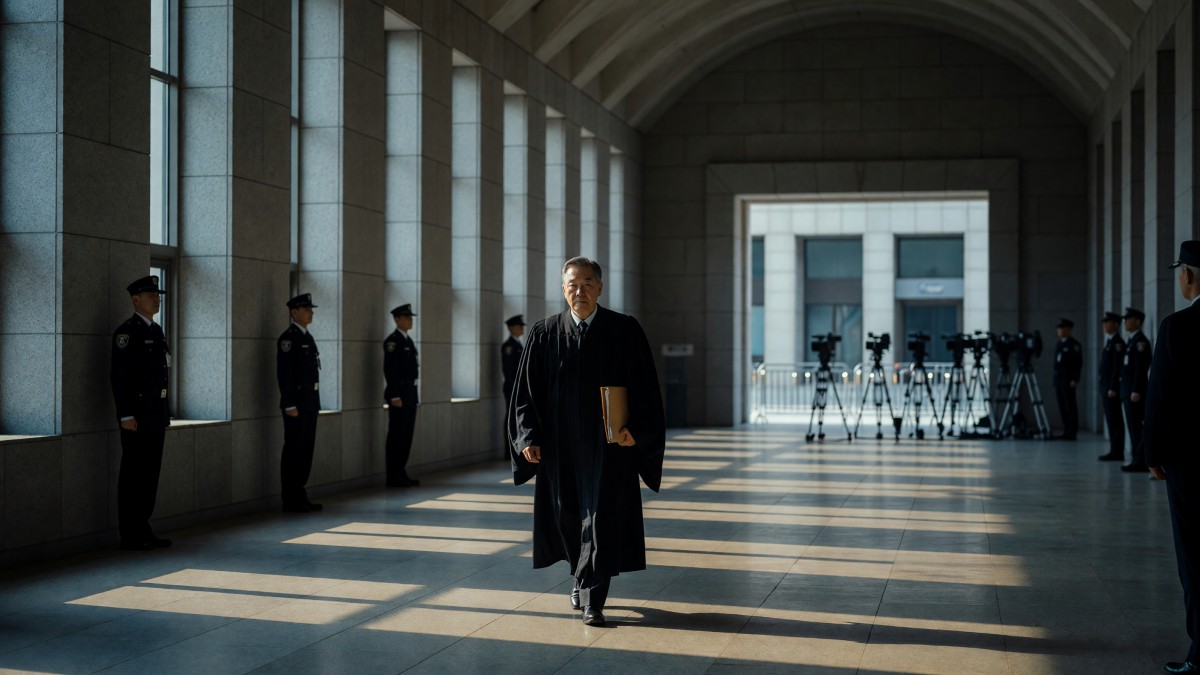
Chief Justice Cho Hee‑dae has become the focal point of South Korea’s political turbulence since President Lee Jae‑myung took office in June 2025. The ruling Democratic Party (DP) resolved at its November 20 general meeting to impeach the head of the judiciary, a move that has reignited debate over the separation of powers and the constitutional limits of each branch. The DP’s impeachment task force aims to submit a motion to the National Assembly in early December, citing three principal grounds: Cho’s conduct during former President Yoon Suk‑yeol’s failed self‑coup, his refusal to recommend a new Supreme Court justice in line with established convention, and a pattern of procedural shortcuts in high‑profile criminal cases. This article unpacks each allegation, examines the legal and political context, and assesses the likely trajectory of the impeachment effort.
The Yoon Self‑Coup and Cho’s Alleged Acquiescence
The first and most dramatic charge stems from the events of early December 2024. On December 3, former President Yoon Suk‑yeol attempted a self‑coup, declaring martial law in a bid to retain power after losing the presidential election. The constitution clearly reserves the Supreme Court as the final arbiter over court‑martial matters, a safeguard meant to prevent the executive from unilaterally suspending democratic order.
According to the DP, the Supreme Court under Cho’s leadership failed to counteract Yoon’s unconstitutional declaration. Instead, a meeting chaired by Cho on the morning of December 4 concluded that “the command and supervision of the judiciary transfers to the martial law commander,” and that the court would “prepare its future steps according to the martial law commander’s instructions and the martial law manual.” The DP argues that this decision amounted to a legal and symbolic endorsement of Yoon’s illegal seizure of power, betraying the court’s duty to protect citizens’ rights to life and property. While the Constitutional Court later ruled Yoon’s martial law unconstitutional, the DP maintains that Cho’s acquiescence deepened the crisis by lending the judiciary an aura of legitimacy at a moment when “even those lacking legal knowledge immediately knew that Yoon’s martial law was unconstitutional.”
Delay and Refusal to Recommend a New Supreme Court Justice
The second impeachment ground concerns Cho’s handling of a vacant Supreme Court seat. Under the South Korean constitution, the chief justice recommends a candidate for a Supreme Court justice, and the president appoints the nominee. Though the constitution does not prescribe a strict timeline, a longstanding convention expects the chief justice to coordinate with the president well before the vacancy arises.
One seat has remained empty since March 2026. Cho delayed his recommendation until August, and when he finally submitted a name, he did so without consulting President Lee Jae‑myung. The DP points out that eight of the twelve current Supreme Court justices were appointed by former President Yoon, creating a court heavily tilted toward his political orientation. President Lee rejected Cho’s initial recommendation, seeking a more balanced composition, and asked for an alternative candidate. Cho’s refusal to submit a new name, the DP asserts, infringes on the president’s constitutional prerogative to appoint personnel and leaves the Supreme Court understaffed, undermining the public’s right to fair trials.
Cho defended his actions by claiming there is “no constitutional ground for the National Assembly and the president to interfere with the procedure for the chief justice’s recommendation,” and he labeled the president’s objections “unconstitutional.” The DP counters that while the chief justice may have a degree of discretion, the established convention reflects the original intent of the framers to ensure cooperation between the executive and judiciary. By bypassing this practice, Cho is portrayed as indulging in “judicial elitism,” an attitude that elevates the courts above elected officials and the electorate.
Procedural Improprieties in High‑Profile Criminal Cases
The third set of allegations focuses on Cho’s handling of politically sensitive criminal matters. In May 2024, ahead of the June presidential snap election, Cho ordered an expedited review of a case involving Lee Jae‑myung, then the DP’s presidential candidate. The Supreme Court overturned an appellate verdict that had found Lee innocent, a decision that could have barred him from running. The DP notes that the ten justices who voted against Lee were all appointed by Yoon and rendered their judgment within nine days, despite the case involving roughly 70,000 pages of documentation.
Another example involves former Prime Minister Han Duck‑soo, who received a 15‑year sentence for aiding Yoon’s attempted insurrection. The Supreme Court missed the statutory deadline of August 7 to review the conviction, extending the deliberation until November 19 before partially acquitting Han. Eight of the nine justices who supported the partial acquittal were either appointed by Yoon or had served under Han when he acted as president following Yoon’s impeachment. The DP argues that these patterns reveal a willingness to prioritize political considerations over procedural regularity, undermining public confidence in the judiciary.
Legal Hurdles and the Role of the Constitutional Court
Even if the DP’s accusations are politically resonant, the legal pathway to impeachment is uncertain. South Korean law requires that an impeachment be grounded in “significant” illegality sufficient to warrant dismissal from office. The DP must therefore demonstrate that Cho’s actions crossed the threshold from questionable conduct to clear constitutional breach.
The Constitutional Court, the sole body empowered to adjudicate impeachment, will assess whether Cho’s alleged misconduct meets this standard. The source material notes that “it’s unclear whether Cho’s behaviors so far have been illegal – even if they are worthy to be frowned upon.” If the Court finds the alleged violations insufficiently grave, it could reject the impeachment motion, preserving Cho’s position until the end of his term.
Timing, Tenure, and Political Calculus
Cho’s term as chief justice expires in June 2027, roughly six months after the anticipated impeachment vote. Constitutional Court proceedings can take up to six months, meaning that even a decisive ruling could arrive after Cho’s departure. This temporal overlap raises questions about the DP’s strategic motives. By pursuing impeachment now, the DP may aim to signal a hardline stance on judicial independence and to deter future executive‑judicial clashes, even if the practical effect on Cho’s tenure is limited.
Furthermore, the DP faces a delicate balancing act. A successful impeachment could reinforce democratic norms by holding a senior judge accountable for perceived overreach. Conversely, a failed attempt might expose the party to criticism for politicizing the judiciary, especially if the Constitutional Court deems the allegations insufficiently serious. The DP’s internal calculations likely weigh both the symbolic impact and the risk of alienating moderate voters who view the judiciary as a cornerstone of constitutional order.
Implications for South Korea’s Separation of Powers
The controversy surrounding Cho Hee‑dae underscores broader tensions in South Korea’s constitutional architecture. The events of December 2024 revealed how quickly democratic safeguards can be tested when an incumbent seeks to override legal norms. The DP’s impeachment drive, whether successful or not, will shape future expectations of judicial conduct and the limits of executive influence.
If the Constitutional Court upholds the impeachment, it would set a precedent that chief justices can be removed for overt political alignment and procedural shortcuts, reinforcing the principle that the judiciary must remain impartial and responsive to constitutional checks. Such a ruling could also prompt reforms to clarify the chief justice’s nomination duties and to institutionalize timelines for filling Supreme Court vacancies, reducing ambiguities that fuel political disputes.
Conversely, a dismissal of the impeachment could embolden future chief justices to assert greater independence from the executive, potentially at the cost of coordination that the constitution’s framers envisioned. The DP’s emphasis on “judicial elitism” suggests a concern that the courts might drift toward self‑appointment and insulation from democratic oversight, a scenario that could erode public trust.
Outlook and Next Steps
In the immediate term, the DP’s impeachment task force will finalize its motion and present it to the National Assembly in early December 2026. The Assembly’s composition—dominated by the DP and its allies—will influence the speed and tenor of the debate. Meanwhile, Cho is likely to contest the allegations, emphasizing his interpretation of constitutional limits on presidential and legislative interference in judicial nominations.
Regardless of the outcome, the episode will remain a defining moment in South Korea’s post‑2020 democratic evolution. It highlights the fragility of institutional checks when political actors test the boundaries of constitutional authority. For observers across the Asia‑Pacific region, the case offers a cautionary tale about the importance of clear procedural norms and the need for each branch to respect the others’ constitutional roles. As the impeachment process unfolds, the world will watch how South Korea reconciles the demands of judicial independence with the imperatives of democratic accountability.
This article was produced with AI-assisted research and editorial support. Reporting is based on the source material cited below. Sources: The Diplomat; thediplomat.com; Global1.News (28 November 2026).
By Kenji Tanaka, Staff Writer
What's Your Reaction?
 Like
0
 Dislike
0
 Love
0
 Funny
0
 Wow
0
 Sad
0
 Angry
0
Japan Correspondent at Global1.News. Tokyo-based voice covering Japanese politics, technology, economy, and culture. Tracks the intersection of tradition and innovation in one of the world's most dynamic societies.













Comments (0)