
Mbappe Ends Morocco's World Cup Dream: France March to Semi-Finals
The dream is over, but the story is far from finished. On a balmy Thursday evening at Boston Stadium in Foxborough, Massachusetts, France's relentless machine rolled over Morocco 2-0 in the FIFA World Cup quarter-final, ending Africa's last hope of a semi-final berth in the 2026 tournament.
The dream is over, but the story is far from finished. On a balmy Thursday evening at Boston Stadium in Foxborough, Massachusetts, France's relentless machine rolled over Morocco 2-0 in the FIFA World Cup quarter-final, ending Africa's last hope of a semi-final berth in the 2026 tournament. For South African fans who had adopted the Atlas Lions as the continent's standard-bearers, the result stings — but the journey of Walid Regragui's men, and the record-breaking presence of 10 African nations at this World Cup, signals a continental shift that Bafana Bafana and SAFA must heed with urgency.
France Ends Morocco's World Cup Dream in Boston, Sets Up Semi-Final Showdown
Boston, United States – July 9, 2026 — Kylian Mbappe delivered the moment of magic that Morocco's stubborn resistance had held at bay for 59 minutes, curling a brilliant right-foot shot past Yassine Bounou from the edge of the area to break the deadlock. Six minutes later, Ousmane Dembele strode forward from midfield and steered a low finish into the bottom corner, sealing France's 2-0 victory and a third consecutive World Cup semi-final appearance — a feat no European nation has achieved in the modern era, and no nation of any confederation since Brazil's run of 1994, 1998, and 2002.
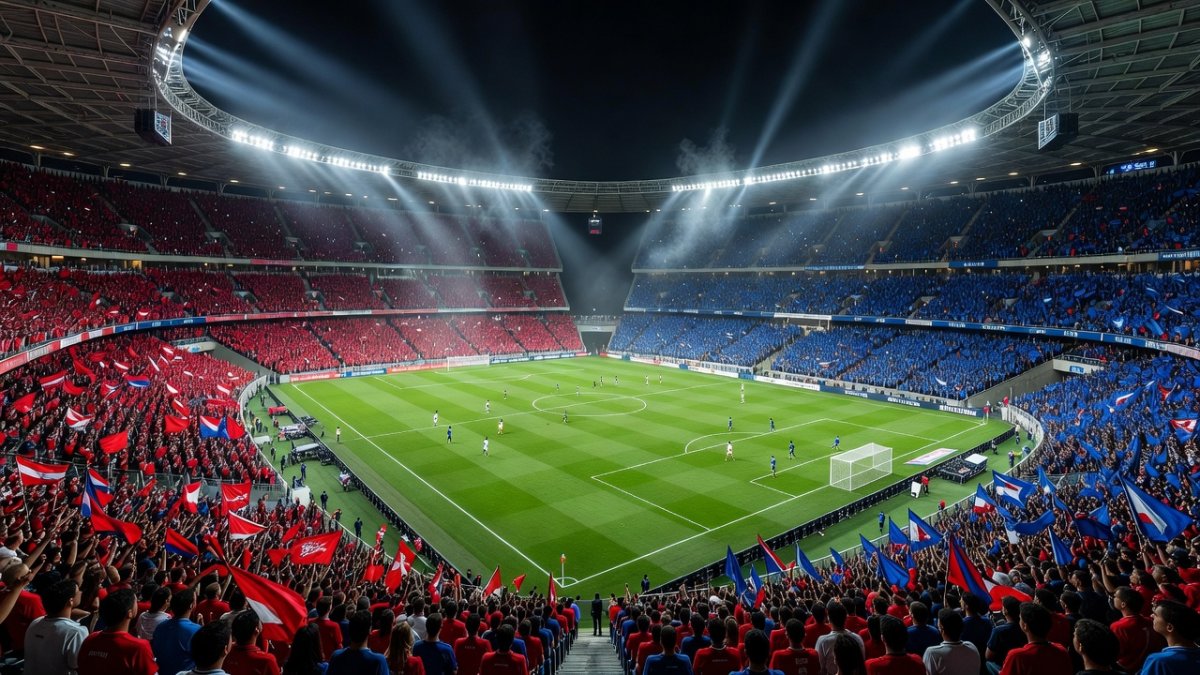
Match Analysis — Mbappe's Brilliance Breaks Moroccan Resistance
The scoreline flatters Morocco's resistance, but not France's control. Didier Deschamps' side were always in command against a limited Morocco outfit that failed to register a single shot on target until the 83rd minute, when Azzedine Ounahi's free-kick was parried by France goalkeeper Mike Maignan. The Atlas Lions' compact defensive system — two banks of four, Brahim Diaz as the lone pressing threat, Ounahi and El Khannouss protecting central space, and Achraf Hakimi disciplined at right back — held France out for nearly an hour. But Mbappe's individual brilliance was always going to find a way through.
The opener came after sustained French pressure. Mbappe, who had won a penalty in the 28th minute after being brought down by Noussair Mazraoui, saw his weak spot-kick saved by Bounou following a lengthy VAR check that delayed the restart by several minutes. The miss seemed to sharpen his focus. When the chance came again, he bent a stunning effort from the edge of the area that left Bounou with no chance — his eighth goal of the tournament, scored in all six of France's matches en route to the last four. That strike puts him level with Lionel Messi on eight goals in the race for the adidas Golden Boot, and takes his career World Cup tally to 20, second only to Messi's 21.
Dembele's fifth goal of the tournament made France the only team in World Cup history to have two players score five or more goals in the same tournament. The former Barcelona winger, who scored a hat-trick in 32 minutes against Norway in the group stage, has formed the tournament's most devastating attacking partnership with Mbappe. France's centre-back partnership of Dayot Upamecano and Maxence Lacroix was commanding throughout, snuffing out whatever limited threat Morocco could muster.
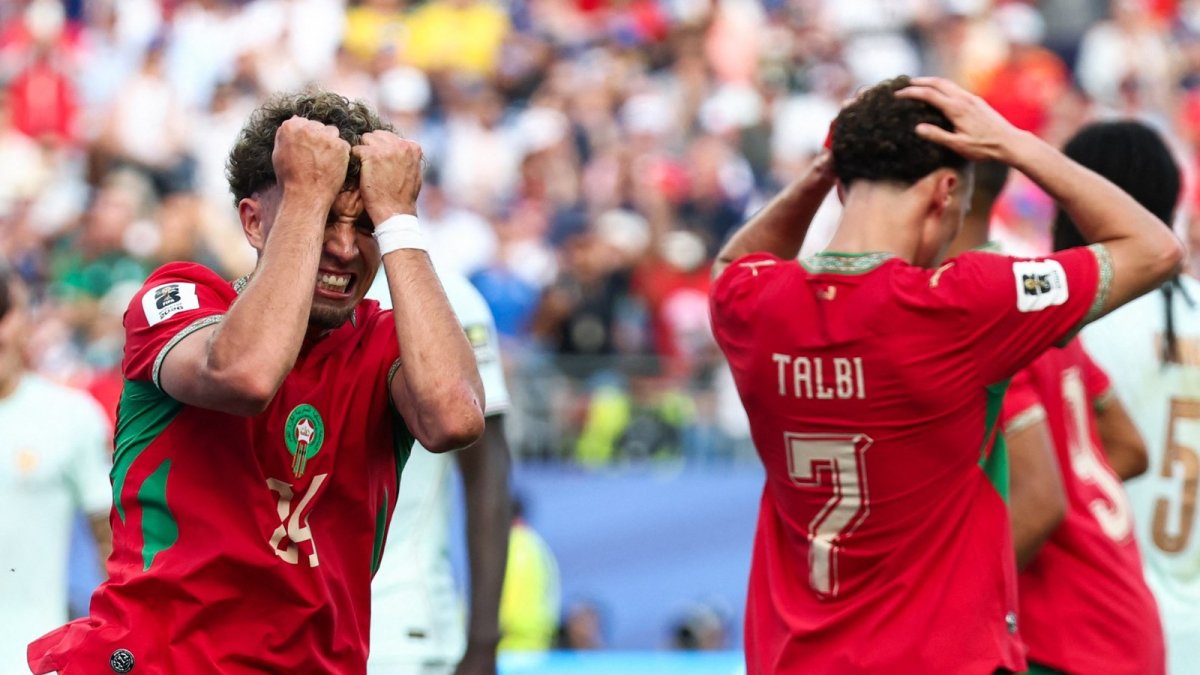
Morocco's Historic Run — From Qatar to Boston, A Continental Legacy
Morocco's exit leaves Africa without a semi-finalist for the first time since 2022, when the Atlas Lions made history as the first African and Arab nation to reach a World Cup semi-final — losing 2-0 to France in Qatar. In 2026, they became the first African nation to reach back-to-back World Cup quarter-finals, a remarkable achievement that cements their status as the continent's standard-bearers. Their run included a 3-0 Round of 16 victory over Canada, and they arrived in Boston having won the Africa Cup of Nations in 2023 and 2024, with victories over Spain and Portugal in the 2022 World Cup run still fresh in continental memory.
Coach Walid Regragui's post-match words captured the spirit of a team that refuses to see this as an ending. "We are not at our end. We are in the middle of our story," he said, his voice carrying the weight of a nation's hopes and the promise of what lies ahead. Morocco will co-host the 2030 World Cup on home soil, and the foundations laid by this generation — the academies, the European-based stars, the tactical sophistication — suggest the story is indeed far from over.
The stadium atmosphere told its own tale. Chants of "Dima Maghreb" — the Moroccan football anthem that had echoed through Boston's streets all week — fell quiet as Dembele's strike sealed the result. "Allez les Bleus" rang out from the French supporters, who had travelled in force to witness their team's march toward a potential third star. For the neutrals, including the thousands of South Africans who had adopted the Atlas Lions as the continent's team, the silence was deafening.
South African Perspective — Lessons for Bafana Bafana and SAFA
For South African football, Morocco's run offers both inspiration and a stark reminder of the gap that remains. Bafana Bafana qualified for this World Cup under Hugo Broos — a major moment for SAFA and South African football — but their tournament ended with a 2-0 loss to Mexico in the opening match at the Estadio Azteca. The record 10 African teams at this World Cup, the continent's biggest ever presence, was validation of Africa's development pathways. But while Morocco, Egypt, and others advanced deep into the tournament, South Africa's campaign was over after the group stage.
The contrast is instructive. Morocco's growth model — a combination of elite academies, a strong European-based player pool, and tactical continuity under Regragui — offers a blueprint that SAFA's high-performance programme would do well to study. The Atlas Lions' AFCON titles in 2023 and 2024, their back-to-back World Cup quarter-finals, and their ability to compete with the world's best on a consistent basis are not accidents. They are the product of sustained investment and strategic planning.
For South African fans, the tournament has been a bittersweet experience. SuperSport and MultiChoice have broadcast every match to record audiences across the continent, and the sight of 10 African nations on the world's biggest stage was a source of immense pride. But the early exit of Bafana Bafana, followed by Egypt's heartbreaking 3-2 Round of 16 loss to Argentina in Atlanta on Tuesday, and now Morocco's quarter-final exit, leaves a void that will not be filled until 2030 — when Morocco, Spain, and Portugal co-host the World Cup on African soil for only the second time after South Africa 2010.
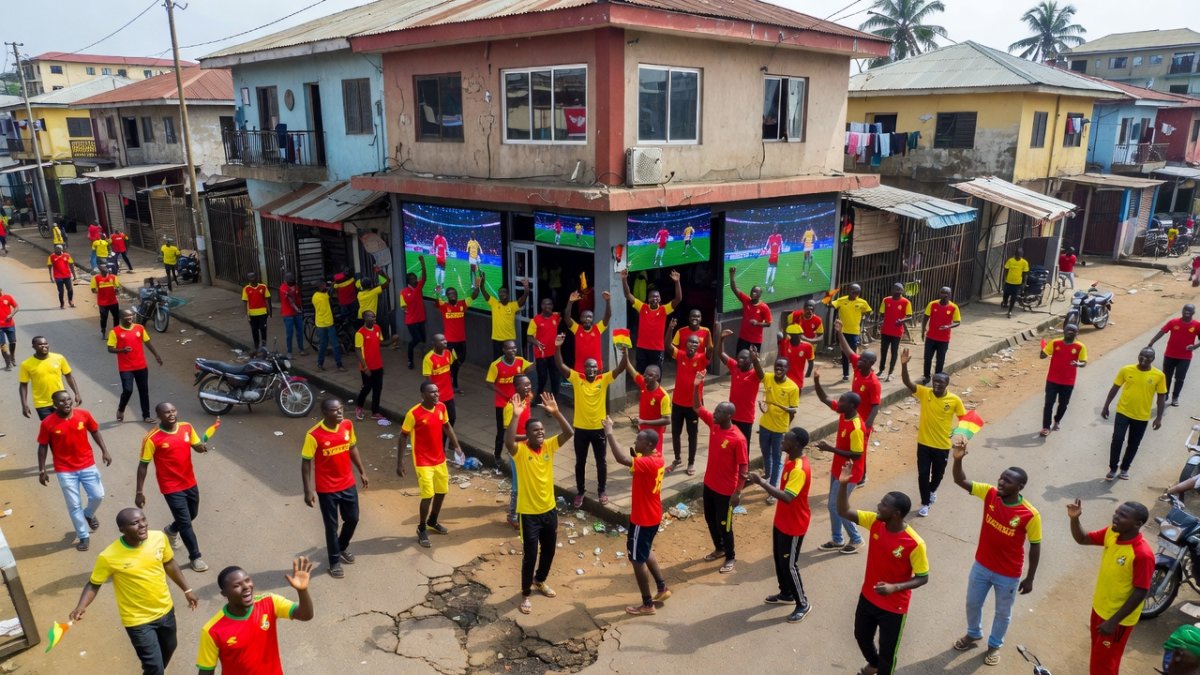
Africa's World Cup Story — Progress, Pain, and Promise
Egypt's run to the Round of 16 was a story in itself. The Pharaohs, the last African team standing before Morocco, pushed Argentina to the brink at Mercedes-Benz Stadium in Atlanta before falling 3-2. Their exit, followed by Morocco's on Thursday, means Africa's deepest run at this World Cup ends at the quarter-final stage — a step back from 2022's historic semi-final, but a sign of the continent's growing depth. Ten teams qualified, more than ever before, and several — including South Africa, Egypt, Morocco, and others — showed they belong on this stage.
The 2030 World Cup in Morocco will be the ultimate test of the continent's progress. Co-hosting with Spain and Portugal, Morocco will have home advantage and a generation of players who have tasted World Cup football at the highest level. The infrastructure being built, the academies being established, and the tactical evolution under Regragui all point toward a nation ready to make history on home soil. For South Africa, the challenge is to ensure Bafana Bafana are part of that story — not as spectators, but as contenders.
Fan reactions captured the emotional weight of the moment. Yaseen Maroufi, a Moroccan supporter, acknowledged France's superiority with a touch of resignation: "France are an unstoppable force because not only do they start with 11 very good players on the pitch, but they also boast one of the best bench strengths in the tournament... France are the team to beat, and it's very hard to beat them at the moment." Claude Beyanoun, a French American fan, was more celebratory: "It was wonderful to watch all this French talent." But it was Hamza, a Morocco fan, who spoke for the continent's enduring hope: "We didn't win this one, but we'll win the next World Cup at home... We must carry on after the loss. This is football. This is life."
What to Watch For — France's Semi-Final and the Golden Boot Race
France now await the winner of the Spain vs Belgium quarter-final in Los Angeles, with a semi-final clash set for Arlington, Texas on Tuesday July 14. Deschamps, the longest-serving coach of any major international side at 14 years and the most decorated French manager in history with the 2018 World Cup and 2020 Nations League titles, will be targeting a third consecutive final appearance. The Mbappe-Dembele partnership has been the tournament's most devastating attacking force, and with Mbappe level with Messi on eight goals, the Golden Boot race adds another layer of intrigue to the final stages.
For South African sports fans, the lessons from this World Cup are clear. Africa's presence is growing, but the gap between the continent's best and the world's elite remains significant. Morocco's run showed what is possible with vision and investment; Bafana Bafana's early exit showed what happens without it. As the 2030 World Cup approaches, with Morocco as a co-host and South Africa's own 2010 legacy still fresh, the time for SAFA to act is now. The continent's football story is being written, and South Africa must ensure it has a leading role in the next chapter.
The dream may have ended in Boston, but for African football, the journey continues. Morocco's "middle of their story" is a promise, not a farewell. And for South Africa, the challenge is to ensure that when the World Cup returns to the continent in 2030, Bafana Bafana are not just participants, but protagonists.
By Dante Williams, Staff Writer
This article was produced with AI-assisted research and editorial support. Reporting is based on sources cited in the article.
What's Your Reaction?
 Like
0
Like
0
 Dislike
0
Dislike
0
 Love
0
Love
0
 Funny
0
Funny
0
 Wow
0
Wow
0
 Sad
0
Sad
0
 Angry
0
Angry
0

Breaking News and Investigations Correspondent at Global1.News. Based in London, covering global breaking news, security, and investigative stories. Known for digging deeper and connecting the dots across continents.










Comments (0)