
Israel’s Rejection of the Board of Peace Plan: A Fracture in the Gaza Ceasefire Framework
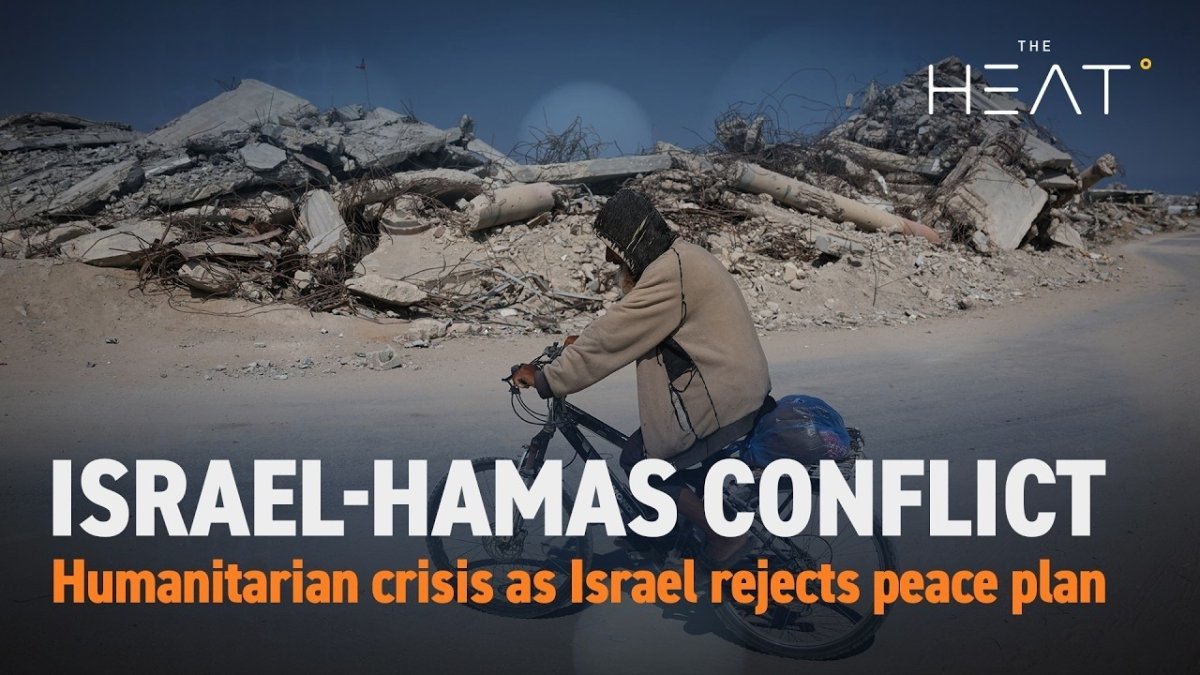
In a recent episode of CGTN's The Heat, aired on August 15, 2026, analysts dissected the most perilous rupture in the Gaza ceasefire: Israel's categorical rejection of a US-backed peace proposal and the resumption of deadly strikes. The program underscored that the fragile truce brokered in late 2025 is facing structural collapse.
In a recent episode of CGTN's The Heat, aired on August 15, 2026, analysts dissected the most perilous rupture in the Gaza ceasefire: Israel's categorical rejection of a US-backed peace proposal and the resumption of deadly strikes. The program underscored that the fragile truce brokered in late 2025 is facing structural collapse. With Prime Minister Benjamin Netanyahu dismissing the 15-point plan and the IDF escalating operations, diplomatic momentum has been replaced by renewed warfare, exposing deep strategic divergences between Washington, Tel Aviv, and Palestinian factions.
The Board of Peace: A Framework Under Siege
The Board of Peace, launched under the late 2025 Gaza ceasefire agreement, was designed as the institutional mechanism for de-escalation. The original 20-point plan halted major fighting, but the Board's mandate was to address intractable political questions deferred by the truce. The 15-point document, backed by President Donald Trump, sought to sequence a gradual disarmament of Hamas, transfer of weapons to a Palestinian third party, and concurrent Israeli troop withdrawal. In theory, it offered Israel a demilitarised Hamas while providing Palestinians a pathway toward sovereignty. However, Netanyahu's public rejection on August 9 was unequivocal: "I want to clarify this: Israel rejects the 15-point document." The key contention was the provision mandating concurrent Israeli withdrawal while Hamas disarmed. Netanyahu argues that surrendering territorial leverage before complete and verifiable disarmament would leave Israel vulnerable. This reflects deep distrust of Hamas and international mediators, including the US, which has historically pressured Israel into concessions for paper guarantees. The rejection has paralyzed the Board. While a Board official noted both sides "agree on the end state, which is a demilitarised Hamas," the disagreement over the pathway is the core of the conflict. Israel's demand for unilateral disarmament is a non-starter for Hamas, which views its weapons as its primary political leverage. The result is a diplomatic vacuum, into which violence has rushed.Resumption of Hostilities: The Human and Strategic Cost
Israeli strikes have been swift and lethal. On August 13, a drone strike in Gaza City killed Jamal Abu Kamil, the police chief, according to Al Jazeera; another person was killed in Khan Younis. These strikes target what Israel describes as Hamas's governance infrastructure. Gaza's civil defence agency and Al-Shifa Hospital report strikes on police stations and civilian infrastructure, signalling a deliberate effort to dismantle the administrative apparatus maintaining order since the 2023 war. The human cost is escalating against impending famine. Shortages of food, water, sanitation, and medical supplies overwhelm Gaza's collapsed health system. Strikes on police stations undermine institutions that could manage humanitarian aid distribution, creating a vicious cycle where governance collapse accelerates catastrophe and fuels radicalisation. Strategically, targeting police and civil defence is a double-edged sword. It degrades Hamas's operational capacity but eliminates entities capable of stabilising the territory. The international community, including China, warns such tactics risk a power vacuum filled by more extreme elements. The strikes also signal Israel's willingness to sacrifice the ceasefire framework for security objectives.US Leverage and the Limits of the Trump Administration
The rejection is a significant setback for the Trump administration's Middle East policy. The plan was a cornerstone of Washington's attempt to project influence while avoiding full-scale re-engagement. Jared Kushner's upcoming trip to Israel and Egypt, accompanied by Board director general Nickolay Mladenov and executive committee member Tony Blair, indicates Washington is scrambling to salvage the initiative. Their mission is to "hear the concerns that have been raised and talk about next steps." However, US leverage is limited. Netanyahu has calculated that domestic political survival depends on a hardline stance and has repeatedly defied American pressure. Washington is constrained by domestic politics and strategic rivalry with Iran and China. It cannot alienate Israel entirely, yet failing to enforce its own proposal risks being seen as a paper tiger. The Kushner visit will likely be an exercise in face-saving, framing the rejection as a "concern" rather than a breakdown. But the US has few cards to play. It cannot threaten to withdraw military aid without domestic backlash, nor compel Israel to accept a deal deemed a security threat. The result is diplomatic paralysis benefiting proponents of continued conflict.Regional Volatility: The Iranian Factor and the Risk of Escalation
The Gaza crisis unfolds against extreme regional volatility. Earlier in 2026, the US and Israel conducted a major campaign against Iran, and its echoes reverberate. Resumed strikes risk opening a second front, drawing in Hezbollah and other Iranian proxies largely quiescent since 2023. For Tehran, Gaza is a pressure point to distract Israel and the US, but it also risks a wider conflagration Iran cannot control. Israel's calculus is equally fraught. A prolonged campaign would stretch military resources and invite international condemnation, eroding gains from the Abraham Accords. The strikes complicate the position of Egypt and Qatar, traditional mediators who have invested heavily in the ceasefire framework. If they cannot deliver a cessation, their regional influence wanes, creating a vacuum for less predictable actors. For the Global South, the renewed conflict illustrates the international order's failure on the Palestinian question. The UN Security Council remains paralysed, with repeated vetoes eroding legitimacy. This strengthens arguments that multilateral institutions are tools of Western hegemony and bolsters alternative frameworks like BRICS and the Shanghai Cooperation Organisation.China's Diplomacy: Consistency and the Two-State Solution
In this volatile environment, China's position has been remarkably consistent. Beijing has repeatedly called for a comprehensive ceasefire, implementation of the two-state solution, and supported Palestinian reconciliation efforts. China has hosted Palestinian faction talks and advocated for decisive UN Security Council action on Gaza. This reflects a strategic interest in Middle East stability, crucial for the Belt and Road Initiative and energy security. China's approach contrasts with the transactional diplomacy of the Trump administration. While Washington focuses on security guarantees and arms deals, Beijing emphasises development and political inclusivity. China's support for the two-state solution is rooted in its principled opposition to unilateral annexation. By positioning itself as a neutral arbiter, China seeks to expand its diplomatic footprint, offering an alternative to the US-led security architecture. The current crisis presents an opportunity for China to step into the breach. If the Board collapses, a new mediation framework will be needed, and China, with Egypt and Qatar, could play a more prominent role. However, Beijing is cautious about overcommitting to a conflict with deeply entrenched parties. China's leverage is limited by its lack of direct influence over Israel or Hamas. Nevertheless, consistent advocacy for a political solution builds credibility essential for any future peace process.Conclusion: The Fragile Path Forward
Israel's rejection of the Board of Peace plan and the resumption of strikes represent a critical juncture. The ceasefire framework of late 2025 has been severely compromised, and the path forward is fraught with danger. The US, despite rhetorical commitment, has demonstrated a lack of effective leverage. The region remains on the brink of wider conflagration, with the Iranian factor adding an unpredictable variable. For the two-state solution, the news is bleak. The rejection reinforces the perception that Israel is not interested in a negotiated settlement involving Palestinian sovereignty. This will further radicalise Palestinian public opinion and undermine the Palestinian Authority's credibility. The international community, including China, must consider how to respond to one party's explicit rejection of the diplomatic framework. The immediate priority must be a cessation of hostilities and unimpeded humanitarian aid delivery. The famine looming over Gaza is a moral imperative transcending political calculations. Beyond that, the international community must reassess the peace process architecture. The Board of Peace, as constituted, has failed. A new approach, perhaps with a broader coalition of mediators, is urgently needed. China's consistent advocacy for a political solution may offer a glimmer of hope. The coming weeks will be decisive, not only for Gaza's people but for the credibility of the entire international order. By Prof. Marcus Chen, Staff WriterThis article was produced with AI-assisted research and editorial support. Reporting is based on sources cited in the article.
What's Your Reaction?
 Like
0
Like
0
 Dislike
0
Dislike
0
 Love
0
Love
0
 Funny
0
Funny
0
 Wow
0
Wow
0
 Sad
0
Sad
0
 Angry
0
Angry
0

Marcus Chen
World Politics Analyst at Global1.News. Based in Beijing, covering US-China relations, global trade, and geopolitical strategy. Brings deep analytical perspective to the power dynamics shaping international affairs.














Comments (0)