
Former Boks rip into Roigard for faking it
When the Springboks clinched a penalty try in the third Rugby’s Greatest Rivalry Test, the celebrations were quickly eclipsed by a controversial episode that has set former Boks legends ablaze.
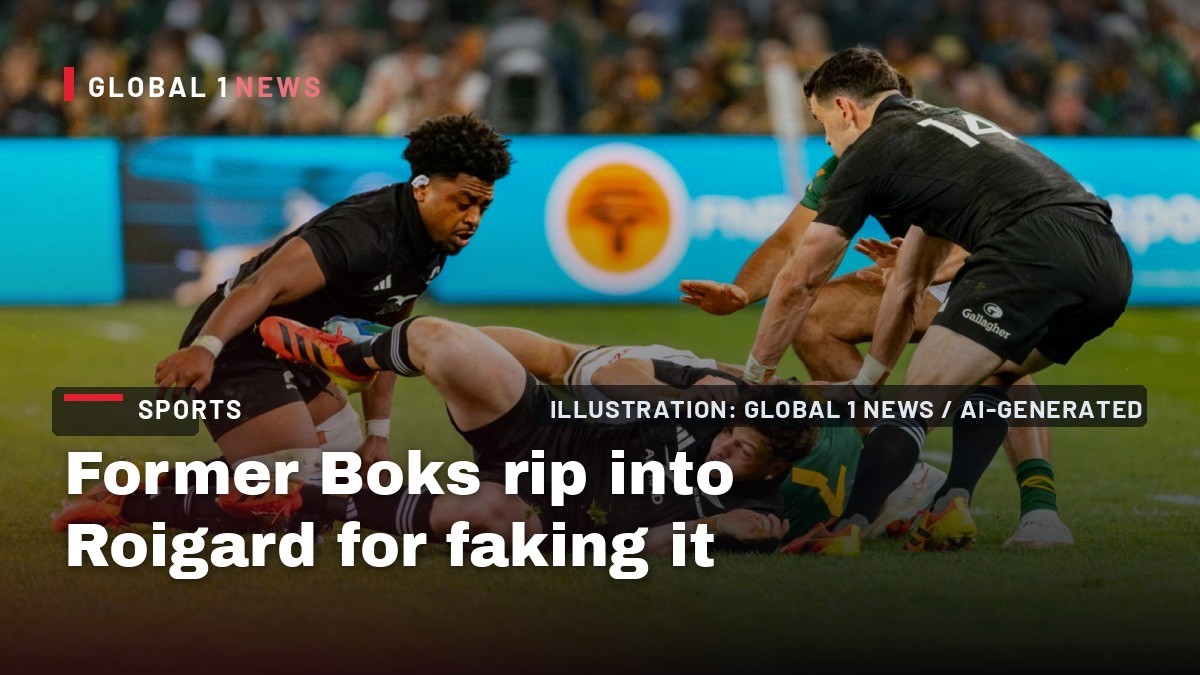
When the Springboks clinched a penalty try in the third Rugby’s Greatest Rivalry Test, the celebrations were quickly eclipsed by a controversial episode that has set former Boks legends ablaze. All Blacks scrum‑half Cam Roigard, after being tackled by Cobus Reinach, slipped to the ground and clutched his face – a move that forced the referee to award a penalty against the South Africans on the halfway line. The incident sparked a firestorm on SuperSport’s post‑match panel and reverberated through the Boks Unpacked X The Verdict podcast, where three of the game’s most vocal ex‑players – Schalk Burger, Hanyani Shimange and Jean de Villiers – laid into what they called blatant gamesmanship.
The incident that lit the fuse
During a high‑stakes test that pitted the All Blacks against the Springboks, Roigard found himself in a tussle with Reinach after the Boks had earned a penalty try. Instead of simply getting up, the New Zealand halfback went to ground, clutching his face as if in pain. The referee, interpreting the gesture as a sign of injury, penalised the Springboks, handing the All Blacks a crucial territorial advantage. The episode was captured on broadcast and instantly became a talking point, prompting former Springbok greats to question the integrity of the act.
Jean de Villiers, speaking on SuperSport, described the manoeuvre as “gamesmanship” that threatens the very spirit of rugby. He noted that such theatrics can force referees and Television Match Officials (TMOs) into split‑second decisions that may alter the outcome of a match, especially when they are compelled to assess simulated injuries without clear evidence.
Former Boks weigh in: No room for theatrics
Schalk Burger, the ex‑loose forward, was quick to highlight the inconsistency in officiating. “Why doesn’t Cam Roigard get a yellow card? Instead, we get a penalty against us on the halfway line for a bit of gamesmanship,” he asked on the podcast. Burger invoked former referee Nigel Owens’ 2015 World Cup warning to Scotland’s Stuart Hogg – “That’s not called for in our game” – to underline that the act sits outside rugby’s accepted conduct.
Hanyani Shimange, another former Springbok, took a broader view, warning that the “animation stuff must stop”. He lamented a growing trend where players exaggerate injuries to sway officials, noting that doctors are now rushing onto the field for players “holding their neck” when they are not truly hurt. Shimange’s call to “cut that out of the game” reflects a concern that such behaviour erodes the authenticity that South African fans cherish.
Jean de Villiers on the ripple effect
Jean de Villiers expanded on the potential fallout of simulated injuries. He argued that when referees are forced to make decisions based on a player’s dramatics, the consequences can be severe – ranging from red cards to suspensions that affect team composition for weeks. “You end up getting a red card and suspended, when you could have just got up and said, ‘Listen, it was a mistake. If it’s fine, let’s move on,’” he warned, underscoring that a single act of deception can jeopardise a teammate’s career.
De Villiers also pointed out that the Roigard episode was not an isolated incident. He referenced a similar episode earlier in the Super Rugby season, suggesting a pattern of players exploiting the “gamesmanship” loophole. For South African rugby, where transformation and grassroots development already face scrutiny, such controversies risk diverting attention from the sport’s positive social impact.
Roigard’s defence and the broader debate
When confronted about his actions, Roigard defended his conduct, insisting he did not regret the incident and viewed it simply as part of the game. His stance reflects a broader debate within the rugby community about the line between savvy play and outright deception. While some argue that a savvy halfback can use any legal means to gain an edge, former Springbok stalwarts contend that the sport’s ethos demands honesty on the field.
The tension between competitive edge and sportsmanship is not new, but the Roigard episode has reignited calls for clearer guidelines. Former players argue that the current law book does not adequately penalise simulated injuries, leaving referees to rely on personal judgment – a factor that can lead to inconsistent outcomes, as seen in the penalty awarded against the Boks.
Implications for South African rugby
For South African fans, the controversy hits close to home. The Springboks, still riding the wave of recent World Cup success, rely on a reputation for physicality and integrity. When an opponent appears to cheat, it fuels a narrative of “us versus them” that can galvanise support but also distract from on‑field performance. The incident also raises questions for SARU about how to protect its players from being disadvantaged by opponents’ theatrics.
Beyond the immediate match, the episode may influence future disciplinary protocols. If the SARU and World Rugby decide to tighten regulations around simulated injuries, South African players could benefit from clearer protections. Conversely, a lax approach could embolden opponents to adopt similar tactics, potentially altering the tactical landscape of Southern Hemisphere rugby.
Looking ahead: What the Boks want
As the Springboks prepare for upcoming fixtures, the former legends’ outcry serves as a reminder that the battle extends beyond the try line. Burger, Shimange and de Villiers all called for a cultural shift – one where “the animation stuff” is stamped out and players are held accountable for gamesmanship. Their message resonates with a South African audience that values authenticity and sees rugby as a unifying force across the nation’s diverse communities.
In the weeks to come, the Springboks will need to focus on their own game while advocating for stricter enforcement of the laws that guard against deception. The Roigard episode, while a single moment, has become a flashpoint for a broader conversation about the soul of rugby – a conversation that South African fans, players and administrators will be watching closely.
This article was produced with AI-assisted research and editorial support. Reporting is based on the source material cited below. Sources: SARugbyMag; sarugbymag.co.za; Global1.News (10 September 2026).
By Dante Williams, Staff Writer
What's Your Reaction?
 Like
0
Like
0
 Dislike
0
Dislike
0
 Love
0
Love
0
 Funny
0
Funny
0
 Wow
0
Wow
0
 Sad
0
Sad
0
 Angry
0
Angry
0

Breaking News and Investigations Correspondent at Global1.News. Based in London, covering global breaking news, security, and investigative stories. Known for digging deeper and connecting the dots across continents.













Comments (0)