
Rocket Report: A weekend of ups and downs; Stoke celebrates engine milestone
Last weekend painted the US launch market in stark contrast: SpaceX kept its hype train rolling with a flawless mid‑air catch of a Starship upper stage, while United Launch Alliance stumbled into its first total loss with Vulcan.
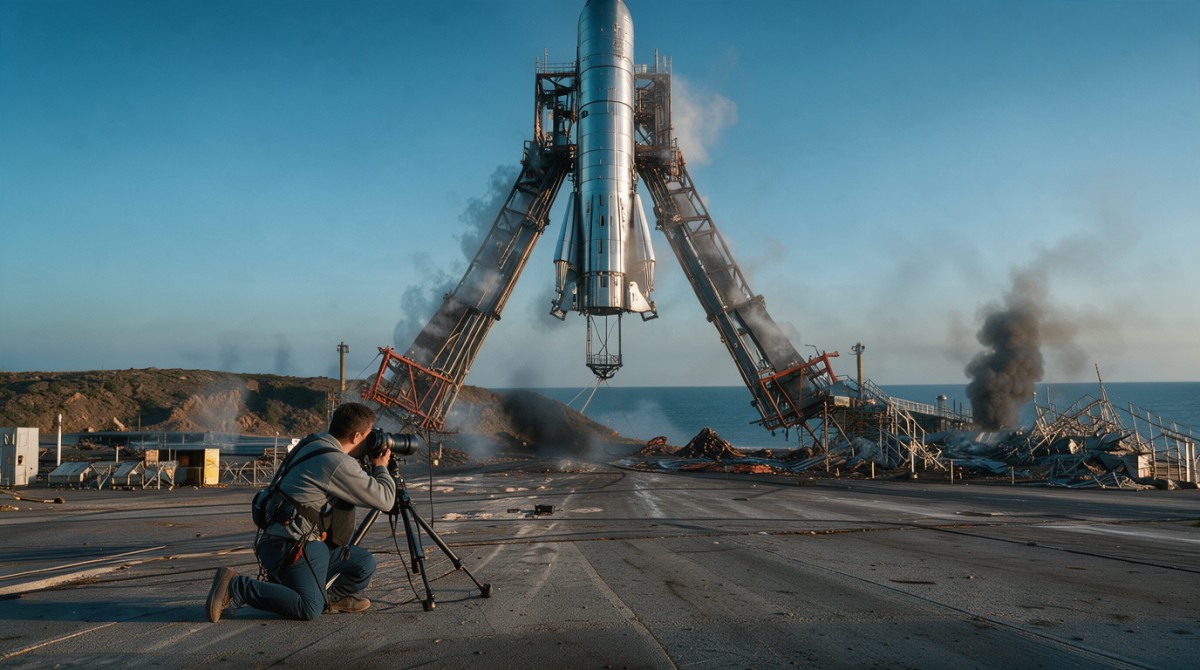
Last weekend painted the US launch market in stark contrast: SpaceX kept its hype train rolling with a flawless mid‑air catch of a Starship upper stage, while United Launch Alliance stumbled into its first total loss with Vulcan. For anyone running a data centre or a cloud stack, the lesson is simple – you can’t afford to ride a single provider’s roller‑coaster. When the booster you’ve booked disappears, you lose revenue, you lose credibility, and you risk breaching SLAs. The same story is playing out across the Atlantic, where ICE YE is trying to buy Italy’s Avio to stitch together a vertically‑integrated European launch capability. And on the other side of the world, Stoke Space is quietly ticking off engine milestones that could reshape the medium‑lift market. Let’s break down what this means for independent hosting firms and why you should be hedging your launch‑dependency bets right now.
SpaceX’s mid‑air catch: a reminder that “reusability” is still a work‑in‑progress
SpaceX’s Saturday stunt – catching a Starship upper stage in mid‑air after nearly a day in orbit – looks impressive on the PR front, but the underlying economics are still murky. The Super Heavy booster was lost at sea, a reminder that even the most polished reusable systems can still shed parts. For a hosting provider that contracts launch services for satellite‑backed edge nodes, the takeaway is that “reusability” does not equal “reliability.” You still face the risk of a lost payload, and the cost of insurance on a Starship launch remains high.
What matters more for us is the consistency of launch cadence. SpaceX’s ability to recover a stage suggests they can eventually lower per‑launch costs, but until the recovery process is routine, the price advantage is speculative. Independent operators should treat SpaceX as a “high‑risk, high‑reward” option and keep secondary contracts with other launch providers to avoid a single‑point‑of‑failure scenario.
ULA’s Vulcan failure: a shock to the US launch ecosystem
The Vulcan failure marks a first for United Launch Alliance, a company that has historically been the “steady hand” for US government and commercial launches. The loss is a direct hit to the US Space Force and Amazon, both of which have booked roughly 70 Vulcan launches over the next few years. Those contracts represent a sizable chunk of future launch capacity, and the failure throws a wrench into planning for any downstream service that depends on that cadence.
From a business‑risk perspective, this is a red flag for any hosting provider that has built redundancy around a specific launch schedule. If you were counting on Vulcan to deliver a batch of low‑Earth‑orbit (LEO) satellites for edge‑computing nodes, you now have to scramble for alternatives – either re‑booking with SpaceX, which may be at capacity, or looking to emerging players like Stoke or the European market. The key is to diversify launch contracts now, before the next failure forces you into a scramble.
European consolidation: ICE YE’s bid for Avio
ICE YE’s announced intention to acquire Avio for more than $2.2 billion is a bold move to create Europe’s first truly vertically integrated space company. Avio’s Vega C, a solid‑fueled launcher capable of delivering up to 3.3 metric tons to LEO, has a healthy backlog of government contracts but has struggled commercially. ICE YE, with a valuation north of $12 billion, hopes to shore up Vega C and possibly fund a new rocket development programme.
For independent hosting firms, this signals a potential new source of launch capacity in Europe, but it also raises the risk of market concentration. If ICE YE successfully merges Avio and leverages its radar‑satellite data business to subsidise launch services, they could undercut pricing for European customers. However, the integration timeline is uncertain, and the venture could face regulatory scrutiny. Keep an eye on the ICE YE‑Avio deal, but don’t bank on it as a guaranteed alternative to US launch providers.
Stoke Space’s engine milestone: a quiet contender gaining traction
Stoke Space announced that its Zenith methane‑fueled engine has cleared acceptance testing and is now shipping to Cape Canaveral for integration with the Nova rocket’s first stage. Seven of these engines will produce roughly 700,000 pounds of thrust, enough to lift a medium‑class payload. More importantly, Stoke is pushing a fully reusable architecture: both the first‑stage booster and the second stage, which features 24 thrusters around a regeneratively cooled heat shield, are designed for re‑flight.
From a hosting‑infrastructure viewpoint, Stoke’s approach could translate into lower launch costs and higher launch frequency if they achieve true reusability. The company is still a few months away from a first flight, expected sometime next year, but the momentum is real. Independent providers should start dialogue with Stoke now, securing early launch slots at potentially favourable terms, especially if you need medium‑lift capability that sits between Falcon 9’s 22‑ton capacity and Vega C’s 3‑ton limit.
NATO’s Starlift initiative: a new avenue for launch procurement
NATO’s recent launch‑brokerage programme, Starlift, aims to pool military launch requirements from a dozen nations and secure slots on commercial rockets. The initiative is backed by roughly $2.7 billion in contracts over the next two years, covering not only launch services but also AI, cyber, and command‑and‑control networks. While the primary focus is defence, the commercial spill‑over could open up additional capacity on rockets that might otherwise be booked for purely civilian payloads.
For hosting firms, especially those with contracts to host defence or government data, Starlift could become a procurement channel. By aligning with NATO’s launch schedule, you may gain priority access to launch slots, which can be leveraged to guarantee service continuity for critical edge‑computing nodes. Keep tabs on the participating countries – Belgium, Canada, Finland, Germany, Italy, the Netherlands, Norway, Sweden, Turkey, the UK, and South Korea – as they may also be looking for hosting partners for their satellite data downlinks.
China’s LandSpace engine reuse: a glimpse of the competition heating up
China’s LandSpace reported that it has completed ground acceptance testing of nine methane‑fueled engines recovered from its Zhuque‑3 booster. This follows a successful landing of the first orbital‑class booster three months earlier. While the Chinese programme is still nascent, the fact that they are already refurbishing and re‑testing engines shows the global race to cut launch costs is intensifying.
From a risk‑management perspective, the emergence of Chinese reusable launch capability adds another variable to the launch‑supply equation. If LandSpace can achieve a reliable, cost‑effective service, they could become a low‑cost alternative for Asian customers, potentially shifting launch demand away from US and European providers. However, export controls and geopolitical considerations may limit Western hosting firms’ ability to engage with Chinese launch services. Still, the competitive pressure could force price reductions across the board – a welcome development for anyone paying premium launch fees.
Actionable steps for hosting providers: diversify, negotiate, and monitor
Given the volatile launch landscape – SpaceX’s flashy but still experimental recoveries, ULA’s unexpected Vulcan failure, ICE YE’s aggressive European consolidation, Stoke’s quiet but promising engine progress, NATO’s new brokerage, and China’s budding reuse – the prudent move is to diversify your launch portfolio now. Secure at least two independent launch contracts for any planned satellite‑based edge nodes, and include clauses that allow you to shift payloads between providers with minimal penalty.
Negotiation is also key. Use the competitive tension created by these developments to lock in favourable pricing and launch windows. For example, reference Stoke’s upcoming flight as leverage when discussing rates with SpaceX or Avio. And finally, set up a monitoring team – or assign a senior engineer – to track the progress of each of these programmes, especially the ICE YE‑Avio merger and NATO’s Starlift rollout, so you can react quickly to any shift in capacity or pricing.
In short, the launch market is no longer a one‑track lane. It’s a multi‑lane highway with construction zones, detours, and new toll booths popping up all the time. Your infrastructure strategy has to be as agile as the rockets you rely on. Stay ahead of the curve, hedge your bets, and keep the lights on for your customers no matter which booster fails next.
— Allan Ali, Founder
This article was produced with AI-assisted research and editorial support. Reporting is based on the source material cited below. Sources: Ars Technica; arstechnica.com; Global1.News (22 November 2026).
By Allan Ali, Global1.News
What's Your Reaction?
 Like
0
 Dislike
0
 Love
0
 Funny
0
 Wow
0
 Sad
0
 Angry
0

Publisher of Global1.News. Automation architect, systems builder, and the guy making sure the truth gets published.















Comments (0)