
Fiji Declares a National HIV Emergency as One in 60 Adults Live With the Virus
Fiji has declared HIV a national emergency, with government estimates showing one in every 60 adults is living with the virus and fewer than a quarter of them on treatment. Cabinet approved the move on 9 September.
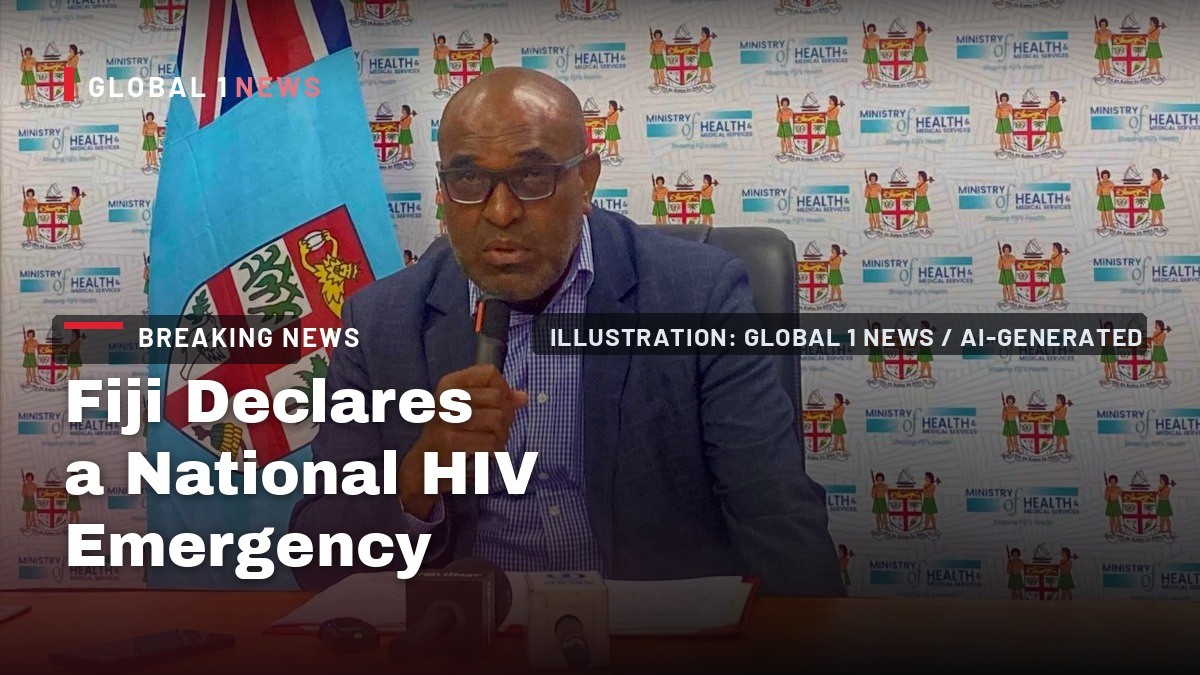
Fiji has declared HIV a national emergency, invoking a public-health power last used during the COVID-19 pandemic. Government estimates say one in every 60 adults in the country is now living with the virus, and fewer than a quarter of them are on treatment. The health minister's verdict on the response that preceded it: no longer sufficient.
Fiji Declares a National HIV Emergency as One in 60 Adults Live With the Virus
Suva, Fiji - Health and Medical Services Minister Dr Ratu Atonio Lalabalavu announced the declaration in a pre-recorded video press statement on Tuesday 15 September 2026, after Cabinet approved the move on 9 September. It was made under Section 69 of the Public Health Act 1935, the provision last used during the pandemic, and sits alongside Fiji's HIV/AIDS Act 2011.
What the Government Declared
The outbreak-level response Lalabalavu's ministry introduced in January 2025 is no longer enough to contain the crisis, he said. "An outbreak-level response is no longer sufficient." Prime Minister Sitiveni Rabuka and his Cabinet backed the decision because of the seriousness of the epidemic, according to RNZ.
The machinery is already being assembled. A five-member Cabinet sub-committee has been set up to clear the barriers that slowed the national response, and plans are under way for a parliamentary standing committee on HIV. The government says it will work with the vanua, the traditional governance structures, alongside faith-based organisations and affected communities.
Lalabalavu framed the declaration as a delivery mechanism rather than a symbol. "Its purpose is to accelerate action and bring the necessary parts of government together to protect health and save lives," he said. "The Ministry of Health cannot meet this challenge alone. It requires coordinated action across government, alongside communities and our partners."
The Numbers That Forced the Decision
Fiji's population is under a million. An estimated 9,000 people were living with HIV as of March 2026, RNZ reported. The trajectory behind the declaration is steep: diagnoses have risen roughly 3,000 per cent since 2010 and 1,400 per cent since 2022, according to Dr Jalal Mohammed, a senior lecturer at the University of Canterbury and adjunct professor at the University of Fiji. The Devpolicy Blog, citing ministry notifications, recorded 1,583 new case notifications in 2024, up from 131 in 2018 - a twelvefold rise in seven years.
The most recent annual diagnosis figure is reported two ways. CNN dates the 2,060 new HIV diagnoses to 2025 and says Lalabalavu gave it as a 2025 figure. RNZ's account of the same statement records the minister saying, "In 2024, we recorded 2060 new HIV diagnoses." The 1,583 total for 2024 recorded by the Devpolicy Blog is consistent with CNN's dating, since two different totals cannot both describe the same year.
Deaths have climbed with infections. National health statistics carried by CNN record 117 HIV-related deaths in Fiji in 2025, up from 25 in 2021. Dr Jason Mitchell, chair of Fiji's National HIV Outbreak and Cluster Response Taskforce, also gives 117 deaths for 2025, including 17 children, in an account carried by PMN News. Dr Mohammed, citing Ministry of Health figures, says one child is born with the virus every week, 56 last year, and one child dies from it every month, 16 last year. Save the Children Fiji says 59 babies acquired HIV from their mother. The child counts do not agree across sources, and no single figure has been authoritatively confirmed.
Coverage remains the sharpest gap, and it is the one number the response will be judged on. Only around 39 per cent of people living with HIV in Fiji know their status and 22 per cent are on treatment, according to Renata Ram, Fiji adviser for UNAIDS, who spoke to CNN. The global treatment rate is 78 per cent.
How a Drug Route Became a Health Emergency
Fiji has become a crucial transit point for narcotics moving from the Americas to markets in Australia, New Zealand and parts of Asia, according to CNN. Stockpiles of methamphetamine smuggled onto the islands by cartels have seeped into local communities, driving an addiction crisis that is now straining the health system.
Injecting drug use has become "a major and rapidly accelerating route of transmission," Ram told CNN, and sharing needles is common. Low condom use, multiple sexual partners, limited testing and stigma are also driving infections, she said.
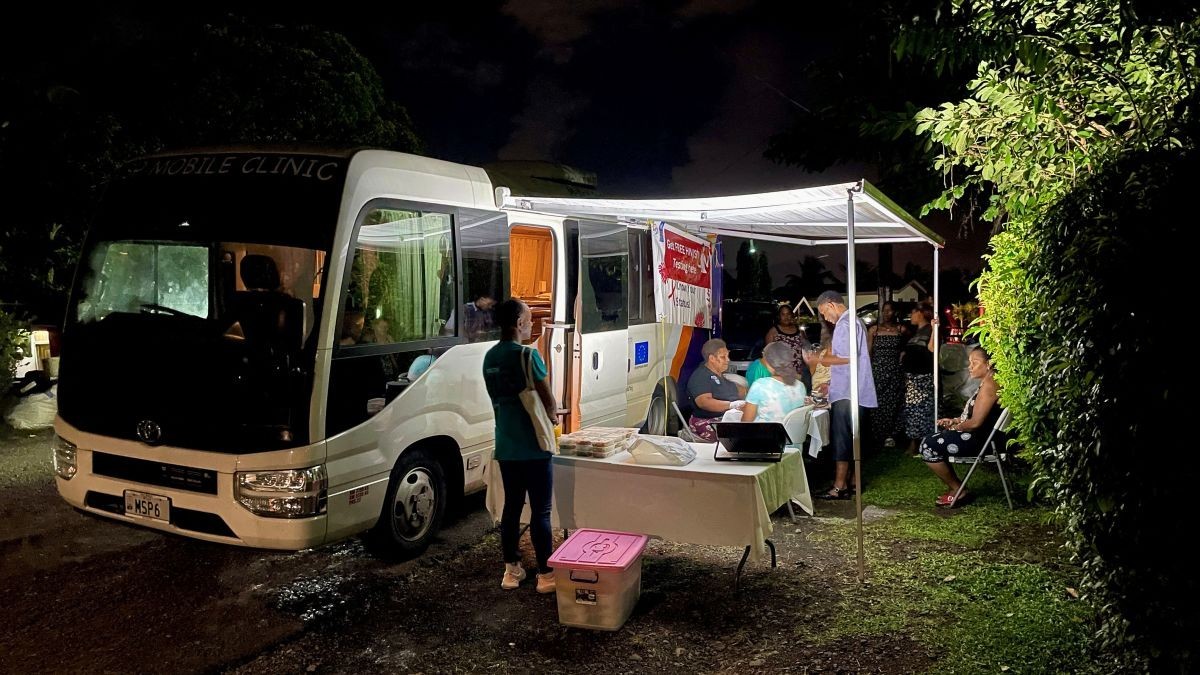
A rapid assessment published in December 2025 found every participant interviewed had at some time reused a needle or syringe after someone else because sterile equipment was not available, according to a joint WHO and UNDP news release issued in Suva. Many said their first injection, often with a potentially contaminated needle, came when they tried the drug.
People who inject drugs made up roughly half of new HIV cases in 2025 where a transmission mode was identified, according to national health statistics carried by CNN; the other half came through sexual transmission. Dr Mohammed describes the epidemic as having moved into a generalised phase, shifting out of its concentrated risk group into the wider population.
The Syringe Question
Central to the response is a formal needle and syringe programme, which Fiji will accelerate alongside expanded testing, treatment, access to pre-exposure prophylaxis, long-acting injectable prevention, harm-reduction services and free treatment for people living with HIV.
The programme has been promised for months. Lalabalavu described preparations as being in their final stages in June 2026, and at that year's budget as nearing completion. No launch date has been given.
A two-day national workshop in Suva applied a new WHO operational guide on needle and syringe programmes to the Fijian context. It was convened and funded by the UN Population Fund, which served as lead technical agency with the Kirby Institute at the University of New South Wales, alongside the Ministry of Health, WHO, UNAIDS, UNDP and other partners.
"People who inject drugs are often left behind in HIV responses, despite facing some of the highest risks," said Dr Tereza Kasaeva, director of WHO's department for HIV, tuberculosis, hepatitis and sexually transmitted infections. Dr Mark Jacobs, WHO's Director of Pacific Technical Support and Representative to the South Pacific, said such programmes are proven to prevent HIV and hepatitis and to save lives. WHO recommends them, and more than 90 countries run them. Australia has since 1987.
Stigma, Faith and the Wall Treatment Cannot Climb
Joeli Colati, executive director of the community group Fiji Network Plus, has lived with HIV for 19 years. He described the barriers to CNN. "It's also connected to stigma, poverty, transport, confidentiality, fear," he said. People hesitate to seek care because "it can be fear of being recognized at the HIV clinic," and there is a major information gap about how the virus is transmitted and how effective treatment is. "Please don't let fear make decisions for you. Knowing your HIV status gives you the power to do something about it."
Fiji is a deeply religious society where premarital or casual sex is generally considered taboo, according to CNN. Its largest church and the government have launched a three-year prayer campaign to tackle the drugs and HIV crisis, RNZ reported. New Zealand's SafeTravel service is warning travellers to Fiji to avoid activities that could increase their risk of infection.
Lalabalavu took the stigma question on directly. "Stigma drives people away from the very services that can help them," he said. "We want people to seek testing and care with confidence. No one should be ashamed, threatened, or excluded because of their HIV status." He also stressed that the virus is not spread through ordinary social contact, a point aimed at tourism concerns.
One in 50 Mothers
Prevalence among women attending antenatal care has reached about 2 per cent, or roughly one in every 50 pregnant women, Lalabalavu said. Save the Children Fiji identified a two-month-old baby as the youngest patient in the country living with both HIV and tuberculosis.
The five-year comparison of prevalence is also reported two ways. CNN and FBC News both give the minister's figure as one in 167 five years ago. RNZ's account of the same statement records one in 1,667. The two figures differ by a factor of ten, and no single version has been confirmed.
What the Response Will Actually Look Like
The plan sits under an HIV Surge Strategy running from 2024 to 2027 and a national HIV Outbreak Response Plan, run with WHO, UNAIDS, UNDP, UNFPA and partners. The Sexual Reproductive Health and HIV Programme Management Unit will coordinate the rollout through divisional and sub-divisional health services and community partners.
The Angels Collective, Fiji's first peer education programme for people who inject drugs, is funded by the Australian Department of Foreign Affairs and Trade, according to a WHO feature. UNFPA Pacific will fund and support monitoring and evaluation of the needle and syringe programme.
Lalabalavu set the delivery test himself. "Every diagnosis must lead to care. Every person starting treatment needs support to remain on it. Prevention must reach the people and communities who need it most," he said. "We must match that commitment with the practical work of delivery: resolving regulatory barriers, training and supporting staff, securing supplies, and working with communities so these services reach the people who need them."
He also issued a direct call to testing. "I ask anyone who may have been exposed to HIV, including through sharing needles or other injecting equipment, or sex without a condom, to come forward for testing. Do not wait until you feel unwell."
The Partners, the Money and the Gap
Supporting Fiji's response are Australia, New Zealand, the Global Fund, India and the United Nations Joint Team on HIV and AIDS, Lalabalavu said. WHO has described Fiji as having the second-fastest-growing HIV epidemic in the Asia-Pacific region, behind Papua New Guinea.
Munkhtuya Altangerel, UNDP's resident representative in the Pacific, framed the emergency as more than a health failure. "Fiji's HIV epidemic is not just a health issue, it is a development and human rights challenge that threatens lives, communities, and progress," she said.
No budget figure, funding total or cost estimate for the response has been published.
What the Experts Predict
Dr Mohammed projects that if the surge continues, overall prevalence will rise to 4 to 5 per cent by 2031; with action, it would land between 2 and 3 per cent. Prevalence is currently about 1 per cent overall but 1.6 per cent among 15 to 49-year-olds, he said. Accounting for undiagnosed cases, the true figure will be higher, conservatively by 45 per cent.
UNAIDS estimates that new HIV infections worldwide fell by about 42 per cent between 2010 and 2025, Ram told CNN, adding that Fiji "has experienced an extraordinary increase over essentially the same period."
Dr Mitchell's assessment is that HIV is increasingly affecting young people, women, pregnant mothers and children, and that a shortage of health workers is constraining efforts to expand treatment and care.
What Happens Next
The declaration is in force, the Cabinet sub-committee is established, the parliamentary standing committee is in planning, and the needle and syringe programme is in its final stages with no launch date. The Surge Strategy runs to 2027.
Lalabalavu returned to the same sentence more than once. "An outbreak-level response is no longer sufficient." The declaration is the government's answer to it. The treatment figures are the measure of whether the answer works.
By Jessica Ali, Staff Writer
This article was produced with AI-assisted research and editorial support. Sources: CNN, RNZ, FBC News, The Fiji Times, PMN News, the Science Media Centre of New Zealand, the World Health Organization, UNDP, the Devpolicy Blog and the Fiji Sun.
What's Your Reaction?
 Like
0
Like
0
 Dislike
0
Dislike
0
 Love
0
Love
0
 Funny
0
Funny
0
 Wow
0
Wow
0
 Sad
0
Sad
0
 Angry
0
Angry
0

Editor-in-Chief at Global1.News. Atlanta-based journalist who cuts through the BS and tells it like it is. Lead anchor, host, and the voice you hear when the spin stops and the truth starts.













Comments (0)