
FIFA's Private Investment Plan Sparks Global Backlash as South Africa Weighs $20m Development Lifeline
FIFA's shock announcement on Tuesday has thrown the global game into turmoil, with private investors eyeing a slice of the World Cup just as South African fans celebrate Bafana Bafana's historic 2026 breakthrough under Hugo Broos.
FIFA's shock announcement on Tuesday has thrown the global game into turmoil, with private investors eyeing a slice of the World Cup just as South African fans celebrate Bafana Bafana's historic 2026 breakthrough under Hugo Broos. The plan promises up to $20m for each of 211 member associations, including SAFA, but threatens to fracture the sport's governance at a moment when transformation and grassroots growth matter most in South Africa.
FIFA's Private Investment Plan Sparks Global Backlash as South Africa Weighs $20m Development Lifeline
Johannesburg, South Africa – 31 July 2026 — FIFA revealed plans on Tuesday to invite third parties to make minority, non-controlling investments in a new subsidiary called FIFA Forward Enterprise, aiming to consolidate its commercial and event operations including the World Cup and FIFA Club World Cup.
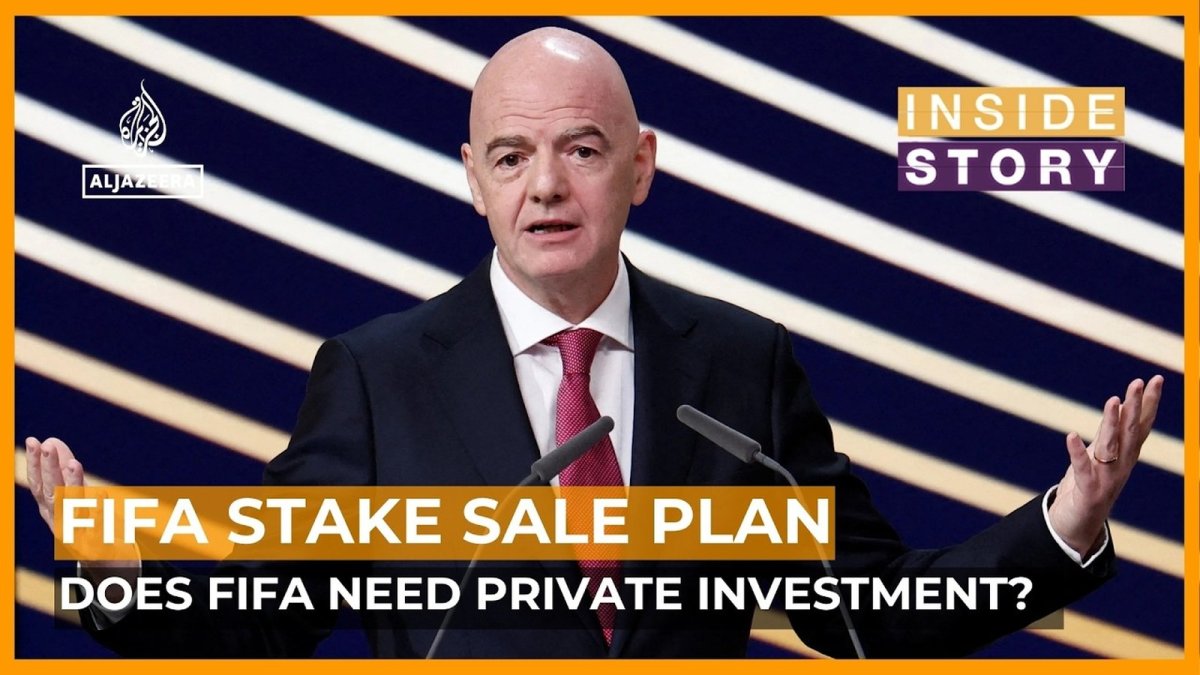
FIFA's $10bn Development Pitch and Investor Details
FIFA says the move will expand football development funding to more than $10bn, giving all 211 member associations access to up to $20m in one-off capital for development projects. Thrive Eternal, a fund led by American venture capitalist Joshua Kushner, is expected to lead the proposed investor group. FIFA president Gianni Infantino stated that parts of the game have turned popularity into commercial value and that FIFA exists to support sustainable, inclusive development in every corner of the world. Infantino gave the 211 member federations until 19 September to support the private investment proposal, with FIFA retaining control of FIFA Forward Enterprise and exclusive authority over football governance, competitions, the international match calendar and all regulatory decisions.
The proposed $20m one-off capital injection per member association would represent a seismic shift from the steady but modest streams SAFA and other African federations currently receive through FIFA Forward programmes. Those annual allocations support coaching courses, equipment and small infrastructure projects across the continent, yet they rarely exceed a few million rand in any single year for most associations. A lump sum of this size could immediately accelerate long-term planning for grassroots academies and talent identification in townships, giving federations breathing room that current funding cycles simply do not allow.
Joshua Kushner’s Thrive Eternal leading the investor group has already sparked governance concerns far beyond Europe. As brother of Jared Kushner and connected to the Trump family circle, the involvement raises questions about political influence entering football’s corridors at a time when transparency around decision-making is already under scrutiny. FIFA insists outside investors will hold only a minority, non-controlling stake with no operational role in competitions or the calendar, pointing to the 2018 Premiership Rugby deal with CVC Capital Partners as proof the model can work without ceding control.
The Times reported that the structure could personally enrich Gianni Infantino by tens of millions of pounds, a claim FIFA has firmly denied, stating there has been no discussion of him becoming chief executive of FIFA Forward Enterprise. Infantino’s own words frame the plan as essential for “sustainable, inclusive development in every corner of the world,” yet the secrecy surrounding investor selection continues to fuel suspicion among those who fear football’s governance is being quietly reshaped.
UEFA's Unanimous Boycott Threat and UK Reaction
UEFA's 55 member nations voted unanimously on Thursday to boycott FIFA events, including future World Cups, unless all plans to seek private investment are dropped immediately. UEFA declared that the soul and governance of football are not assets to trade and that the World Cup cannot be treated as an investment product. UK Prime Minister Andy Burnham wrote on X that football does not belong to investors but to the people who fill the stands, adding that the World Cup is not a product and was never anyone's to sell. The English Football Association said it was unaware of FIFA's plans when they were released.
A World Cup without European teams would strip the tournament of its global commercial engine and competitive depth, rendering the event almost unrecognisable to fans who have watched the competition grow since 1930. The charge that the plan was "conceived in secret" with zero transparency over who stands to gain financially has hardened positions across the continent.
The English FA’s admission that it was unaware of the plans until they surfaced publicly exposes the lack of genuine consultation FIFA extended to its own members. For South African supporters who still cherish the 2010 World Cup as a moment when the nation stood united, the idea that decisions about the game’s ownership could be made behind closed doors feels like a betrayal of the very spirit that made that tournament historic.
Andy Burnham’s declaration that “football does not belong to investors. It belongs to the people who fill the stands” resonates deeply with local fans who pack stadiums for PSL matches and Bafana Bafana qualifiers. Once a piece of the game is sold, he warned, it is sold out, a message that echoes the fears of ordinary South Africans who see their national team’s progress as something that should remain in public hands rather than traded on financial markets.
Global Backlash Spreads Across Confederations
CONCACAF's 41 member associations rejected the proposal during a meeting on Thursday, expressing deep concerns about lack of due process, the short deadline and absence of review by FIFA governance bodies. The Asian Football Confederation backed UEFA and CONCACAF stances but stopped short of a boycott, stating that the proposed FIFA Forward Enterprise cannot realistically achieve the necessary broad consensus. The Mexican Football Federation said it would study the proposal before deciding its position. Carlos Cordeiro, Infantino's senior adviser handpicked to represent FIFA on the White House Task Force for the 2026 World Cup, resigned on Friday. FIFA responded early Friday blaming incorrect media reports and vowing to proceed with consultation so each member can express its vote based on facts.
The AFC’s dramatic reversal marks a significant fracture in Infantino’s long-standing support base. After backing him throughout his 11-year presidency, the confederation now demands an urgent review of FIFA’s governance and decision-making framework, declaring that the proposed FFE cannot realistically achieve the necessary broad consensus. This shift signals that even traditional allies are unwilling to rubber-stamp a plan rushed through with a 19 September deadline.
Carlos Cordeiro’s resignation as senior adviser and White House Task Force representative for the 2026 World Cup removes a key bridge between FIFA and American political circles at a delicate moment. His departure underscores how the controversy is already damaging relationships that Infantino had carefully cultivated ahead of the expanded tournament co-hosted by the United States, Canada and Mexico.
FIFA’s Friday statement blaming “incorrect media reports” while vowing to proceed has done little to calm tensions. With CAF, CONMEBOL and OFC yet to declare positions, Africa’s 54 votes at the September deadline and the March Congress in Rabat could prove decisive in determining whether the plan survives or collapses under the weight of global opposition.
South African Perspective: Bafana's Historic Run and SAFA's Pending Decision
SAFA, as a member of CAF which has yet to announce a position, now faces a critical choice on the FIFA Forward Enterprise plan. Bafana Bafana made history at the 2026 FIFA World Cup by advancing out of Group A that included co-hosts Mexico, Czechia and the Republic of Korea, with Thapelo Maseko scoring the 1-0 winner against South Korea on 24 June to secure a Round of 32 spot as group runners-up. Bafana's run ended with a 1-0 defeat to Canada at the Los Angeles Stadium on 28 June under head coach Hugo Broos. South Africa hosted the 2010 World Cup as the first African host nation, and the up-to-$20m one-off capital per member association could significantly boost SAFA's development programmes, grassroots football and teams like Bafana Bafana and Banyana Banyana.
South Africa’s hosting of the 2010 World Cup remains the defining moment when the country first welcomed the world as an African host, leaving behind stadiums, transport upgrades and a generation inspired to believe the game could belong to everyone. That legacy still shapes national pride, yet many of the facilities built then now require maintenance while grassroots structures lag behind.
A $20m injection could transform SAFA’s ability to fund the ABC Motsepe League, expand coaching education and create clearer pathways for Bafana Bafana and Banyana Banyana players emerging from township clubs. Such resources would directly support the transformation agenda by unearthing talent in areas historically excluded from professional development structures, turning potential into sustained national team success like the historic 2026 run under Hugo Broos.
CAF’s 54 votes give Africa pivotal influence over whether the plan advances. SAFA’s voice within the confederation therefore carries extra weight, as the decision will determine whether South African football receives a genuine development boost or watches the game’s governance shift further away from the people who fill the stands every weekend.
Broader Implications for Calendar, Expansion and Elections
Football finance expert Kieran Maguire told BBC Sport the proposals represent an opportunity for FIFA to generate even more money with many interested parties wanting a slice of the action, likely leading to pressure for a 64-team World Cup and tournaments every two years. The announcement is considered as big a deal as the European Super League plan, with fears of expansion in team numbers and frequency of both the World Cup and Club World Cup plus more pressure on the domestic calendar. The proposal could be voted on by all 211 members at the FIFA Congress in Morocco in March. Infantino appeared to have a clear path to a fourth and final term through to 2031 before this crisis, with an 18 November deadline for candidates to declare and the vote scheduled next March in Rabat, Morocco.
A 64-team World Cup combined with pressure for biennial tournaments would squeeze the PSL calendar into even tighter windows, forcing January and February matches into already congested periods and increasing player workload at a time when South African clubs are fighting to retain talent. The domestic season would lose rhythm, affecting both league competitiveness and national team preparation.
Kieran Maguire noted that while $20m represents modest money in England, it stands as a transformative sum for countries like South Africa, highlighting the widening economic divide that makes such offers tempting yet risky. The comparison to the European Super League controversy is apt: both represent attempts to financialise the sport’s core assets in ways that bypass traditional governance.
With the 18 November candidate deadline approaching and a contested vote possible at the March Congress in Rabat, Infantino’s pursuit of a fourth term through 2031 now faces its sternest test. The outcome will shape whether FIFA’s expansion ambitions proceed with broad consent or fracture the unity the 2010 World Cup once symbolised for African football.
What to Watch in Coming Weeks
The next FIFA event is the FIFA Under-20 Women's World Cup 2026 kicking off in Poland next month, with the Polish FA stating on Friday it has not received any information about teams withdrawing. Infantino gave federations until 19 September to support the private investment proposal, while CAF, CONMEBOL and OFC have yet to make their positions clear. South African fans will monitor how SAFA and CAF respond, knowing that any deal could reshape funding for grassroots transformation and the 2010 World Cup legacy that still drives national pride.
The stakes could not be higher for South African football as Bafana Bafana's breakthrough and the 2010 legacy hang in the balance against a proposal that could either accelerate development or fracture the global game. SAFA's voice in CAF will prove decisive in the weeks ahead.
By Dante Williams, Staff Writer
This article was produced with AI-assisted research and editorial support. Reporting is based on sources cited in the article.
What's Your Reaction?
 Like
0
Like
0
 Dislike
0
Dislike
0
 Love
0
Love
0
 Funny
0
Funny
0
 Wow
0
Wow
0
 Sad
0
Sad
0
 Angry
0
Angry
0

Breaking News and Investigations Correspondent at Global1.News. Based in London, covering global breaking news, security, and investigative stories. Known for digging deeper and connecting the dots across continents.











Comments (0)