
FIFA COO Kevin Lamour Exits as Infantino World Cup Crisis Deepens
The corridors of FIFA's Zurich headquarters have never been short on drama, but the departure of chief operating officer Kevin Lamour this week has sent shockwaves through the global game that South African football fans should be paying very close attention to. This is not just another administrative reshuffle — this is the sound of the world's most powerful sports organisation cracking under the weight of its own ambition.
The corridors of FIFA's Zurich headquarters have never been short on drama, but the departure of chief operating officer Kevin Lamour this week has sent shockwaves through the global game that South African football fans should be paying very close attention to. This is not just another administrative reshuffle — this is the sound of the world's most powerful sports organisation cracking under the weight of its own ambition.
FIFA COO Kevin Lamour's exit deepens Infantino crisis as World Cup privatisation fallout continues
Zurich, Switzerland – this week — FIFA confirmed on Monday that the working relationship between the governing body and Kevin Lamour, its chief operating officer, ended on 17 August 2026, just weeks after the Frenchman publicly criticised president Gianni Infantino's plan to sell a stake in the commercial rights of the World Cup and other tournaments. The departure marks the second senior resignation in the fallout from the collapsed $20bn FIFA Forward Enterprise privatisation plan, and it throws Infantino's bid for a fourth term as FIFA president into serious doubt.
The Exit That Shook FIFA
Lamour, who joined FIFA's senior leadership in November 2024 after serving as UEFA's deputy general secretary, had released a statement on 1 August saying FIFA staff had been "deceived" over the proposal, describing it as "the project of one person." His words were damning: "Our mission ... is to serve football, not to serve the personal interests of a person who, unfortunately, believes he embodies FIFA when he is supposed to be at its service."
FIFA's terse statement thanked Lamour for "two years of service" and wished him well, adding that no further comment would be made. But the silence from Zurich speaks volumes about the turmoil engulfing world football's governing body.

A Plan That Fell Apart
The crisis began with a proposal that, on paper, looked like a financial masterstroke. FIFA Forward Enterprise was a plan to create a $20bn subsidiary and sell up to a 20 percent stake to private equity investors, raising an estimated $4.2bn. The money would have been injected into the game's development programmes, including those that fund football across Africa and South Africa.
But the plan unravelled spectacularly. Carlos Cordeiro, a senior adviser to Infantino, resigned in protest on 1 August, calling it "a bad deal for football." Lamour's statement followed the same day, and Infantino withdrew the proposal within hours. The damage, however, was already done.
UEFA, the Asian Football Confederation (AFC) and CONCACAF — which runs football in North and Central America and the Caribbean — have all expressed their loss of confidence in Infantino. UEFA described the FIFA Forward Enterprise proposal as a "shabby, back room, opaque deal" and warned of a boycott of all FIFA games and events. The Football Associations of England, Wales, the Republic of Ireland and Scotland have withdrawn their support for Infantino and will not be voting for his re-election in early 2027.
Laura McAllister, the UEFA vice-president and former Wales captain who worked with Lamour at European football's governing body, released a statement criticising his dismissal. "Kevin's sacking seriously weakens Fifa's administration, whilst undermining this unique opportunity to shift the culture at Fifa and to reset the organisation on sporting values, not simply commercial and financial ones," she said. "Fifa is not the president, it is the whole football family."
The Battle for FIFA's Presidency
Infantino's bid for a fourth term, which once looked a formality, is now facing its most serious challenge since he took office in 2016. The 56-year-old Swiss-Italian was initially elected at an Extraordinary Congress following the resignation of Sepp Blatter amid a corruption scandal, and he was re-elected unopposed in 2019 and 2023.
The term limit question is now front and centre. FIFA presidents are limited to three terms, but Infantino successfully argued in 2022 that his first stint from 2016 to 2019 should not count because it completed an interrupted mandate. Human rights organisation FairSquare has written to FIFA's Governance, Audit and Compliance Committee (GACC), urging that Infantino be ruled ineligible to seek another term.
"The complaint we have filed provides clear evidence that this is a clear breach of the rules and one that sets a very dangerous precedent," said FairSquare director Nicholas McGeehan. "The rules state clearly that three presidential terms is the maximum allowed. FIFA can't simply circumvent this rule – which serves as a check on presidential power – by saying that his first term doesn't count."
The letter was drafted with the assistance of Miguel Maduro, the former head of FIFA's independent Governance and Review Committee. "The principle of term limits was a fundamental aspect of the 2016 reform aimed at limiting power and the rule introduced is clear: no FIFA President can serve more than three terms of office," Maduro said. "Trying to carve out an exception to such a rule for Mr Infantino reveals both a resistance to the principle of term limits and how some at FIFA conceive of rules not as rules but as obstacles to be circumvented."
Last week, UEFA, the AFC and CONCACAF called for an independent review of Infantino's conduct. Sources with knowledge of the situation said the three confederations viewed the letter as an opportunity for Infantino to quit with his dignity intact. FIFA has set a deadline of 18 November for challengers to come forward, and the election is scheduled for March next year in Morocco.
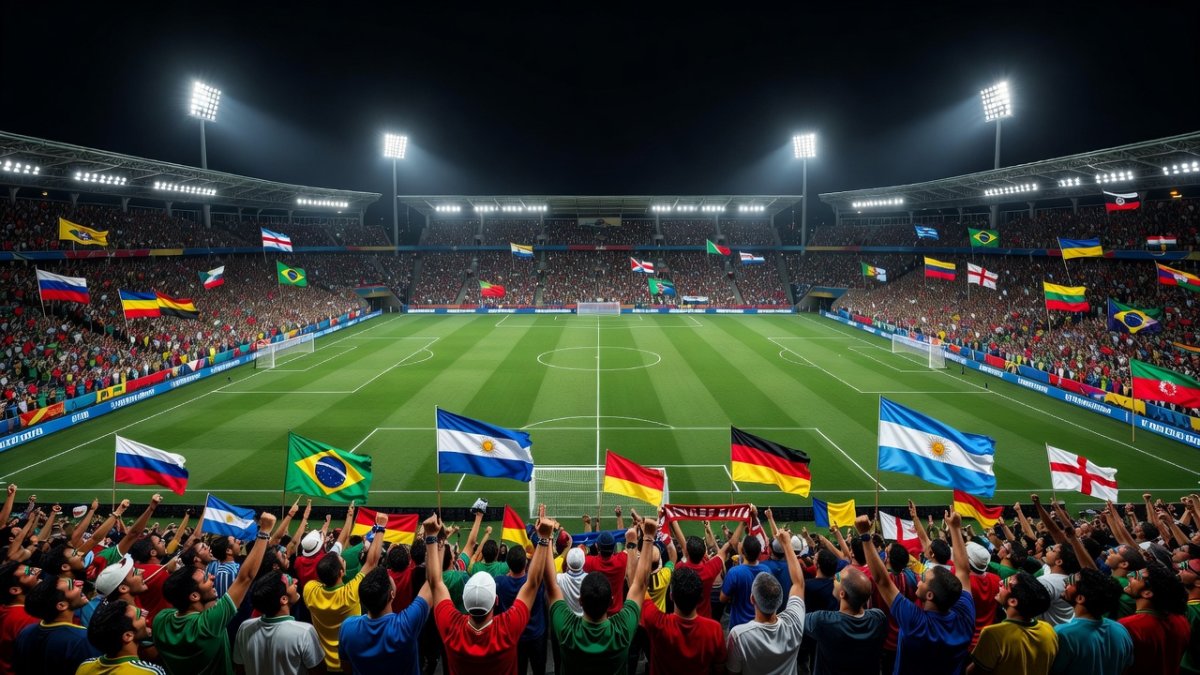
South African Perspective
For South African football, this is not a distant European power struggle. The African Football Confederation (CAF) has been a key pillar of Infantino's support base, and that support has significant implications for how the game is governed on the continent.
Infantino retains the backing of the African and South American confederations, and the heads of six Arab football federations last week expressed their "full support" and "confidence" in the president. This puts SAFA in a delicate position. The South African Football Association has historically aligned itself with CAF's leadership, and that alignment has brought tangible benefits — including infrastructure investment and development programmes funded through FIFA's Forward programme.
But the question South African football administrators must now ask themselves is whether that alignment serves the interests of the game at home. The FIFA Forward Enterprise plan would have funnelled billions into development projects across Africa, including South Africa. But at what cost? The proposal would have given private equity investors a stake in the commercial rights of the World Cup and other tournaments — a fundamental shift in how football's revenues are distributed.
For Bafana Bafana and the domestic PSL calendar, the timing of this crisis matters. South Africa's national team is building towards the 2027 AFCON in Morocco, and the stability of continental football governance is crucial to that preparation. The 2026/27 season is shaping up to be one of the most important in recent memory, with the PSL calendar packed and Bafana Bafana needing competitive fixtures to maintain momentum.
The governance lessons for South African sport are clear. The crisis at FIFA is a reminder that transparency and accountability are not optional extras — they are the foundation on which sustainable sporting success is built. South Africa has its own history of governance challenges in sport, from the messy politics of SAFA elections to the transformation debates that continue to shape cricket and rugby. The FIFA crisis shows what happens when power is concentrated in the hands of one person and when rules are treated as obstacles to be circumvented rather than principles to be upheld.
What It Means for the Beautiful Game
The fallout from the FIFA Forward Enterprise collapse is about more than one man's political survival. It is about the soul of the game. The proposal to sell a stake in the World Cup's commercial rights to private equity investors would have fundamentally altered the relationship between football's governing body and the game itself.
Football is not just a business. It is a cultural force that unites communities, nations and continents. In South Africa, football is the heartbeat of the townships, the pride of the provinces, and the dream of every child kicking a ball on a dusty pitch. The idea that the World Cup — the pinnacle of the beautiful game — could be partially owned by private investors who have no loyalty to the sport is deeply troubling.
UEFA's threat of a boycott of all FIFA games and events would have been catastrophic for the global game. A World Cup without Europe is unthinkable. A World Cup without Africa is equally unthinkable. The fact that Infantino withdrew the proposal within hours of the backlash shows that the football family still has the power to hold its leaders accountable — but it also shows how close we came to a disaster.
The support of CAF and the South American confederation for Infantino is a reminder that football's power structures are complex and often contradictory. The African game has benefited from Infantino's leadership in many ways, but it has also been complicit in the culture of deference that allowed this crisis to develop. South African football must learn from this moment and demand better governance at every level — from SAFA to CAF to FIFA itself.
What to Watch For
The next few months will be critical for the future of world football. The 18 November deadline for challengers to come forward will reveal whether anyone is willing to take on Infantino directly. The GACC's response to the FairSquare complaint will test whether FIFA's governance structures are genuinely independent or merely window dressing.
For South African fans, the immediate focus should be on the 2026/27 season and the road to the 2027 AFCON in Morocco. Bafana Bafana's qualification campaign will be shaped by the stability of continental football governance, and the PSL calendar will need to accommodate the demands of international fixtures. The last thing South African football needs is a governance crisis at the top of the global game distracting from the business of developing players and winning matches.
But the bigger picture matters too. The battle for FIFA's presidency is a battle for the future of football itself. Will the game be governed by principles of transparency, accountability and sporting integrity? Or will it be governed by the whims of powerful individuals who believe they embody the institution they serve?
The answer to that question will determine whether the beautiful game remains beautiful — or whether it becomes just another commodity to be bought and sold by private equity firms with no stake in the communities that make football what it is.
South African football has always punched above its weight on the global stage. From the 2010 World Cup to the triumphs of Bafana Bafana and the passion of the PSL, this country has shown that football is more than a game. As the crisis at FIFA unfolds, South African football must raise its voice and demand better — not just for itself, but for the entire football family.
The game belongs to the players, the fans and the communities. It does not belong to any one person, no matter how powerful. Kevin Lamour understood that. Carlos Cordeiro understood that. The question now is whether the leaders of world football — and the leaders of African football — understand it too.
By Dante Williams, Staff Writer
This article was produced with AI-assisted research and editorial support. Reporting is based on sources cited in the article.
What's Your Reaction?
 Like
0
Like
0
 Dislike
0
Dislike
0
 Love
0
Love
0
 Funny
0
Funny
0
 Wow
0
Wow
0
 Sad
0
Sad
0
 Angry
0
Angry
0

Breaking News and Investigations Correspondent at Global1.News. Based in London, covering global breaking news, security, and investigative stories. Known for digging deeper and connecting the dots across continents.









Comments (0)