
Ferromex Derailment Spills Chemicals Near Naco, Sonora
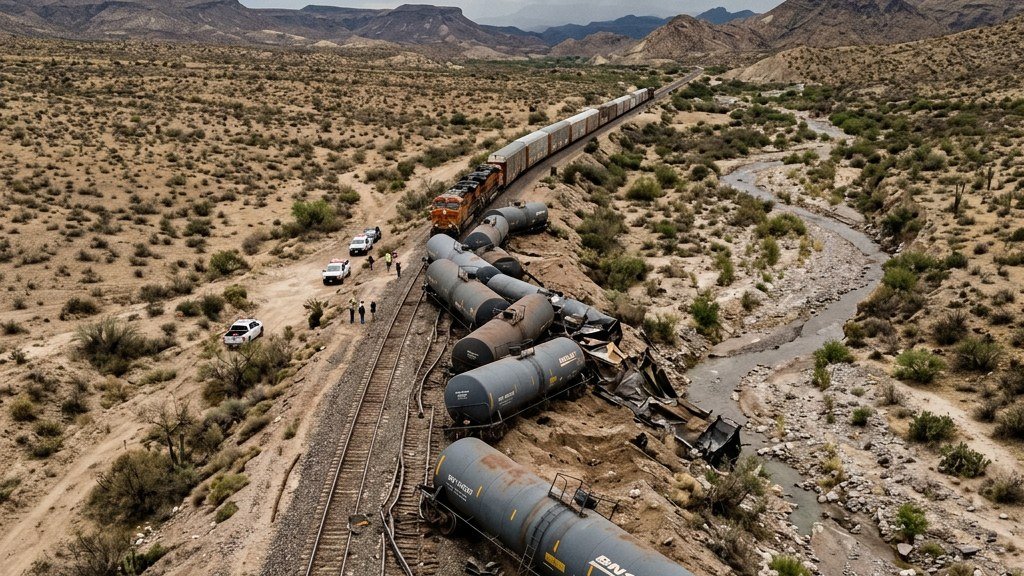
On Saturday July 25, 2026, a Ferromex freight train derailed at ejido Cuauhtémoc in Naco municipality, Sonora, about 20 km south of the US-Mexico border, spilling roughly 59,000 liters of sodium hydrosulfide and some copper. Federal and state agencies including Profepa, Semarnat, and the FGR responded at once while rains complicated containment efforts. The incident has forced temporary displacement for families in the Cuauhtémoc ejido and renewed worries about water sources
Ferromex Derailment Spills Chemicals Near Naco, Sonora
On Saturday July 25, 2026, a Ferromex freight train derailed at ejido Cuauhtémoc in Naco municipality, Sonora, about 20 km south of the US-Mexico border, spilling roughly 59,000 liters of sodium hydrosulfide and some copper. Federal and state agencies including Profepa, Semarnat, and the FGR responded at once while rains complicated containment efforts. The incident has forced temporary displacement for families in the Cuauhtémoc ejido and renewed worries about water sources that serve nearby communities including Cananea.
Tags: Ferromex derailment, sodium hydrosulfide spill, Sonora Mexico, Naco border, Profepa closure, ejido Cuauhtemoc, aquifer contamination, Grupo Mexico, Cananea, Semarnat, Conagua, Rio Sonora
The Derailment at Ejido Cuauhtémoc
The freight train left the tracks near Rancho Potrero El Cobre inside the Cuauhtémoc ejido lands. Several tank cars overturned and released the corrosive chemical onto the ground and into a temporary arroyo. Ferromex crews recovered spilled copper and transferred about 1,700 liters of remaining sodium hydrosulfide from the damaged cars while performing venting maneuvers.
Emergency teams quickly set up a security perimeter around the site. Three levels of government worked together on initial containment. The smell of fumes from the chemical reacting with moisture reached nearby homes and prompted several families to leave temporarily.
Local residents in this rural stretch of northern Sonora rely on the land for small-scale farming and livestock. The sudden disruption cut into daily routines for people who have lived on these ejido parcels for generations.
Ferromex crews moved swiftly after the incident, containing the released material within hours and recovering portions of the copper concentrate while venting the remaining rail units to reduce ongoing hazards. By Wednesday, teams from the three levels of government worked together at Ejido Cuauhtémoc to evaluate the site and begin coordinated removal operations. The morning discovery revealed the spill had spread farther than first expected, with employees and authorities finding visible traces along the tracks and adjacent ground that required rapid assessment and additional specialized equipment.
Chemical Risks and Weekend Rains
Sodium hydrosulfide poses health and environmental hazards because it can release hydrogen sulfide gas when it meets water or acids. Sunday rains on July 26 carried some of the spilled material along natural runoff paths and slowed cleanup crews.
Authorities flew over a roughly 5 km stretch of the channel that includes the settlement of El Sauz, located about 3.7 km from the derailment point. So far no evidence shows the solution reached that community or other inhabited areas.
Conagua began sampling water and soil to check for possible infiltration into the subsoil or the aquifer. Semarnat has stated there is no immediate risk to the population, yet monitoring continues while results are pending.
Sodium hydrosulfide becomes especially hazardous when it contacts water because the reaction releases hydrogen sulfide gas, a toxic substance that can irritate the eyes and respiratory system even at low concentrations. A temporary arroyo complicates containment because any rainwater can carry the chemical beyond the original release point, turning a localized spill into a wider surface-water issue. The aquifer study therefore holds direct importance for rural families who rely on private wells for drinking, livestock, and irrigation; until results confirm the groundwater remains unaffected, residents face uncertainty about whether their daily water sources are safe for continued use.
Profepa Closure and Multi-Agency Response
Profepa has kept a permanent presence at the site since the accident. On July 29 the agency issued a temporary closure of the derailment zone to allow inspections, cleaning, and environmental remediation to proceed under supervision.
Governor Alfonso Durazo noted that the impact of the tank car hitting the ground helped limit how much chemical escaped. Daniel Gámez of Sonora's Civil Protection Agency said emergency measures were put in place right away to remove any material that could pose further risk.
President Claudia Sheinbaum confirmed the federal government is investigating the incident. Profepa and Semarnat continue to evaluate damages while the FGR conducts its own probe into the cause.
Profepa's temporary closure is designed to keep activities in the derailment zone controlled while the agency supervises the work Ferromex is carrying out to recover spilled materials and reduce the risks associated with the chemical. The closure will remain in place until inspections conclude and authorities determine that the remediation measures applied at the site are sufficient, according to Semarnat and Profepa. For residents watching from nearby communities, that timeline matters: the longer the zone stays closed, the longer they wait for answers about the water they use every day.
Effects on Border Communities and Cananea
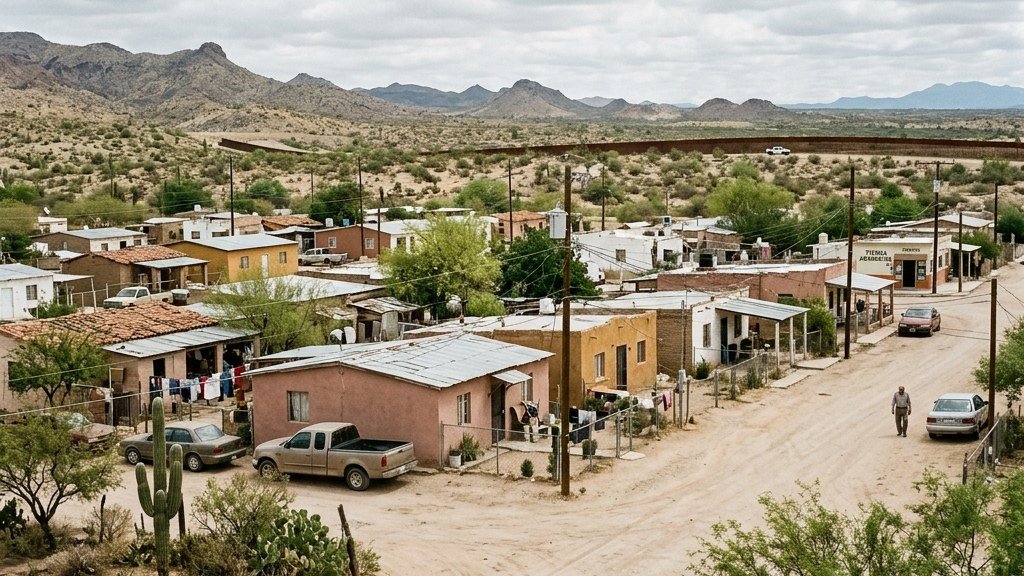
Mayor Lorenzo Villegas of Naco reported that the fumes forced several Cuauhtémoc ejido families to leave their homes for a time. Naco sits on the border with Bisbee, Arizona, and the accident site lies roughly 18 miles south of the town.
Further south, residents of Cananea, a city of about 40,000 people, watch the situation closely because waterways could carry contamination toward their area. The closure remains in place while authorities determine that remediation is sufficient.
Ordinary families in these rural colonias and ejidos depend on clean water for household use and small agricultural plots. Any long-term effect on the aquifer would hit their daily lives and livelihoods directly.
Naco sits directly on the international line, with Bisbee, Arizona, immediately across the border, so any environmental concern quickly draws attention from both Mexican and U.S. communities that share the same air and water systems. Beyond the immediate area, ranchers and small farmers in nearby ejidos depend on local water sources and grazing land for their livelihoods; the ongoing uncertainty while laboratory results are pending creates practical hardship, forcing families to weigh whether to move livestock, seek alternative water, or delay planting decisions until clearer information becomes available.
Grupo México History and Sonora Context
Ferromex operates as a subsidiary of Grupo México, a major copper producer whose rail network moves ore and goods across northern Mexico. The company's past environmental record in Sonora includes the 2014 Buenavista del Cobre spill that released copper sulfate acid into the Tinajas creek and then the Bacánuchi and Sonora rivers.
That earlier event affected communities across at least seven municipalities and led to a roughly 2 billion peso compensation and remediation fund. President Sheinbaum has noted that related work on the Río Sonora continues as part of current federal environmental efforts in the state.
The latest incident occurs in the same region where mining and rail transport remain economically important. Freight links connect Sonora's copper mines to border commerce with the United States, yet residents balance those benefits against recurring environmental concerns.
Ongoing Monitoring and Future Outlook
Conagua and Semarnat continue soil, stream, and groundwater studies to determine whether any of the chemical reached the aquifer. Profepa will keep the closure in effect until remediation meets required standards.
Possible causes under review include whether an atypical storm damaged the rail tracks before the derailment. Investigators from the FGR are examining all available evidence.
For the families who returned to their homes after the temporary displacement, daily life now includes waiting for clear results on water safety. For now, the practical guidance has been to stay clear of the closed zone and any runoff channels, and to report unusual smells or signs of affected vegetation to local civil protection officials. The communities of Naco, the Cuauhtémoc ejido, and Cananea now face weeks of waiting for the results of soil, stream, and groundwater studies that will determine whether this spill remains a contained incident or becomes a longer environmental emergency.
The story of this spill joins a longer chapter of environmental challenges that shape life in Sonora's borderlands.
By Rosa Martinez, Staff Writer
This article was produced with AI-assisted research and editorial support. Reporting is based on sources cited in the article.
What's Your Reaction?
 Like
0
Like
0
 Dislike
0
Dislike
0
 Love
0
Love
0
 Funny
0
Funny
0
 Wow
0
Wow
0
 Sad
0
Sad
0
 Angry
0
Angry
0

Latin America/Andes Correspondent at Global1.News. Based in Bogota, covering politics, environment, energy, and social movements across the Andean region. Passionate about environmental journalism and communities protecting their land.














Comments (0)