
F-35 Parts Went to Hong Kong. Now Congress Wants Answers
A shipment of F-35 fighter jet parts bound for the United States was diverted from Australia to Hong Kong and remains unaccounted for. Australia's defence minister says the parts were not sensitive; reporting says one was a stealth canopy. A US House committee is investigating.
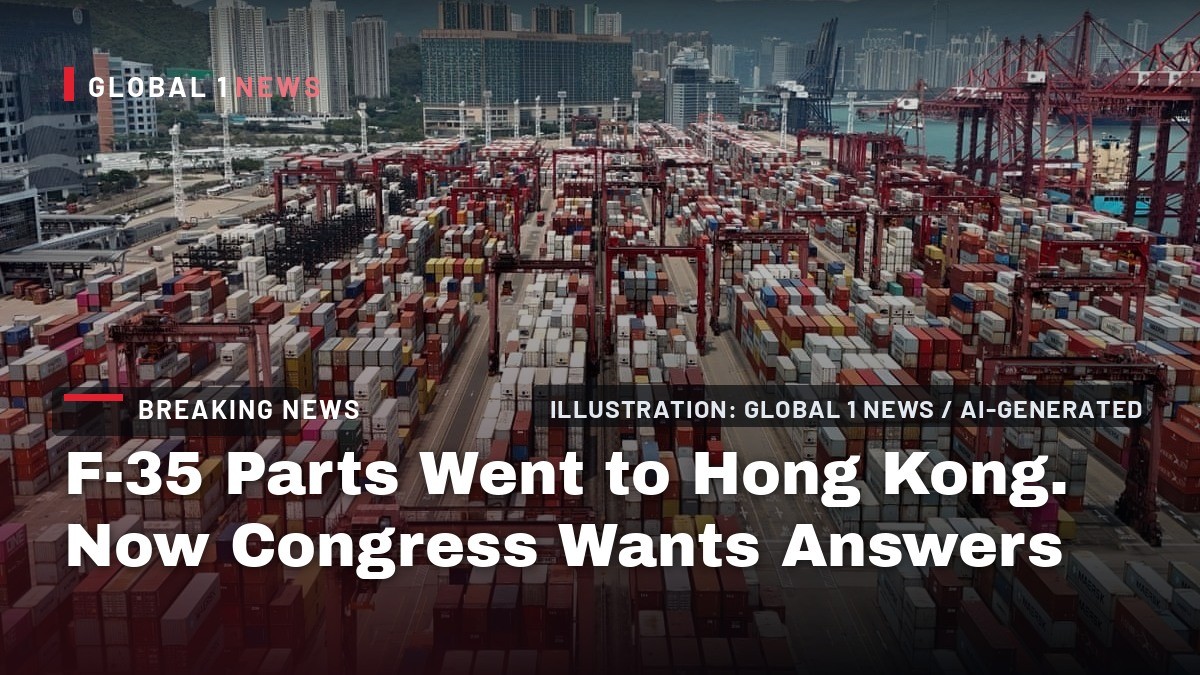
Australia has confirmed that a shipment of F-35 fighter jet parts went to the wrong place — Hong Kong — instead of the United States, where they were meant to be repaired. The parts left Australia, and months later nobody has publicly said where they are. Now a US House committee is investigating, and the Australian defence minister is telling everyone not to worry.
F-35 Parts Went to Hong Kong. Now Congress Wants Answers
Sydney, Australia — The shipment was supposed to cross the Pacific. It ended up in Hong Kong instead. That single wrong turn has triggered a congressional inquiry, a Pentagon retrieval effort, and a quiet argument about how much damage one misplaced box of fighter jet hardware can do.
What Canberra Confirmed
Defence Minister Richard Marles confirmed the incident to reporters in Adelaide, saying Australia is working with the United States and Lockheed Martin, the F-35's manufacturer, to investigate. "We are examining very much everything that has occurred at the Australian end," he said. He also said Australia is "confident about the way in which we've engaged with the programme." That is the official Australian position: yes, it happened, and yes, we are helping.
What Canberra has not done is explain how a shipment bound for the United States was rerouted through one of Asia's busiest ports and into Beijing's sphere of influence. China has spent recent years tightening its grip on Hong Kong, and the national security laws it has enacted there give Chinese authorities wide latitude inside the city. A shipment that lands in Hong Kong does not stay out of reach.
The Shipment That Went the Wrong Way
The parts were being moved from Australia to the United States for repairs, according to three people familiar with the matter who spoke to POLITICO on condition of anonymity. An intermediary was transporting them on behalf of Lockheed Martin, and some of the components are now missing, the Pentagon has confirmed. Somewhere in transit, the shipment was diverted to Hong Kong. It is not clear why. It is not clear who rerouted it. It is not clear who has it now. The parts remain unaccounted for months later.
The F-35 Joint Program Office says it is "aware of a shipment issue of unserviceable F-35 Lightning II components" and is working with US authorities and industry partners "to retrieve these components, investigate the incident, and place safeguards to avoid a future occurrence." That is the full extent of what has been officially acknowledged. The programme office has declined to explain what "unserviceable" means, including whether the items were damaged beyond repair.
Why One Canopy Matters
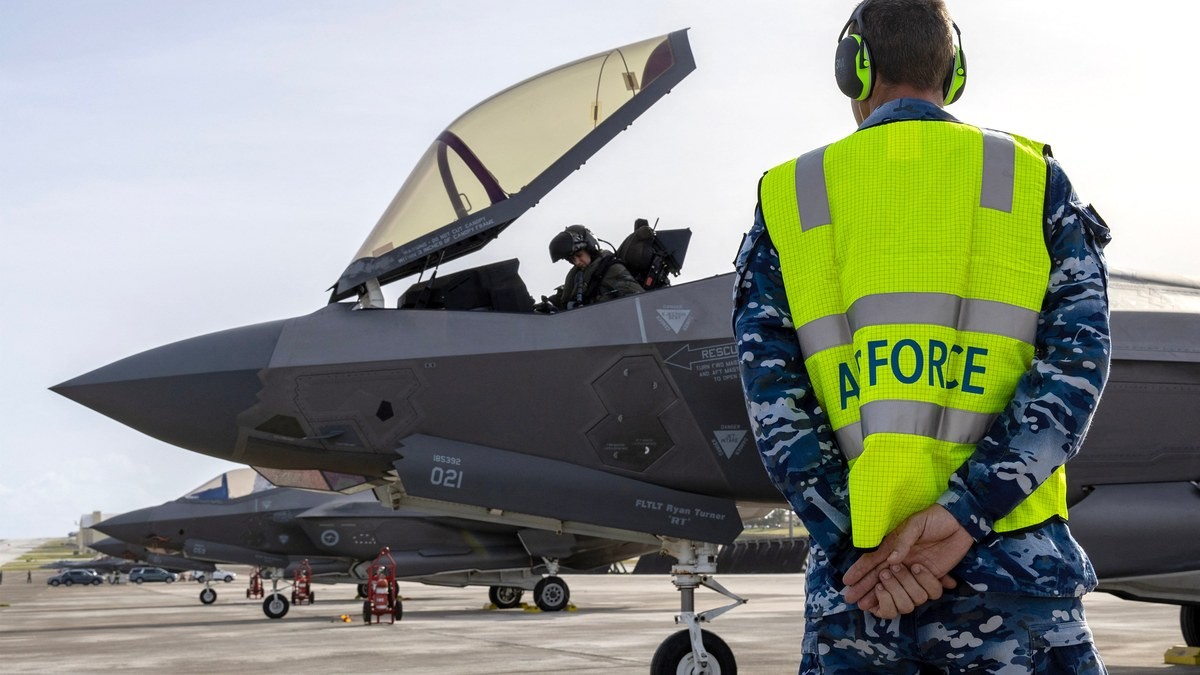
The shipment included one of the jet's canopies — the acrylic bubble that covers the cockpit. It is coated with a thin layer of transparent radar-absorbent material that helps hide the aircraft from enemy radar. That coating is stealth technology, and only the United States and its allies have access to it. An adversary that got its hands on a canopy could study it and potentially reverse-engineer the technology.
Canopies are a wear item. The Air Force's own description notes that the radar-absorbent layer degrades over time, which is why canopies are repaired or replaced across the more than 1,300 F-35s built for the US and its allies. Australia operates the jet but does not have the capability to repair these canopies, so unserviceable ones are shipped to the United States through the programme's multinational logistics network.
J.J. Gertler, a former House Armed Services Committee staff member and Congressional Research Service analyst, put the risk plainly: "It's no secret that China has been aggressively trying to get F-35 data through electronic espionage, among other means. But even if they already had specifications or other data about the part, possessing a real one can give them even more to go on and can verify or refine whatever they already had learned."
The Committee in the Room
The House Armed Services Committee is investigating. "The committee is aware of this issue and we've received multiple briefings on it," spokesperson Heather Vaughan said, adding the committee is "continuing to look into the incident and conduct oversight."
State Department and Pentagon officials first briefed congressional national security staff in June, and more briefings are expected. Programme officials were scheduled to brief committee staff as early as September 22. This is not a quiet paperwork review. It is the committee that oversees defence policy asking how a stealth component ended up in Hong Kong and why nobody can say where it is now.
Lockheed Martin will not talk about it. The company said it cannot discuss the status of specific shipments or its shipping procedures for security reasons, but that it follows US regulations established by the Department of War and regulated by the Defense Logistics Agency. "Our teams handle every shipment with the utmost diligence and safeguards to ensure the integrity of the F-35 program and the security of our allied partners," it said.
"Not Sensitive" and the Stealth Question
Marles told reporters the missing parts were not "sensitive." "We're not talking about sensitive equipment here or sensitive parts," he said. That is one claim on the record. The other is that the shipment included a canopy coated with radar-absorbent material that only the US and its allies possess. Both statements are now public. They do not sit comfortably together.
Marles also said the matter is "ultimately" for the United States and Lockheed to manage, since Lockheed runs the global supply chain. The Pentagon has not described the parts as sensitive or non-sensitive. It has described them as "unserviceable," and declined to say more. The Australian Defence Force, for its part, said the government "takes the protection of classified and export-controlled technologies extremely seriously" and maintains a "robust export control regime administered by Defence."
The Warehouse Australia Does Not Control
A warehouse in Williamtown, north of Sydney, operates as the Asia-Pacific regional hub for F-35 spare parts. It was previously run by BAE Systems, and was designed to support jets in Singapore, Japan and South Korea, as well as US and British aircraft carriers in the region. Lockheed Martin took control of the warehouse contract in November 2024, according to a BAE Systems Australia spokesman, who said his company is "not under contract and has no involvement in the global shipping of F-35 components."
Australia's parliament heard in 2025 that F-35 parts moved in and out of that warehouse on commercial aircraft with stopovers in Asia. Defence officials said Australia did not control or direct the export of those parts, and two sources told AFP the programme is controlled by the US military. It is not clear whether this specific shipment originated at Williamtown.
A Tracking Problem Six Years Long
The diversion is separate from a longer-running problem: the Pentagon cannot properly account for F-35 spare parts. For the sixth straight year, failures in tracking spare parts and equipment were a "material weakness" contributing to the inability to achieve a successful audit of the military's finances, according to the Pentagon comptroller and inspector general.
A 2023 Government Accountability Office report found that more than 1 million F-35 spare parts, valued at more than $85 million, had been reported missing or lost over a five-year period. The GAO concluded the department could not review those losses because Lockheed controls the information. "The F-35 Joint Program Office does not track or enter these spare parts into an accountable property system of record that would enable it to capture and store real-time changes to property records," the report said. "The prime contractors maintain this information." Those earlier losses have not been linked to the Hong Kong incident — but they explain why the question of who is watching the parts keeps coming back.
What Investigators Still Do Not Know
Why was the shipment diverted? Who handled the components after they reached Hong Kong? Where are the missing parts now? Was any sensitive technology compromised? None of these questions has a public answer.
There is no public evidence that China obtained or inspected the parts. The Chinese Embassy said it was not familiar with the incident. The Hong Kong government declined to comment on individual cases. The State Department declined to comment. Investigators are still trying to establish the basic facts of what happened to a shipment that should never have gone missing.
What It Means for the Alliance
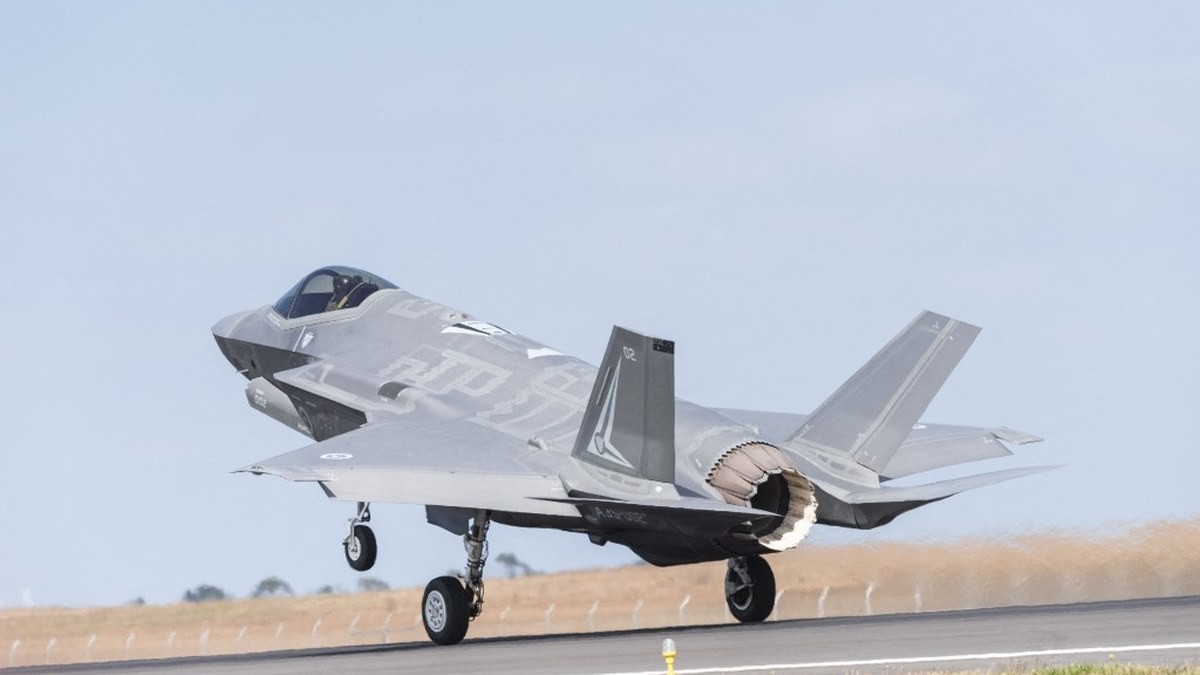
The F-35 is not just an American jet. The United States operates more than 800 of them — its most costly weapons system — and eight partner countries, including Australia, the UK, Italy, the Netherlands, Canada, Denmark and Norway, pool spare parts and rely on each other's facilities. A further twelve countries have bought the jet, among them Japan, Singapore and South Korea. Australia, with 72 F-35s, is the Indo-Pacific inventory hub for parts and maintenance, and its Air Force reached full operational capability in 2025.
This is a programme that is on track to become the world's costliest. Flyaway prices for the latest production lots run about $92 million for an F-35A, $121.4 million for an F-35B and $110.8 million for an F-35C, and the Pentagon expects to spend almost $2 trillion over the programme's lifespan. When a shipment goes missing in a system this interconnected, it raises questions not just about one box but about the supply chain that moves parts across the globe. Australia and the United States have been reducing red tape for transferring secret defence technology under AUKUS. This incident shows what happens when that technology moves through commercial channels.
What Comes Next
More congressional briefings. More questions from the House Armed Services Committee. A Pentagon retrieval effort that has so far not produced the parts. Marles said Australia is examining everything that happened at its end. Lockheed said it cannot discuss shipment status for security reasons but follows all US regulations.
And the canopy is still unaccounted for. So is every other component that was in that shipment. The committee wants to know where they went. So does everyone else.
By Jessica Ali, Staff Writer
This article was produced with AI-assisted research and editorial support. Sources: POLITICO, Bloomberg, AFP, CNN, ABC News Australia, The Guardian, Channel NewsAsia, The Straits Times, South China Morning Post, The Defense News, US Government Accountability Office, F-35 Joint Program Office.
What's Your Reaction?
 Like
0
Like
0
 Dislike
0
Dislike
0
 Love
0
Love
0
 Funny
0
Funny
0
 Wow
0
Wow
0
 Sad
0
Sad
0
 Angry
0
Angry
0

Editor-in-Chief at Global1.News. Atlanta-based journalist who cuts through the BS and tells it like it is. Lead anchor, host, and the voice you hear when the spin stops and the truth starts.













Comments (0)