
Islamabad sealed off as fuel price protests loom, PTI rallying support
Al Jazeera English’s correspondent Kamal Hyder reports from a tense Islamabad where the capital has been effectively locked down in anticipation of massive street protests.
Al Jazeera English’s correspondent Kamal Hyder reports from a tense Islamabad where the capital has been effectively locked down in anticipation of massive street protests. The government has sealed off the main arteries leading into the city’s Red Zone, deploying roughly 1,500 shipping containers as makeshift barriers. The move comes as fuel prices and broader cost‑of‑living pressures have ignited a wave of unrest that is set to converge on the Pakistani capital this week. While the immediate trigger is the surge in fuel costs, the demonstrations also carry a political dimension, with farmers and supporters of the Pakistan Tehreek‑e‑Insaf (PTI) demanding the release of former Prime Minister Imran Khan and decrying recent arrests of PTI activists.
Security cordon and the logistics of a sealed capital
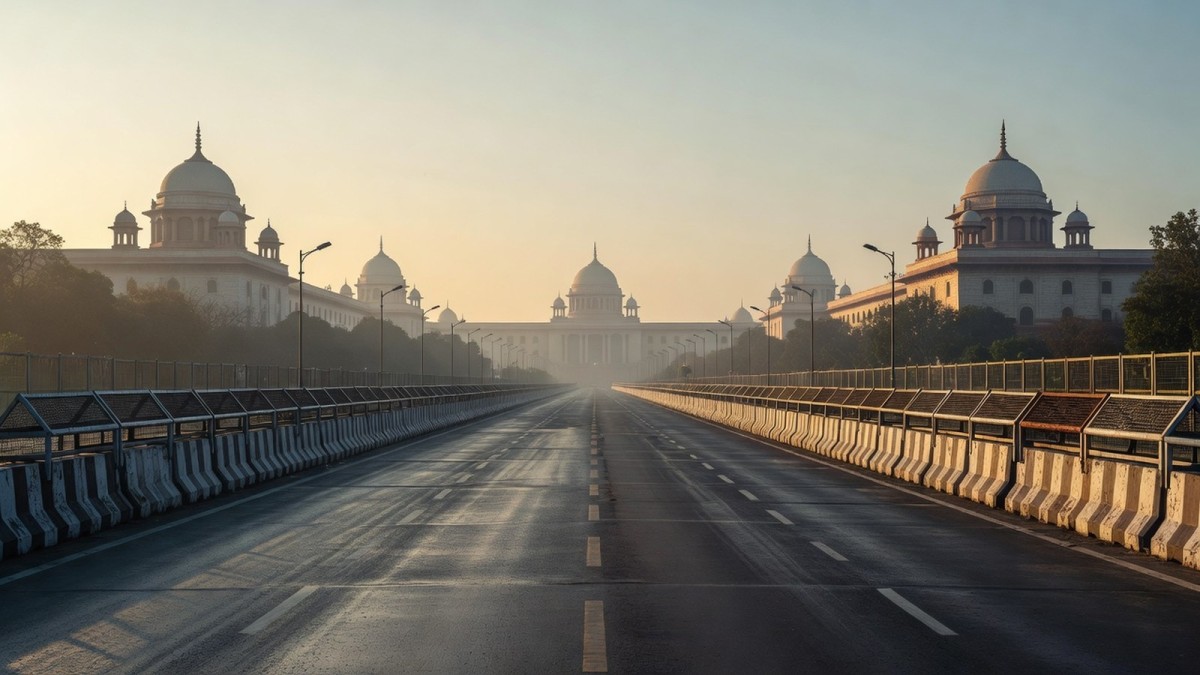
The scale of the security operation in Islamabad is striking. According to the footage, about 1,500 shipping containers have been strategically placed to block entry points, effectively sealing off the Red Zone – the administrative heart of the city that houses key government ministries and foreign embassies. The containers, normally seen at ports, now form a concrete wall that channels traffic and limits movement, a visual reminder of the seriousness with which authorities are treating the looming protests.
Such a massive deployment of containers signals a pre‑emptive approach. Rather than waiting for crowds to gather and potentially overwhelm police lines, the government has opted to create a physical barrier that can be quickly adjusted as the situation evolves. This tactic mirrors crowd‑control measures seen in other parts of the world where authorities have turned to heavy‑duty infrastructure to manage mass gatherings.
For South African observers, the sight of containers turned into barricades may evoke memories of the 2021 unrest in parts of the Western Cape, where makeshift roadblocks were erected amid protests over service delivery. While the contexts differ, the underlying principle – using physical obstacles to control urban movement – is a common thread in how governments respond to large‑scale civil disobedience.
Fuel price hikes as the spark for unrest
The immediate catalyst for the protests is the sharp rise in fuel prices, a pressure point that resonates across the continent. In South Africa, fuel price fluctuations have repeatedly triggered public outcry, most notably during the 2018 fuel tax protests that saw nationwide blockades. The Pakistani scenario mirrors those dynamics: higher fuel costs ripple through transport, food prices, and everyday household budgets, amplifying existing grievances.
Al Jazeera’s coverage highlights that the fuel price issue is not an isolated economic concern but part of a broader cost‑of‑living squeeze that includes rising food and utility bills. For many Pakistanis, the added expense threatens already stretched household finances, prompting a sense of urgency that fuels the mobilisation of diverse groups – from urban commuters to rural farmers.
From a South African lens, the protest narrative underscores how commodity price shocks can quickly become politicised. In SA, similar spikes have been leveraged by opposition parties and civil society to demand accountability from the state. The Pakistani case illustrates how a single economic pressure point can act as a catalyst for broader political mobilisation, a pattern that analysts in both countries watch closely.
PTI supporters and the demand for Imran Khan’s release
Beyond the economic grievances, the protests carry a pronounced political undertone. The PTI, led by former Prime Minister Imran Khan, has mobilised its base to demand his release from jail, a demand that has become a rallying cry for many demonstrators. The footage notes that PTI supporters have already faced arrests, adding a layer of tension to the already volatile atmosphere.
The PTI’s call for Khan’s release is intertwined with the broader narrative of perceived political persecution. In South Africa, the legacy of political imprisonment during the apartheid era still informs public sentiment around the treatment of opposition figures. While the contexts differ, the emotional resonance of a leader’s detention can galvanise supporters and draw sympathy from broader segments of society.
Al Jazeera’s report indicates that PTI supporters are not acting alone; they are aligning with farmers who have their own grievances, particularly around agricultural subsidies and market access. This coalition of urban political activists and rural agrarian groups reflects a strategic alliance that amplifies the protest’s reach, much like the historic alliance between trade unions and community organisations during South Africa’s anti‑apartheid struggle.
Farmers’ grievances and the rural dimension
The involvement of farmers adds a crucial rural dimension to the unfolding drama in Islamabad. In Pakistan, farmers have been vocal about rising input costs, especially fuel, which directly impacts their ability to transport produce to market. Their participation signals that the protest movement is not confined to city streets but is rooted in the countryside’s economic hardships.
This mirrors South Africa’s own farmer protests, where drought, rising costs, and market pressures have driven rural communities to the streets. The convergence of farmer and PTI demands in Pakistan illustrates how economic stressors can bridge urban‑rural divides, creating a broader front against perceived governmental neglect.
The Al Jazeera footage does not detail specific farmer actions, but the mention of their planned demonstrations suggests a coordinated effort to pressure the capital. For South African readers, this coordination underscores the importance of logistics and timing in protest planning – a lesson learned from the 2021 farmer protests that saw simultaneous blockades across several provinces.
Government response and the balance of force
The Pakistani government’s decision to seal off the Red Zone and deploy containers reflects a heavy‑handed approach aimed at pre‑empting large‑scale disorder. While the move may deter immediate crowd formation, it also raises questions about the proportionality of state force. In South Africa, the use of force in protest management has been a contentious issue, with the police often criticised for excessive tactics.
Al Jazeera’s report does not elaborate on the presence of police or military units inside the sealed perimeter, but the sheer scale of the physical barriers suggests that authorities are prepared for a significant security operation. The balance between maintaining public order and respecting the right to protest is a delicate one, and the Pakistani authorities appear to be erring on the side of caution.
For South African sports fans, the parallels are clear: just as the SARU has faced criticism over crowd control at stadiums, the Pakistani government must navigate the fine line between security and civil liberties. The outcome of Islamabad’s lockdown could set a precedent for how other nations manage protest logistics in the face of economic crises.
Implications for regional stability and South African observers
The unfolding events in Islamabad have ramifications that extend beyond Pakistan’s borders. A large‑scale protest in the capital, especially one that combines economic and political grievances, can destabilise the country’s internal security and potentially spill over into neighbouring regions. For South Africa, a nation that monitors global protest trends for insights into domestic unrest, the Pakistani scenario offers a case study in how fuel price spikes can ignite broader societal discontent.
Moreover, the involvement of PTI supporters and the demand for Imran Khan’s release highlight the political volatility that can accompany economic protests. South African political analysts often watch such developments to gauge how opposition movements leverage economic pain to challenge incumbent governments – a pattern evident in both countries.
In the world of sport, the ripple effects can be felt in scheduling and participation. International cricket tours, for instance, sometimes adjust itineraries in response to security concerns, as seen when matches were relocated in the Middle East due to civil unrest. Should the protests in Islamabad intensify, there could be knock‑on effects on any scheduled sporting events in Pakistan, a scenario that South African fans and broadcasters would monitor closely.
By Dante Williams, Staff Writer
This article was produced with AI-assisted research and editorial support. Reporting is based on the source material cited below. Sources: Al Jazeera English video report (22 September 2026); Al Jazeera English; Global1.News
What's Your Reaction?
 Like
0
Like
0
 Dislike
0
Dislike
0
 Love
0
Love
0
 Funny
0
Funny
0
 Wow
0
Wow
0
 Sad
0
Sad
0
 Angry
0
Angry
0
Breaking News and Investigations Correspondent at Global1.News. Based in London, covering global breaking news, security, and investigative stories. Known for digging deeper and connecting the dots across continents.










Comments (0)