
Europe Turns to Carbon Capture: Denmark's Greensand Bets on Burying CO2
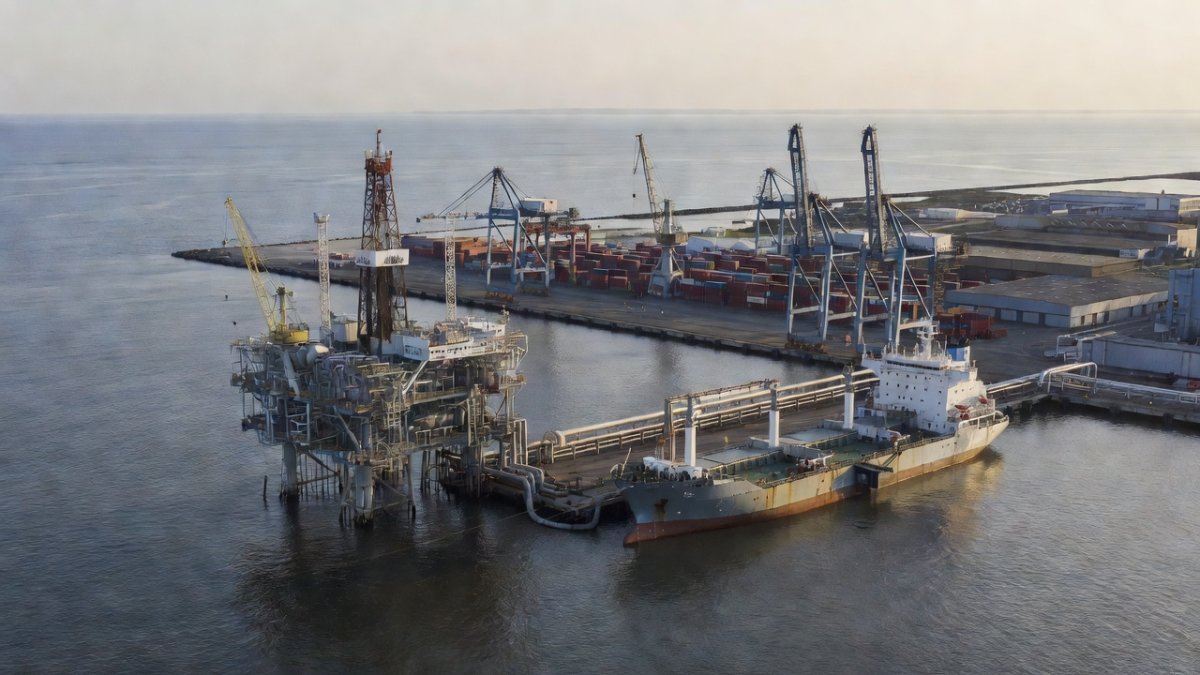
The North Sea wind whips across the port of Esbjerg, carrying the salt of a sea that has powered Europe for half a century. But the vessels docking here now carry something different — not oil, not gas, but the captured breath of an industrial continent, liquefied and ready for burial beneath the Danish seabed.
The North Sea wind whips across the port of Esbjerg, carrying the salt of a sea that has powered Europe for half a century. But the vessels docking here now carry something different — not oil, not gas, but the captured breath of an industrial continent, liquefied and ready for burial beneath the Danish seabed. As the European Union scrambles to meet its climate commitments, it is betting billions on a technology that has long been dismissed as too costly and too complex: carbon capture and storage. And from where I sit in São Paulo, watching this unfold, the stakes could not be higher — because what happens in the cold waters of the North Sea will echo directly into the warm depths of the Santos Basin, where Brazil has quietly become the world's most experienced practitioner of putting carbon back where it came from.
Europe Turns to Carbon Capture: Denmark's Greensand Bets on Burying CO2
Esbjerg, Denmark – September 1, 2026 — The European Union is placing some of its hopes on carbon capture and storage (CCS), a technology that traps CO₂ and injects it deep underground. The technology is costly, but a new project in Denmark hopes to change that. Al Jazeera's Paul Rhys reports from the North Sea, where the Greensand project is preparing to become the first full-scale CO2 storage facility in operation in the European Union. For a continent that has struggled to reconcile industrial competitiveness with climate leadership, Greensand represents a test case — not just for Denmark's ambitious climate targets, but for the entire bloc's strategy of betting on technological fixes to bridge the gap between rhetoric and reality.
Europe's Billion-Euro Bet on Burying Carbon
The European Union has spent the better part of a decade wrestling with a fundamental contradiction: how to decarbonize an economy built on fossil fuels without dismantling the industrial base that provides millions of jobs. Carbon capture and storage has emerged as the answer — or at least, the answer that allows the machinery to keep running while the transition unfolds. The EU's Net-Zero Industry Act and its Innovation Fund have channeled billions into CCS demonstration projects, but the technology has remained stubbornly expensive, with critics pointing to a long history of overpromising and underdelivering. Denmark's Greensand project, however, is different. It is not a pilot, not a demonstration, not a research exercise. It is a commercial operation, backed by public funding and private capital, designed to prove that CCS can work at scale and at a cost that makes sense.
The Danish government has committed DKK 197 million — approximately EUR 26 million, or USD 28 million — in public funding to support the project, a relatively modest sum compared to the scale of the ambition. The project supports Denmark's legally binding target of a 70% CO2 reduction by 2030 and carbon neutrality by 2050. But the significance extends far beyond Denmark's borders. If Greensand succeeds, it will provide a template for the rest of Europe — and for the world — showing that cross-border CO2 transport and storage is not just technically feasible but commercially viable. The consortium behind the project, led by INEOS as day-to-day operator with partners Harbour Energy (formerly Wintershall Dea) and Nordsøfonden, brings together more than 23 organizations from across the CCS value chain, from capture to shipping to injection.
Greensand: How a Depleted Oil Field Became a CO2 Vault
The story of Greensand begins with a world first. In March 2023, the project achieved something no one had done before: CO2 captured in Belgium was transported across the North Sea and permanently stored under the Danish seabed, proving that cross-border CCS works. That demonstration laid the groundwork for the December 10, 2024 Final Investment Decision (FID) on the first commercial phase, known as 'Greensand Future' — a decision that paved the way for more than $150 million in investment across the CCS value chain. Storage operations are set to begin mid-2026 in the INEOS-operated Nini field, a depleted oil field in the Danish North Sea that has already given up its hydrocarbons and now serves a new purpose as a geological vault for the carbon emissions of European industry.
The logistics are elegant in their complexity. CO2 is captured and liquefied at Danish biomethane production plants, then transported to the port of Esbjerg, where it is loaded onto Royal Wagenborg's dedicated CO2 carrier, the 'Carbon Destroyer.' The ship then makes the journey to the Nini field, where the liquefied CO2 is injected into depleted wells, deep beneath the seabed, where it will remain for geological timescales. The storage potential is significant: 0.5 to 1 million tonnes of CO2 per year from 2025, increasing to 4 to 8 million tonnes per year by 2030. Sir Jim Ratcliffe, chairman of INEOS, put it bluntly: 'This is a breakthrough for carbon capture and storage. Greensand Future will be the first CO2 storage facility in operation in the EU.' The words carry weight, but the proof will be in the injection data.
The Cost Problem CCS Must Solve
For all its technical elegance, CCS has always faced a fundamental economic problem: it costs money to capture carbon, and unless that cost is borne by someone — industry, government, or consumers — the technology will remain a niche solution. Critics point to Boundary Dam in Canada, where the long-term capture rate has hovered around 57%, well below the 90% originally promised, as evidence that CCS is expensive and unproven at scale. Environmental groups warn that CCS can prolong fossil fuel dependence, giving the oil and gas industry a license to keep drilling while claiming to be part of the climate solution. These are legitimate concerns, and they are not going away. But the Greensand project is attempting to answer them with data, not promises.
The economics of Greensand are built on a simple insight: the cost of CCS is not fixed. It depends on the scale of operations, the efficiency of capture technology, and the availability of storage sites. By aggregating demand across multiple emitters and using existing infrastructure — depleted oil fields, existing pipelines, and a dedicated CO2 carrier — Greensand aims to drive down the cost per tonne of CO2 stored. The Danish government's public funding helps de-risk the early phase, but the long-term viability depends on the carbon price in the EU Emissions Trading System, which has been volatile but trending upward. If Greensand can demonstrate that CCS can be delivered at a cost that is competitive with other decarbonization options, it will have achieved something that has eluded the industry for two decades.
Brazil Is Already the World's Quiet Leader in Carbon Reinjection
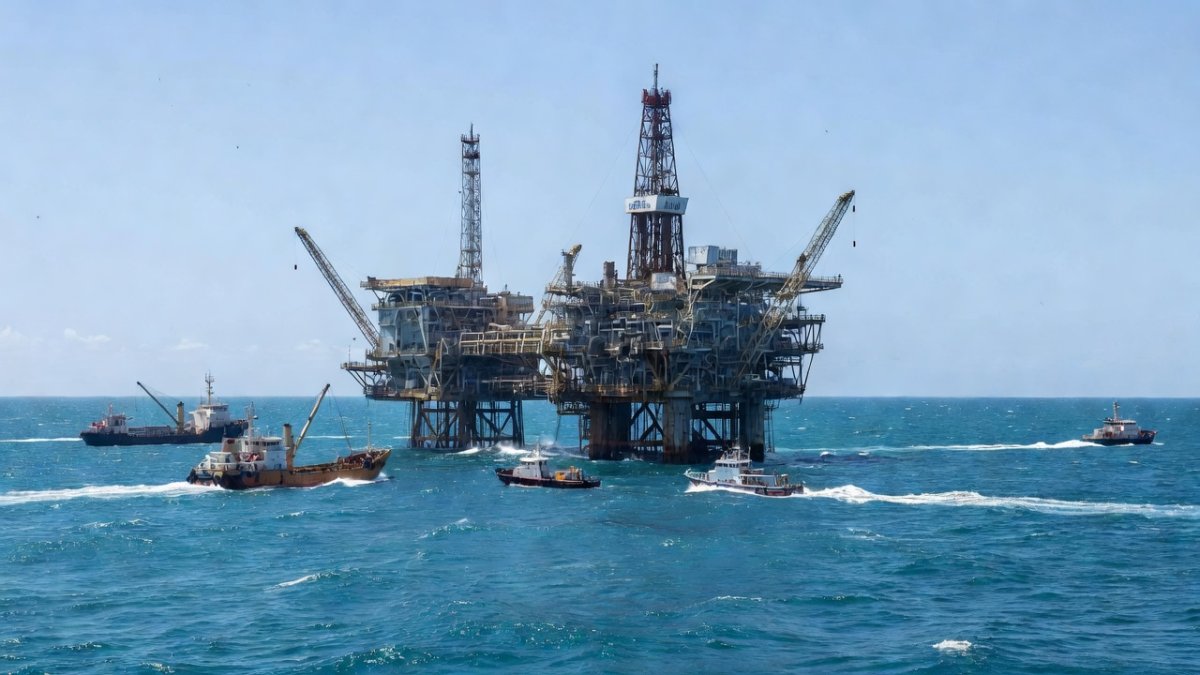
While Europe has been debating the merits of CCS, Brazil has been quietly doing it — at a scale that dwarfs anything in the North Sea. Petrobras reinjected 14.2 million tonnes of CO2 into Santos Basin pre-salt reservoirs in 2024, up from 13 million tonnes in 2023, and more than a quarter — 28% — of the global CO2 reinjection capacity reported for 2024. This is not a pilot project or a demonstration. It is routine industrial practice, carried out using 22 floating production, storage and offloading (FPSO) vessels in the pre-salt layer that capture and reinject CO2, a technology matured over more than a decade. The cumulative reinjection in Brazil's pre-salt exceeds 67.9 million tonnes of CO2, according to Petrobras reporting through 2024. These numbers are staggering, and they put Brazil in a unique position in the global CCS landscape.
The Brazilian approach is different from the European model. In the pre-salt, CO2 reinjection is not primarily an environmental measure — it is an oil recovery technique. The CO2 is injected into the reservoirs to maintain pressure and enhance oil recovery, which means the economics work differently. The CO2 is not a waste product to be disposed of; it is a tool for extracting more oil. This has allowed Petrobras to develop the technology at scale without waiting for carbon prices or government subsidies. But the environmental benefit is real: the CO2 stays underground, permanently, in the same geological formations that held it for millions of years. As the world wakes up to the potential of CCS, Brazil's experience in the pre-salt is becoming a reference point — and a competitive advantage.
South America's First CCS Law: Regulation Catches Up
The regulatory landscape in Latin America has been slow to catch up with the technology, but that is changing. Brazil approved the first carbon capture and storage legal framework in South America, signed by the president, with the National Agency of Petroleum, Natural Gas and Biofuels (ANP) responsible for regulating CCS activities. This is a landmark achievement, providing the legal certainty that investors and operators need to move forward. As COP30 wrapped up in Brazil in November 2025, the country positioned itself to deliver South America's first dedicated CO2 injection by mid-2026 — a timeline that aligns with the start of Greensand's operations in the North Sea, creating a fascinating parallel between the two regions.
The Brazilian legal framework is designed to be comprehensive, covering everything from exploration and storage permits to long-term liability and monitoring requirements. It also creates a pathway for the development of a CCS industry in Brazil, which could become a significant source of revenue and employment. Petrobras' 2026-2030 Business Plan allocates about 14% of its $6.4 billion decarbonization portfolio to CCS, CO2 use and related activities — a clear signal that the company sees CCS as a core part of its future, not a side project. The Latin America CCS market was valued at USD 192.5 million in 2025 and is projected to reach USD 386.0 million by 2034, growing at a CAGR of 7.80% (IMARC Group). These are not trivial numbers, and they reflect a growing recognition across the region that CCS is not a distraction from the energy transition but a necessary complement to it.
What This Means for Latin America
The implications of Greensand for Latin America are profound, but they are not straightforward. On one hand, the Danish project demonstrates that CCS can work at commercial scale, providing a template that could be adapted to Latin American conditions. On the other hand, the differences between the two regions are significant. Europe has a mature carbon market, strong government support, and a dense network of industrial emitters that can be connected to storage sites. Latin America has none of these things, at least not to the same degree. But the region has something else: geology. The same sedimentary basins that hold oil and gas also hold the potential for CO2 storage, and countries like Mexico, Argentina and Colombia are studying CCS potential. Mexico's government has backed CCS pilots, and Argentina's Vaca Muerta shale basin has been flagged for CO2 storage potential in mature fields.
The regional drivers are clear: Nationally Determined Contribution (NDC) climate commitments across the region, demand for CO2-enhanced oil recovery (EOR) in Brazil's offshore fields, and accelerating international climate finance. The question is whether Latin America can move from studying CCS to deploying it at scale. The Brazilian experience suggests it can — but only if the regulatory framework, the financing mechanisms, and the political will are aligned. The Greensand project offers a model for how to do this, but it also highlights the challenges. CCS is not a silver bullet. It is expensive, complex, and unproven at the scale required to make a meaningful dent in global emissions. But it is also one of the few tools we have for dealing with the emissions that are already locked into the system.
The Bottom Line — A Just Transition, or a Fossil Fuel Lifeline?
The debate over CCS is ultimately a debate about the nature of the energy transition. Is it a transition away from fossil fuels, or a transition to a world where fossil fuels are used more responsibly? The answer matters, because it determines whether CCS is seen as a bridge to a renewable future or a lifeline for the oil and gas industry. The critics are right to be skeptical. CCS is expensive, and there is a real risk that it will be used to justify continued investment in fossil fuel infrastructure that should be retired. But the defenders are also right: we cannot decarbonize the global economy without dealing with the emissions from industrial processes like cement, steel, and chemicals, which are difficult to electrify and have few alternatives to CCS.
For Latin America, the stakes are particularly high. The region is rich in fossil fuel resources, and countries like Brazil, Mexico, and Argentina face enormous pressure to develop those resources for economic growth. CCS offers a way to do that while also meeting climate commitments — but only if it is deployed as part of a broader strategy that includes aggressive investment in renewables, energy efficiency, and the protection of natural carbon sinks like the Amazon. The Greensand project is a reminder that the technology works, but it is also a reminder that the technology is not enough. The real challenge is political: building the institutions, the regulations, and the public support to ensure that CCS serves the public interest, not just the interests of the fossil fuel industry. As the North Sea wind whips through Esbjerg and the Carbon Destroyer prepares for its next voyage, the question is not whether we can bury carbon — it is whether we have the wisdom to do it right.
By Elena Vasquez, Staff Writer
This article was produced with AI-assisted research and editorial support. Reporting is based on sources cited in the article.
What's Your Reaction?
 Like
0
Like
0
 Dislike
0
Dislike
0
 Love
0
Love
0
 Funny
0
Funny
0
 Wow
0
Wow
0
 Sad
0
Sad
0
 Angry
0
Angry
0

Latin America Correspondent at Global1.News. Based in Mexico City, covering politics, economics, energy, and culture across the region. Brings an on-the-ground perspective to stories spanning from the Rio Grande to Patagonia.















Comments (0)