
El Salvador Sends 2,000 Troops to Haiti for Four Missing Men, and Nobody Will Say Who Commands Them
El Salvador has deployed more than 2,000 soldiers to Haiti to rescue four air force technicians missing since an 18 October gang ambush in Croix-des-Bouquets, after Trump told Bukele: "Do what you have to do." No one has said who commands them, or whether the men are alive.
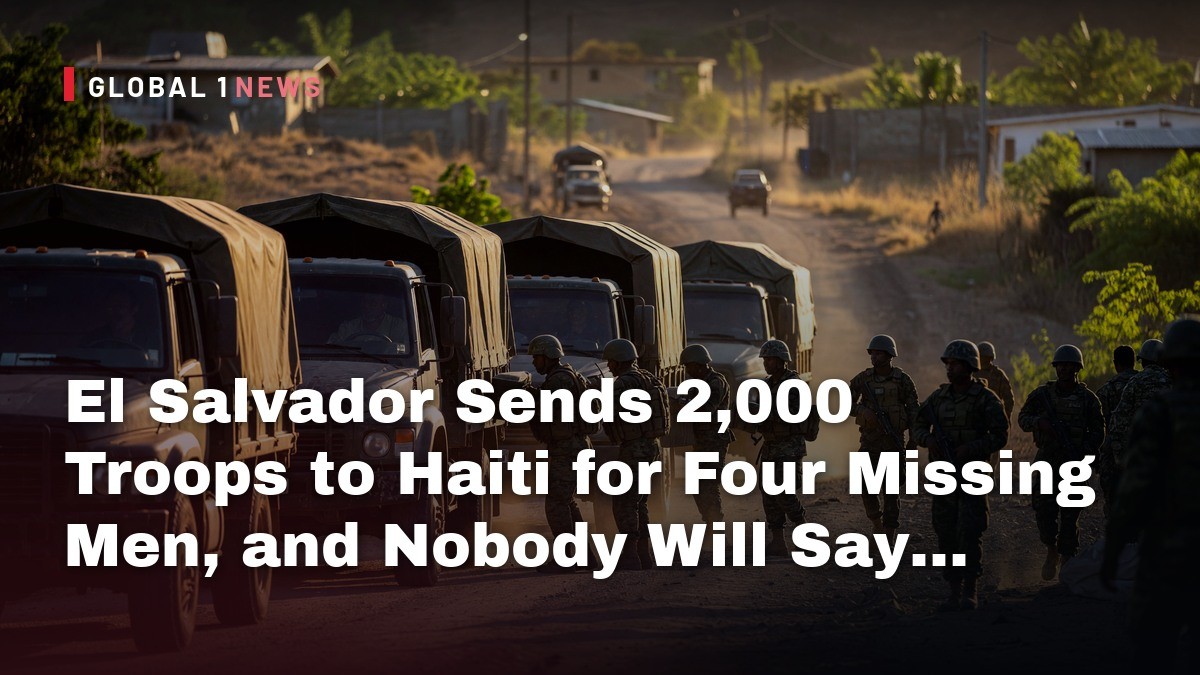
Thirteen days after four Salvadoran air force technicians vanished in a burning armoured vehicle on the edge of Port-au-Prince, El Salvador has put more soldiers into Haiti than the United Nations force they came from. Nobody has told the public who commands them, what law they operate under, or whether the four men they came to find are alive.
El Salvador Sends 2,000 Troops to Haiti for Four Missing Men, and Nobody Will Say Who Commands Them
Port-au-Prince, Haiti — El Salvador's foreign ministry announced on Wednesday that it is deploying more than two thousand soldiers to Haitian soil, a rescue mission President Nayib Bukele says will not end until four aviation technicians are recovered. Two days later, Axios reported that Bukele had telephoned President Donald Trump to make sure Washington would not object, and that Trump replied: "Do what you have to do."
Four Men, Thirteen Days, and Two Thousand Troops
The four are aviation technicians attached to the United Nations-authorised Gang Suppression Force, the multinational mission supporting Haiti's police against armed groups. They were ambushed on 18 October in the Santo area of Croix-des-Bouquets, a commune east of the capital, while returning to base from a market. The attack was carried out with firearms and explosives; the vehicle caught fire and the men got out. Contact has not been re-established since.
What began as a search by a small contingent has become the largest Salvadoran military operation abroad in living memory. Before the ambush, El Salvador had at least 124 personnel in Haiti, according to a UN report cited by Reuters. By 27 October a Haitian security official, speaking on condition of anonymity, put the number on the ground at about one thousand. The foreign ministry's statement on 28 October said more than two thousand would deploy. Axios, citing sources, reported the figure could double or triple.
What Happened at Croix-des-Bouquets
The ambush itself is not in dispute. El Salvador's armed forces said in a statement on 19 October that the technicians were returning to camp when their armoured vehicle was hit with explosives and set on fire, and that the men managed to flee the burning vehicle. A helicopter sent to search the area was shot at.
What followed is murkier. The Gang Suppression Force and Haiti's national police mounted a helicopter offensive against armed groups in the Plaine du Cul-de-Sac area while trying to locate the men. No group has claimed responsibility for the ambush. The vehicle was attacked in territory controlled by armed groups including Chèn Méchan, Kraze Barye and 400 Mawozo, according to the Associated Press, and both of those larger gang leaders have been sanctioned by the United Nations and the United States. The area is a short drive from a market in what analysts describe as a gang-controlled red zone.
The Ultimatums
Bukele's response has been a sequence of escalating deadlines with no deadline attached. On 21 October he announced a military operation on X, writing in Haitian Creole that "today's attack is nothing compared to what is coming if they do not release the four hostages alive," adding: "And do not take our words as empty threats."
He also warned the gangs that El Salvador had "already finished" with its own, and "we can finish with you too." Haiti's government issued a statement the following evening calling the abduction an "absolute priority" and saying a meeting had been held at the prime minister's office to strengthen operations. On 29 October, at a press conference in San Salvador beside Peru's President Keiko Fujimori, Bukele put it more bluntly. "If they do not hand them over the good way," he said, "we will rescue them the bad way" — and added that along the way, the gangs would be finished off.
The Bodies That Were Not Them
On 24 October, Bukele publicly rejected reports that the men had been found. The New York Times had reported, citing two people close to the international mission, that four bodies had been recovered. According to The Haitian Times, the remains were handed to the Gang Suppression Force at Toussaint Louverture International Airport by Hero Client Rescue, a US-funded humanitarian organisation led by Scott Reece, a former US State Department security official.
"They are not our men," Bukele wrote on X. "These remains correspond to a child, a man of a size significantly larger than that of our air technicians, as well as a person who wore part of the uniform of an army that is not ours." The Gang Suppression Force said the same day that it had received burned remains suspected to be the missing personnel but could not yet confirm their identities, and that doctors were examining them. It also clarified that a Chadian military identification card circulating online belonged to a Chadian soldier who lost it during the search and remains with his unit.
The Phone Call to Washington
The escalation carries an American signature. Axios reported on 30 October that Bukele called Trump on Tuesday to ensure the United States would not object, and that sources briefed on the call described Trump's reply as sympathy plus a green light: "Do what you have to do." The same reporting said Bukele wanted assurances Washington would not abandon him mid-intervention.
Material support has been visible for days. A US military official told Reuters that Washington provided C-130 transport aircraft to move Salvadoran troops. Flight tracking data cited by AFP identified one aircraft used in the lift as a Boeing 737-401 belonging to the Ecuadorian private company Aeroregional, flying between Ecuador, El Salvador and Haiti between 23 and 27 October. Axios reported that Colombia also provided logistical and transportation support, and that El Salvador is covering about 90 per cent of the operation's cost — a figure Bukele himself has repeated.
A Force Bigger Than the Force
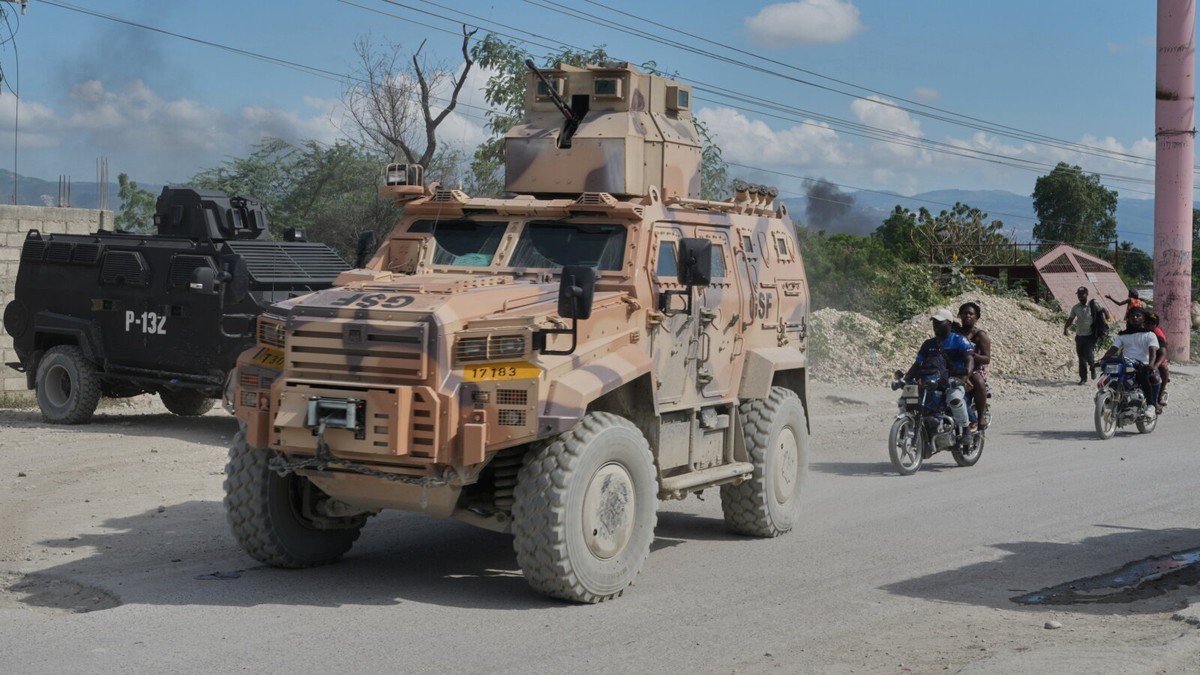
The arithmetic is the story. The Gang Suppression Force was authorised by the Security Council in September 2025 at 5,550 personnel. As of 12 October it had 1,563 uniformed members, the UN said. Its special representative, Jack Christofides, told the Council on 26 October that it had deployed over 2,000 personnel from six countries, and Reuters put it at about 2,000 — just over a third of the planned size a year into its mandate.
El Salvador's single contribution now rivals that total. Le Nouvelliste reported on 28 October that 1,300 Salvadoran soldiers were in the country, surpassing the force's own troop count. AFP noted that the deployment represents at least ten per cent of the Salvadoran army, estimated at 20,000 in 2021; Bukele has promised to double the army, but the figures have not been publicly updated.
Nobody Has Said Who Commands Them
Neither government has published the terms. Bukele says the operation carries "authorisation of all international and national levels" but has not detailed his troops' powers. Reuters reported that it remains unclear who will command the new Salvadoran contingent, how long it will stay or whether more forces will follow. The Haitian Times reported that Haiti's government describes the arrangement as a bilateral agreement whose terms have not been made public.
Analysts expect at least part of the force to operate outside the UN chain of command. Luis Contreras, a Salvadoran security and organised crime analyst, told Reuters he expected some troops could coordinate with a private military company run by Blackwater founder Erik Prince, an ally of Trump that has conducted anti-gang drone operations in Haiti since 2025. Axios framed the country as a possible test case for Bukele and Prince as "public-private proxies for US muscle in the hemisphere."
The Same Week Haiti Moved Its Election
On the same day El Salvador announced the deployment, Haiti's electoral authorities postponed the first round of presidential and parliamentary elections from 13 December to 18 July 2027, Al Jazeera reported. Two days earlier, the UN's top official in Haiti had told the Security Council that setting new dates without a realistic assessment of whether a vote can be held would corrode public trust.
"Setting new dates for elections without a realistic assessment of their feasibility will only erode public confidence and the credibility of Haitian institutions," said Carlos Ruiz Massieu, the Secretary-General's special representative. More than 35 parties and groups and 3,500 candidates have registered, yet only 759,257 potential voters were on the lists as of 5 October, out of an estimated electorate of 6.5 million. Haiti has not held national elections since 2016.
What the Country Looks Like Now
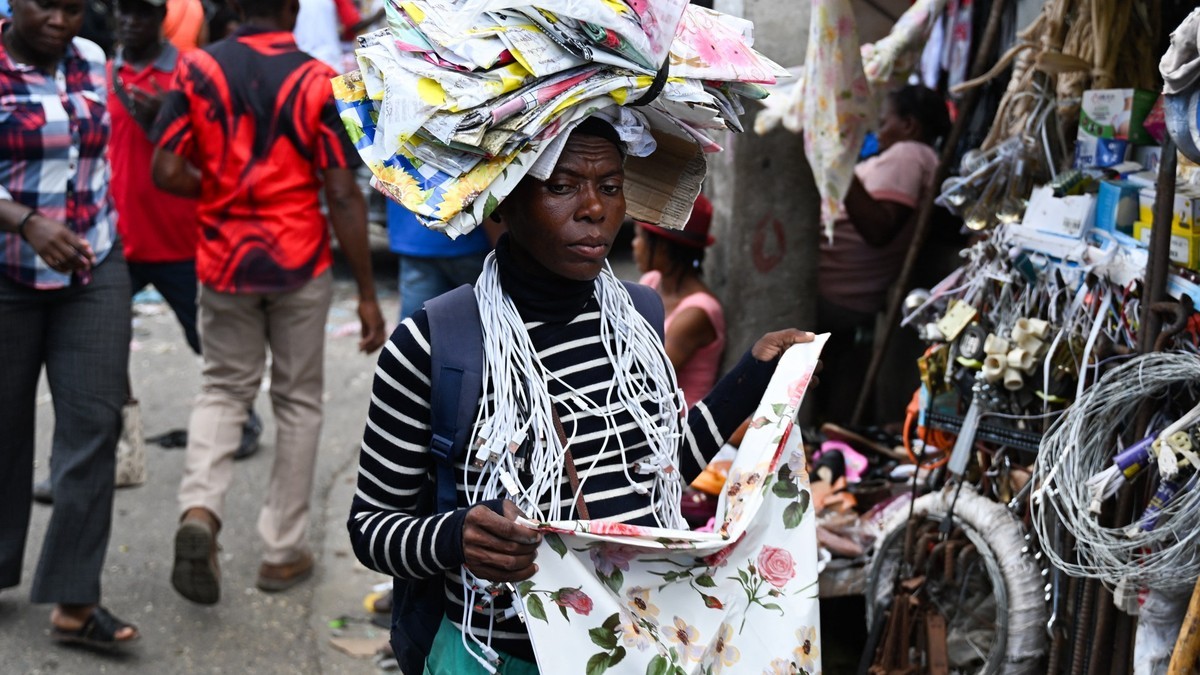
The numbers Ruiz Massieu carried to New York describe a state losing ground faster than any force can take it back. Between July and early October, 1,123 Haitians were killed and 440 injured in gang-related violence. In July and August alone, 689 women and girls were reported raped by gang members. In the Kenscoff attack of 23 and 24 August, at least 47 people were killed, 22 wounded and 52 taken hostage, 13 of whom were later freed.
Violence has spread into rural areas — Saint-Michel-de-l'Atalaye, Marigot, Léogâne — and armed groups are targeting farmland, homes and public infrastructure. Nearly 1.5 million people have fled their homes, including more than 740,000 children. The economy is expected to contract for a seventh consecutive year, and the 2026 humanitarian plan is roughly half funded. Gangs control an estimated 70 per cent of the capital, according to the Associated Press.
The Question Nobody in San Salvador Will Answer
There is still no confirmation that the four men are alive. The US ambassador to the United Nations, Mike Waltz, told the Council on 26 October: "We believe the four men survived, but they do remain unaccounted for." No gang has claimed them; the leader of 400 Mawozo, Wilson Joseph, has released videos denying he holds them. Christofides said the force's thoughts were with their families "during these difficult times."
Nor has any government published a casualty toll from the rescue itself. The UN says security-force operations account for 52 per cent of Haitians killed or wounded since July — 808 people, including 148 not associated with gangs. The diaspora group United Nations Association of Haiti has written to Secretary-General António Guterres alleging Salvadoran bombardments since 22 October have killed civilians, and Doctors Without Borders warned on 29 October of rising violence in the capital with women and children among the wounded reaching its hospitals. Pierre Esperance of Haiti's National Human Rights Defense Network put the risk plainly: "Not everybody living in gang-controlled areas are gangsters."
By Jessica Ali, Staff Writer
This article was produced with AI-assisted research and editorial support. Sources: UN News and UN Security Council meeting coverage (10246th meeting), Associated Press, Reuters, BBC, Al Jazeera, Axios, The Haitian Times, CANA/CMC, Infobae, France 24/AFP, teleSUR English, and reporting on statements by Medecins Sans Frontieres, the Global Initiative Against Transnational Organized Crime and the International Crisis Group.
What's Your Reaction?
 Like
0
 Dislike
0
 Love
0
 Funny
0
 Wow
0
 Sad
0
 Angry
0

Editor-in-Chief at Global1.News. Atlanta-based journalist who cuts through the BS and tells it like it is. Lead anchor, host, and the voice you hear when the spin stops and the truth starts.











Comments (0)