
Ekurhuleni murders: Urgent SAPS warning over fake identikits
South Africa is once again facing a chilling wave of fear as the Ekurhuleni murder investigation deepens, and the South African Police Service (SAPS) has issued a stark warning about the flood of fake suspect images circulating on social media.
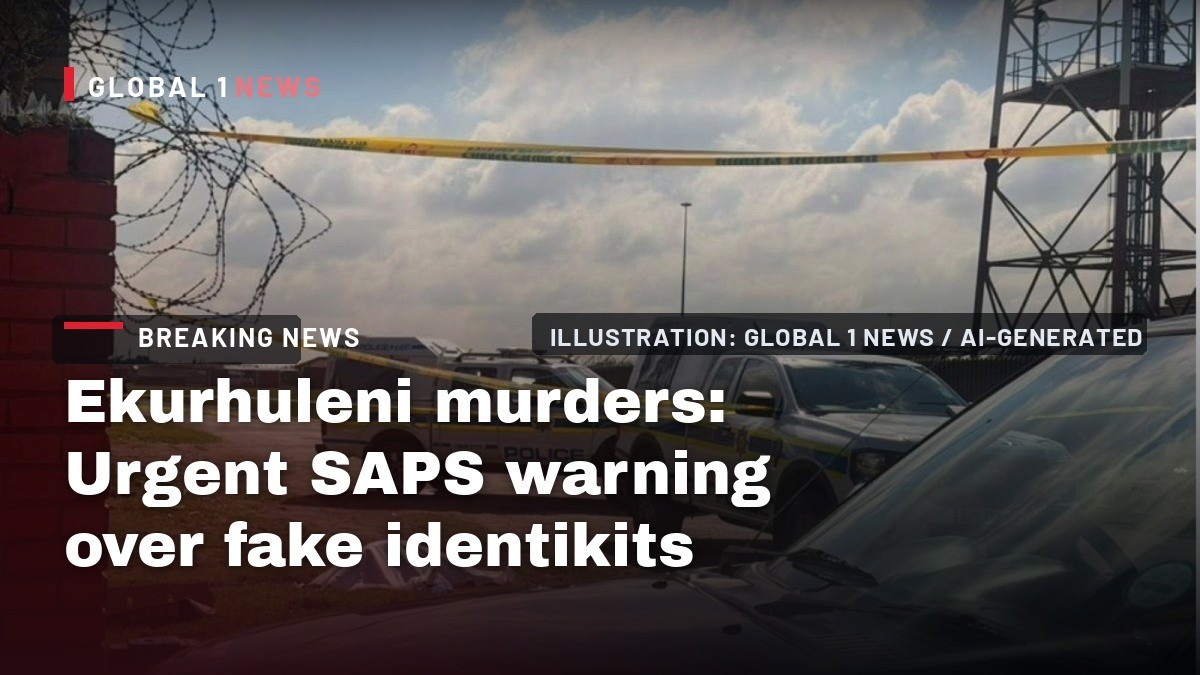
South Africa is once again facing a chilling wave of fear as the Ekurhuleni murder investigation deepens, and the South African Police Service (SAPS) has issued a stark warning about the flood of fake suspect images circulating on social media. In a climate where every share can turn an ordinary citizen into a target, the police have been crystal clear: no official identikit, wanted poster or photograph of any suspect has been released. The urgency of this message cannot be overstated, especially as nine women’s deaths across Kempton Park and the wider Ekurhuleni municipality now sit under intense scrutiny.
Fake Identikits Flood the Feed
Over the past week, social media platforms have been awash with alleged suspect photographs, each claiming to shed light on the mysterious killings. Yet, SAPS has categorically denied any involvement in the creation or distribution of these images. The service stressed that any official visual representation will only emerge directly from police channels, and only when investigators have identified a suspect and require public assistance. The proliferation of unverified pictures is not just a nuisance; it is a dangerous catalyst that can quickly turn an innocent person into a target for harassment, threats, or worse.
Brigadier Athlenda Mathe, the national police spokesperson, warned that the speed at which false images spread can cause irreversible damage to lives that have nothing to do with the crimes. “An unverified photograph can quickly turn an innocent person into a target,” she said, underscoring the real-world consequences of online speculation. The SAPS appeal is for users to pause, verify, and rely on official communication rather than forwarding sensationalist content that fuels panic and potentially jeopardises investigations.
The Growing Scope of the Investigation
The Ekurhuleni case has now expanded to nine separate incidents, with the latest body discovered in Dawn Park on Thursday. While the police have confirmed the ninth death, they have not linked the murders to a single perpetrator, leaving the community in a state of heightened anxiety. The investigation remains methodical, with detectives probing each case individually while also testing for possible connections between the victims.
Four of the women have been publicly identified, most notably 28‑year‑old Gracious Nkomo, whose family recognised her after her body was found along the R21 in Kempton Park. The identification of victims is a painful but essential step, providing families with closure and giving investigators crucial data points to map out potential patterns or geographic links.
Police Urge Direct Reporting Over Online Guesswork
In a clear departure from the usual call‑outs for public tips, SAPS is now urging citizens to bypass the internet’s rumor mill entirely. Instead of sharing names, photos, or theories online, the police want anyone with credible information to hand it directly to the authorities. This direct line of communication is intended to protect both the integrity of the investigation and the safety of individuals who might otherwise be wrongly implicated.
The service has promised that once investigators reach a stage where they need public assistance to identify or locate a suspect, an official appeal will be issued. Until such a moment arrives, the police have asked communities to treat all unofficial posters, photographs, and claims with extreme caution. This approach aims to curb the spread of misinformation while preserving the investigative process from undue interference.
Impact on Community Trust and Safety
The surge of fake identikits has broader implications for community trust in law enforcement. When rumors run rampant, they can erode confidence in the police’s ability to protect and serve, especially in a region already grappling with a series of high‑profile violent crimes. The SAPS warning is therefore not just a procedural note; it is a strategic effort to rebuild public faith by demonstrating a commitment to factual, responsible communication.
Moreover, the potential for innocent individuals to become targets highlights the delicate balance between public vigilance and vigilantism. South Africans have long rallied around causes of safety and justice, from the anti‑apartheid sports boycotts to community‑driven crime watch programmes. In this instance, the call is for measured, evidence‑based participation rather than reactionary sharing of unverified content.
Legal and Ethical Dimensions of Online Sharing
Beyond the immediate risk of personal harm, the spread of false suspect images raises serious legal concerns. South African law, particularly the Protection from Harassment Act, provides avenues for individuals who become victims of online defamation or targeted threats. While the SAPS has not indicated any ongoing prosecutions related to the fake identikits, the warning serves as a reminder that unlawful conduct online can have real‑world legal repercussions.
Ethically, the situation forces a reflection on the responsibilities of social media users. In an age where a single click can amplify misinformation, the onus is on each citizen to verify sources before sharing. The police’s plea to rely on official SAPS communication channels is a direct appeal to that ethical duty, urging the public to become guardians of truth rather than inadvertent propagators of falsehood.
Potential Links to Wider Crime Trends
While the SAPS has not confirmed that a single individual is responsible for all nine murders, the clustering of cases in Ekurhuleni invites speculation about broader crime trends. The municipality has seen a rise in gender‑based violence, a scourge that has prompted national outrage and policy responses, including the establishment of dedicated units to combat femicide. The ongoing investigation could therefore feed into larger strategic assessments of how such crimes are coordinated, financed, or facilitated across provincial lines.
Understanding whether these murders are isolated incidents or part of a coordinated pattern will be crucial for shaping future policing strategies. Should investigators uncover a link, it may prompt a recalibration of resources, including increased forensic capacity and community outreach programmes aimed at preventing further loss of life.
What South Africans Should Do Now
In the immediate term, the public’s role is clear: refrain from sharing unverified suspect images, verify any information through official SAPS channels, and report any credible leads directly to the police. Community members who suspect they have relevant information are encouraged to contact the nearest police station or use the dedicated tip‑off lines that SAPS has publicised in previous high‑profile investigations.
Beyond the practical steps, South Africans are called upon to maintain a collective sense of responsibility. The tragedy of the nine women’s deaths is a stark reminder of the vulnerabilities faced by women across the nation, and the need for a unified front against gender‑based violence. By supporting the police’s measured approach, respecting the privacy and safety of individuals, and staying vigilant against misinformation, the nation can help ensure that justice is served without further collateral damage.
This article was produced with AI-assisted research and editorial support. Reporting is based on the source material cited below. Sources: The South African; thesouthafrican.com; Global1.News (19 September 2026).
By Dante Williams, Staff Writer
What's Your Reaction?
 Like
0
Like
0
 Dislike
0
Dislike
0
 Love
0
Love
0
 Funny
0
Funny
0
 Wow
0
Wow
0
 Sad
0
Sad
0
 Angry
0
Angry
0

Breaking News and Investigations Correspondent at Global1.News. Based in London, covering global breaking news, security, and investigative stories. Known for digging deeper and connecting the dots across continents.












Comments (0)