
AWS adds virtual iPhones to its cloud
AWS just rolled out virtual Android and iPhone devices under its Device Farm banner, and the tech press is already buzzing. The promise is simple: spin‑up a Pixel or iPhone in seconds, run your CI pipeline, and keep the real hardware for the final regression grind.
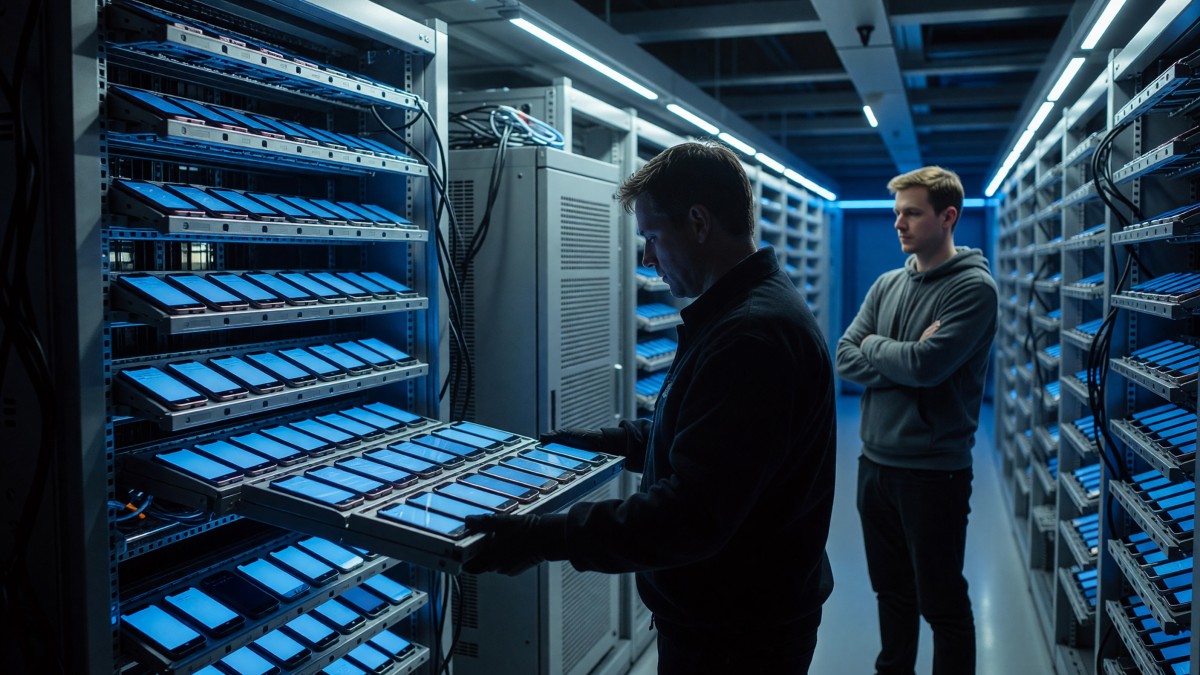
AWS just rolled out virtual Android and iPhone devices under its Device Farm banner, and the tech press is already buzzing. The promise is simple: spin‑up a Pixel or iPhone in seconds, run your CI pipeline, and keep the real hardware for the final regression grind. On paper it sounds like a win‑win, but when you strip away the marketing fluff you see a very narrow menu that does little to solve the real pain points of developers and, more importantly, independent hosting providers who have to support these test pipelines for their customers.
What AWS actually delivered
The new virtual offerings consist of a single Google Pixel 10 handset (available with Android 15, 16 or 17), a Pixel tablet running Android 17, and a virtual iPhone 16 with iOS 18.6, 23.61 and 27.0. AWS claims these “typically start in seconds, and others start in around a minute,” positioning the service as a speed‑up for pull‑request checks, code merges and smoke tests.
Crucially, the same Device Farm APIs that work with physical devices also work with these emulators, so you don’t have to re‑tool your test suites. That continuity is the only real advantage; the device catalog itself is painfully limited.
Why the catalog feels half‑baked
When The Register logged in as an AWS user, the only Android handset on the virtual menu was the Pixel 10. The Pixel line is a niche player in the global smartphone market. Counterpoint’s Q2 2026 top‑10 list shows no Pixel devices at all, with the iPhone 16 barely scraping into the tenth spot and the iPhone 17 dominating the top three positions. In short, AWS is offering emulators for phones that hardly anyone uses in the wild.
On the iOS side, the only virtual model is the iPhone 16, which sits at the bottom of the same top‑10 list. Meanwhile, the market’s heavy hitters – the Samsung Galaxy S26 Ultra, Galaxy A07 4G, A17 5G, A17 4G and Galaxy S26 – occupy every other slot from fourth to ninth. Those are the devices developers are actually testing against in the field, and they are conspicuously missing from AWS’s virtual roster.
The foldable gap
Another glaring omission is any foldable form factor. Apple’s iPhone Duo and Samsung’s foldable Galaxy devices are now part of the mainstream testing matrix, especially for apps that need to validate multi‑window layouts. AWS does provide physical Galaxy A17 devices and three versions of the iPhone 17, but the Device Farm still lacks any virtual foldable. That forces developers to either request a loaner from Apple or shell out roughly $2,000 to buy a physical unit for testing – a cost that independent hosting firms can’t easily absorb.
From a risk‑management perspective, that creates a bottleneck. If a client’s release hinges on a foldable‑specific bug, you either have to maintain a small inventory of pricey hardware or risk missing the defect entirely. Neither scenario is attractive for a lean hosting operation.
Pricing and the hyperscaler trap
AWS frames the virtual devices as a cheaper alternative to maintaining a physical lab, but the pricing model isn’t disclosed in the source material. Historically, hyperscalers bundle device time into per‑second or per‑minute rates that can balloon when you run large test suites across many branches. For a small‑to‑mid‑size provider, that can quickly outpace the cost of buying a handful of real devices, especially when you factor in the need for multiple OS versions.
The “shift left” narrative sounds good until you realize the virtual devices only cover a sliver of the real‑world device landscape. You’ll still need physical devices for high‑fidelity regression, meaning you’re paying twice – once for the virtual time and again for the hardware inventory you can’t dispense with.
Operational impact on hosting providers
Running Device Farm on your own infrastructure already demands storage, networking and orchestration overhead. Adding a layer of AWS‑hosted virtual devices introduces a dependency on a third‑party API, which can become a single point of failure. If AWS experiences an outage in its Device Farm endpoint, your CI pipelines stall, and your customers’ release cycles are delayed.
Moreover, the limited device selection means you’ll have to maintain a parallel physical lab for the majority of the market’s devices. That dual‑track approach complicates automation, increases maintenance overhead, and raises the risk of configuration drift between the virtual and physical test environments.
What independent providers can do instead
First, double‑down on open‑source emulators that cover a broader device set. Projects like Android Emulator, Genymotion and open‑source iOS simulators can be run on‑premises, giving you full control over the device matrix and eliminating per‑minute usage fees. Second, build a curated physical pool that mirrors the top‑selling models – the Galaxy S26 series and iPhone 17 line – and expose that pool through a self‑service API for your customers.
Third, negotiate volume discounts with device vendors or explore leasing programs that spread the capital cost of high‑end phones over time. Finally, adopt a tiered testing strategy: use cheap, fast emulators for unit‑level checks, reserve physical devices for regression, and only pull in expensive foldable hardware for the final release gate. This layered approach keeps costs in check while preserving test fidelity.
Bottom line for founders
AWS’s virtual device rollout is a classic hyperscaler move: offer a slick, low‑latency service that looks attractive on the surface but fails to address the core needs of the market. The limited catalog, the absence of foldables, and the inevitable reliance on AWS APIs make it a risky add‑on for any hosting provider that isn’t already deep in the Amazon ecosystem.
If you’re building a hosting business that wants to stay independent, treat AWS’s virtual devices as a supplemental tool, not a replacement for a robust physical lab. Focus on breadth of device coverage, control over cost, and resilience against third‑party outages. That’s the pragmatic path to delivering reliable mobile testing without getting trapped in the hyperscaler pricing maze.
— Allan Ali, Founder
This article was produced with AI-assisted research and editorial support. Reporting is based on the source material cited below. Sources: The Register; theregister.com; Global1.News (27 November 2026).
By Allan Ali, Global1.News
What's Your Reaction?
 Like
0
 Dislike
0
 Love
0
 Funny
0
 Wow
0
 Sad
0
 Angry
0

Publisher of Global1.News. Automation architect, systems builder, and the guy making sure the truth gets published.















Comments (0)