
Diplomacy and the Beautiful Game: Miami Museum Shows Football's Power to Unite Nations
As the football world converged on the United States for the 2026 FIFA World Cup, a museum in the Miami suburb of Coral Gables was telling a quieter but no less powerful story — how the beautiful game has connected peoples and nations for nearly five centuries.
As the football world converged on the United States for the 2026 FIFA World Cup, a museum in the Miami suburb of Coral Gables was telling a quieter but no less powerful story — how the beautiful game has connected peoples and nations for nearly five centuries. "Diplomacy and the Beautiful Game: From Scotland to Brazil to Haiti" gathered rare artefacts, archival photographs and living testimonies tracing football's role in migration, cultural exchange and peacebuilding, with the African continent woven through every chapter.
Diplomacy and the Beautiful Game: How a Miami Museum Showed Football's Power to Unite Nations
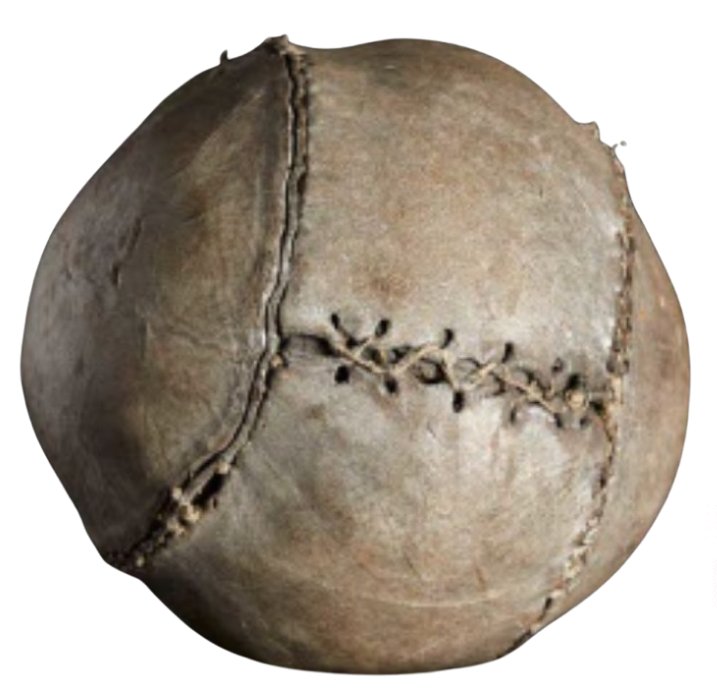
Coral Gables, Florida — The exhibition opened at the Coral Gables Museum's Zahner Center on June 12 and ran until July 19, timed to the World Cup that crowned Spain champions on its final day. Its centrepiece was the world's oldest known football — a 16th-century leather ball from Stirling Castle in Scotland — making its first journey to the Americas, and its galleries carried visitors from the Scottish roots of Brazilian football to the Haitian capital where a match helped heal a nation.
A Museum in Miami Tells Football's Diplomatic Story
The Coral Gables Museum, a Mediterranean Revival landmark in the heart of Miami's most elegant suburb, transformed its Zahner Center into a celebration of football's hidden history this summer. The exhibition "Diplomacy and the Beautiful Game: From Scotland to Brazil to Haiti" opened on June 12 and ran daily from 9am to 5pm until July 19, deliberately timed to coincide with the FIFA World Cup 2026 that was being played across the United States, Canada and Mexico.
The museum's curators partnered with the Consulate General of Brazil in Miami to assemble an extraordinary collection of rare artefacts and archival photographs. The galleries revealed how football has influenced migration, education, identity and dialogue across five centuries — from the Scottish court of Mary Queen of Scots to the streets of São Paulo, from the hills of Port-au-Prince to the stadiums of Lagos and Dakar.
The africanews report of June 26, filed by Laetitia Lago Dregnounou with the Associated Press, brought the exhibition's story to audiences across the continent. The report highlighted how the museum's narrative placed Africa not at the margins but at the very centre of football's diplomatic history — a perspective that resonated deeply with visitors from the diaspora who came to see their own stories reflected in the galleries.
For African visitors, the exhibition offered something rare: a recognition that the beautiful game's power to unite has always crossed oceans and continents. The museum's walls carried photographs of children playing with makeshift balls in Lagos, of Senegalese fans draped in national colours, of Nigerian heroes lifting trophies — images that spoke to a shared continental passion.
The timing was deliberate. As millions of fans descended on North American stadiums, the museum offered a quieter space for reflection on what football truly means — not just goals and glory, but connection, understanding and the slow work of building bridges between peoples. The exhibition's title itself told the story: from Scotland to Brazil to Haiti, with Africa woven through every chapter.
The World's Oldest Football: A 16th-Century Treasure from Stirling Castle
The exhibition's centrepiece drew crowds from across the globe: the world's oldest known football, on view in the United States for the first time from June 22 to 27. Made in Stirling, Scotland between 1540 and 1570, this nearly 500-year-old treasure had never before crossed the Atlantic, and its arrival in Miami was itself a diplomatic event.
The ball was discovered in the late 1970s, wedged among beams behind the Queen's Chamber at Stirling Castle — one of Scotland's most historic royal residences. It is made of thick leather panels wrapped around a pig's bladder, about the size of a small melon, roughly half the size of a modern football. Its survival across nearly five centuries is nothing short of miraculous.
The ball dates to the era of King James V of Scotland and his daughter Mary, Queen of Scots — a time when football was already wildly popular in Scotland, played in streets and castle courtyards alike. The Stirling Smith Art Gallery and Museum, which holds the ball in its permanent collection, has long celebrated it as a Guinness World Record holder and a national treasure.
Aoife McKenna of the Stirling Smith offered a charming theory about how the ball came to rest in the castle's beams: "Somebody in the 1540s must have kicked the ball quite high into the ceiling and it got stuck." The image of a 16th-century kicker sending the ball soaring into the rafters — and losing it for four centuries — delighted visitors of all ages.
Caroline Mathers, Director of the Stirling Smith Art Gallery and Museum, personally saw the ball off on its journey to Miami, while curator Michael McGinnes accompanied the artefact to ensure its safe arrival. Their presence underscored the significance of the loan — a gesture of international cultural friendship that mirrored the exhibition's own themes.
Football's popularity in Scotland since the 15th century is well documented, and the exhibition used the ancient ball to tell a larger story: that the game we love today has deep roots, and that those roots spread across the world through migration, trade and cultural exchange.
From Scotland to Brazil: Charles Miller and the Birth of a Football Nation
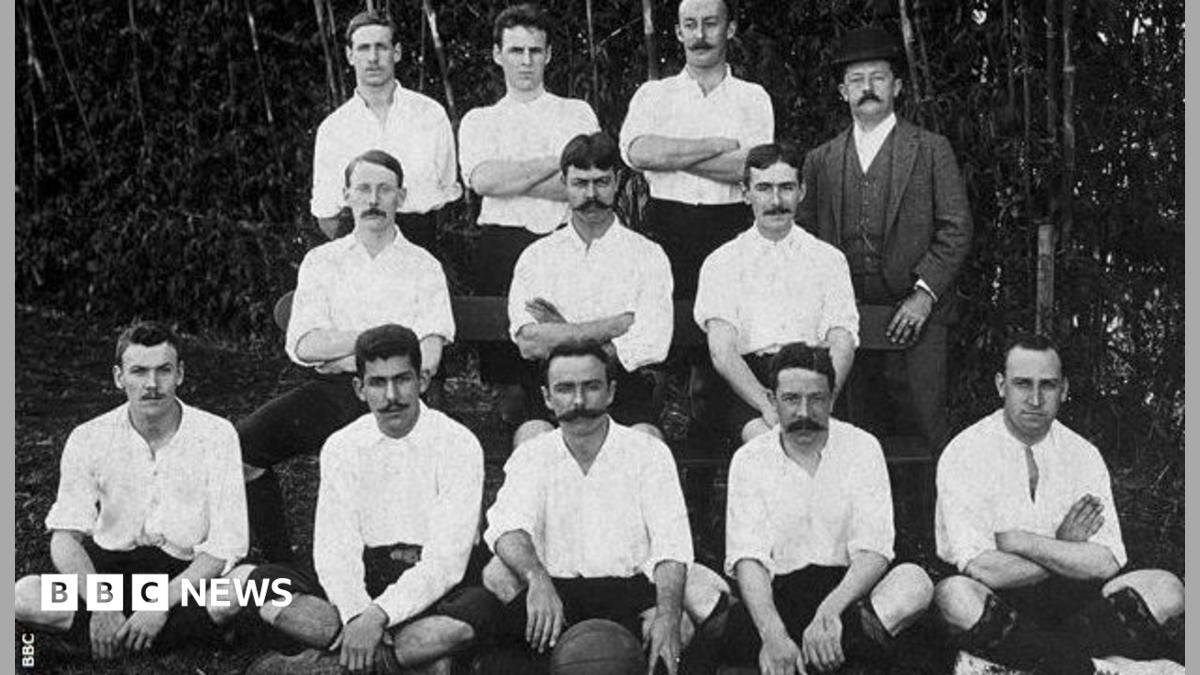
The exhibition devoted special attention to the historical and cultural links between Scotland and Brazil — a connection that changed the course of football history. At the centre of this story stands Charles Miller, born in São Paulo in 1874 to a Scottish railway engineer father and a Brazilian mother of English descent.
Miller was educated in Southampton, England, where he absorbed the game's rules and spirit. When he returned to Brazil in 1894, he carried two footballs and a set of rules in his luggage — a modest cargo that would transform a nation. He founded the São Paulo Athletic Club (SPAC) and the Liga Paulista de Foot-Ball, Brazil's first football league, and is widely regarded as the father of Brazilian football.
The exhibition traced this Scottish root of Brazilian football with rare photographs and documents, showing how the game evolved from an elite pastime into the passion of a nation. Visitors could trace the journey from Miller's first kickabouts on São Paulo's muddy fields to the gleaming stadiums of the modern era.
The timing of the ancient ball's display was particularly poignant: on June 24, Scotland faced Brazil in a World Cup group match at Hard Rock Stadium in nearby Miami Gardens. Brazil won 3-0 to clinch Group C, and the ancient ball from Stirling was on display just miles away — a living connection between the two nations' football histories.
The galleries also highlighted the legacy of Pelé, whose brilliance transformed football into an art form and whose name remains synonymous with the beautiful game. The exhibition reminded visitors that Brazil's football culture was shaped profoundly by African heritage — the rhythms, the creativity, the joy that define Brazilian football all trace back to the African diaspora.
For African visitors, this section of the exhibition was particularly moving. It showed how a game carried from Scotland to Brazil became something new and magnificent — and how African influence made it what it is today.
Haiti: The 2004 Peace Match and a Nation's Football Soul
Haiti holds a special place in football history, and the exhibition honoured it with depth and sensitivity. Haiti was the first Caribbean nation to qualify for a World Cup, reaching the 1974 tournament in West Germany, where Emmanuel Sanon scored a famous goal against Italy's legendary goalkeeper Dino Zoff — a moment that announced Haitian football to the world.
But the exhibition's most powerful Haitian story was the 2004 peace match between Brazil and Haiti in Port-au-Prince. Played when Brazil commanded the UN peacekeeping mission MINUSTAH after years of instability, the match was more than a friendly — it was a gesture of solidarity and dialogue between nations, a moment when football served as a bridge in times of crisis.
Photographs by Antônio Gaudério captured the match in striking detail, showing Haitian fans packed into the stadium, their faces alight with joy despite the hardship around them. These images, featured prominently in the exhibition, demonstrated football's unique power to transcend politics and bring people together.
Haiti's story is deeply connected to Africa. As the first Black republic and the second independent nation in the Americas, Haiti represents the African diaspora's living connection to the continent. The exhibition made this connection explicit, showing how football has served as a thread linking Haiti to its African roots.
The peace match of 2004 was not about winning or losing — it was about presence, about showing up, about using the beautiful game to say: we see you, we stand with you. That message resonated powerfully with visitors, many of whom had never considered football's role in peacebuilding before.
For African audiences, Haiti's story is a reminder that the diaspora's football passion mirrors our own — and that the game can be a force for healing in the darkest times.
Nigeria: Football as a Platform for Unity and Global Engagement
The exhibition spotlighted historic moments in Nigeria where the game became a platform for dialogue, unity and international engagement. Chief among these was Nigeria's 1996 Olympic football gold, when the Dream Team became the first African nation to win Olympic football gold — a triumph that announced African football to the world.
The Dream Team's journey was nothing short of miraculous. In the semi-final against Brazil, Nigeria trailed 3-1 before mounting a stunning comeback to win 4-3. In the final against Argentina, they won 3-2 with goals from Nwankwo Kanu and Jay-Jay Okocha — names that still echo in the hearts of African football fans.
That triumph unified a nation and demonstrated that African teams could compete with — and beat — the world's best. The exhibition's galleries captured the euphoria of those moments, with photographs and memorabilia that brought the Dream Team's achievement to life for a new generation.
Nigeria's Super Eagles have long been symbols of continental pride, and the exhibition celebrated their role in shaping African football's identity. From the green-and-white jerseys to the rhythm of the stands, Nigerian football culture was presented as a vital part of the global game.
The exhibition also touched on the role of football in Nigerian cities, from street matches in Lagos to national celebrations that bring the entire country to a standstill. Football in Nigeria is not a spectator sport — it is a way of life, a language spoken by millions.
For Senegalese visitors, the Nigerian story resonated deeply. Our own Teranga Lions have carried the same hopes and dreams, and the parallels between Nigerian and Senegalese football passion were impossible to miss. The exhibition reminded us that African football is one story, told in many voices.
Africa's Moment at the World Cup 2026
As the exhibition ran, Africa was making history at the World Cup. Nine of the continent's ten qualifiers advanced to the knockout rounds — a record run that demonstrated African football's growing global stature. Only South Africa exited early, narrowly falling to Canada in a match that could have gone either way.
The tournament's final on July 19 saw Spain beat Argentina 1-0 in extra time, with Ferran Torres scoring the decisive goal. Lionel Messi set a new World Cup scoring record during the tournament, adding another chapter to his legendary career — but it was Africa's collective performance that captured the imagination of the continent.
The exhibition's closing weeks coincided with the Africa Women's Cup of Nations final, contested this week between Cameroon and Malawi. The match was a celebration of African women's football, which has grown enormously in recent years and now commands attention across the continent and beyond.
African football's rise is no accident. It is the product of decades of investment, passion and determination — and of the continent's deep love for the beautiful game. The World Cup 2026 demonstrated that African teams belong on the world stage, competing with confidence and flair.
The exhibition's narrative — from Scotland to Brazil to Haiti, with Africa at its heart — found its natural conclusion in these achievements. Football has always been a global language, and Africa is now speaking it fluently.
What African Audiences Can Learn
The exhibition's message for African audiences is clear: football is soft power, and cultural diplomacy is a tool we can wield with pride. The stories of Scotland, Brazil and Haiti show how the game can build bridges, heal wounds and project a nation's identity to the world.
There is also a lesson in preservation. The Stirling Smith Art Gallery and Museum has cared for the world's oldest football for decades, treating it as a national treasure. African institutions can do the same — preserving our own sporting heritage, from historic jerseys to photographs of legendary matches, so that future generations can connect with their football history.
Senegal's Museum of Black Civilizations in Dakar has already shown what is possible when African institutions tell their own stories. Imagine what such a museum could do with a collection dedicated to African football — the triumphs, the heroes, the moments that have defined our continental identity.
The exhibition's core message is that football is a global language of connection. Whether in Stirling or São Paulo, Port-au-Prince or Lagos, the game speaks to something universal in the human spirit. For African nations, this language is a powerful tool for engagement with the world.
There is also potential for African cities to host major tournaments and cultural showcases. The World Cup 2026 demonstrated the power of hosting — the energy, the attention, the economic benefits. Africa has already hosted the World Cup once, in South Africa in 2010, and the continent's growing football stature suggests more opportunities lie ahead.
As the exhibition closed on July 19, visitors left with a warm sense of connection — to the game, to each other, and to a shared history that spans centuries and continents. For African audiences, the message was clear: our football culture is a treasure, and the world is ready to celebrate it with us. The next World Cup cycle begins now, and Africa's story is only getting started.
By Amara Diop, Staff Writer
This article was produced with AI-assisted research and editorial support. Reporting is based on sources cited in the article.
What's Your Reaction?
 Like
0
Like
0
 Dislike
0
Dislike
0
 Love
0
Love
0
 Funny
0
Funny
0
 Wow
0
Wow
0
 Sad
0
Sad
0
 Angry
0
Angry
0

West Africa/Sahel Correspondent at Global1.News. Dakar-based journalist covering politics, security, climate, and development across Francophone and Anglophone West Africa. Tells the stories of a region undergoing profound transformation.













Comments (0)