
Denmark Speeds Up Ukraine Air-Defence Aid After Russian Frigate Fires Flares at Danish Helicopter
Denmark is bringing forward and increasing a military aid package for Ukraine to DKK 1.8 billion, about $276 million, four days after a Russian frigate fired two flares at a Royal Danish Air Force Fennec helicopter in international waters off Gedser.
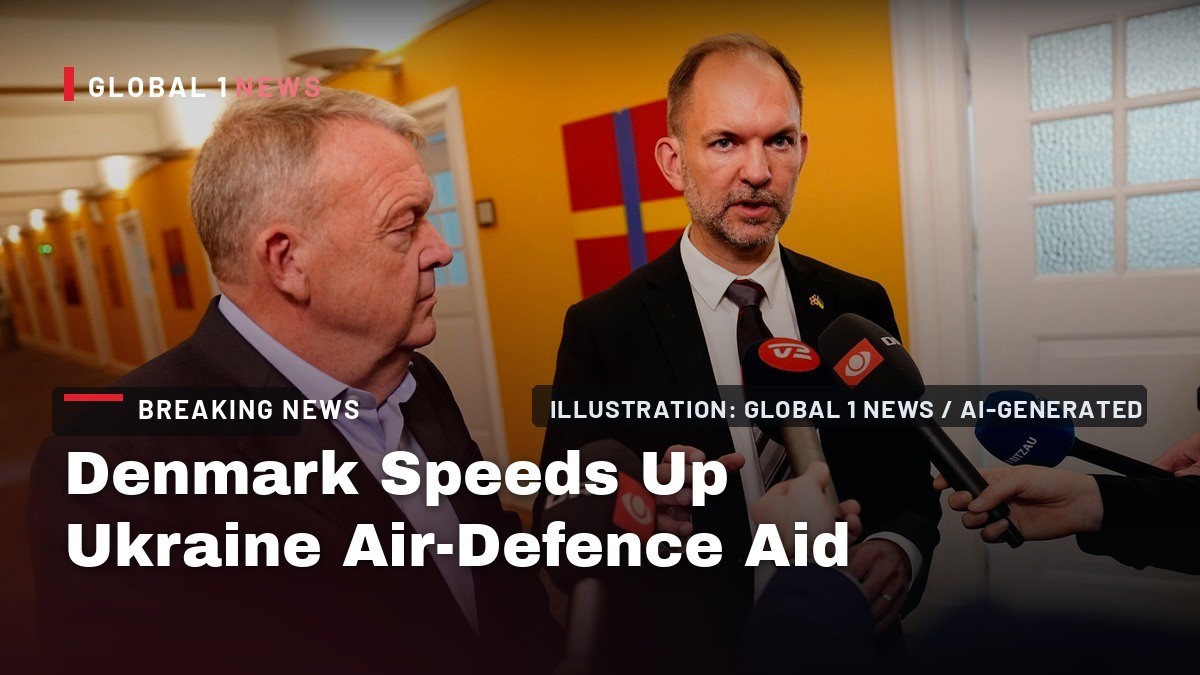
Denmark has done something unusual with a military aid package: it moved it forward, made it bigger, and tied the timing directly to a Russian frigate firing flares at a Danish helicopter. The confrontation between Copenhagen and Moscow is now measured in kroner as well as in nautical miles.
Denmark Speeds Up Ukraine Air-Defence Aid After Russian Frigate Fires Flares at Danish Helicopter
COPENHAGEN, Denmark — Denmark is bringing forward and increasing a military aid package for Ukraine to a total of DKK 1.8 billion, roughly $276 million or about EUR 241 million, the government announced Friday, four days after a Russian frigate fired two flares toward a Royal Danish Air Force helicopter in international waters off Gedser.
The Frigate, the Fennec and the Flares Nobody Radioed About
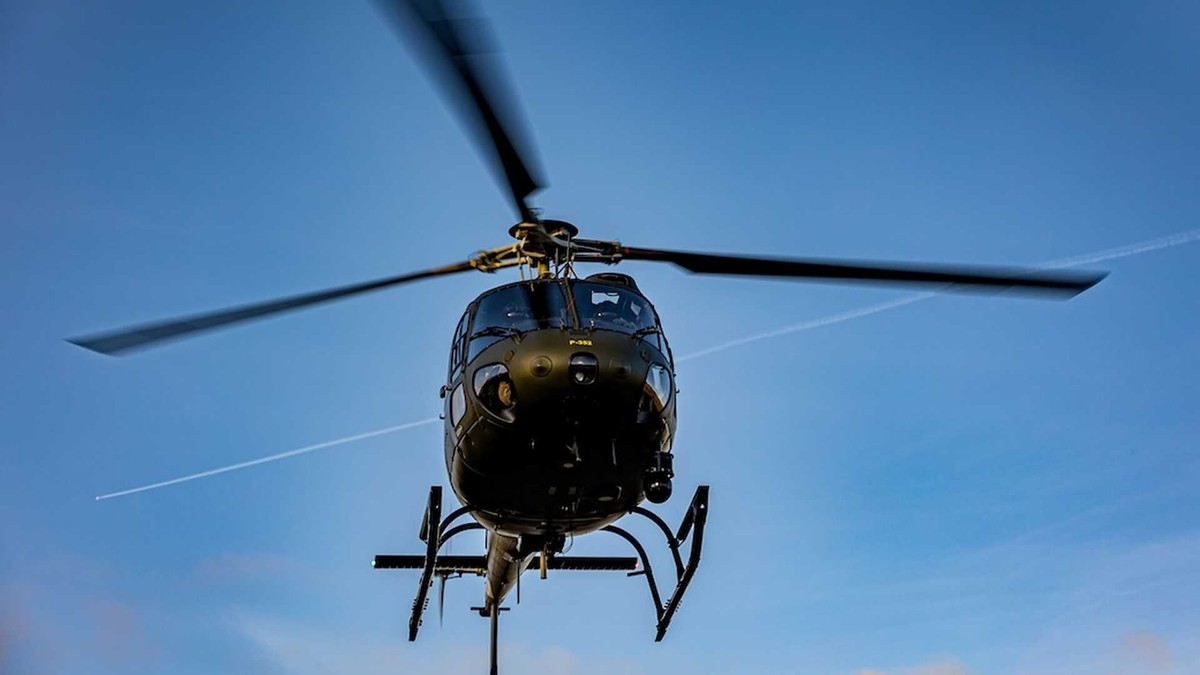
The aircraft was an Aérospatiale AS550 C2 Fennec, a light observation helicopter flown by the Royal Danish Air Force from Karup Air Base in central Jutland. It was on what Danish Defence Command described as routine photographic identification of a Russian frigate. The frigate fired two flares. One passed at close range to the helicopter. Defence Minister Jeppe Bruus said the Russian vessel did not establish radio contact with the Danish helicopter before firing.
No crew member was injured. No damage was recorded. The helicopter broke away after the firing. Bruus told broadcaster TV 2 that, to his knowledge, this was the first incident of its kind involving Denmark, and he described the manoeuvre as very unprofessional seamanship. He acknowledged the helicopter operated relatively close to the frigate but said this was normal for Danish monitoring missions. Denmark has not released the Fennec's altitude, speed, flight path, closest point of approach, or the flare's minimum separation, preventing a precise reconstruction of the encounter to date.
What Happened Off Gedser on Monday Night
Gedser sits at the southern tip of the island of Falster, Denmark's southernmost town, on the approaches to the Danish straits that carry traffic in and out of the Baltic. Danish Armed Forces issued a press release at 23:02 local time on Monday 14 September. It said one of the air force's Fennec helicopters had been fired at with pyrotechnics in international waters off Gedser.
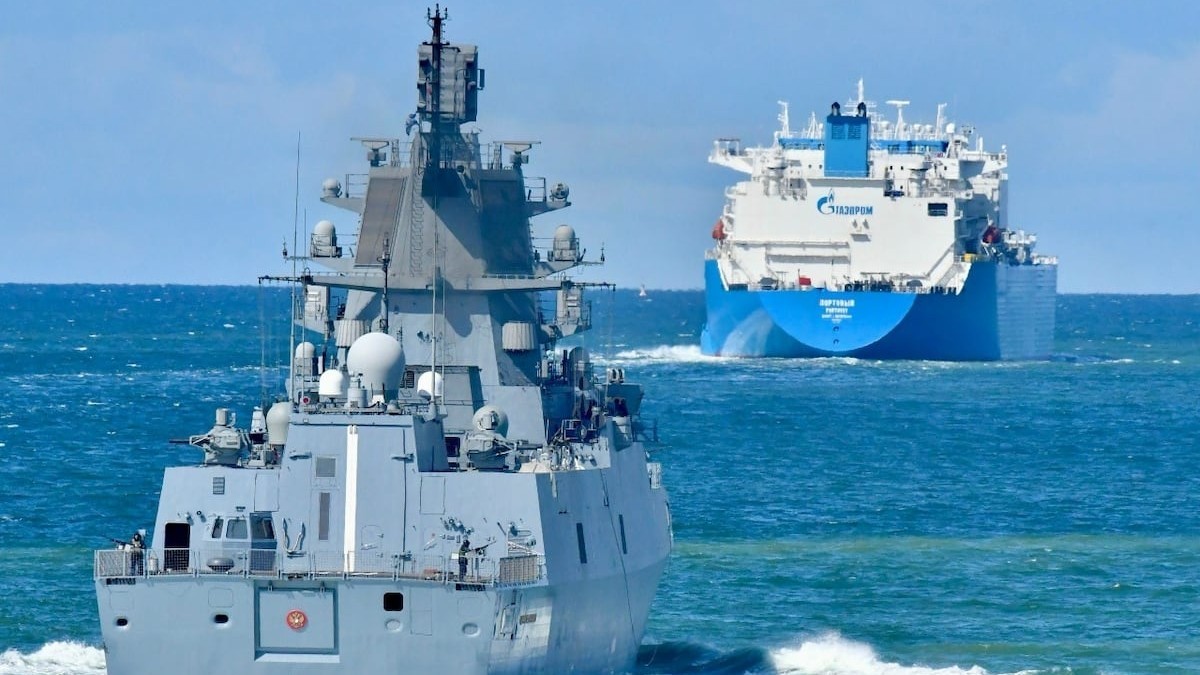
The frigate was not named by the Danish Defence Command, which also did not identify the helicopter's unit or give a position for the encounter. DR reported on 16 September that German police confirmed the identity of the vessel earlier in the week, and noted the Russian warship involved has previously drawn attention in the Baltic Sea. Army Recognition describes it as an unidentified Russian frigate. Ekstra Bladet broke the news in Copenhagen on Monday. Copenhagen has not publicly named the vessel.
Copenhagen's Answer Was Not a Protest. It Was a Cheque.
The package was announced Friday by Foreign Minister Lars Løkke Rasmussen and Bruus after a meeting of the Danish Parliament's Foreign Policy Committee at Christiansborg. Reuters reported the government said Denmark is speeding up a donation to Ukraine in response to the incident in which a Russian warship fired flares towards a Danish military helicopter, narrowly missing the aircraft. The new support package will be used for air defences, the government said.
Most or all of the money goes toward air-defence systems produced in Ukraine, and to support that Ukraine specifically asked for. DR, the Danish public broadcaster, reported that Denmark is bringing forward and increasing a support package totalling 1.8 billion kroner for Ukraine. The value converts to approximately $276 million, at $1 = 6.5228 Danish crowns, and to approximately EUR 241 million. No figure has been released for how much of the total is new money versus brought-forward money, and no delivery date for the systems has been stated beyond faster than originally planned.
If the Russians Think They Can Rattle Us
Bruus, speaking to reporters after the committee meeting, said: "If the Russians think they can rattle us… then our response is to ramp up our support for Ukraine faster than we had intended." The Copenhagen Post carried a variant: "If the Russians think that they can rattle us by doing this kind of thing, then our counter-response is that we will step up our support for Ukraine faster than we had intended." Bruus said Denmark is now disbursing its support to Ukraine faster than originally planned.
Løkke described the incident as a severe Russian provocation. The Copenhagen Post rendered his line as: "If they think they can provoke us into being restrained with our support for Ukraine, then they are mistaken." Reuters rendered it as: "If anyone thinks they can pressure us to hold back on our support for Ukraine, they are mistaken." Løkke said the actions were completely unacceptable, could have put human lives at risk, and that Russia is gradually shifting the boundary for what it considers acceptable behaviour. He also said: "This fits into a pattern we are seeing around Europe, where Russia is escalating and constantly testing boundaries."
Moscow Gave the Frigate's Captain a Medal
Russia has said the Danish helicopter acted provocatively. Russian ambassador to Denmark Vladimir Barbin accused the helicopter of "provocative actions" near the vessel and said Moscow would investigate the interaction. Barbin said: "The Danish side's attempts to explain the helicopter's provocative actions against the Russian frigate as 'routine practice' give rise to serious concern about the possible consequences of such recklessness." He said it was not the first time Danish Air Force helicopters had carried out dangerous manoeuvres near Russian warships outside Denmark's territorial waters, and that he had made a complaint last year over dangerous flyovers and low-altitude hovering by a Danish Air Force helicopter over an anti-submarine vessel.
Russian Defence Minister Andrey Belousov later awarded a medal to the frigate's commander for preventing what Moscow described as a provocation by the Danish helicopter. Both sides agree no injuries and no damage occurred. The two accounts diverge on who acted dangerously and whether the Danish flight was routine. Russia has not publicly responded to the Friday aid package.
Why Every Kroner Is Going to Air Defence
Ukraine has faced difficulties defending itself against Russian ballistic missile attacks because of shortages of suitable air-defence missiles, including Patriot missiles produced by the United States. Kyiv is struggling to defend itself against Russian ballistic and cruise missiles owing to shortages of suitable interceptors, including US-made Patriot missiles. TVP World also reports the US moved to approve 10 German Patriot missiles for Ukraine.
Denmark has been a co-lead of the Air Force Capability Coalition supporting Ukraine's F-16 capacity. The Fennec at the centre of the incident is a small airframe by comparison: empty weight 1,220 kg, maximum takeoff weight 2,250 kg. Originally configured for anti-armour missions, the Danish Fennecs lost their anti-tank weapons and shifted to observation, reconnaissance and light transport. The Fennec measures 10.93 m at the fuselage and 12.94 m overall with its 10.69 m rotor turning.
The Ukraine Fund Is Running Dry
Denmark has been a major supporter of Ukraine since Russia launched its full-scale invasion in 2022 and is a leading provider of financial aid on a per-capita basis. The totals differ between sources. TVP World puts Danish military support at about EUR 10.3 billion since the full-scale invasion, excluding contributions through the European Union. Time News puts it at around 76.8 billion Danish kroner, or $11.7 billion, in defence aid, including equipment such as F-16 fighter jets and Caesar howitzers. A Danish government security-cooperation document states Denmark has allocated approximately EUR 11.0 billion in support for Ukraine since 2022, comprising roughly EUR 9.9 billion in military support and approximately EUR 1.1 billion in civilian contributions.
Since December, Denmark has announced only one other major aid package in addition to Friday's package. The Danish Ukraine Fund, which has financed much of the country's support, has almost run out of available money. Further support would therefore require politicians to find funding elsewhere. So far much of Denmark's support has been financed through the government's projected future fiscal surplus, known in Danish as the økonomiske råderum. Danish policy toward Ukraine has also included preparations for a possible peacekeeping role in the event of a settlement.
A Pattern Europe Has Started Naming Out Loud
NATO spokesperson Allison Hart called the incident another irresponsible Russian action intended to intimidate the alliance, and said NATO would continue to defend its territory and continue to support Ukraine. European Commission President Ursula von der Leyen condemned what she called reckless and dangerous Russian behaviour, writing on X that: "These are not isolated incidents; they are part of a broader pattern of Russian aggression and provocation against Europe, testing our readiness and our resolve."
EU foreign policy chief Kaja Kallas, in a video posted to social media, said: "We have seen Russia's dangerous recklessness at full display in the past 48 hours" — citing the Russian warship firing flares at a Danish helicopter, NATO jets shooting down a drone over Lithuania, Russia striking a passenger train near the border with Ukraine, and Poland pulling a drone from its airspace. The European Union accused Russia on Tuesday of the reckless firing of flares. NATO fighters destroyed a drone entering Lithuania from Belarus on 15 September, although its origin and whether the incursion was deliberate remained officially undetermined.
The Escalation Denmark Deliberately Did Not Make
Denmark summoned the Russian ambassador over the incident, a step the Danish Ministry of Foreign Affairs confirmed on 15 September. Prime Minister Mette Frederiksen called the incident reckless action from Russia towards Danish military and said Russian actions aimed to intimidate and divide.
Asked whether Copenhagen would seek consultations with allies under Article 4 of the North Atlantic Treaty, Bruus said Denmark took the incident seriously but was not at that point. No Article 4 or Article 5 consultation has been triggered. Bruus said the encounter would not change Denmark's behaviour in the area; the Danish Armed Forces had a legitimate task monitoring activity around the country and would continue carrying it out. The Danish response, in other words, was to accelerate money rather than to escalate legally.
What to Watch Now
Several signals remain visible. Whether the Danish Ukraine Fund is replenished from sources outside the økonomiske råderum will determine how many more packages of this size Copenhagen can move. Whether the Russian frigate is publicly named by Denmark, and whether Moscow responds at all to the aid decision, will shape the next phase of the exchange. Whether NATO moves beyond its spokesperson's language, and whether any ally requests Article 4 consultations, will indicate how far the alliance reads this as a single incident or as part of the pattern Kallas and von der Leyen described.
By Jessica Ali, Staff Writer
This article was produced with AI-assisted research and editorial support. Sources: Reuters, Copenhagen Post, DR, TVP World, The Hindu, Dawn, AeroTime, Army Recognition, The Danish Dream, Time News, Danish Ministry of Foreign Affairs, Danish Armed Forces, NATO and the European Commission.
What's Your Reaction?
 Like
0
Like
0
 Dislike
0
Dislike
0
 Love
0
Love
0
 Funny
0
Funny
0
 Wow
0
Wow
0
 Sad
0
Sad
0
 Angry
0
Angry
0

Editor-in-Chief at Global1.News. Atlanta-based journalist who cuts through the BS and tells it like it is. Lead anchor, host, and the voice you hear when the spin stops and the truth starts.















Comments (0)