
Delhi Hospitals: Rs 50-60 Cr Medical Equipment Idle, HC Told
An audit ordered by the Delhi High Court has exposed a staggering reality: medical equipment worth crores of rupees, including advanced cancer diagnostic machines and hundreds of ventilators, is lying unused across Delhi government hospitals. The findings, submitted in status reports from 26 hospitals and compiled in a government affidavit, reveal systemic failures in manpower planning, procurement, and asset management that are now under judicial scrutiny.
An audit ordered by the Delhi High Court has exposed a staggering reality: medical equipment worth crores of rupees, including advanced cancer diagnostic machines and hundreds of ventilators, is lying unused across Delhi government hospitals. The findings, submitted in status reports from 26 hospitals and compiled in a government affidavit, reveal systemic failures in manpower planning, procurement, and asset management that are now under judicial scrutiny.
Delhi High Court Audit Reveals Crores of Unused Medical Equipment: Cancer Scanners, Ventilators, and Oxygen Concentrators Idle Across 26 Hospitals
New Delhi – August 14, 2026 — A comprehensive audit ordered by the Delhi High Court has uncovered that medical equipment worth an estimated Rs 50-60 crore is lying unused across Delhi government hospitals, according to status reports submitted by 26 hospitals and compiled in an affidavit. The Division Bench of Justices Prathiba M. Singh and Manmeet Pritam Singh Arora, hearing a suo motu PIL on healthcare facilities, passed an order on August 7, 2026 (uploaded August 12), directing immediate remedial action. The court expressed deep concern that imported equipment, manufactured by globally renowned companies, is being permitted to lie idle after "enormous investment" — a situation it called "quite shocking" in the context of GTB Hospital's idle ventilators.
The Cancer Institute's Idle Arsenal: A Rs 15.42 Crore Cyclotron Shut Since 2022
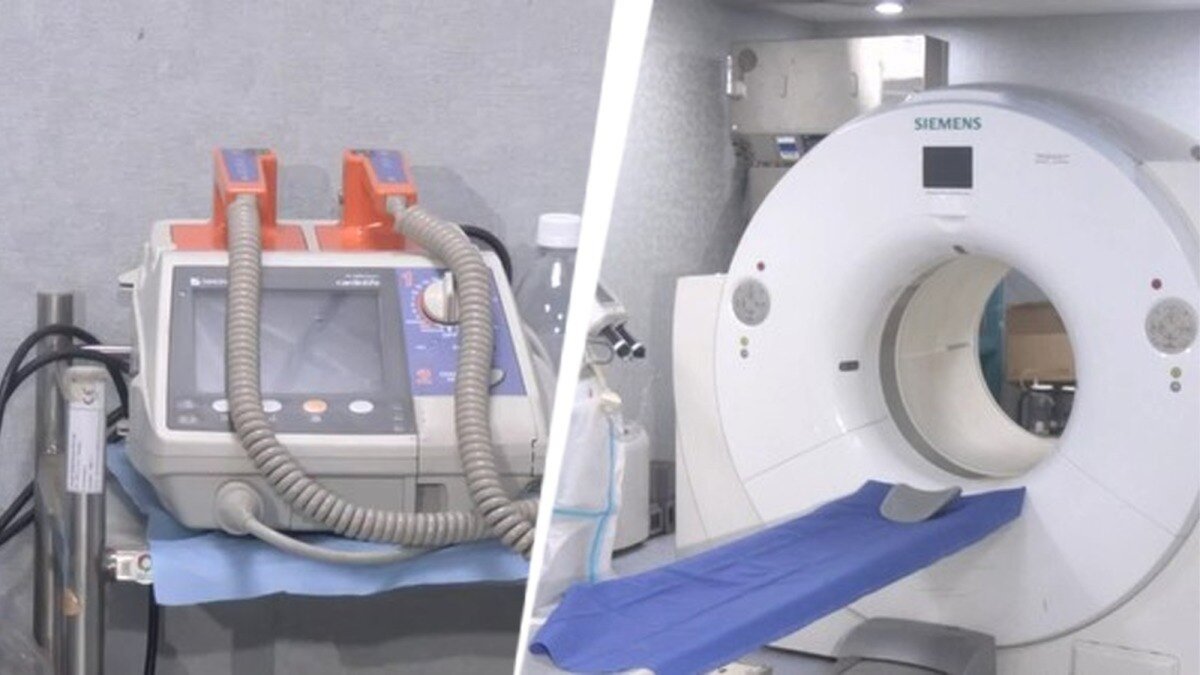
The most glaring findings come from the Delhi State Cancer Institute's Department of Nuclear Medicine. A Medical Cyclotron (PET-Trace 10), purchased in 2017 for USD 2.532 million (approximately Rs 15.42 crore at 2017 exchange rates) plus Rs 64 lakh in local supplies and Rs 2.5 crore in turnkey costs, has been shut since 2022. The cyclotron produces FDG radiopharmaceutical, a critical tracer required for PET scans used in cancer diagnosis and staging. The reason for its idleness: a lack of trained manpower to operate it.
Alongside the cyclotron, a PET Scanner with integrated CT, purchased in 2021 for USD 2.479 million plus Rs 65.38 lakh in local supplies, is only partially functional — the CT component is in use, but the PET component is awaiting NEMA testing and remains under evaluation. A Dual Head Gamma Camera with SPECT and Multi-Slice CT, purchased in 2017 for USD 1.3515 million plus Rs 26.68 lakh in local supplies, is completely unused and non-functional, also under evaluation.
The institute's Molecular Oncology Lab has 32 unused pieces of equipment, 23 of which have a recorded purchase cost totalling approximately Rs 3.75 crore. Reasons cited include non-functionality, pending repairs, discontinued equipment, and manpower shortages. A DNA/RNA Extractor worth Rs 30.90 lakh sits unused, awaiting repair directions. Even the gastroenterology department has three scopes purchased in 2014 for a combined Rs 77.01 lakh — one Upper GI Scope is in use, but another Upper GI and a Lower GI Scope are at the end of their service life and unused.
The court's order was pointed: "The unused equipment is also extremely critical and is to be used in diagnosis and treatment of cancer. The said equipment appear to be manufactured by globally well-known companies and it is unclear as to why such equipment is being permitted to lie unused after enormous investment having been made into the same."
GTB Hospital: 400 Ventilators and 910 Oxygen Concentrators Idle — Court Calls It "Quite Shocking"
At Guru Teg Bahadur (GTB) Hospital, the audit found 400 ventilators and 910 oxygen concentrators lying unused. These were procured or donated during the COVID-19 pandemic when demand was acute, but have since become excess to requirements. The court described this as "quite shocking." Even more alarming, the court noted that GTB's ECG machine was non-functional, observing that "the hospital, in all likelihood, is functioning without an ECG machine."
This pattern of pandemic-era over-procurement is repeated across the capital. Deen Dayal Upadhyay (DDU) Hospital has at least 350 unused units across departments, largely procured or indented during COVID-19 and no longer required after wards returned to normal operations. The identifiable cost of these items is approximately Rs 90.30 lakh, including 22 Astrol 150 ventilators worth Rs 12.10 lakh. The hospital says some machines are being retained for emergency and disaster requirements, but the scale suggests poor forecasting.
Lok Nayak, DDU, and the Rs 94.82 Lakh Oxygen Tank That Was Never Connected
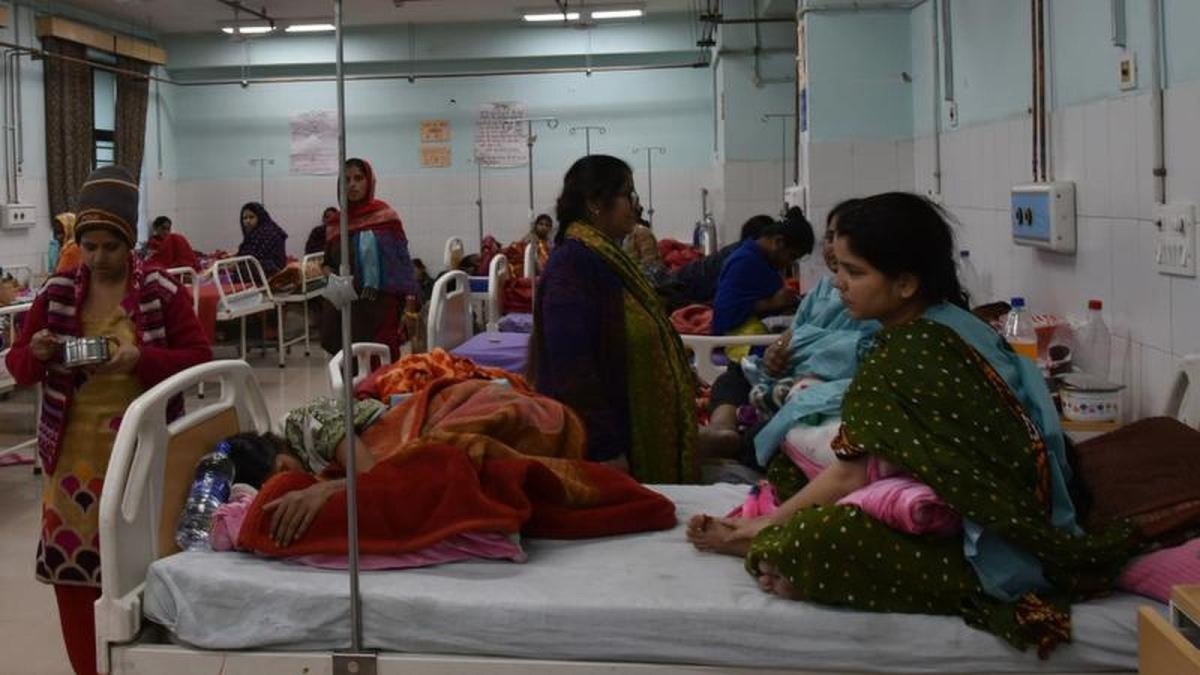
Lok Nayak Hospital (LNJP) — the very institution at the centre of the PIL after a 70-year-old woman was allegedly denied an ICU bed despite the online portal showing availability — has 44 BiPAP machines worth Rs 63.80 lakh and 34 oxygen concentrators worth Rs 16.90 lakh unused. That's 78 machines worth approximately Rs 80.70 lakh, all received during COVID-19 and kept "for use in wards as required."
At DDU Hospital, a donated oxygen buffer tank worth Rs 94.82 lakh, installed in 2021, has never been connected to the Medical Gas Pipeline System. Two eye-bank machines — a Rs 20.95-lakh specular microscope and a Rs 1.20-lakh laminar air-flow unit — have been unused since 2019. The eye bank never became operational due to non-renewal of corneal transplantation permission, lack of trained corneal specialists, the COVID-19 shutdown, and a shortage of trained ophthalmologists.
The manpower crisis extends beyond specialised equipment. Rao Tula Ram Memorial Hospital has an Ultrasound Unit/Colour Doppler worth Rs 24.93 lakh unused for four years — because no radiologist is available. BR Sur Homeopathic College has a fully functional ultrasound machine worth Rs 19.08 lakh unused for the same reason, though the hospital says it is in the process of engaging a radiologist. GNEX Delhi has an Anaesthesia Work Station procured through the Central Procurement Agency (CPA) awaiting tender documents, technical specifications, and an accessories list — it has not even been installed by the OEM. GIPMER, notably, reported no unused equipment; its one Anaesthesia Work Station indented from the IGH warehouse on May 18, 2026, is awaiting installation with technical documents and accessories pending from CPA.
What This Means for India: The Cost of Poor Asset Management in Public Health
This audit is not merely a Delhi problem; it is a symptom of a national failure in public health asset management. India's public hospitals have repeatedly faced similar scrutiny — audits in multiple states during and after the pandemic flagged CT scanners and ventilators procured in a hurry and left idle once demand subsided, a pattern the Delhi High Court is now confronting at the capital's own institutions. The Delhi findings, however, are particularly damning because they involve cancer diagnostic equipment — machines that directly impact mortality outcomes in a city that is a tertiary referral hub for North India.
For Indian taxpayers, the numbers are stark. The cyclotron alone represents Rs 15.42 crore in capital expenditure sitting idle for four years. The PET scanner, gamma camera and molecular oncology lab equipment add further crores on top of that single machine. When GTB's 400 ventilators and 910 oxygen concentrators are added, along with DDU's 350 units and LNJP's 78 machines, the total easily crosses the Rs 50-60 crore figure the court cited. This is money that could have funded tens of thousands of Ayushman Bharat treatments, equipped dozens of primary health centres in underserved districts, or hired the biomedical engineers and technicians whose absence is the very reason these machines sit idle.
The root cause is a governance gap between procurement and operations. India's public health system has historically under-invested in biomedical engineering capacity. The National Medical Commission's staffing norms focus on doctors and nurses, but say little about the biomedical engineers, radiologists, and nuclear medicine technologists required to operate advanced equipment. The result: machines purchased with great fanfare become expensive museum pieces.

Court Directives and the Political Response: A Test for Delhi's Governance
The High Court has directed the Secretaries of Health and Family Welfare and Services departments to hold meetings with Medical Superintendents and Directors of all 26 hospitals to "examine the issue hospital-wise." Specific directives include ensuring adequate manpower to operate equipment, shifting unused machines to hospitals where they are needed, providing necessary equipment and accessories without delay, considering technical manpower requirements, removing condemned equipment, reallocating unused equipment, filling vacancies, and procuring missing accessories.
The court has also sought clarity on a common emergency helpline. The Delhi government has approved the existing toll-free infrastructure of the Centralised Accident & Trauma Services (CATS) as the common helpline for emergency services, ICU bed availability, and hospital speciality information. However, the court is unclear which CATS number would be used and whether operators would have access to relevant ICU and speciality information. This follows the court's earlier decision to order surprise audits across 38 Delhi government hospitals after the LNJP ICU bed denial incident.
Delhi Health Minister Dr Pankaj Singh has blamed the previous Aam Aadmi Party government for purchasing expensive machines without ensuring operational readiness. He stated that the present government is examining the matter and making efforts to put usable equipment into service per the High Court's directions. Singh also revealed that Delhi government hospitals face a staff shortage of around 21%, with recruitment undertaken since the present government took office. He cited a 2024 Anti-Corruption Branch case claiming probe findings of irregularities, with approximately 15 companies blacklisted and a committee examining the matter. The government is also working on a public-private partnership model for CT scans, MRI, and ultrasound services round the clock.
The Bottom Line: From Procurement to Utilisation — A Policy Imperative
The Delhi High Court's audit has laid bare a fundamental flaw in India's health infrastructure strategy: procurement without a utilisation plan. The court's next hearing is scheduled for September 18, 2026, and the government has been given clear directives. But the deeper lesson for India is that capital expenditure in healthcare must be tied to human resource planning, maintenance contracts, and asset management systems. The Rs 50-60 crore of idle equipment in Delhi is not just a financial loss — it represents delayed cancer diagnoses, untreated patients, and a public health system that fails its citizens despite spending crores. As India pushes forward with Ayushman Bharat and the expansion of tertiary care, the Delhi High Court's intervention should serve as a national wake-up call: equipment that is not used is not healthcare — it is waste.
— By Dr. Raj Patel, Staff Writer
This article was produced with AI-assisted research and editorial support. Reporting is based on sources cited in the article.
What's Your Reaction?
 Like
0
Like
0
 Dislike
0
Dislike
0
 Love
0
Love
0
 Funny
0
Funny
0
 Wow
0
Wow
0
 Sad
0
Sad
0
 Angry
0
Angry
0

India/South Asia Correspondent at Global1.News. Analytical voice with a background in science and health journalism. Based in New Delhi, covering Indian politics, education, healthcare, technology, and policy. Breaks down complex data into clear, actionable reporting.













Comments (0)