
Delhi High Court Junks 2015 Maggi Noodles Cases Over Alleged Excess Lead Content
Eleven years after a single state laboratory report triggered a nationwide ban that emptied Maggi noodle packets from millions of Indian kitchens, the Delhi High Court has thrown out the criminal prosecutions built on those findings — ruling that the scientific foundation of the case had "substantially eroded" beyond repair.
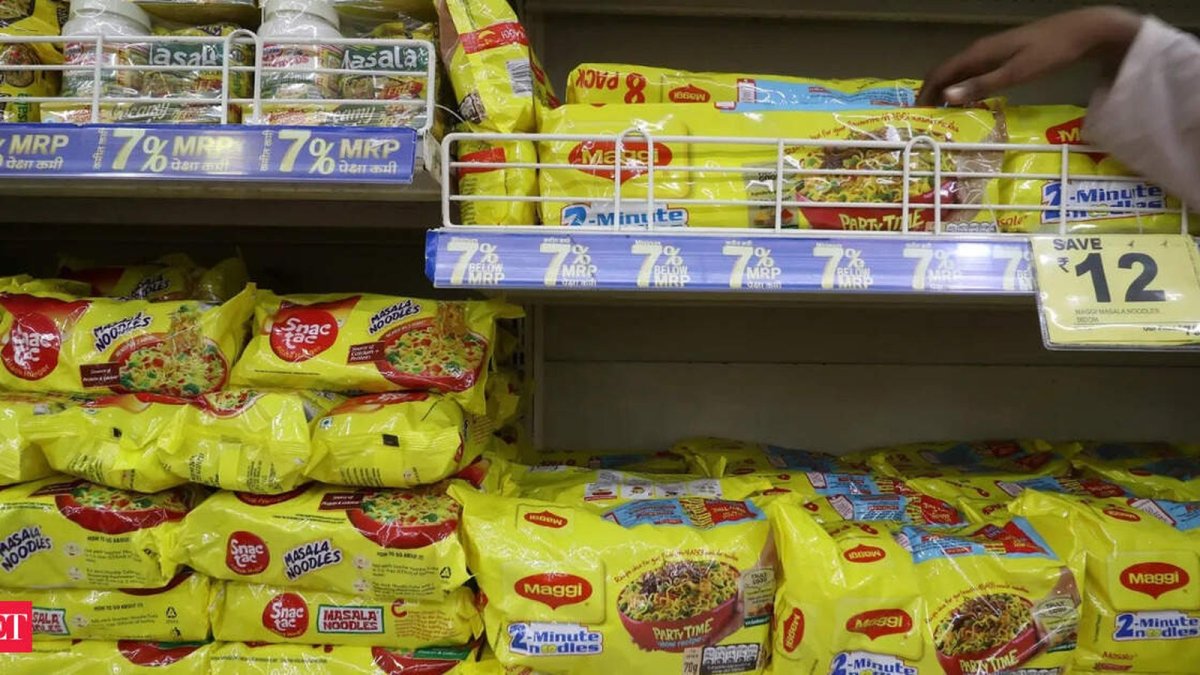
Eleven years after a single state laboratory report triggered a nationwide ban that emptied Maggi noodle packets from millions of Indian kitchens, the Delhi High Court has thrown out the criminal prosecutions built on those findings — ruling that the scientific foundation of the case had "substantially eroded" beyond repair. The judgment, delivered by Justice Madhu Jain, quashes two criminal complaints filed by Delhi's Food Safety Department along with the trial court summoning orders of November 6, 2015 and January 11, 2016, and all consequential proceedings arising from the 2015 lead-in-Maggi controversy.
Delhi High Court Quashes Maggi Lead Criminal Cases
New Delhi, August 10, 2026 — The Delhi High Court on Monday invoked its inherent powers under Section 482 of the Code of Criminal Procedure to quash two criminal complaints against Dharmendra Hansraj Kotak and others, holding that continuing the prosecutions would compel the petitioners to undergo a "protracted criminal trial" when the very basis of the allegations had evaporated through scientifically accredited re-testing.
A Prosecution Built on a Faulty Foundation
The complaints originated from samples of Maggi instant noodles collected by Delhi's Food Safety Department in May 2015, during a nationwide sampling exercise ordered by the Food Safety and Standards Authority of India (FSSAI) at the height of the controversy. A Food Analyst had reported that lead content in the masala tastemaker exceeded the prescribed limit of 2.5 parts per million (ppm), and one complaint additionally alleged misbranding over the "No Added MSG" declaration. Both complaints accused the petitioners of violations under the Food Safety and Standards Act, 2006.
But as the Court observed: "The continuation of the complaints would merely compel the petitioners to undergo a protracted criminal trial despite the very foundation of the prosecution having substantially eroded." That erosion was not a matter of opinion — it was the product of a sequence of judicial and scientific determinations that followed.
From a UP Lab Report to a Nationwide Ban
The 2015 scare began when a Uttar Pradesh food laboratory alleged lead content of up to 17.2 ppm in Maggi samples — nearly seven times the statutory limit of 2.5 ppm. On June 5, 2015, FSSAI banned all variants of Maggi, branding the product "unsafe and hazardous for human consumption." Nestle India responded by recalling an estimated 38,000 tonnes of noodles from retail shelves across the country, at an estimated cost of Rs 450 crore.
Nestle's Maggi commanded roughly 70–80 percent of the organised instant-noodles market before the ban, with annual sales of approximately Rs 2,000 crore — a near-monopoly built over three decades. When the nationwide prohibition landed, that dominance evaporated within weeks. Competitors moved with unseemly haste: CG Foods' Top Ramen and ITC's Yippee rushed to scale up production and capture shelf space, while Patanjali later entered the fray with a distinctly 'desi' positioning. The recall proved a logistical nightmare in India's fragmented retail universe, where millions of kirana stores vastly outnumber modern trade outlets and few kept purchase records. The panic was amplified by a 24x7 news cycle and social media, where alarming headlines about 'lead in Maggi' circulated without nuance about dose or exposure.
The tide turned on August 13, 2015, when the Bombay High Court set aside the nationwide ban, holding that the laboratories whose results formed the basis of FSSAI's action did not meet statutory requirements under the Food Safety and Standards Act — they had to be both NABL-accredited and notified under Section 43 of the Act. The UP laboratory's findings, it emerged, were unreliable. Although the ban was lifted and the brand relaunched in November 2015, Maggi returned to a permanently altered battlefield: its dominance had been dented, Yippee had established itself as a credible number two, and the entire category had been reshaped by fear.
CFTRI and the Supreme Court's Scientific Re-Evaluation
Into this breach stepped the Supreme Court, which directed fresh testing of Maggi samples by accredited laboratories, followed by verification at the CSIR-Central Food Technological Research Institute (CFTRI) in Mysuru, a notified Referral Food Laboratory under the statutory framework. Those tests found lead content to be well within permissible limits.
The significance of the CFTRI protocol cannot be overstated: it created a constitutionally supervised chain of scientific verification that superseded the original, flawed analysis. Consumer proceedings filed before the National Consumer Disputes Redressal Commission (NCDRC) by the Union of India were subsequently dismissed after the Commission considered the CFTRI reports.
The public-health meaning of the 2.5 ppm lead threshold bears careful examination. Lead is a cumulative neurotoxin with no safe level of exposure; the FAO/WHO Codex Alimentarius sets lead limits for cereal-based products generally in the range of 0.1–0.2 ppm, far stricter than India's transitional 2.5 ppm standard. In children, even modest elevations can impair neurodevelopment, and because lead's half-life in blood is roughly 30 days while its half-life in bone spans decades, contamination silently accumulates. This is precisely why laboratory reliability matters. NABL accreditation assures that a laboratory's methods are validated, instruments calibrated, and analysts competent — a precondition for any result grounding a criminal prosecution. Under Section 43 of the FSS Act, FSSAI notifies referral laboratories, giving their findings decisive evidentiary weight. By directing fresh tests to CFTRI, the Supreme Court anchored the dispute in an institution with both scientific and statutory authority. CFTRI's corroborative use of atomic absorption spectrometry and ICP-MS analysis vindicated Nestle's position, underscoring that sound science, not alarm, must drive food-safety enforcement.
Why the State's Resistance Failed
The State of Delhi fought the petitions, arguing that the complaints had been filed after following prescribed statutory procedure and that the petitioners had failed to exercise their right to seek referral analysis of the samples at the relevant time. It was a technical argument, and Justice Madhu Jain rejected it.
The Court held that while criminal proceedings ordinarily continue on their own footing, the High Court could not ignore subsequent scientific findings and judicial developments under Section 482 CrPC where the very scientific foundation of the prosecution had been revisited through a constitutionally supervised process. The judgment, recorded as 2026 LiveLaw (Del) 733, also drew on recent decisions by the Himachal Pradesh High Court and the Uttarakhand High Court, both of which had quashed similar criminal proceedings from the same Maggi controversy, relying on the CFTRI reports and the Supreme Court's directions.
Lessons for India's Food Safety Architecture
For food regulators, this ruling is a watershed. The statutory framework of the FSS Act — with its distinction between primary laboratories, NABL-accredited facilities, and Section 43 notified Referral Food Laboratories — exists precisely to ensure that enforcement action flows from verifiable, standardised science, not from a single contested report. The Maggi episode forced a structural overhaul of India's food-testing infrastructure. In 2015, the country had roughly 72 NABL-accredited food laboratories; FSSAI's Integrated Food Laboratory network now links state, referral, and private accredited facilities into a single reporting framework. The 2017 Food Safety and Standards (Laboratory and Sampling Analysis) Regulations tightened protocols for sample handling, chain of custody, and timely reporting — direct responses to the evidentiary chaos in which one state-lab result triggered a nationwide ban. FSSAI also intensified surveillance, expanding annual sample testing from about 60,000 in the pre-2015 era to more than 100,000 in recent years, with sharper focus on lead, aflatoxins, and pesticide residues.
For the food industry, the message is equally clear — regulatory risk can be managed when the underlying science is sound, but commercial and reputational damage may not be recoverable. For consumers, the ruling restores a measure of confidence in the regulatory process: the system, however imperfectly, did self-correct through judicial oversight and independent scientific verification. Maggi, which has commanded the instant-noodles market since its 1983 launch in India, re-entered shelves in November 2015, but it took eleven more years for the last criminal shadow of the controversy to be lifted.
The deeper legacy, however, is the 'food safety vs food fear' debate. The episode taught consumers that labels can mislead, but it also taught regulators that a single flawed test can destroy brand value worth thousands of crores. Criminal prosecution in food matters must rest on evidence that survives rigorous scrutiny. The Delhi High Court's invocation of Section 482 of the CrPC — the abuse-of-process doctrine — affirms a cardinal principle: where a competent authority like CFTRI has exculpated a product, continuing to prosecute its makers on the basis of a discredited report is not merely unfair; it abuses the court's process. That emerging jurisprudence, buttressed by institutional reform, may prove more durable than any single brand's fortunes.
The Bottom Line
Eleven years after a single discredited report triggered a nationwide ban, the criminal case is over, and Nestle has been spared a trial for conduct the science no longer supports. India's food-safety architecture, rebuilt around more than 200 accredited laboratories and tighter sampling protocols, is measurably stronger than the system that failed in 2015.
— By Dr. Raj Patel, Staff Writer
This article was produced with AI-assisted research and editorial support. Reporting is based on sources cited in the article.
What's Your Reaction?
 Like
0
Like
0
 Dislike
0
Dislike
0
 Love
0
Love
0
 Funny
0
Funny
0
 Wow
0
Wow
0
 Sad
0
Sad
0
 Angry
0
Angry
0

India/South Asia Correspondent at Global1.News. Analytical voice with a background in science and health journalism. Based in New Delhi, covering Indian politics, education, healthcare, technology, and policy. Breaks down complex data into clear, actionable reporting.















Comments (0)