
Danube's Record Lows Force Historic Shutdown of Hungary's Paks Nuclear Plant
For the first time in its 44-year history, Hungary's only nuclear power plant is going dark — not because of politics or war, but because the Danube River has simply run out of water to cool it. The record-shattering collapse of Europe's second-longest river has forced the Paks plant to zero output in the middle of a heatwave pushing past 40 degrees Celsius, and the warning echoes far beyond Budapest: energy systems built on water are colliding with a climate that no longer guarantees it.
For the first time in its 44-year history, Hungary's only nuclear power plant is going dark — not because of politics or war, but because the Danube River has simply run out of water to cool it. The record-shattering collapse of Europe's second-longest river has forced the Paks plant to zero output in the middle of a heatwave pushing past 40 degrees Celsius, and the warning echoes far beyond Budapest: energy systems built on water are colliding with a climate that no longer guarantees it.
Danube's Record Lows Force Historic Shutdown of Hungary's Paks Nuclear Plant
Budapest, Hungary – August 3, 2026 — Hungary's Soviet-designed Paks nuclear station, the backbone of the national grid, has powered down completely as record-low Danube water levels make reactor cooling impossible. Prime Minister Péter Magyar ordered the first full shutdown in the plant's history on Sunday, triggering a grid emergency, emergency power imports, and an appeal for citizens to slash electricity use during evening peak hours — a climate-driven energy crisis that experts warn could cost the economy more than $600 million and offers Latin America a stark preview of its own water-dependent power systems.

A Nuclear First: Paks Goes Dark
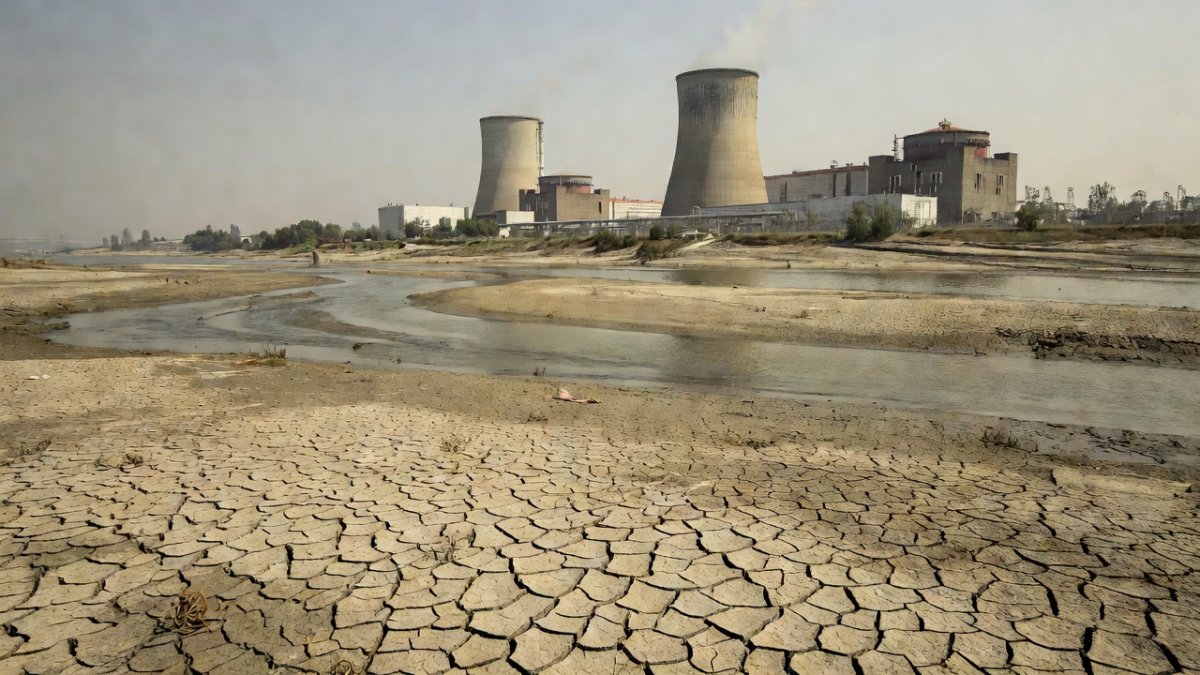
Hungary’s sole nuclear facility, the Soviet-designed Paks plant with its four VVER-440 reactors, has powered down completely for the first time in its 44-year history. Located south of Budapest along the Danube, the station normally delivers roughly 2,000 megawatts and meets nearly 40 percent of national electricity demand. On Friday its output already slipped to 965 megawatts; overnight it fell further to 240 megawatts before reaching zero on Sunday, August 2, 2026. Prime Minister Péter Magyar ordered the full shutdown after the river level at the plant reached minus 134 centimeters, well below the threshold needed for safe once-through cooling. The previous record low stood at minus 98 centimeters in 2018, and levels are now forecast to drop to minus 144 centimeters if dry conditions persist. The plant draws Danube water directly to keep reactor cores within safe temperature limits; without adequate flow, operators had no choice but to halt generation. A Defense Working Group has been activated for emergency coordination, and the outage could stretch for weeks unless river levels recover quickly. This unprecedented closure underscores how tightly nuclear reliability is now tied to hydrological conditions that climate change is rapidly altering.
The Danube's Record Collapse
The Danube, Europe’s second-longest river, has reached historic lows across multiple gauges. At Budapest the reading hit 23 centimeters, nine inches, eclipsing the 2018 all-time low of 33 centimeters. At Paks the level stands at minus 134 centimeters and is expected to fall further. A 90-day rainfall deficit of 80 to 130 millimeters blankets Hungary, with some basin areas recording precipitation up to 83 percent below long-term averages. More than 100 Hungarian cities and villages now operate under water-use restrictions, while major industrial users have been asked to cut consumption voluntarily. Shipping has been crippled: Budapest cruise vessels remain docked upriver, sightseeing tours cancelled. The receding waters have exposed sunken Nazi-era warships and even a woolly mammoth skeleton. Parallel crises grip neighboring basins; the Rhine at Cologne sits 68 centimeters below its 2018 record, while the Loire and Elbe also run unusually low. Downstream, Serbia and Romania’s Iron Gates hydropower plant operates at roughly 20 percent of normal capacity, forcing Serbia to curtail output at two additional hydroelectric stations. These synchronized low flows reveal a continental-scale drought that no single country can manage alone.
Heatwave, Grid Emergency, and the $600 Million Bill
Forecasters warn of temperatures exceeding 40 degrees Celsius, with peaks near 42 degrees and record-warm nights ahead. Peak-hour demand could surge 20 percent from air-conditioning loads alone. Hungary has declared a grid emergency, activated backup generation, and urged citizens to slash use between 17:00 and 22:00 while halting lawn watering, car washing, and pool filling. Experts estimate power disruptions could cost the economy more than $600 million through lost agricultural output, industrial slowdowns, and higher energy import bills. One parliamentary assessment projects extra electricity import costs ranging from €220 million to €547 million for August alone. Europe has already endured successive heatwaves since May 2026, the most severe striking in June and triggering more than €2 billion in EU grain losses with a forecast cut of nearly 9 million tonnes; France and Hungary rank among the hardest hit. Slovakia’s Prime Minister Robert Fico stated his country is closely monitoring the situation and stands ready to assist. France has previously idled reactors during heatwaves to protect river ecosystems, illustrating the same physical constraints now confronting Paks.
What This Means for Latin America
Latin American grids depend on hydropower for 60 to 70 percent or more of generation in Brazil, Argentina, and Colombia. Drought therefore slashes supply precisely when heatwaves drive demand higher, creating the same mismatch now visible in Hungary. Brazil’s Angra 1 and 2 nuclear units at Angra dos Reis draw seawater for cooling and therefore remain relatively resilient to freshwater shortages; together they supply about 40 percent of Rio de Janeiro state’s power, though only 3 percent nationally, with Angra 3 revival targeted for late 2026. Argentina’s Atucha I, operating since 1968 at 357 megawatts, and Atucha II at 693 megawatts both draw cooling water from the Paraná de las Palmas river, leaving them directly exposed to low-flow risks identical to those that forced Paks offline. Ecuador endured widespread blackouts in 2024 after drought drained hydro reservoirs; Colombia has faced repeated reservoir crises; Brazil’s 2001 energy emergency imposed nationwide rationing. A strong El Niño is forecast for 2026, promising floods in some southern basins and intensified drought elsewhere. The lesson is clear: any energy system built on river or reservoir water, whether hydro dams or river-cooled thermal plants, faces mounting climate vulnerability. Diversification, storage, and aggressive demand management become essential resilience tools for the region.
The Climate Science Connection
World Weather Attribution scientists have linked the unprecedented temperatures to human-caused climate change. Warmer air holds more moisture according to the Clausius-Clapeyron relation, accelerating soil drying and evaporation even when rainfall totals remain near average. Long-term decline in Alpine glacier melt that normally sustains summer Danube flows compounds the problem. Nuclear plants require steady river volumes both for once-through cooling and to keep discharge temperatures within environmental limits; when those volumes disappear, reactors must shut down regardless of fuel availability. The same physics applies across Latin America’s river-cooled facilities and hydro-dependent grids. Successive heatwaves since May 2026 have already demonstrated how quickly the margin between supply and demand narrows under extreme conditions. Without rapid investment in diversified generation, flexible storage, and regional interconnection, the continent risks repeating Hungary’s sudden loss of baseload capacity at the worst possible moment. The Paks closure is not an isolated European event but a preview of the water-energy collisions that will intensify wherever cooling and generation remain tethered to increasingly erratic river systems.
Voices from the Ground
Prime Minister Péter Magyar’s activation of the Defense Working Group signals the gravity Hungarian authorities attach to the crisis. Citizens in more than 100 municipalities now face formal water restrictions while industrial users negotiate voluntary cuts. Downstream, Serbia’s reduced hydroelectric output directly affects regional supply, prompting Prime Minister Robert Fico to confirm Slovakia’s readiness to provide support. In Latin America, memories of Ecuador’s 2024 blackouts and Brazil’s 2001 rationing remain vivid among utility operators and rural communities that lost irrigation and refrigeration capacity. Argentine engineers at Atucha monitor Paraná levels daily, aware that any further drop could force output reductions similar to Paks. Brazilian planners at Angra dos Reis note their seawater advantage yet still track regional drought patterns because transmission constraints can isolate even resilient plants. These ground-level experiences reveal a shared vulnerability: when rivers fail, entire economies feel the shock through lost production, higher import bills, and disrupted daily life. The human cost is measured not only in megawatts but in farms without power for pumps and families without reliable cooling during lethal heat.
The Bottom Line — What Comes Next
The Paks shutdown demonstrates that nuclear reliability, like hydropower, now depends on stable water supplies threatened by climate-driven extremes. If Danube levels do not recover, the plant may remain offline for weeks, forcing continued reliance on costly imports and demand restrictions. Latin American nations face parallel risks at river-cooled stations such as Atucha and at hydro-heavy grids already tested by El Niño variability. The path forward requires accelerated diversification into wind, solar, and battery storage, stronger regional interconnections, and binding demand-management protocols that protect the most vulnerable users. Hungary’s $600 million exposure and Europe’s €2 billion grain losses illustrate the economic stakes; Latin America’s larger hydro share magnifies those stakes further. Policymakers must treat water availability as a core planning parameter rather than an afterthought. The Danube’s record lows and Paks’s historic closure deliver a clear warning: energy systems built on water will face repeated crises unless resilience measures match the speed of climatic change. By Elena Vasquez, Staff Writer
This article was produced with AI-assisted research and editorial support. Reporting is based on sources cited in the article.
What's Your Reaction?
 Like
0
Like
0
 Dislike
0
Dislike
0
 Love
0
Love
0
 Funny
0
Funny
0
 Wow
0
Wow
0
 Sad
0
Sad
0
 Angry
0
Angry
0

Latin America Correspondent at Global1.News. Based in Mexico City, covering politics, economics, energy, and culture across the region. Brings an on-the-ground perspective to stories spanning from the Rio Grande to Patagonia.















Comments (0)