
Colombia Recognizes Israeli Sovereignty Over Golan Heights, Joining US in Historic Diplomatic Shift
In a recent i24NEWS English report, the diplomatic world witnessed a seismic shift as Colombia became only the second country after the United States to formally recognize Israeli sovereignty over the Golan Heights. The announcement, made on Monday by Colombia's newly inaugurated far-right President Abelardo de la Espriella, has sent shockwaves through the Middle East, drawing immediate praise from Jerusalem and fierce condemnation from Damascus and Riyadh.
In a recent i24NEWS English report, the diplomatic world witnessed a seismic shift as Colombia became only the second country after the United States to formally recognize Israeli sovereignty over the Golan Heights. The announcement, made on Monday by Colombia's newly inaugurated far-right President Abelardo de la Espriella, has sent shockwaves through the Middle East, drawing immediate praise from Jerusalem and fierce condemnation from Damascus and Riyadh. This move marks a dramatic reversal of Colombia's previous policy under leftist President Gustavo Petro and signals a broader realignment of Latin American politics toward Israel.
Colombia Recognizes Israeli Sovereignty Over Golan Heights, Joining US in Historic Diplomatic Shift
Jerusalem, Israel – this week — In a landmark diplomatic development, Colombia's new government has officially recognized Israeli sovereignty over the Golan Heights, making it only the second nation after the United States to do so. The announcement came just three days after President Abelardo de la Espriella was inaugurated in Cali on August 7, signaling his administration's immediate and decisive break from the policies of his predecessor. Israeli Prime Minister Benjamin Netanyahu welcomed the move in a video posted on X on Tuesday, invoking a nostalgic slogan from the 1990s: "The people are with the Golan." Pointing to a map of the strategic plateau, Netanyahu declared, "The Israeli flag flies here and will continue to fly here, because this is our land."
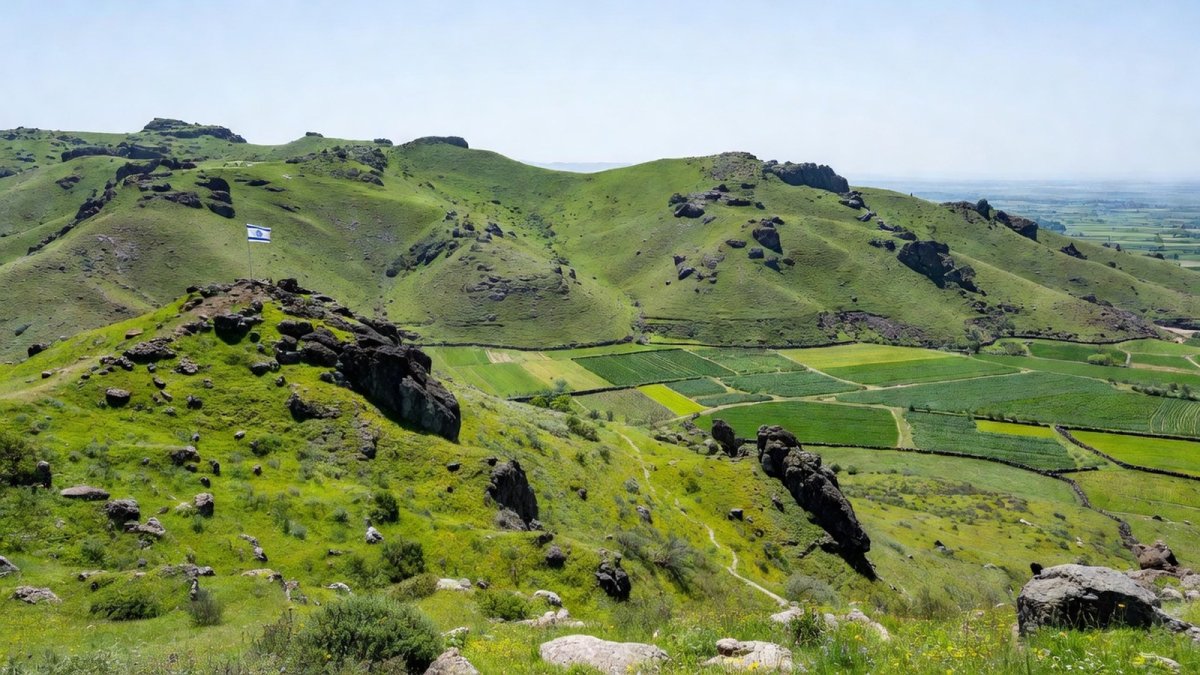
Colombia's Historic Step
The Colombian Foreign Ministry issued a statement on X on Monday, August 10, declaring: "The Government of Colombia recognises Israeli sovereignty over this territory, as well as that State's right to protect itself against external threats." The statement further emphasized that "Colombia recognises that maintaining Israel's control and sovereignty over the Golan Heights is an essential component of its national defence." This formal recognition represents a complete reversal of the stance taken by the previous administration of Gustavo Petro, who had severed diplomatic relations with Israel in 2024, withdrawn Colombia's ambassador, and halted coal exports to the Jewish state.
The timing of the announcement is particularly striking, coming only hours after a powerful magnitude-7.4 earthquake struck western Colombia on Monday, killing at least 132 people, according to Colombian authorities, and injuring hundreds more. While Israel offered assistance to Colombian authorities following the disaster, Netanyahu made no mention of the earthquake in his video addressing the Golan Heights, focusing entirely on the diplomatic achievement.
Netanyahu's Response
Prime Minister Netanyahu's video response on Tuesday was characteristically emphatic, using the iconic slogan "The people are with the Golan" — a phrase that harkens back to Israeli domestic debates in the 1990s about the future of the territory. The Prime Minister's Office in Jerusalem has long maintained that the Golan Heights is an integral part of Israel's historic homeland, a position now bolstered by Colombia's recognition. Netanyahu's message was clearly aimed not only at the Israeli public but also at the international community, signaling that Israel intends to press forward in seeking additional recognitions from other nations.
The video, which was widely circulated on social media, showed Netanyahu pointing to a map of the strategic plateau, emphasizing the territory's importance to Israel's national security. The Golan Heights, which overlooks the Sea of Galilee and northern Israel, has been described by Israeli officials as essential for the country's defense against threats from Syria and Iran-backed militias operating in the region.
The New President's Reversal
Abelardo de la Espriella, a US-backed millionaire lawyer, ran a bombastic campaign promising close relations with the United States and Israel as a way to combat armed groups in Colombia. His election represents a significant shift in Latin American politics, where several nations have recently moved toward more pro-Israel positions. De la Espriella has pledged to restore close diplomatic ties with Jerusalem and has announced his intention to move Colombia's embassy to the Israeli capital, a move that would align Colombia with the United States and a handful of other nations that have established their embassies in Jerusalem.
Israeli Foreign Minister Gideon Sa'ar thanked his "good friend" de la Espriella for the "historic" recognition, revealing that the pair had agreed on the move in the Colombian city of Barranquilla a day before the inauguration ceremony. Sa'ar also expressed gratitude to Colombia's Foreign Minister Omar Bula Escobar. In his remarks, Sa'ar emphasized Israel's strategic vulnerability: "Israel is a small country without strategic depth. Having defensible borders is essential for Israel in order to guarantee the existence of the Jewish people in its historic homeland." Sa'ar, who attended de la Espriella's inauguration ceremony, pledged to continue working so that more countries join the United States and Colombia in recognizing Israeli sovereignty over the Golan.
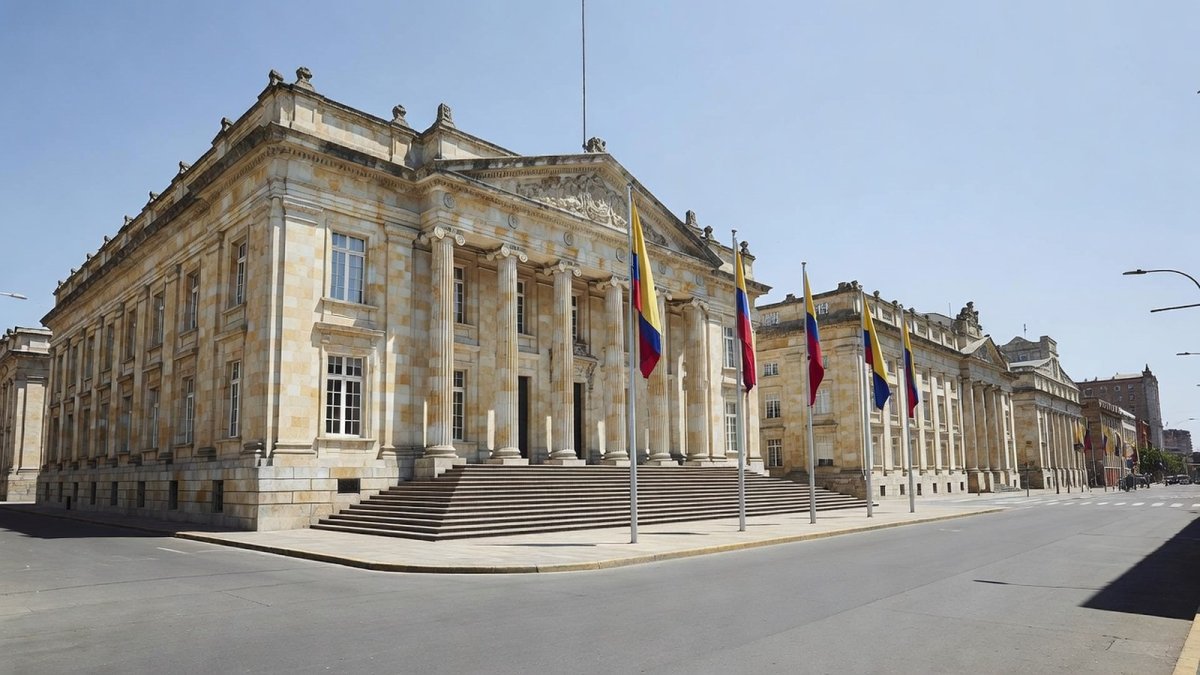
Condemnation from Damascus and Riyadh
As expected, the recognition drew immediate and sharp condemnation from Syria and its regional allies. Syria's foreign ministry said on Tuesday it "categorically rejects and condemns" Colombia's recognition, insisting that the Golan "is an inseparable part of Syrian territory." Saudi Arabia echoed this sentiment, stating that Colombia's position "contradicts international law and relevant international legitimacy resolutions" and asserting that the Golan "is occupied Syrian Arab land." Qatar also joined the chorus of condemnation, reflecting the unified Arab stance on the issue.
The United Nations continues to recognize the Golan Heights as part of Syria, and last month UN Secretary-General Antonio Guterres reiterated that stance, describing Israeli occupation of the territory as "totally unacceptable." The international consensus, which has held since Israel captured the Golan from Syria in the 1967 Six-Day War and annexed it in 1981, remains largely intact despite the US recognition in 2019 during President Donald Trump's first term.
Regional Context: A Shifting Latin America
Colombia's recognition of Israeli sovereignty over the Golan Heights must be understood within the broader context of a shifting political landscape in Latin America. De la Espriella's election is part of a wave of pro-Israel candidates who have taken power across the region in recent years. Bolivia resumed cordial relations with Israel after conservative President Rodrigo Paz took office in 2025, reversing the policies of his leftist predecessor. Chile's Jose Antonio Kast, a vocal Israel supporter, took power in March 2026, further consolidating the trend. Argentina's President Javier Milei has been perhaps the most outspoken, declaring that "If Israel falls, all of the West is next."
This realignment represents a significant diplomatic victory for Israel, which has long sought to expand its influence in Latin America as a counterweight to the Palestinian diplomatic offensive in international forums. The reversal of Gustavo Petro's policies is particularly notable, as Petro had co-founded and co-chaired the Hague Group, an organization of countries working to hold Israel to account under international law. Petro had also planned to open a Palestinian embassy in Ramallah — a plan that de la Espriella has now cancelled.
What This Means for Israel and the Region
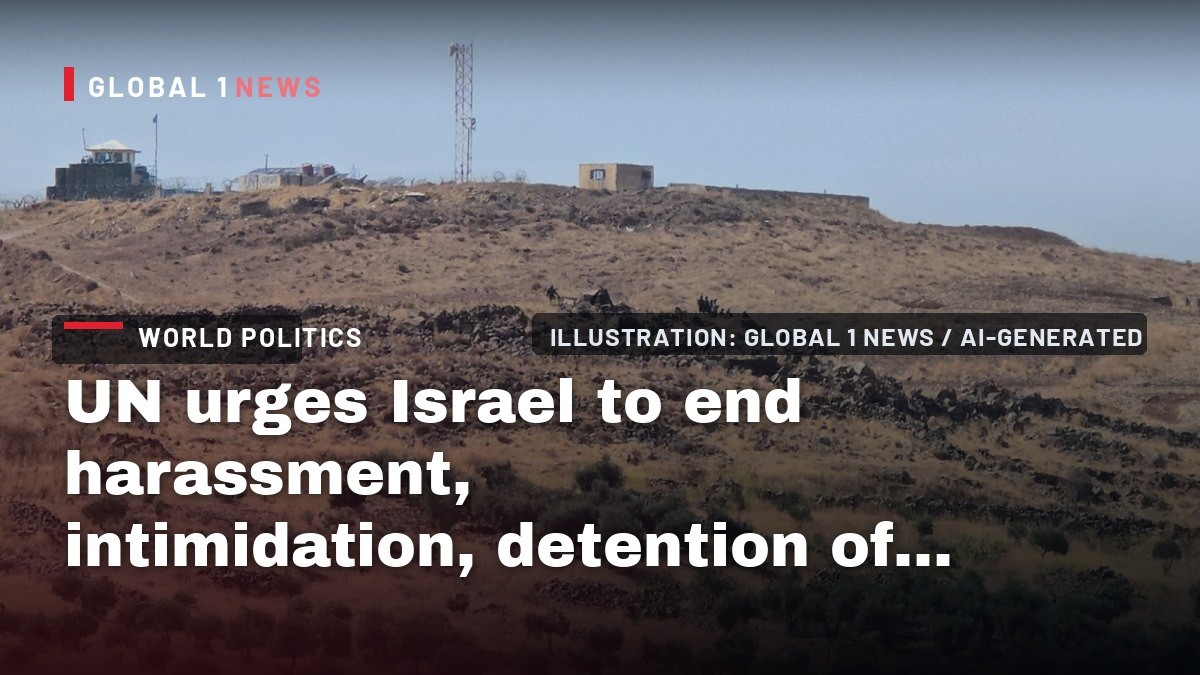
The strategic significance of Colombia's recognition extends far beyond diplomatic symbolism. The Golan Heights has become increasingly important to Israel's security calculus following the collapse of Bashar al-Assad's government in December 2024. Israel has moved troops into a UN-monitored buffer zone and seized strategic territories, including the Syrian side of Jabal al-Sheikh (Mount Hermon), which overlooks Damascus. The collapse of the Assad regime has created a security vacuum that Israel has moved to fill, and the Golan Heights serves as a critical vantage point for monitoring threats from Syria and beyond.
For Israeli policymakers, Colombia's recognition provides a template for future diplomatic efforts. Foreign Minister Sa'ar has made clear that Israel will continue to press other nations to follow the US and Colombian example, arguing that the Golan Heights is essential for Israel's survival. The recognition also sends a message to other countries in Latin America and beyond that aligning with Israel on territorial issues can yield diplomatic and economic benefits.
However, the move also carries risks. It could further strain Israel's relations with Arab nations that have normalized ties in recent years, such as Saudi Arabia, which has been considering a normalization agreement with Israel. The Saudi condemnation of Colombia's recognition suggests that Riyadh remains sensitive to any moves that could be perceived as legitimizing Israeli territorial expansion. For Israel, the challenge will be to balance its pursuit of additional recognitions with the need to maintain and expand the Abraham Accords and other regional normalization efforts.
As the dust settles on this diplomatic earthquake, one thing is clear: Israel's campaign to gain international recognition for its sovereignty over the Golan Heights has gained significant momentum. With Colombia now on board, Israeli officials are likely to intensify their efforts in Africa, Asia, and other parts of Latin America. The coming months will reveal whether Colombia's recognition is an isolated event or the beginning of a broader shift in international opinion on one of the Middle East's most contested territories. For now, Netanyahu and his government can celebrate a significant diplomatic victory, even as the region braces for the consequences.
By Hannah Berg, Staff Writer
This article was produced with AI-assisted research and editorial support. Reporting is based on sources cited in the article.
What's Your Reaction?
 Like
0
Like
0
 Dislike
0
Dislike
0
 Love
0
Love
0
 Funny
0
Funny
0
 Wow
0
Wow
0
 Sad
0
Sad
0
 Angry
0
Angry
0

Israel Correspondent at Global1.News. Based in Tel Aviv, covering Israeli politics, security, technology, and society. Provides balanced, deeply-sourced reporting on one of the most closely-watched regions in the world.













Comments (0)