
Mount Bromo in Flames: El Nino Wildfires Push Indonesia to the Brink
The acrid smell of burning vegetation now drifts across the caldera of one of Indonesia’s most iconic volcanoes, a stark reminder that the 2026 El Niño has arrived with a vengeance.
The acrid smell of burning vegetation now drifts across the caldera of one of Indonesia’s most iconic volcanoes, a stark reminder that the 2026 El Niño has arrived with a vengeance. What began as a small brushfire on August 3rd within the Bromo Tengger Semeru National Park has exploded into a conflagration that has scorched nearly a thousand hectares of protected land, forced an indefinite closure of the tourist site, and placed East Java on the front line of a national climate emergency. As firefighters battle stubborn hotspots and authorities deploy every available resource, the crisis at Mount Bromo is not an isolated incident but a harbinger of a broader, more dangerous dry season that is gripping the archipelago and echoing across the globe.
Mount Bromo in Flames: El Nino Wildfires Push Indonesia to the Brink
Jakarta, Indonesia – August 11, 2026 — The iconic silhouette of Mount Bromo, usually a backdrop for sunrise-seeking tourists, is now obscured by a haze of smoke and ash. The wildfire that ignited on August 3rd has consumed approximately 900 hectares (2,200 acres) of the Bromo Tengger Semeru National Park, a figure that represents a dramatic escalation from the 743 hectares (1,836 acres) reported just a day earlier. While officials state the blaze is now "mostly under control," with active burning reduced to roughly 2 hectares (5 acres), the damage is extensive, and the park remains closed to visitors indefinitely. The closure, announced by park operators on Instagram, was framed as "a crucial step to maintain the safety of visitors, staff and people in the surrounding areas," a necessary measure as 150 personnel continue to work on Tuesday, August 11, to extinguish lingering embers and prevent flare-ups.
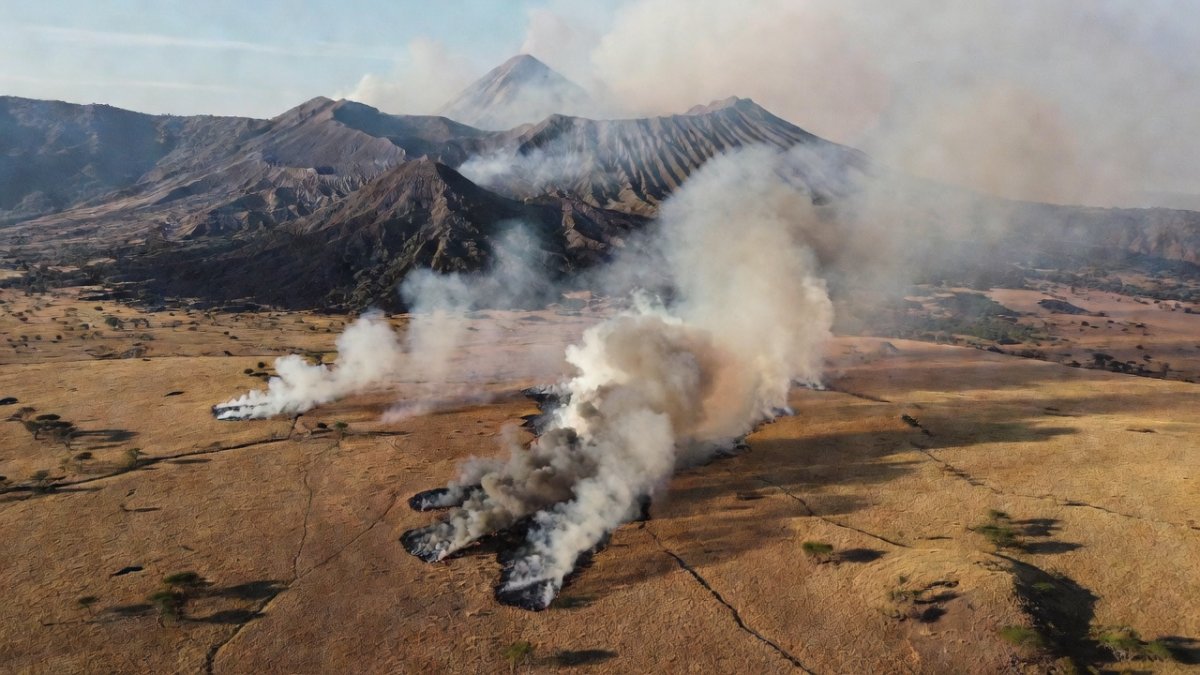
Bromo in Flames: An Iconic Volcano Under Siege
The fire at Bromo is not merely a visual tragedy; it is an ecological assault on one of Indonesia's most treasured landscapes. The flames have swept through dry grassland, low-lying vegetation, and critically, stands of protected Edelweiss flowers, a species endemic to the high altitudes of Java. The fire’s reach extended to the Penanjakan viewpoint, a popular vantage point for tourists, though authorities have confirmed no injuries or building evacuations were necessary. The speed and intensity of the blaze caught many off guard, transforming a normally lush volcanic ecosystem into a charred wasteland within a week. The park’s closure, while disruptive to the local tourism economy, is a precautionary measure that underscores the severity of the situation, prioritizing human safety over economic activity.
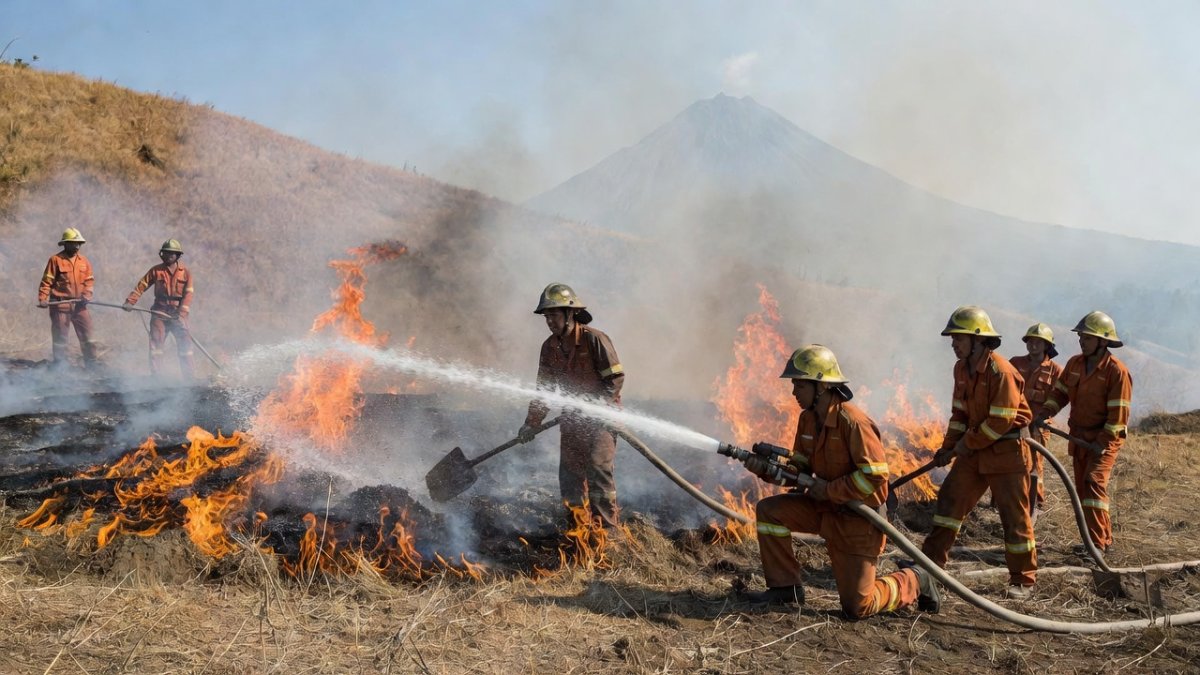
The operational response at Bromo has been a testament to the challenges posed by such fires. With cloud-seeding ruled out due to the absence of suitable rain clouds—a decision confirmed by Forestry Minister Raja Juli Antoni during his Sunday visit—firefighters have been forced to rely on more conventional, and labor-intensive, methods. Water bombing helicopters and ground teams have been working in tandem, but the terrain is unforgiving. The steep slopes of the caldera, combined with strong winds, have made containment efforts arduous. The fact that the fire has been reduced to a 2-hectare hotspot is a significant achievement, but the 150-plus personnel still on site know that a single gust of wind could reignite the dry brush, undoing days of painstaking work. The battle at Bromo is a microcosm of a national struggle against an increasingly volatile climate.
A Nation on Fire: Six Provinces, 100,000 Hectares
While Bromo captures the headlines, the reality is that Indonesia is fighting a multi-front war against fire. Nationwide, more than 100,000 hectares (247,000 acres) of land have been scorched, a figure that dwarfs the destruction at the national park. The government has mobilized nearly 50,000 firefighters and disaster personnel to combat the blazes, a massive logistical undertaking that stretches from the western tip of Sumatra to the heart of Borneo. Chief Security Minister Djamari Chaniago articulated the government's concern, stating, "We are on alert because the weather conditions really make it possible for these fires to become larger." This is not hyperbole; the conditions are primed for disaster, and the authorities are bracing for a long and difficult season.
The government has identified six priority provinces where the risk is most acute: Riau, Jambi, and South Sumatra on the island of Sumatra, and West Kalimantan, Central Kalimantan, and South Kalimantan on the island of Borneo. These regions are not arbitrary selections; they are home to vast expanses of peatland, a carbon-rich soil that, when dried out, becomes highly combustible. The Ministry of Forestry has reported that more than 107,000 hectares were affected between January and June 2026, a staggering 110 percent increase compared to the same period in 2023, the last El Niño year. This figure is more than double the total area burned in all of 2023, painting a grim picture of a rapidly deteriorating situation. The fires are not just an environmental issue; they are a public health crisis, a economic drain, and a test of national resilience.
El Nino's Global Fingerprint
The root cause of this conflagration is a familiar, yet formidable, adversary: El Niño. This naturally occurring climate phenomenon, characterized by a warming of the central and eastern Pacific Ocean, triggers a cascade of changes in global wind patterns, air pressure, and rainfall. For Indonesia, the impact is typically a pronounced dry season, with significantly reduced precipitation that turns forests and peatlands into tinderboxes. The BMKG, Indonesia's meteorological agency, has issued a stark warning that the 2026 dry season is more intense and prolonged than usual, with August and September identified as the most critical months for fire risk. This is not a speculative forecast; it is a data-driven assessment based on current ocean temperatures and atmospheric conditions.
The global fingerprint of this El Niño is unmistakable. The last significant El Niño event helped make 2023 and 2024 the two hottest years on record globally, and the current cycle is showing signs of being equally disruptive. The phenomenon is typically drier in India and Southeast Asia, but its effects are felt worldwide. In Latin America, the Amazon Cooperation Treaty Organization (OTCA) has named El Niño the top climate risk for 2026, a designation that has prompted governments across the region to prepare for drought, extreme heat, flooding, and wildfire risk since July. The NOAA had already put the odds of El Niño formation at 61% for May-July 2026, and those odds have now materialized into a full-blown event. The fires in Indonesia are not an isolated tragedy; they are a manifestation of a global climate pattern that is testing the resilience of ecosystems and societies from the Pacific to the Atlantic.
Cloud Seeding, Water Bombs and the Fight for Rain
In the desperate fight against the fires, Indonesia has deployed an arsenal of technological and conventional tools. Cloud seeding, a technique that involves dispersing silver iodide and salt into the atmosphere to encourage rainfall, is a key component of the strategy. The process can increase rainfall by up to 15 percent, a seemingly modest figure that could be the difference between a manageable fire season and a catastrophic one. However, the effectiveness of cloud seeding is entirely dependent on the presence of suitable rain clouds, and in the current dry conditions, these are proving elusive. More than a dozen aircraft are dedicated to cloud-seeding missions, but they are struggling to find the atmospheric moisture needed to make the technique work, a frustrating reality for officials who see the potential for rain but cannot unlock it.
Alongside cloud seeding, a fleet of 43 helicopters is assisting firefighters on the ground, conducting water bombing runs to douse flames in inaccessible areas. In Jambi province alone, approximately 6,000 firefighters have been deployed, but they are facing a formidable adversary. The deep peat soil, which can burn underground for weeks, combined with limited water supplies, difficult access, and strong winds, has complicated their efforts. The firefighters are not just battling flames; they are battling the very nature of the terrain. The Forestry Minister’s visit to Mount Bromo on Sunday highlighted the limitations of the current approach. With cloud-seeding ruled out, the focus has shifted to water bombing and ground firefighting, a laborious and dangerous task. The minister also urged the public to avoid discarding cigarette butts and to stop clearing land by burning, a plea that underscores the role of human activity in exacerbating a natural phenomenon.
Peat, Smoke and the School Closures
The consequences of the fires extend far beyond the charred landscapes, infiltrating the daily lives of millions of Indonesians. The most immediate impact is on air quality, which has deteriorated to hazardous levels in several regions. In Pontianak, the capital of West Kalimantan on the island of Borneo, Mayor Edi Rusdi Kamtono has ordered school closures for the second consecutive day on Tuesday, August 11, due to the thick, acrid smoke that has blanketed the city. Children are being forced to learn from home, a disruption that affects their education and places a burden on working parents. The closures are a stark reminder that the fires are not just an environmental issue but a public health emergency, with the smoke posing a serious risk to respiratory health, particularly for children, the elderly, and those with pre-existing conditions.
The source of much of this smoke is the burning of peatland, a particularly insidious type of fire. The Ministry of Forestry has reported that 48,890 hectares of peatland are ablaze in Riau, Jambi, South Sumatra, Central Kalimantan, and South Kalimantan. Peat fires are notoriously difficult to extinguish because they burn below the surface, smoldering for weeks or even months. They also release enormous amounts of carbon dioxide and toxic particulate matter, making them a major contributor to both local air pollution and global climate change. The smoke from these fires is not just a local nuisance; it is a transboundary haze that can affect neighboring countries, creating diplomatic tensions and regional health crises. The school closures in Pontianak are a visible symptom of a much deeper problem, one that requires a coordinated, long-term strategy to manage peatlands and prevent the conditions that lead to these catastrophic fires.
What This Means for Latin America
While Indonesia battles its own inferno, the same climatic forces are converging on Latin America, creating a sense of déjà vu and a warning of what is to come. The Amazon Cooperation Treaty Organization (OTCA) has explicitly named El Niño as the top climate risk for 2026, and governments across the region have been preparing since July for a cascade of climate-related disasters. The Amazon, which faced a staggering 17.9 million hectares burned in 2024 according to MapBiomas, and over 140,000 fire spots detected by INPE, Brazil's national space research institute, is particularly vulnerable. The Pantanal, the world's largest tropical wetland, also experienced a record fire season in 2024, consuming approximately 440,000 hectares, with the critical season typically running from August to October. These are not distant memories; they are recent wounds that are about to be reopened.
The parallel between Indonesia and Latin America is not coincidental; it is a direct consequence of the same global climate system. Even a weak-to-moderate El Niño, when combined with already dried-out land, can turn a small spark into a large fire, a scenario that is all too familiar to both regions. The 2026-2027 El Niño cycle is expected to disrupt rainfall patterns in the Amazon, leaving communities and wildlife vulnerable to drought and fire. Furthermore, Latin America is entering this cycle with dengue still circulating, and coastal hospitals are newly exposed to climate-driven flooding risks. The region is not just facing a fire risk; it is facing a multi-faceted climate crisis that will test its infrastructure, its public health systems, and its capacity for disaster response. The fires in Indonesia are a preview of the challenges that Latin America will likely confront in the coming months.
The Bottom Line — A Shared Climate Future
The wildfires raging across Indonesia are a stark illustration of the interconnectedness of our climate system. The El Niño phenomenon, a natural cycle, is being amplified by the underlying trend of global warming, creating conditions that are more extreme and more destructive than in the past. The 110 percent increase in burned areas compared to the last El Niño year is not just a statistic; it is a measure of how much more vulnerable our ecosystems have become. The fires at Mount Bromo, the school closures in Pontianak, and the mobilization of 50,000 personnel are all symptoms of a planet under stress. The response from Indonesia—a combination of cloud seeding, water bombing, and ground firefighting—is a testament to human ingenuity, but it is also a reminder that we are fighting a losing battle if we do not address the root causes.
For Latin America, the message is clear: prepare for the worst. The OTCA’s warning, the NOAA’s forecasts, and the data from MapBiomas and INPE all point to a high-risk season. The region must learn from Indonesia’s experience, investing in early warning systems, firefighting capacity, and, most importantly, in the sustainable management of its forests and peatlands. The bottom line is that we share a climate future. A fire in Borneo is a warning for the Amazon; a drought in Java is a preview for the Pantanal. The challenges are global, and so must be the solutions. The world is watching as Indonesia battles its flames, hoping that the lessons learned will help prevent a similar catastrophe elsewhere. The time for proactive, coordinated action is now, before the next spark ignites.
By Elena Vasquez, Staff Writer
This article was produced with AI-assisted research and editorial support. Reporting is based on sources cited in the article.
What's Your Reaction?
 Like
0
Like
0
 Dislike
0
Dislike
0
 Love
0
Love
0
 Funny
0
Funny
0
 Wow
0
Wow
0
 Sad
0
Sad
0
 Angry
0
Angry
0

Latin America Correspondent at Global1.News. Based in Mexico City, covering politics, economics, energy, and culture across the region. Brings an on-the-ground perspective to stories spanning from the Rio Grande to Patagonia.















Comments (0)